

 SHARE:
Nearly every municipality, regional district and First Nation across the Okanagan and Similkameen watersheds has signed on to a syilx-led initiative to restore and protect the region’s waters for the next seven generations.
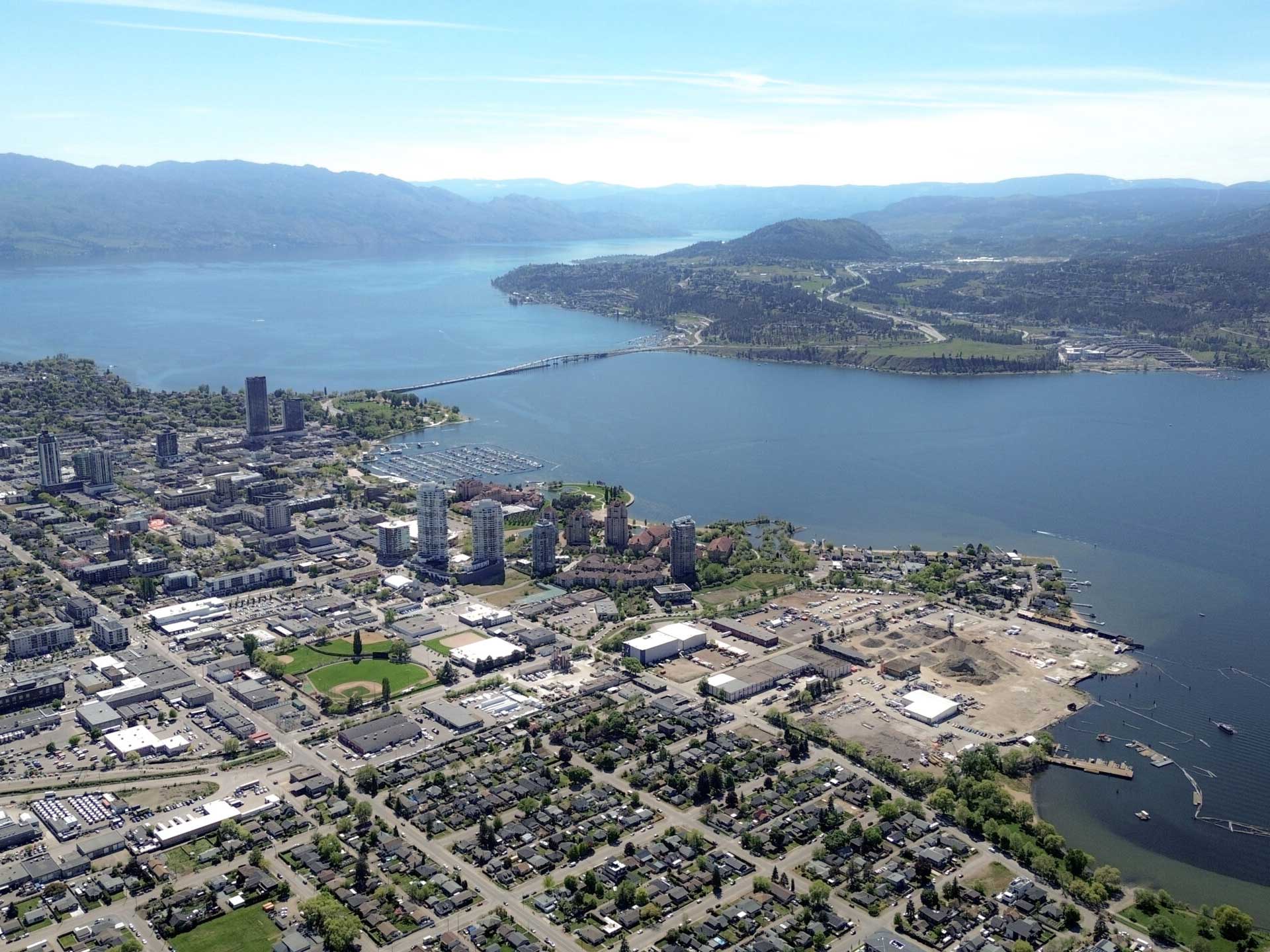
But the effort is missing two key players: the cities of Kelowna (kiʔláwnaʔ) and West Kelowna, representing a combined population of nearly 210,000 people. Located in the Regional District of Central Okanagan, it’s the most populated urban area in syilx territories.
Indigenous and non-Indigenous governments warn ecosystem degradation, collapsing aquatic species populations and climate change’s impacts — including threats to water quality, worsening droughts and warming waters — have raised the urgency of protecting local watersheds.
Last month, syilx leaders at the Okanagan Nation Alliance declared an emergency across six of its major watersheds, in response to worsening droughts, declining fish populations and growing threats to long-term water security throughout their territories.
And on Thursday the Regional District of the North Okanagan imposed restrictions in the Greater Vernon Water service area. Non-essential water use, like watering lawns and filling private pools, is banned and people are encouraged to cut water use by 50 per cent. Farmers are required to reduce water use by 70 per cent.
Protecting the region’s waters is a matter of people’s health, too. In the last decade, Interior Health issued more than a thousand water system advisories for the larger Okanagan-Similkameen region. Within the Central Okanagan, the health authority issued 412 advisories, of which nearly half were boil-water advisories.
According to the provincial water licence database, the City of Kelowna owns nearly 150 current water licences, which are a mix of ground and surface waters sourced from surrounding watersheds.
At the opposite ends of kɬúsx̌nítkʷ (Okanagan Lake), the total number of current licences owned by the cities of Vernon and Penticton — with combined a population of nearly 90,000 people — is just short of 50, based on provincial numbers.
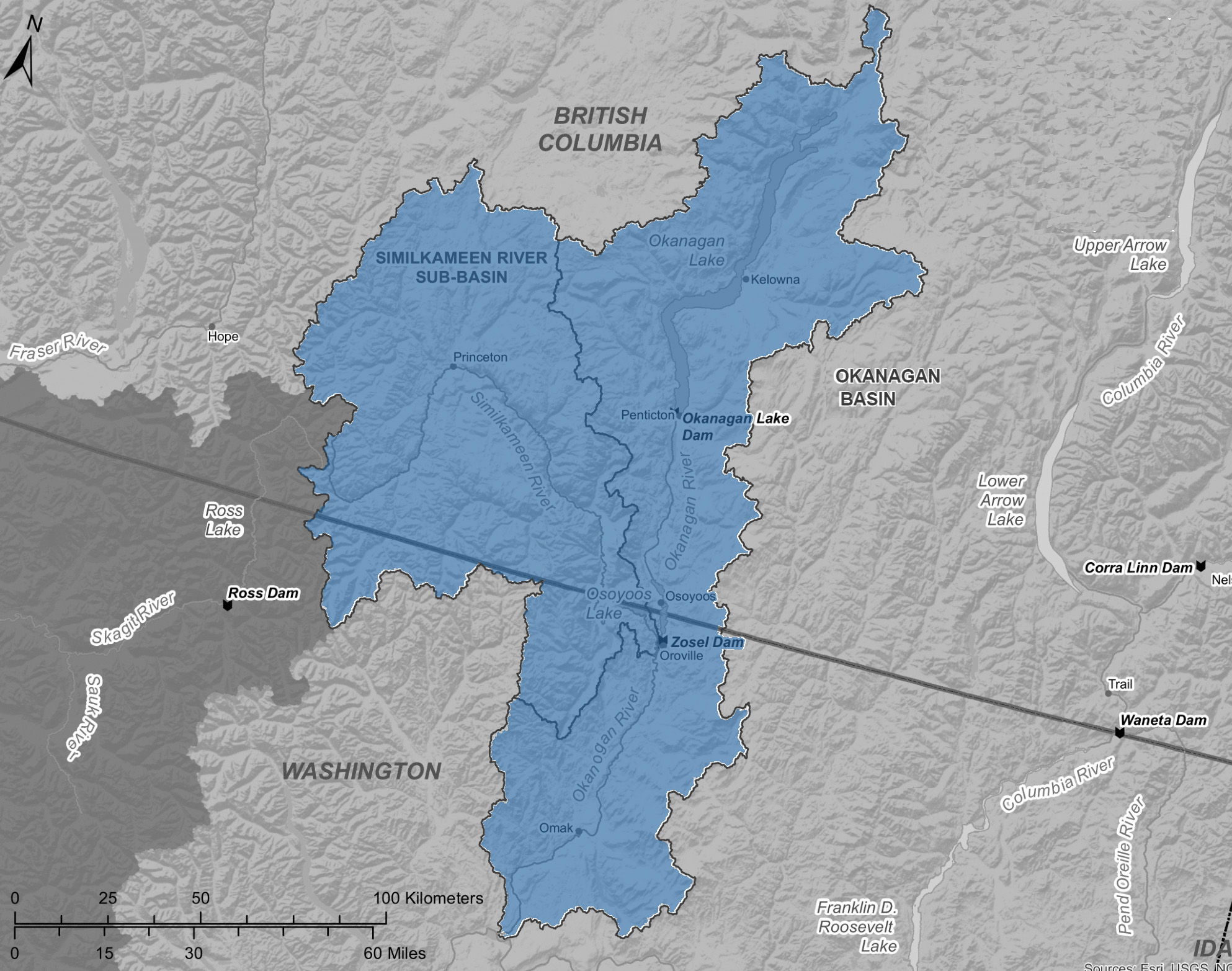
In 2024, in response to the watershed concerns, 19 leaders across the region formalized an agreement to work together on water issues, the Okanagan-Similkameen Collaborative Leadership Table. Together, the signatories to the memorandum of agreement represent close to 450,000 residents across three regional districts.
The syilx-led governance model brings First Nations, municipalities and regional districts together to share decision-making over crucial issues affecting water, ecosystems and watershed restoration. Signatories include all six chiefs of the syilx First Nations within the two watersheds. The mayors of Vernon, Penticton, Oliver, Princeton, Keremeos and Osoyoos are also among the initial signatories, representing about 100,000 residents.
Last year, they entered discussions to create a 250-year plan to manage and protect waterways across the region.
The agreement they signed nearly two years ago commits to “working together on matters of common concern to protect and restore siwɬkʷ (water) … now and for future generations.”
The agreement’s preamble includes a clause committing to “take action on shared priorities consistent with the United Nations Declaration on the Rights of Indigenous Peoples and the Calls to Action of the Truth and Reconciliation Commission of Canada.”
‘It takes everyone to be at the table’
But at the memorandum’s signing event in 2024, Kelowna Mayor Tom Dyas and West Kelowna Mayor Gord Milsom were notably absent.
And while Milsom did attend one of the Collaborative Leadership Tables meetings last year — as an observer — he has not attended any since.
Meanwhile, Dyas has not been at any of those meetings since the MOA’s signing.
This year, the Okanagan Nation Alliance’s two-day siwɬkʷ (Water) and Climate Forum in March — which coincided with World Water Day celebrations — was even held in kiʔláwnaʔ. The event brought together more than 320 people.
Yet even then, neither local mayor attended.
Even before the Okanagan Nation Alliance declared a watershed emergency last month, the leadership table’s co-chair, y̓ilmixʷm (Chief) simo Robert Louie of Westbank First Nation, said all regional leaders need to work together to tackle water issues.
“There is not one single group that can do it alone,” he said at the water forum in March. “It takes everyone to be at the table.”
Fellow collaborative leadership table member Julius Bloomfield, the mayor of snpink’tn (Penticton), noted at that event “there are people that are not here, that … know they should be here.”
“They’re not here yet, but they will be here in the future. I believe that,” said Bloomfield.
Louie added that he too believes that “every municipal government will be here.”
“We’re almost there right now,” said Louie. “We have to involve everyone that’s connected in a way with water.”
Kelowna’s own plan leaves out UNDRIP, TRC
Both Dyas and Milsom declined interview requests to discuss why they haven’t committed to the collaborative leadership table, despite the many regional water issues straining local governments.
Instead, their offices emailed statements declaring support for regional collaboration on water issues.
A spokesperson for the City of West Kelowna said the city “supports the table’s initiatives,” but did not explain why it has not signed the Collaborative Leadership Table agreement — noting that “may change in the future.”
West Kelowna’s statement added the city “continues to be interested in and values the table’s initiatives and the mayor has been invited to sit as an observer and attends the meetings as his schedule allows.”
Meanwhile, when asked why the City of Kelowna hadn’t signed on, a spokesperson told IndigiNews the city adopted its own Water Security Plan last year to ensure “long-term security in the supply and quality of our water.”
Its plan includes language and values similar to the collaborative leadership table agreement. For example, the city states it wants to protect Okanagan Lake and its surrounding watershed “to ensure future generations can continue to prosper.”
The plan affirms the syilx people’s “deep relationship and connection” to water, and their knowledge and stewardship practices as foundational to managing the resource responsibly for the well-being of “landscapes, fish and wildlife, as well as our communities.”
And the document makes reference to a syilx water law outlined in the 2014 Okanagan Nation Alliance’s siwɬkʷ Water Declaration which states that “siwɬkʷ (water) has the right to be recognized as a familial entity, a relation and a being with a spirit who provides life for all living things.”
While Kelowna’s plan commits “to work with local First Nations to incorporate these values into water security management and best practices,” it is missing the syilx-led memorandum of understanding’s references to two documents: the UN Declaration on the Rights of Indigenous Peoples and the Truth and Reconciliation Commission’s calls to action.
“Inclusion of broad expectations associated with all the important actions that are in those two documents are well beyond the scope of a Water Collaboration Table, in our opinion,” said the City of Kelowna statement.
“The notion of an independent body of municipal and Indigenous representatives making important resource decisions that affect our citizens is counter to obligations to make decisions as a council, at the council table.”
Kelowna’s water protection strategy’s only reference to UNDRIP is that it is a provincial commitment. Instead, the city’s responsibilities includes “incorporating syilx knowledge into project design criteria,” and “working to maintain and strengthen a respectful and collaborative relationship with the Okanagan Nation Alliance.”
Despite not joining the regional collaborative leadership table, Kelowna insists it believes in collaborative leadership.
“Sustainable water management will only be possible through collaboration between the many governments and groups involved in the protection and management of water sources and systems in the region,” the city’s water plan declares.
‘It’s unfortunate’
John Wagner, an environmental anthropologist and professor emeritus at the University of British Columbia Okanagan, told IndigiNews he was disappointed the City of Kelowna has not signed onto the collaborative leadership table.
“It’s unfortunate that they have decided not to show leadership,” said Wagner, who is involved in the university’s Watershed Ecosystems Research Excellence Cluster.
“They have huge responsibility, really, and I think they’re dodging their responsibilities.”
The provincial government is not involved with the collaborative leadership table, and the Ministry of Indigenous Relations and Reconciliation told IndigiNews that “local governments are autonomous, independent and democratically elected.”
“We encourage strengthening positive government-to-government relationships built on a foundation of respect, rights and reconciliation.”
For syilx leaders, water management is inseparable from broader questions of Indigenous jurisdiction, responsibility and relationships to land and water.
“We’re not giving up one or the other’s jurisdiction… that’s not the purpose of why we’re here,” Louie said last year at the the table’s first meeting since signing their formal agreement. “We’re here because we have to be here. It’s our duty — it’s our responsibility — to be here.”
A focus on governance and ecosystems
Last November, the Okanagan-Similkameen Collaborative Leadership Table established two working groups to implement their 250-year initiative.
One was a governance working group, focused on shared policy priorities and decision-making tools.
The other was an ecosystems working group, focused on setting priorities for restoring watersheds. For instance — improving fish habitats; monitoring water quality; protecting salmon-spawning waterways; and identifying which waterways need the most urgent restoration efforts.
While the collaborative leadership table has not yet released updates from those working groups publicly, Indigenous and non-Indigenous leaders in the Regional District of North Okanagan have already been working together since November to protect the North Aberdeen Plateau watershed, a drinking water source for up to 80,000 people in that region.
The absence of Kelowna and West Kelowna from the collaborative leadership table reflects differing views in the province about what collaboration should look like in practice, particularly as First Nations across British Columbia push for a greater role in decision-making around land and water stewardship.
Although the syilx-led initiative can still move forward with its current signatories, the UBC’s Wagner said it is unfortunate that two of the region’s largest municipalities haven’t joined a plan intended to span interconnected ecosystems and jurisdictions.
But the priority for the collaborative leadership table, in his opinion, is not about whether all municipalities join the effort formally.
More important, he argued, is “whether those who are signed on can agree to undertake a set of actions with their working groups to address water issues.”
“I hope they will be able to move forward soon to some action items, and we should all try our best to support that process,” he said.
“Whether it’s going to take 100 years or 250 years to fully realize their vision is also not so much the issue, in my mind, as when it is going to show itself as successful on the ground?”
City of Penticton Mayor Bloomfield said the 250-year-plan is meant to advance incrementally, as regional leaders develop other water-protection frameworks.
“We start off with small, manageable steps,” he said, “while we’re figuring out the biggest steps that can be taken and need more planning.”
But growing the circle of who sits at the table remains important, he continued, so there can be “more work and more collaboration with different levels of government,” he said.
Despite the challenges, Wagner said that collaborative leadership table remains “a very positive sign of things to come.”
“Almost everybody in the valley has agreed to follow a syilx-led process,” he said. “That wasn’t happening 20 years ago. It sure wasn’t happening 40 years ago. That’s pretty extraordinary.” ![[Tyee]](/design-article.thetyee.ca/ui/img/yellowblob.png)
Read more: Indigenous, Environment








Tyee Commenting Guidelines
Please note that email notifications for replies are not currently working due to a software issue which may be resolved in a future update.
Comments that violate guidelines risk being deleted, and violations may result in a temporary or permanent user ban. Maintain the spirit of good conversation to stay in the discussion and be patient with moderators. Comments are reviewed regularly but not in real time.
Do:
Do not: