


 SHARE:
Birding is often thought of as something older folks do to pass the time. Something accessible and easygoing. But it isn’t like that for everyone. And birding isn’t just about checking out a goose through some binoculars, either.
Birding involves birdwatching, but it also includes identifying and “listing” the birds. Listing is the birdwatching practice of making a list of every species of bird a watcher sees, and where they see it. Many birdwatchers in Canada share their bird lists online through eBird, a collaborative project managed by the conservation non-profit Birds Canada. Birders can make lists tagged with their location on eBird, upload photos and audio to the platform and see who the biggest listers are.
The listing universe is hierarchically structured. There’s a master list of all the birds a birder has seen in their lifetime called a “life list;” those birds are described as “lifers.” There are also smaller, time-specific lists called “big years” and “big days,” and in those, there’s a bit of competition.
A big year or big day is when a lister sets out to see as many species as they possibly can in the span of one big year, from Jan. 1 to Jan. 1, or one big day, from midnight to midnight. That means travelling as far as they can, and as fast as they can, to see these birds. Many birders are particularly motivated by the possibility of seeing a rare bird on these missions.
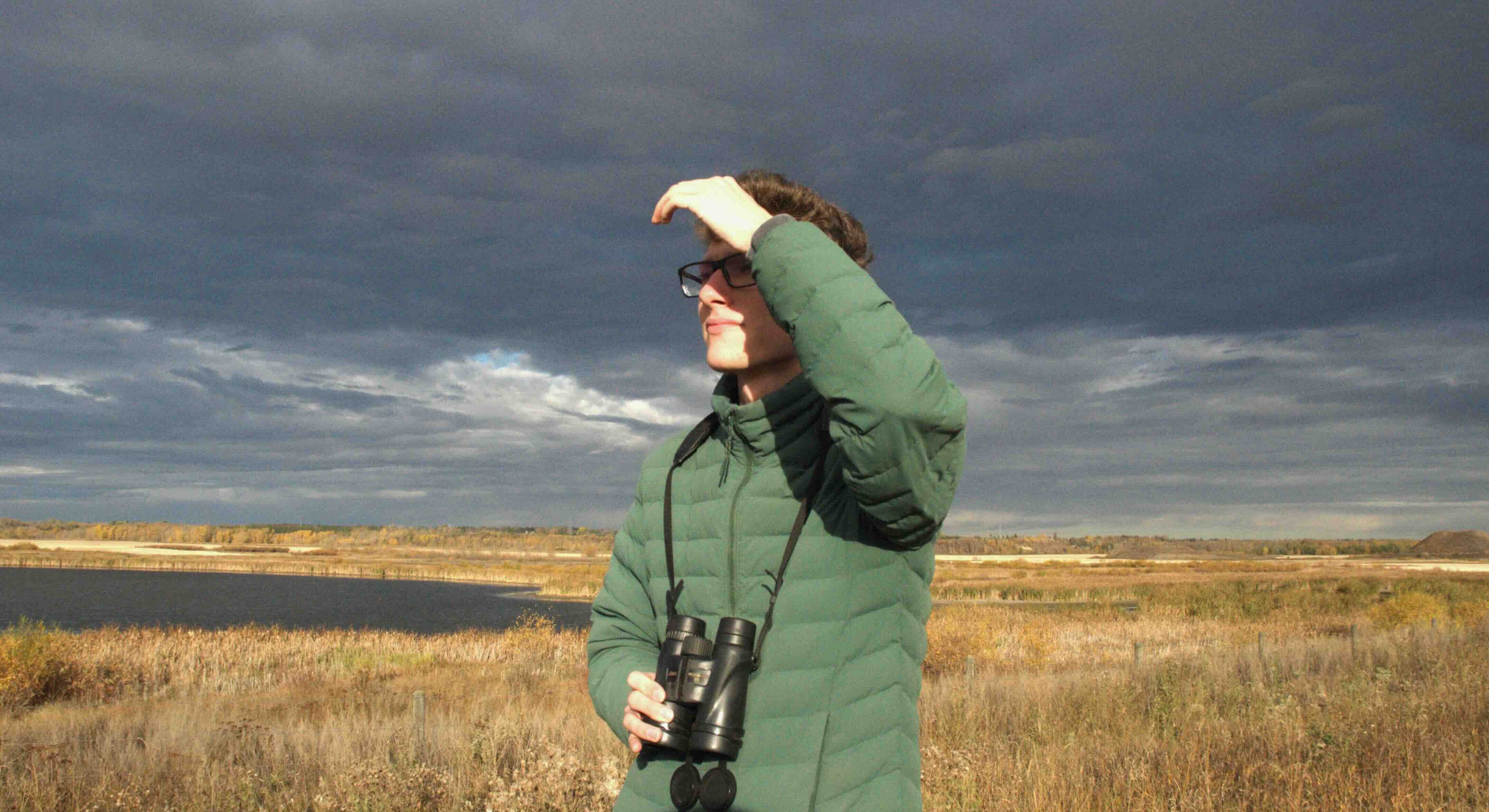
In Alberta, birders Ethan Denton, 22, and David Grinevitch, 20, are a part of a new generation of birders doing as much as they can, within reason, to see rare birds, and as many birds as they can.
Denton, a bird bander at Wood Buffalo Wildlife Research Institute, holds the record for the biggest Alberta big year, which he set in 2021 when he was only 18.
Grinevitch is a University of Alberta student and is, at the time of publication, ranked first in both Alberta and Edmonton on eBird for 2025. Grinevitch is also going for an Edmonton-area big year record this year.
A tale of two spark birds
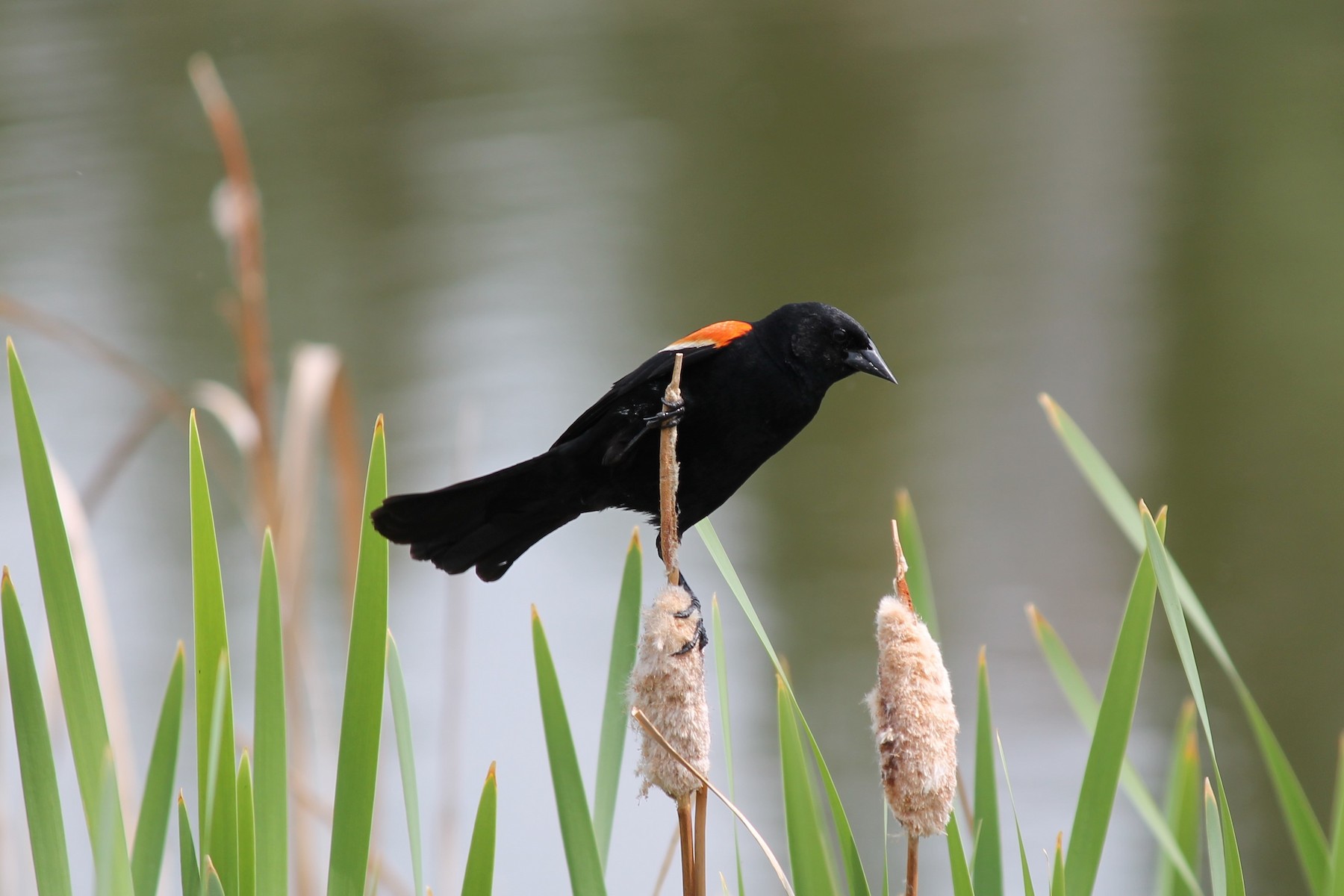
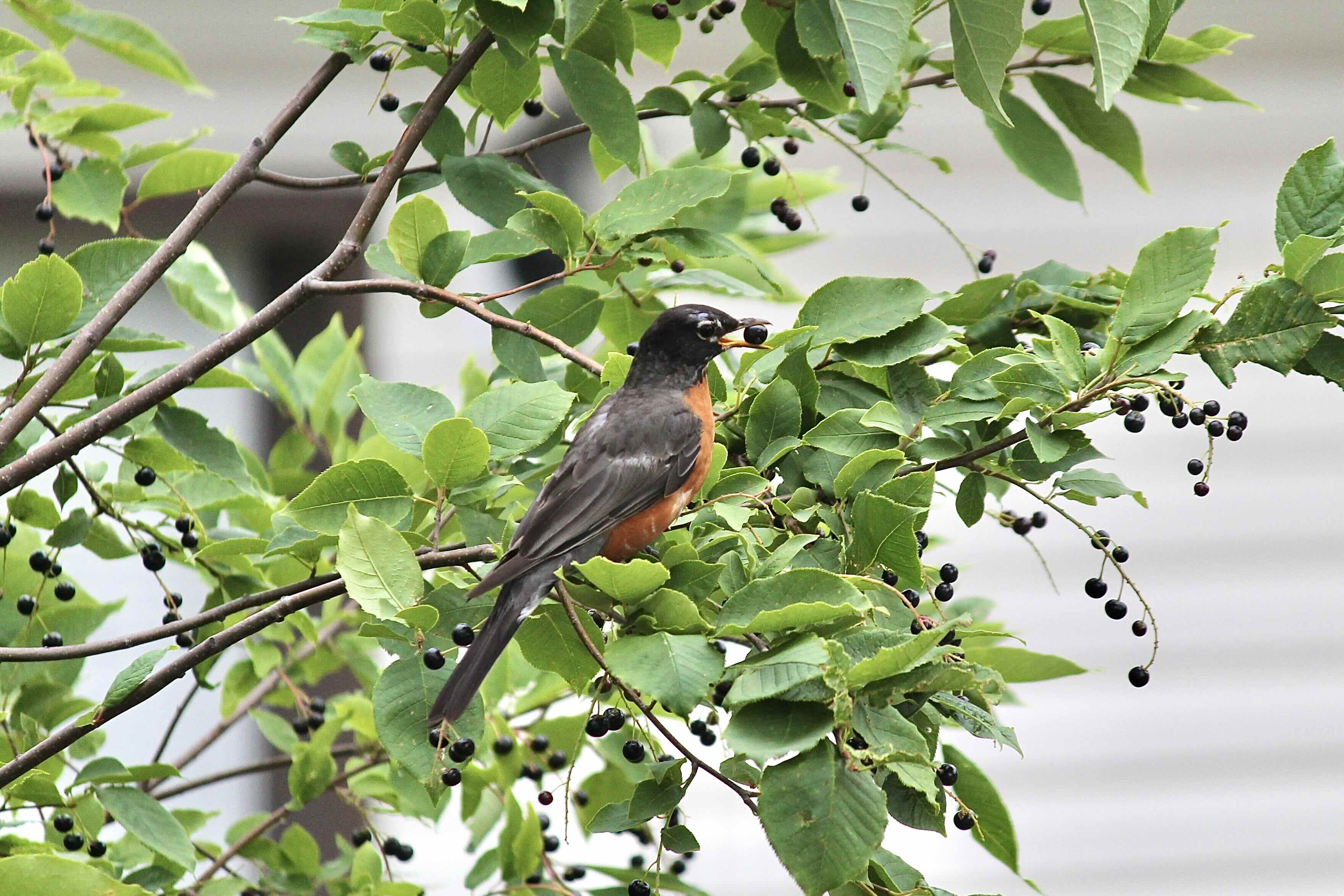
Denton’s passion for birding began when he was in elementary school and there was a class competition to see the most birds. Grinevitch dove into birding as a child after noticing birds in the trees around his home.
The special bird that hooks a person into birding is called their spark bird. Today, Denton and Grinevitch are a part of a new generation of birders who are doing whatever they can to see rare birds.
“I think what sets some of this younger generation of birders apart, [like] me, Grinevitch and a couple others, is how unhinged we are,” Denton said. “We’re really deep into it. We go on these really big trips, we call them twitches, sometimes five, six, or even 15 hours away, driving through the night to go see these birds in places they shouldn’t be.”
Discovering the potential location of a rare bird comes from tips birders share through an Alberta-wide group chat of birders. There’s also eBird.
Knowing the bird can leave the site, and that a birder often has a good distance to go to see it, creates an exciting sense of urgency.
“We never know what’s going to happen,” Denton said. “Is it going to be a one-day wonder? Is it going to be a one-hour wonder? Is it going to get eaten by a hawk?”
On these trips, Denton’s willing to do whatever it takes to see these birds, within reason. Things like trespassing are off limits for him.
“But everything that involves basically the abuse of my body, I’m fine with,” Denton added.
Wild drives, and a supportive community
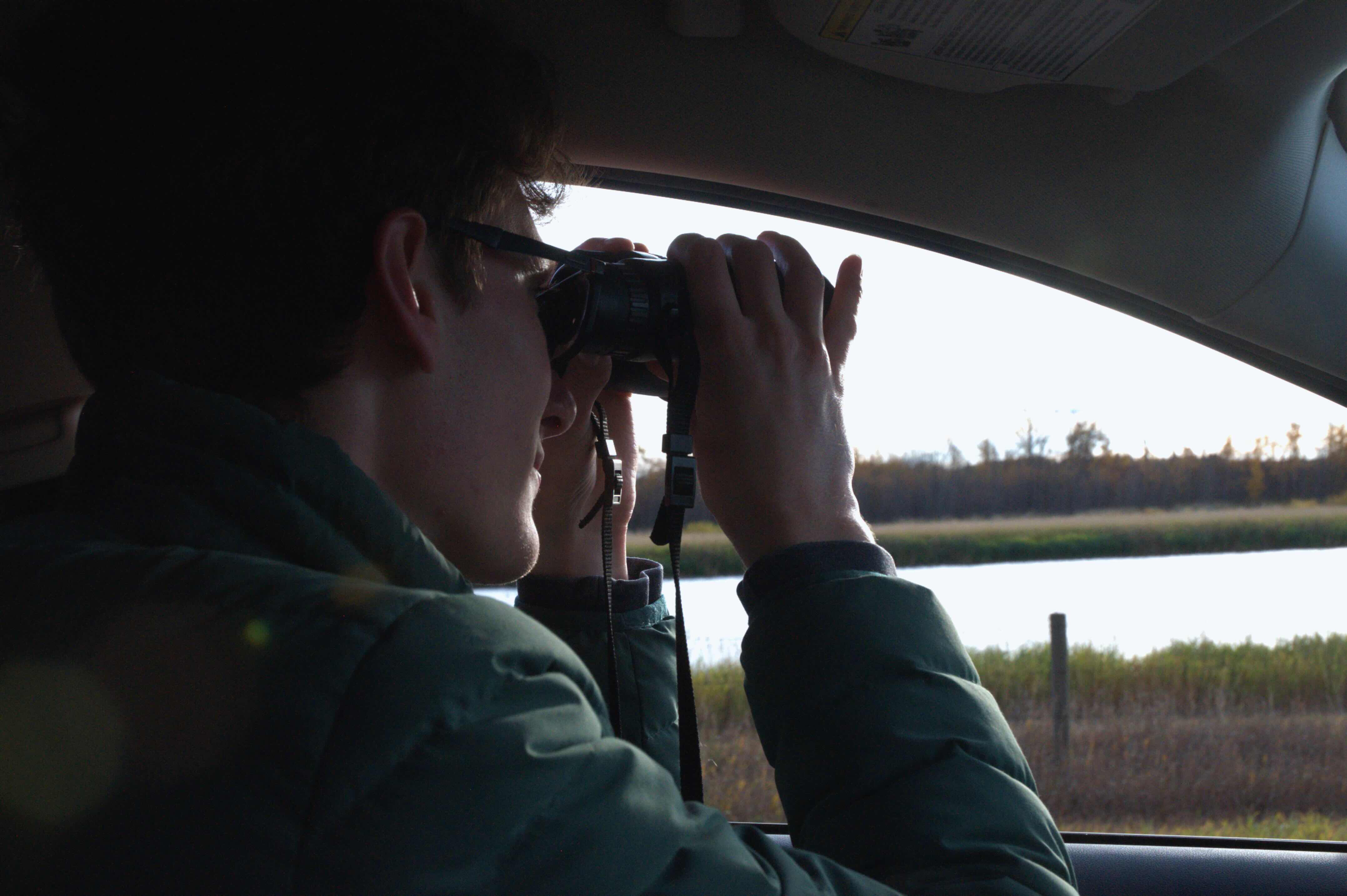
On one of his final twitches of last year, Denton said he drove to Fort McMurray and spent two-and-a-half days sleeping in his car, having to turn it on every 30 minutes to keep warm. And, he missed the bird. He was looking for the first Alberta record of a Eurasian Tree Sparrow.
“It’s a crushing feeling,” he said, but there are two ways of looking at it. “You can either get discouraged, or you can say, ‘Well, this just makes the ones that you see feel better.’”
While Denton often drove himself on birding trips, carpooling with other birders is also a significant part of the culture. In an article he wrote about his big year, he said that since he was without a car at one point during his record-setting year, he ended up waiting in a mall parking lot until 3 a.m. for a fellow birder to pick him up so they could see a pair of Sage Thrashers.
Birding culture is one in which its members lift each other up. “As a whole, birding has a fantastic community, and birding is a very community-based activity. They help each other,” Denton said. “During my big year, everyone I talked to was very supportive and very helpful and wanted me to succeed.”
Like all communities, birding does have its bad apples, but its members hold each other accountable.
“Birding ethics has some lines that get crossed and there’s two types of people that cross them. There are people who know the rules and know what’s ethical and decide to just ignore it, and, which is most of the time, there’s well-meaning people that just don’t understand,” Denton explained.
“But, as a community, we have a very good awareness of some of these things and tend to push that educational side of things. We don’t want people making mistakes because it’s bad for the birds.”
Members of the birding community work together to uphold a set of birding ethics grounded in respect for birds and their habitat. Frowned-upon activities that are seen to violate the ethical line in birding include “call backs,” when a birder calls back to a bird using that bird’s own call, and “baiting” birds to entice them to show themselves to birders. There is also an unethical practice known as “spook and shoot,” when a birder spooks a bird in order to take a photo of it flying.
In Denton and Grinevitch’s experience, trespassing is about as bad as it gets in Alberta.
Denton mentioned one case when homeowners called police on birders coming to see a rare bird on their property, but sometimes it’s a bit more than just a call to the local RCMP station.
“I know, down south, people have been shot at by farmers and stuff. I’ve had people point laser pointers at me or my car, but they’re just not used to seeing people out there,” Denton said.
Most of the time, when people see them and wonder what they’re doing, it turns into a moment of connection.
Denton and Grinevitch said when they’re out with their telescopes set up, people often come by out of curiosity. “I love the educational aspect. The more people that we can share this with, the more people care about birds … the better our scope is to protect them, and the environment,” Denton said.
“When you find something, you get so much joy out of sharing it with others and helping them see it,” Grinevitch said. This season, Grinevitch got a tip about an Ancient Murrelet in Banff. Ancient Murrelets are usually only found on the West Coast, so finding one in Alberta is a rare occurrence.
Right after his classes ended at the University of Alberta, he drove to Calgary to pick up other birders keen to see the same bird. He then drove the group to Banff, which is an eight-hour drive to and from Edmonton.
The Ancient Murrelet was on a lake not far from the highway. Grinevitch and the other birders set up their telescopes, or ‘scopes, as birders call them, to view the bird in the water. Grivevich said a lot of people passing by stopped to see what they were doing out of curiosity. They would set up their equipment and teach those who wanted to know about the bird and what makes it rare.
“Birds like that one, when they’re so off-course, especially a seabird like that, it’s probably going to die in Alberta. But it’s going to have a great impact on people, and it could be a spark bird for so many people to care just a little bit more about birds than they did before,” Grinevitch said.
‘Look everywhere’
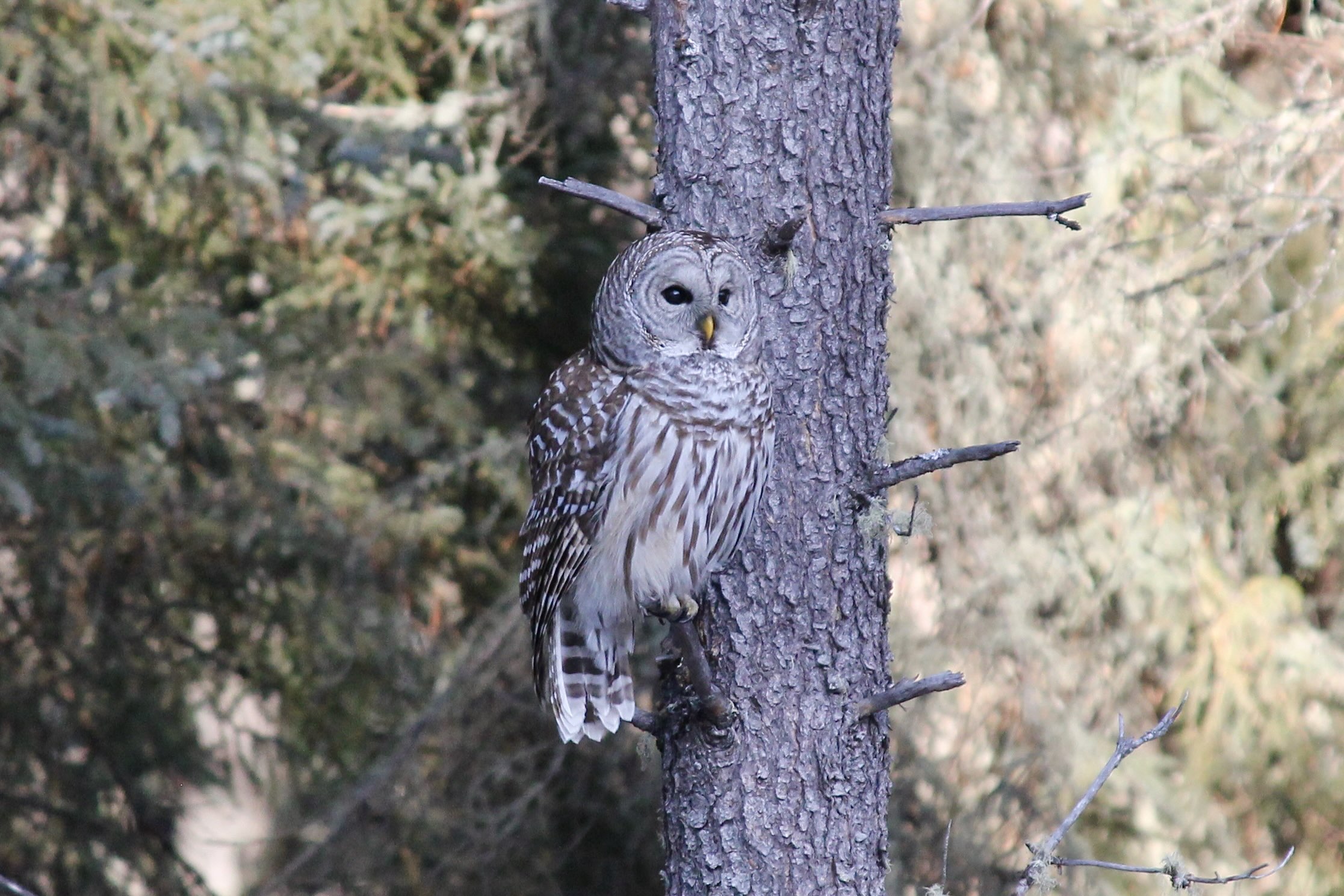
In the time I’ve spent with birders, I’ve noticed they have an awareness of the environment like nothing I’ve ever seen.
Birders are listening carefully to what’s around them, seeing what’s above them and making note of their surroundings. In a blank sky, they’ll see the tiniest bird, and in a commotion of chatter, they’ll hear the quietest bird call.
Denton said birders make their awareness of birds “second nature. You build it into yourself,” he said, “And once you start birding seriously, you never really stop.”
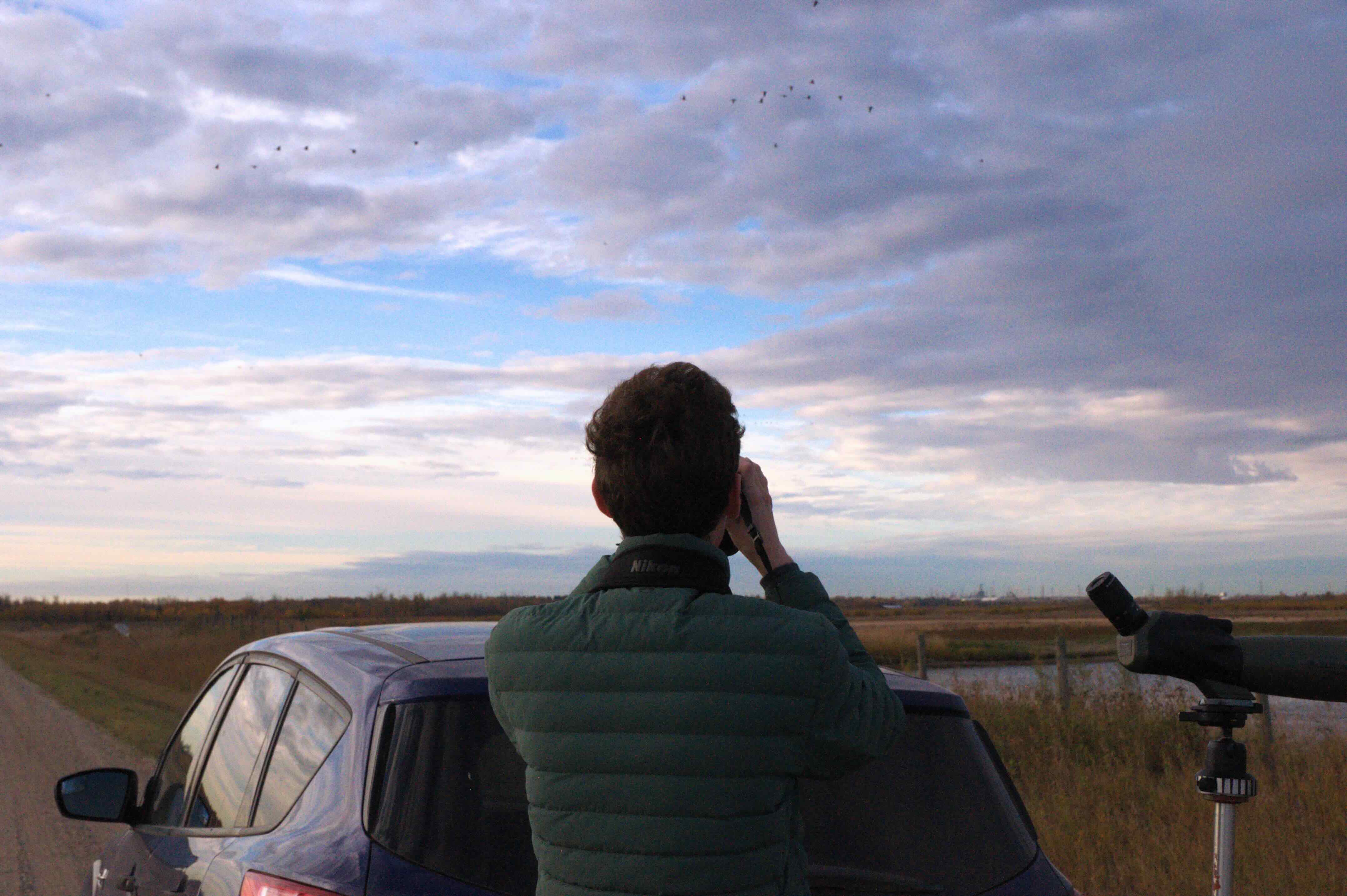
He added that because of this well-honed awareness, birders get to see and experience a lot more of the natural world than those who aren’t birding.
While birding is relatively accessible for those who are looking to start in their home communities, there can be some financial setbacks for those who want to pursue it seriously.
“Birding tends to be a middle-, upper-class pursuit,” Denton notes, adding that birding in Alberta lacks ethnic diversity. “The thing that [Grinevitch] and I do, like my big year, we’re very lucky we get to do that,” Denton said.
With the costs of lost wages while on birding trips, plus the necessary food, gas and shelter to support such missions, listing and seeking rare birds requires a level of financial support or comfortability for those involved.
“The numbers game, or the listing game, is not a measure of skill. It’s a measure of privilege. It’s really easy to look at a birder and say ‘Oh, you’ve seen 5,000 species, you’re probably a good birder.’ But, the 5,000 species took travelling to a whole bunch of countries and guides needed to be hired and they probably have a $20,000 camera,” Denton said.
“Once you start getting into the insane birder and the hardcore big listers, it’s not very accessible to lower-income brackets.”
There are some ways in which the birding community is trying to make birding accessible through outreach programs and free guided walks in local parks.
But more easily, Denton said the best way to get started is to “look everywhere. Look in your yard. Look in your parks.”
You don’t need to go to great lengths to love birds, he added. “You can go and feed the Chickadees, and that is just as worthwhile as any of the things that Grinevitch and I do.” ![[Tyee]](/design-article.thetyee.ca/ui/img/yellowblob.png)
Read more: Alberta, Environment










Tyee Commenting Guidelines
Please note that email notifications for replies are not currently working due to a software issue which may be resolved in a future update.
Comments that violate guidelines risk being deleted, and violations may result in a temporary or permanent user ban. Maintain the spirit of good conversation to stay in the discussion and be patient with moderators. Comments are reviewed regularly but not in real time.
Do:
Do not: