


 SHARE:
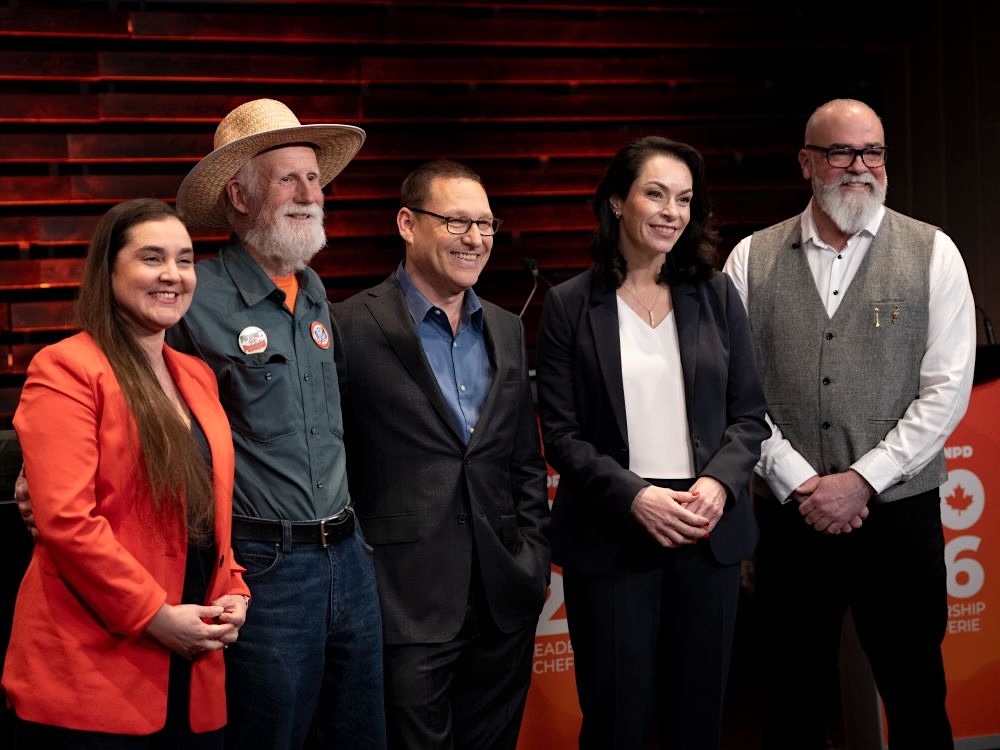
The race to lead the New Democrat Party is officially underway.
Voting opened on March 9 and a leader will be announced March 29, when the party will gather in Winnipeg for the NDP convention.
Five leadership contestants are in the race to replace former NDP leader Jagmeet Singh: Edmonton Strathcona MP Heather McPherson, labour leader Rob Ashton, activist and documentary filmmaker Avi Lewis, social worker and Campbell River Coun. Tanille Johnston and organic farmer Tony McQuail.
Sanjay Jeram, a political science lecturer at Simon Fraser University, said Ashton, McPherson and Lewis have emerged as the race’s three front-runners.
Lewis has been able to fundraise more than twice as much money as the next candidate, with nearly three times as many people contributing to his campaign.
But Jeram said that while fundraising traditionally indicates who will win an election, Lewis is a polarizing figure. And with voters using a ranked ballot system, the next leader of the NDP is anything but determined.
Polling suggests McPherson, the only candidate who won a seat in the last federal election, has the best name recognition, while Ashton, a West Coast labour leader, can appeal to blue-collar workers.
The leadership race comes less than a year after the NDP’s worst election in decades, and polling suggests voters and candidates alike are split on party policy and direction.
The leadership vote promises to test progressive voters' values on political strategy, unionized labour, affordability and climate change.
“You have this interesting race setting up for the soul of the party,” Jeram said. “Where do they want the party to go?”
Avi Lewis leads fundraising
Elections Canada interim campaign returns show Lewis has taken the lead in fundraising, having brought in $1.2 million from more than 10,400 contributors.
Elections Canada data shows MacPherson has raised $560,000 from more than 3,800 contributors, while labour leader Rob Ashton has raised nearly $360,000 in contributions from more than 2,000 supporters.
McQuail has raised more than $112,000 from over 800 contributors. Elections Canada has yet to publish Johnston’s fundraising numbers.
Marcel Nelson, who teaches political science at Sheridan College, said that historically the candidate who raises the most money tends to be the one who wins the election.
Nelson, who disclosed that he supports Lewis in the leadership race, said Lewis’s strong stance against the oil and gas industry might make it difficult to attract voters in Alberta and Saskatchewan.
“The issue of climate change will be a bit of a polarizing factor within the party,” Nelson said.
“The common wisdom is that Lewis and his strong language on climate change will make the provincial sections of the NDP unelectable in both of those provinces, so they see his environmental positioning as a liability.”
Lewis is one of the co-authors of the Leap Manifesto, a list of political proposals on how Canada could transition from fossil fuels. He continues to advocate for policies like a tax on oil and gas exports to the United States and against the construction of new oil pipelines and natural gas terminals.
He has also proposed affordability solutions including free public transit and publicly owned grocery stores.

That puts Lewis’s politics the furthest left of any candidate, Nelson said. He added that the NDP’s leadership voting system — which asks voters to rank up to five candidates in order of preference — might give less controversial candidates a leg up if Lewis cannot get a majority of first-choice votes.
“Lewis is kind of a polarizing figure within the party,” Nelson said. “If he doesn't reach that 50 per cent threshold after the first ballot, it might be a bit of a tough slog.”
Fundraising has been a hurdle for both McQuail and Johnston. The NDP required leadership contestants to pay a $100,000 fee to enter the race, paid in four $25,000 instalments over the course of the race.
Last November, Johnston told The Tyee that raising funds was challenging for her campaign and gives an advantage to wealthy candidates.
Meanwhile, just before the holidays, McQuail said he was unsure he would be able to raise enough to make the final payment.
Still, both candidates remain in the race.
Heather McPherson leads in name recognition
Early polling data shows Edmonton Strathcona MP McPherson came into this race as the best-known candidate. An October 2025 Pollara survey of 2,700 Canadians found one in five knew who she was, compared with 16 per cent for Lewis and 14 per cent for Ashton.
McPherson has represented her downtown Edmonton riding since 2019 and has served as the NDP’s deputy House leader, party whip, critic for international development and critic for foreign affairs. Her bid for leadership has been backed by former NDP Alberta premier Rachel Notley.
Since coming into office, she has backed bills that would see changes to the Canada Pension Plan and ban so-called “company unions,” which bargain with employers’ interests in mind instead of workers’.
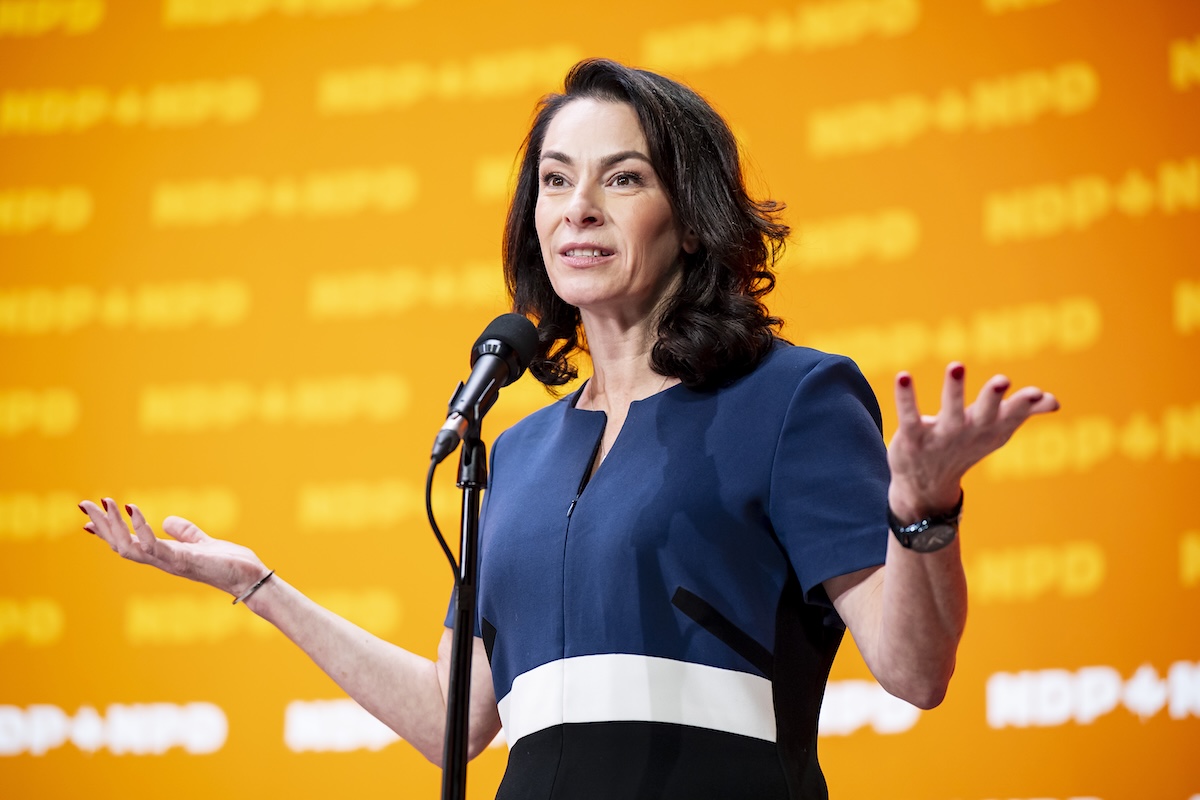
David McGrane, a politics professor at the University of Saskatchewan, said McPherson’s experience was an asset during her campaign but could work against her if voters want significant change.
“She has the most experience and a network of people, particularly those that are elected or formerly elected, working for her across the country,” he said.
“I think there's a question mark in some people's minds about whether she actually represents enough change in terms of what the NDP was doing before.”
Like both Ashton and Lewis, McPherson has campaigned on a promise to ramp up construction of affordable and social, co-op, non-profit housing. She and Ashton both propose banning corporate landlords from buying large apartment portfolios and single-family homes.
Her campaign includes a proposed tax on “excess profits” on corporations and new rules that would require banks, insurers and pension funds to divest from polluting projects towards clean energy.
McPherson also proposes changing the federal government’s new Major Projects Office, which was built to fast-track big infrastructure, so it would prioritize clean energy generation and transmission infrastructure and require projects to create union jobs.
Jeram, the political science lecturer from SFU, said McPherson was the most centrist of the front-runners, and the candidate who is best positioned to bring together a wide base of progressive-minded voters.
“McPherson speaks to a more centrist, moderate, pragmatic vision — one that brings in urban Canadians,” Jeram said.
“Her challenge will be whether she brings back the working-class voters in Windsor and around Oshawa, places like that, where the NDP needs to make gains to be successful.”
The Pollara survey found that McPherson primarily appeals to white-collar workers, university-educated people and immigrants, while Ashton, president of the International Longshore and Warehouse Union Canada, excites blue-collar workers.
Rob Ashton appeals to blue-collar workers
Ashton led Vancouver port workers through the 2023 strikes that shut down supply chains across the country and has since become a fixture on B.C. picket lines, joining public sector workers and postal workers in solidarity.
During the leadership campaign, Ashton has been outspoken about rekindling the party’s connection with the working class.
“Rob Ashton has the support of the labour movement quite firmly, and that is going to bring some votes towards him,” McGrane said.
Ashton’s policies include restoring one-step union certification Canada-wide, which allows a union to be certified without a vote if the majority of employees sign union cards.
He also proposes an overhaul of the Temporary Foreign Worker Program that would give migrant workers open work permits and a clearer path to permanent residency, and a ban on rent-fixing algorithms that landlords and short-term rental apps use to optimize pricing.
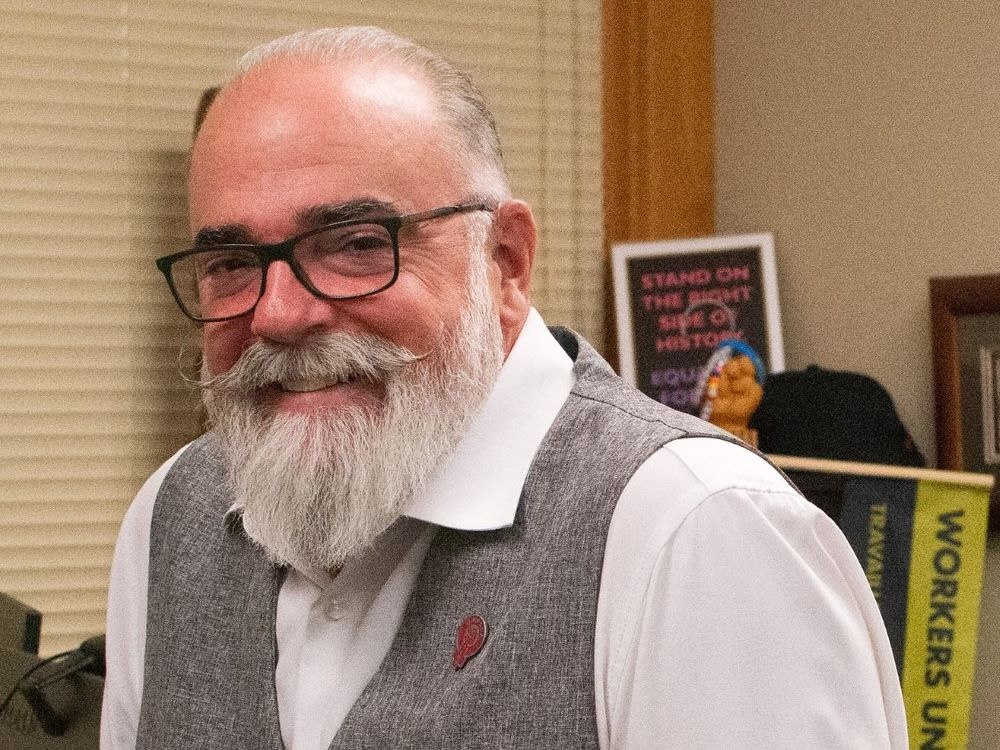
McGrane added Ashton’s top challenge has been overcoming a perception that he is inexperienced, having never held office.
“There are arguments around if leadership is an entry-level job,” McGrane said. “He has an interesting message and he's authentic and he's refreshing. Some people will question if he has the experience to do the top job.”
Jeram said that while Ashton has more of an appeal to blue-collar, working-class Canadians, he might struggle to appeal to progressive urban voters.
“It's sort of the inverse problem of Heather McPherson,” Jeram said. “They have different bona fides and probably have a stronger appeal to certain factions in the party.”
The NDP’s appeal in Quebec
A map of political contributions created by political analyst and 338Canada contributor Kyle Hutton suggests many of the candidates have struggled to fundraise from voters in Quebec.
Less than eight per cent of all Quebec respondents to the Pollara poll said they knew any of the candidates. The province has nearly a quarter of all the seats in the House of Commons and is home to only one of the six NDP MPs.
While the 2011 election proved the NDP can make inroads in that province, the “orange wave” under the leadership of Jack Layton is now a distant memory.
In that election, Quebec voters elected NDP MPs to 59 federal seats under Layton, enabling the NDP to become the official Opposition with a total of 103 MPs, the most federal seats the party had ever won.
None of the current five candidates are fluent in French, and they struggled to communicate in the language at a bilingual leadership debate in Montreal last November.
But Jeram said it’s unclear if the party needs to win over those voters.
“If the goal is simply to revive the NDP to a place of respectability, then maybe Quebec isn't so important,” Jeram said. “If they want to win the government, they must win Quebec.”
Rebuilding the party
The next New Democrat leader will have to rally support after the party lost 17 of its 25 seats in the 2025 federal election.
During that election, climate and social issues took a back seat to affordability and the looming threat of U.S. President Donald Trump’s trade policies and repeated verbal threats to Canada’s sovereignty.
Meanwhile, some progressive voters strategically voted to keep Pierre Poilievre’s Conservative Party of Canada from winning.
The NDP came out of that election with about 6.3 per cent of the vote, and Singh, the party’s leader since 2017, resigned after failing to win his riding in Burnaby.
Recent polling suggests support for the NDP has remained about the same in the months since.
A March 5 Leger poll of 1,627 Canadians found only five per cent intended to vote NDP. Meanwhile, a poll of 1,000 Canadians from Nanos Research published March 10 found that 10 per cent of respondents supported the party.
But Jeram said the NDP might have an opportunity to build bridges with voters who are unhappy about the Liberals’ governing, especially a more centrist candidate like McPherson.
Since coming into power, Prime Minister Mark Carney has fast-tracked big infrastructure projects, rolled back climate policies and called for Stephen Harper-style budget cuts.
The prime minister has also dramatically ramped up spending on defence in an effort to meet NATO commitments of five per cent of the country’s total GDP, a pledge the NDP has spoken out against.
New Democratic Party membership has spiked in recent months.
In an email to The Tyee, NDP national director Lucy Watson said there are currently about 100,000 members — up from about 60,000 when the leadership race began.
“We are glad to see such excitement from progressive Canadians eager to be part of the conversation taking place about the future direction of the party," Watson said.
A similar spike happened nine years prior, when the party tripled its membership to 124,000 during the 2017 leadership race.
Jeram said if the Liberal party can stave off an election by winning a majority, the NDP’s new leader has plenty of time to start rebuilding.
“I think it's going to be a slow burn,” he said.
Last Tuesday, Nunavut MP Lori Idlout crossed the floor from the New Democrats to the Liberal Party of Canada. The move followed three other recent floor-crossings: former Conservative MPs Chris d’Entremont, Michael Ma and Matt Jeneroux have also joined the Liberals.
Idlout’s move put the federal Liberals at 170 seats in the House of Commons — two seats shy of a majority. Meanwhile, two Toronto ridings and one in Montreal will have byelections ending in April.
Jeram said the new leader will have to decide whether the NDP focuses on pushing new policy ideas through government and holding other parties to account, or tries to supplant the Liberals on the left side of the spectrum in an earnest attempt to win government, like during Layton’s 2011 campaign.
“There’s this divide between those who want the party to be a party of protest, to stick to its ideological guns, versus those who want to moderate the party,” Jeram said.
“It's a choice point within the NDP. Who are they going to be?”
He added it may be up to voters in the leadership election to determine which path the party takes.
The new NDP leader will also immediately have to start fundraising to prepare for the next federal election fight, McGrane added.
“The party is broke,” he said. “From what I can understand, a massive fundraising campaign will have to be put in place right away.”
McGrane said with only six MPs, the NDP will have to find ways to leverage the seats they have to work with the Liberal government, like how former leader Singh forged the supply and confidence agreement with the Liberals to deliver progressive policies.
“The main thing is to keep the NDP in the game and make sure that it maintains relevancy in Canadian politics,” he said. ![[Tyee]](/design-article.thetyee.ca/ui/img/yellowblob.png)
Read more: Federal Politics







Tyee Commenting Guidelines
Please note that email notifications for replies are not currently working due to a software issue which may be resolved in a future update.
Comments that violate guidelines risk being deleted, and violations may result in a temporary or permanent user ban. Maintain the spirit of good conversation to stay in the discussion and be patient with moderators. Comments are reviewed regularly but not in real time.
Do:
Do not: