



 SHARE:
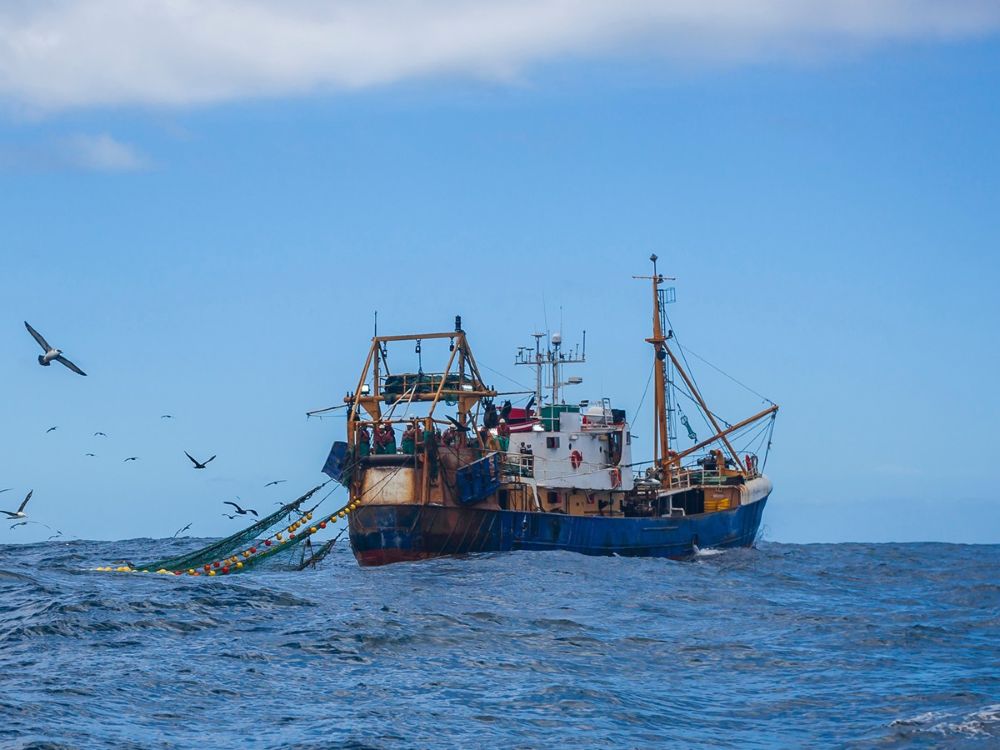
Bottom trawlers extract one-quarter of the world’s fisheries catches by weight and raise significant ecological, economic and social concerns. Given that, you’d think there would be an answer to basic questions in fisheries: how many fish species are being caught, and what are they?
In reality, though, bottom trawling is often proceeding blindly.
Bottom trawling is widespread and problematic. Gears operate by dragging large weighted nets across the ocean floor (some as wide as a 45-storey building is tall), sweeping up most of the life they encounter along the way and destroying habitat.
Hundreds of thousands of bottom trawlers operate all over the world, often dependent on subsidies, implicated in human rights violations and exacerbating climate change.
We lead a conservation team called Project Seahorse, dedicated to ensuring there are more fish in the ocean in healthier ecosystems. We focus our work on securing healthy populations of seahorses — and to save seahorses, we have to save the seas.
By far the biggest threat to seahorses is their incidental capture in bottom trawls. As such, seahorses provide an index of the tremendous intensity of bottom trawling.
It was while developing a briefing on bottom trawl impacts that we realized no one knew the actual tally or diversity of fish getting caught up in nets. So we set out to provide an answer and in so doing unveiled more about the pressure bottom trawling is placing on marine species, ecosystems and fisheries worldwide.
Endangered species
Our research was anchored in tedious work as our co-authors took a deep dive into studies and reports hosted on the Food and Agriculture Organization of the United Nations document repository, supplemented by an ad hoc exploration of additional literature.
The FAO is an intergovernmental organization that, among other things, collates worldwide fisheries data. We extracted more than 9,000 reports of fish species in bottom trawl catches, spanning from 1895 to 2021.
The first of our worrying findings is that a huge number of species are affected. We documented around 3,000 different fish species in bottom trawl catches but our modelled estimates suggest the true number could be double that.
Our data also showed that bottom trawls extract all or most species in some fish families. These include both the ocean’s most nutritious and commercially critical fish, such as jacks and croakers, and rare, distinct fish such as giant guitarfish and plough-nosed chimera.
Our second discovery is that many of the species we documented are already known to be of conservation concern. Among those on the International Union for Conservation of Nature’s Red List, about one in seven are classified as threatened or near-threatened with extinction. Bottom trawling was also cited in threat assessments for two-thirds of those species.
Insufficient data
Our third finding was that there is limited information on the conservation status for many of the fish caught in bottom trawls. About one-quarter of the species we recorded were listed as “data deficient” or “not evaluated” by the International Union for Conservation of Nature, meaning their conservation status is essentially unknown.
People tend to focus on the threatened species, which certainly need our attention, seahorses among them. However, we also need to be concerned about the species in trawls that lack conservation assessments, which may also be faring badly.
Finally, we found that many species are not even being recorded. Our database includes relatively few records of smaller demersal species (animals that live near the bottom of the sea), with fisheries often just lumping them together as “various” or “trash fish.”
As many fish are so often overlooked or ignored in catch records, we often don’t actually know what bottom trawlers are catching. When species are not recorded, we lose critical information about biodiversity, population status and ecosystem impacts, not to mention the loss of resources that people depend on for food and livelihoods.
Bottom trawl fisheries should be required to demonstrate that they are ecologically, economically and socially sustainable before being considered acceptable. As it stands, the burden of proof falls on those trying to demonstrate harm — not on the industry causing it. This needs to be reversed, paying full attention to all the fish in the nets.
![[Tyee]](/design-article.thetyee.ca/ui/img/yellowblob.png)
Read more: Environment





Tyee Commenting Guidelines
Please note that email notifications for replies are not currently working due to a software issue which may be resolved in a future update.
Comments that violate guidelines risk being deleted, and violations may result in a temporary or permanent user ban. Maintain the spirit of good conversation to stay in the discussion and be patient with moderators. Comments are reviewed regularly but not in real time.
Do:
Do not: