


 SHARE:
If you know, you know.
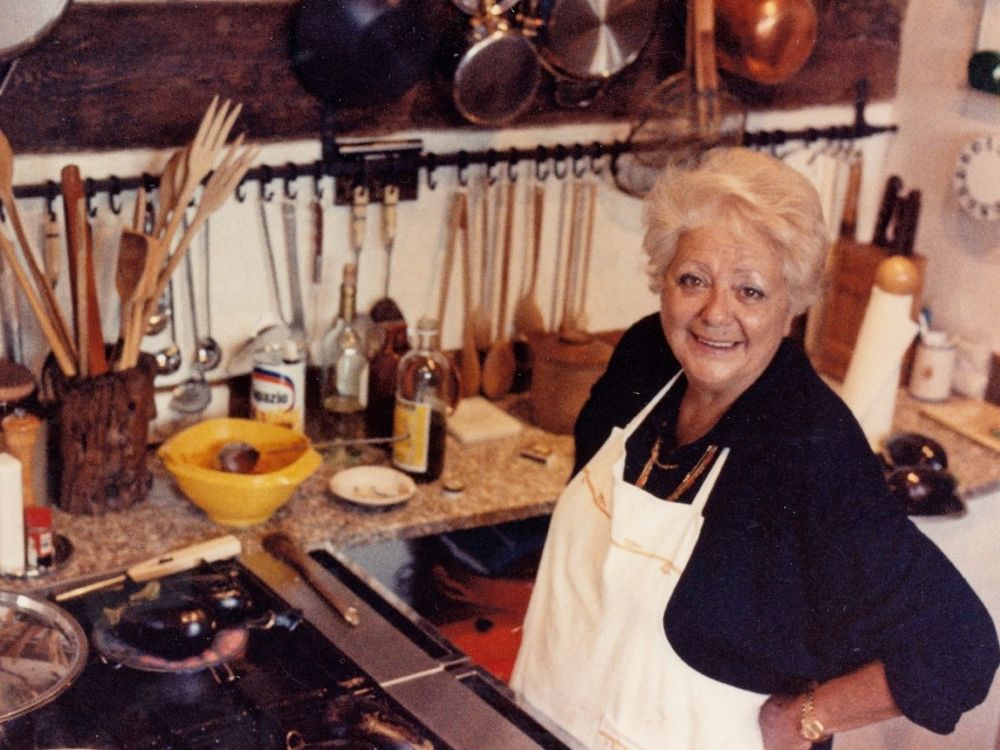
The only tomato sauce recipe you’ll ever need is Marcella Hazan’s tomato sauce with onion and butter. Straightforward, perfect, wonderful. The same descriptors can be used for the woman herself.
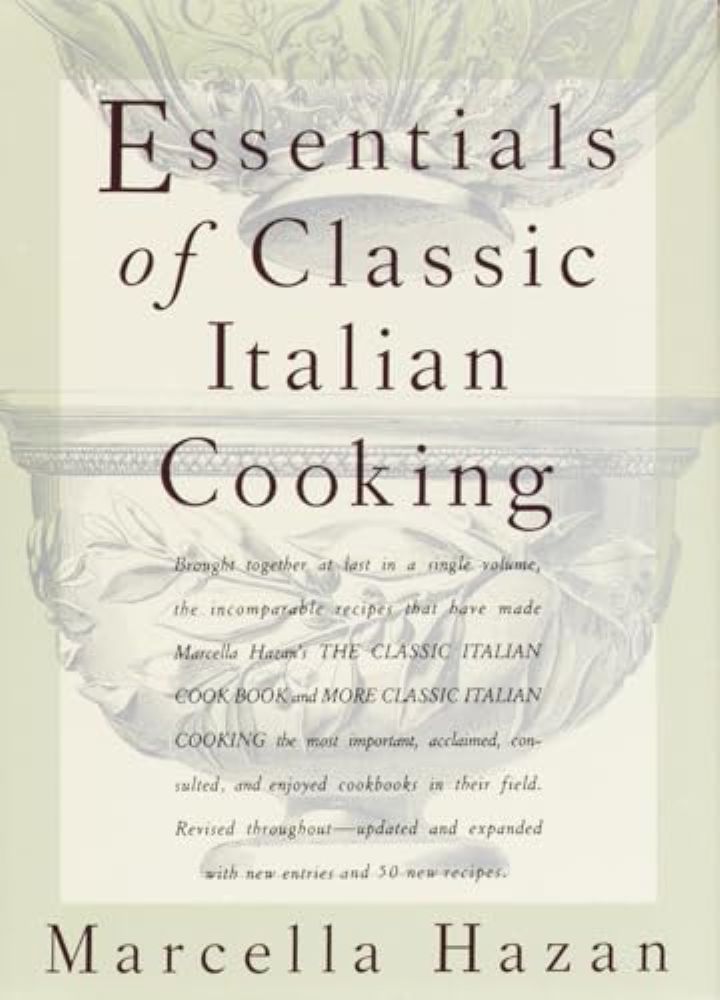
By way of introduction to her methodology and approach, Hazan describes her bestselling 1992 cookbook Essentials of Classic Italian Cooking as a “kitchen handbook, the basic manual for cooks of every level, from beginners to highly accomplished ones, who want an accessible and comprehensive guide to the products, the techniques and the dishes that constitute timeless Italian cooking.”
And that’s exactly what you get. I received my copy of Essentials as a wedding anniversary gift, and it has never left my kitchen. Battered, stained and dog-eared, it remains a treasured component of my home life.
Peter Miller’s documentary, simply titled Marcella, doesn’t do anything fancy with the standard biopic format. It’s a straight shot that takes us from Hazan’s childhood into her early married life, then a near-vertical volley to global fame. Along the way, there are many tasty details to savour.
A great many of these are centred around Hazan’s recipes, that glorious tomato sauce, as well the equally remarkable roast chicken with lemons, which is pretty much exactly as it sounds — both a poem and a recipe. Hazan’s ability to create culinary masterpieces with the simplest ingredients borders on magic, but it was her background in research and teaching that allowed her to analyze recipes, breaking them down into their essential components.
As a little girl growing up in the small seaside town of Cesenatico, Italy, Hazan had the quintessential Italian childhood until an accident changed the course of her life. A badly broken arm that never healed correctly left her with limited mobility. Although she remained self-conscious about it into her adult life, the experience also forged a will that saw her through a number of significant challenges.
After earning two degrees in natural sciences and biology, Hazan started her professional life teaching science. Here is where culinary fate stepped in, when Marcella met her future husband Victor Hazan. Their marriage proved instrumental in both life and work.
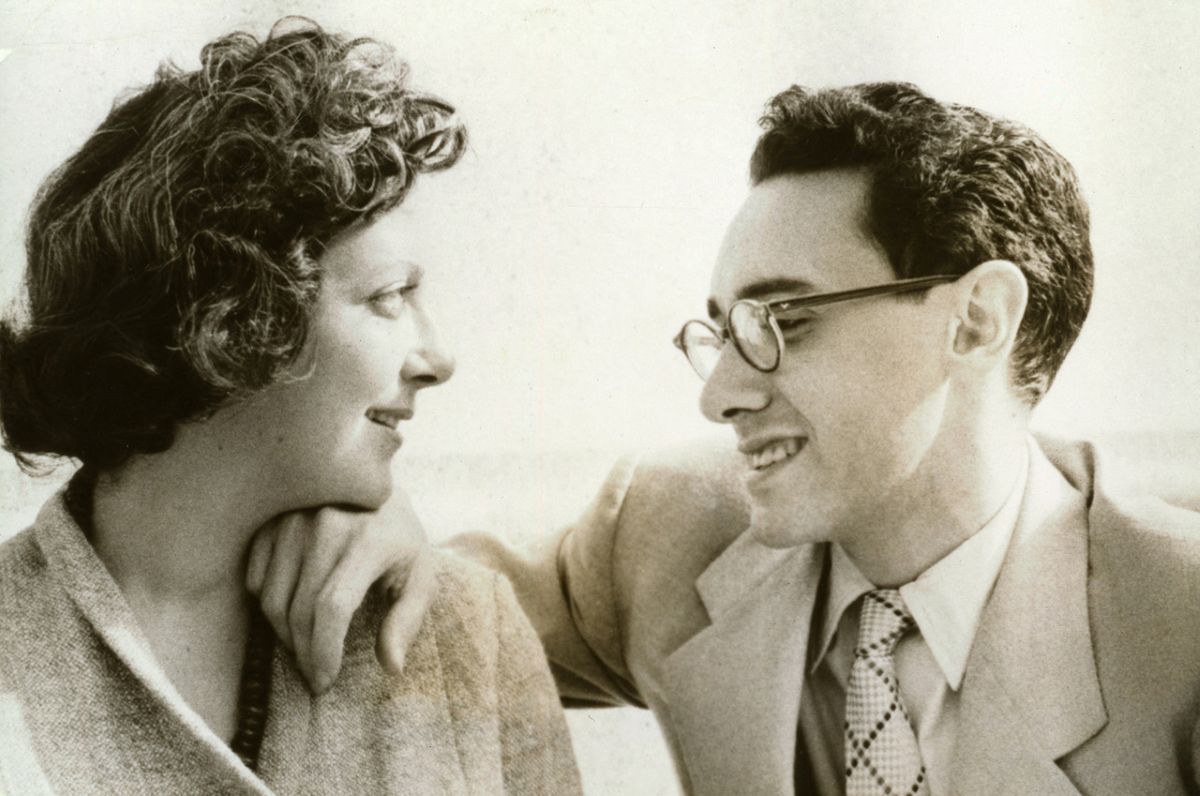
Born in Italy, but largely raised in New York, Victor had returned to his mother country as a young man. He explains in the film that his return was because he missed the language and, most importantly, the food.
When the couple first met through a setup from a friend, Marcella wasn’t much interested, thinking Victor was little more than a teenager (he was 24 at the time).
Nevertheless, he persisted. Despite their cultural and religious differences (she was Catholic and he a Sephardic Jew) they married and moved to Forest Hills, Queens, a borough of New York City.
In a new country, alone and unable to speak English while living with the expectations to take on the roles and responsibilities of a wife, Hazan turned to cooking. As she recalled in her book Marcella Cucina, “There I was, having to feed a young, hard-working husband who could deal cheerfully with most of life’s ups and downs, but not with an indifferent meal. In Italy, I would not have wasted time thinking about it. My mother cooked, my father cooked, both my grandmothers cooked, even the farm girls who came in to clean could cook. In the kitchen of my New York apartment there was no one.”
As she honed her skills, testing out recipes first on her husband and then expanding to offer cooking classes in her home to American women eager to learn new methods, the generations upon generations of Italian cooks in Hazan’s family surfaced in her kitchen. “Cooking came to me as though it had been there all along, waiting to be expressed,” she says in the film. “It came as words come to a child when it is time for her to speak.”
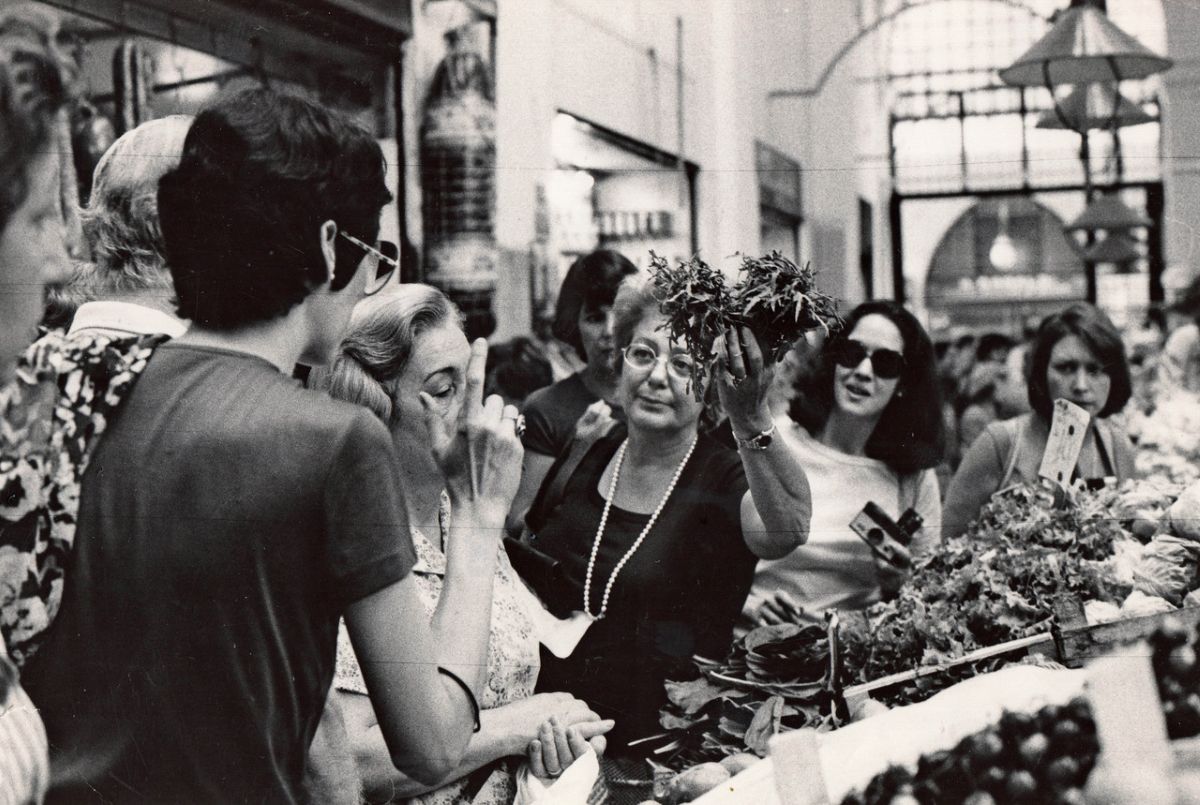
One of the first cooks to champion Italian cooking, Hazan introduced generations of would-be foodies to virgin olive oil, sundried tomatoes and balsamic vinegar, ingredients that were often hard to source at the time, even in a major centre like New York City.
Although Hazan opened up the wonders of Italian cuisine to an American public that may not have known Chef Boyardee was named for the Italian-American chef Ettore Boiardi, hers was not an entirely easy path to culinary superstardom. Her approach, gleaned from her research and academic background, allowed her to clarify different aspects of cooking, but luck also played a large role.
Just as she was about to give up on teaching cooking, a phone call from then-New York Times food editor Craig Claiborne changed everything. Claiborne had caught wind of Hazan from a section in the paper that listed notable cooking courses, so he called to ask if he could come and meet her at noon. She surprised him by saying, “No, that’s when we’re having lunch.”
Undaunted, Claiborne invited himself to dine with the Hazans in their tiny apartment. A magnificent feast resulted in a glowing feature in the Times, and Hazan never lacked for students for her cooking school.
Hazan’s first cookbook was written in collaboration with her husband, who translated from Italian into English, measured ingredients and codified techniques so that the recipes were easy to follow and consistent.
Even as the recipes themselves were disarmingly simple, the language and stories included in Hazan’s books were redolent with history and culture, rich in poetry.
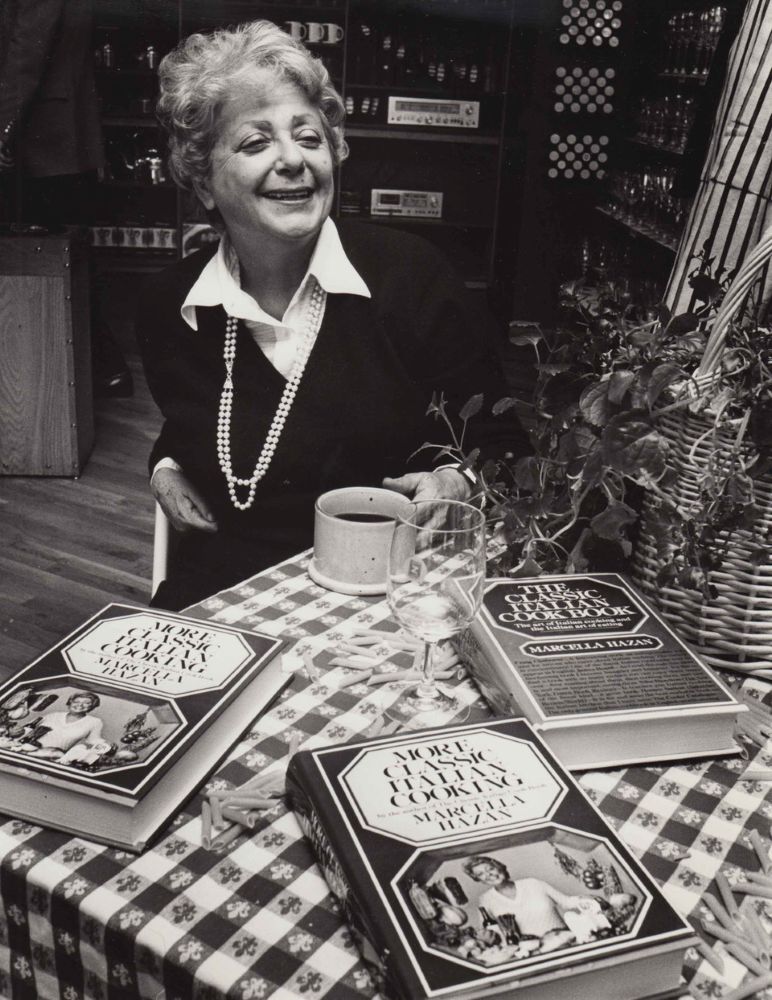
Another bit of extraordinary luck came through none other than Julia Child, who introduced Hazan to her editor Judith Jones at Knopf. The result of this meeting was two of Hazan’s bestselling cookbooks The Classic Italian Cookbook, published in 1973, and More Classic Italian Cooking (1980). These two titles were amalgamated into one omnibus title Essentials of Classic Italian Cooking in 1992. Awards, accolades and media appearances soon cemented her place in American culinary world.
If not exactly a household name like Child with her television show, Hazan was embraced by people who came to know her principally through her books. Clear, concise and no-nonsense, they resonate with her distinctive voice (gravelled by a lifetime of chain smoking and Jack Daniels whiskey).
One of the most charming aspects of the documentary is watching famous chefs like April Bloomfield and Shola Olunloyo make some of Hazan’s most famous recipes and then burst into tears. As her son Giuliano, also a chef, says, “I hear her voice in my head when I am making her recipes.” Then he, too, promptly bursts into tears. Such is the Marcella effect.
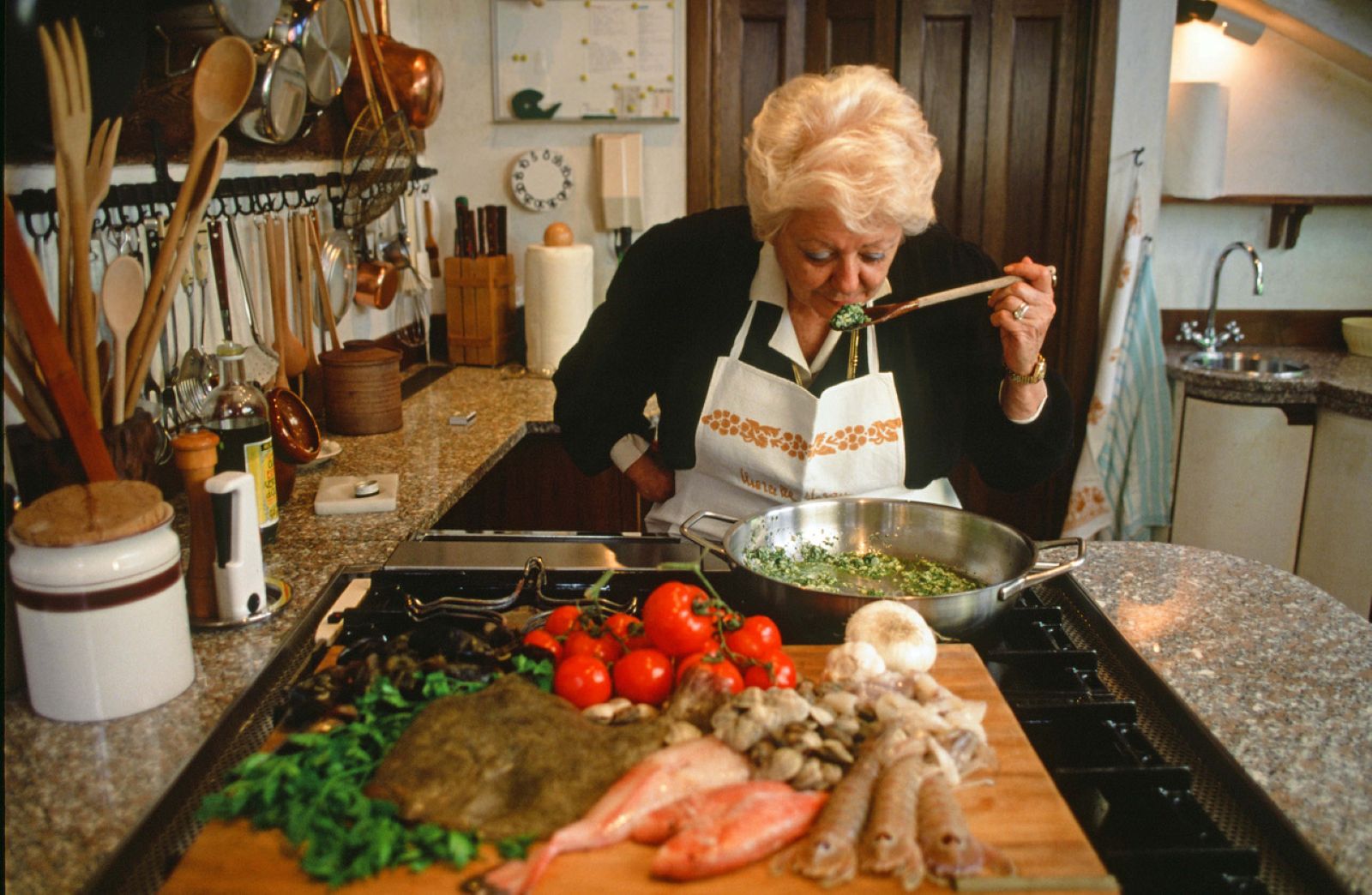
After securing a measure of security and money in the U.S., the couple bought a pensione in Venice, where Marcella offered week-long cooking intensives that attracted a global clientele. The city’s Rialto Market was a key part of Hazan’s approach. She and her students visited daily to buy fresh, local ingredients.
These scenes alone are swoon-worthy to anyone with an interest in food, as the camera glides over vegetables heaped high, shining silver fish and pastries galore. Eating close to home was an aspect of Italian cooking that harkened back to her childhood, of fish caught and cooked right on the dock, and long midday meals that united family and friends around the table.
After moving from Venice to Longboat Key, Florida (of all places!), the Hazans slowed down. After dedicating his life to supporting his wife’s career, Victor found his own measure of fame as expert in wine — robust Italian reds to be specific. Marcella died on Sept. 29, 2013, from complications of emphysema.
The bare facts of the film, like Hazan’s recipes, are straightforward, but the magic takes place when food, memory and connection transform the basic ingredients into something numinous. It’s little wonder about the number of tears that are shed throughout the film. The fundamental connection between food and love bypasses the intellect and hits one straight in the gut.
Like her famous tomato sauce, Hazan was blessed with the innate instinct for letting things do exactly what the needed to do.
Simplicity, technique and good ingredients were key, but even more important was timing, of knowing when to take things out and when to let them be.
Her legacy lives on in her ability to pass along this knowledge to generations of cooks, both professional and amateur, who continue to love her like a mother. I am one of them.
‘Marcella’ is screening at the VIFF Centre in Vancouver from May 9 to 17. The film will be available on video-on-demand services starting May 9. ![[Tyee]](/design-article.thetyee.ca/ui/img/yellowblob.png)








Tyee Commenting Guidelines
Comments that violate guidelines risk being deleted, and violations may result in a temporary or permanent user ban. Maintain the spirit of good conversation to stay in the discussion and be patient with moderators. Comments are reviewed regularly but not in real time.
Do:
Do not: