


 SHARE:
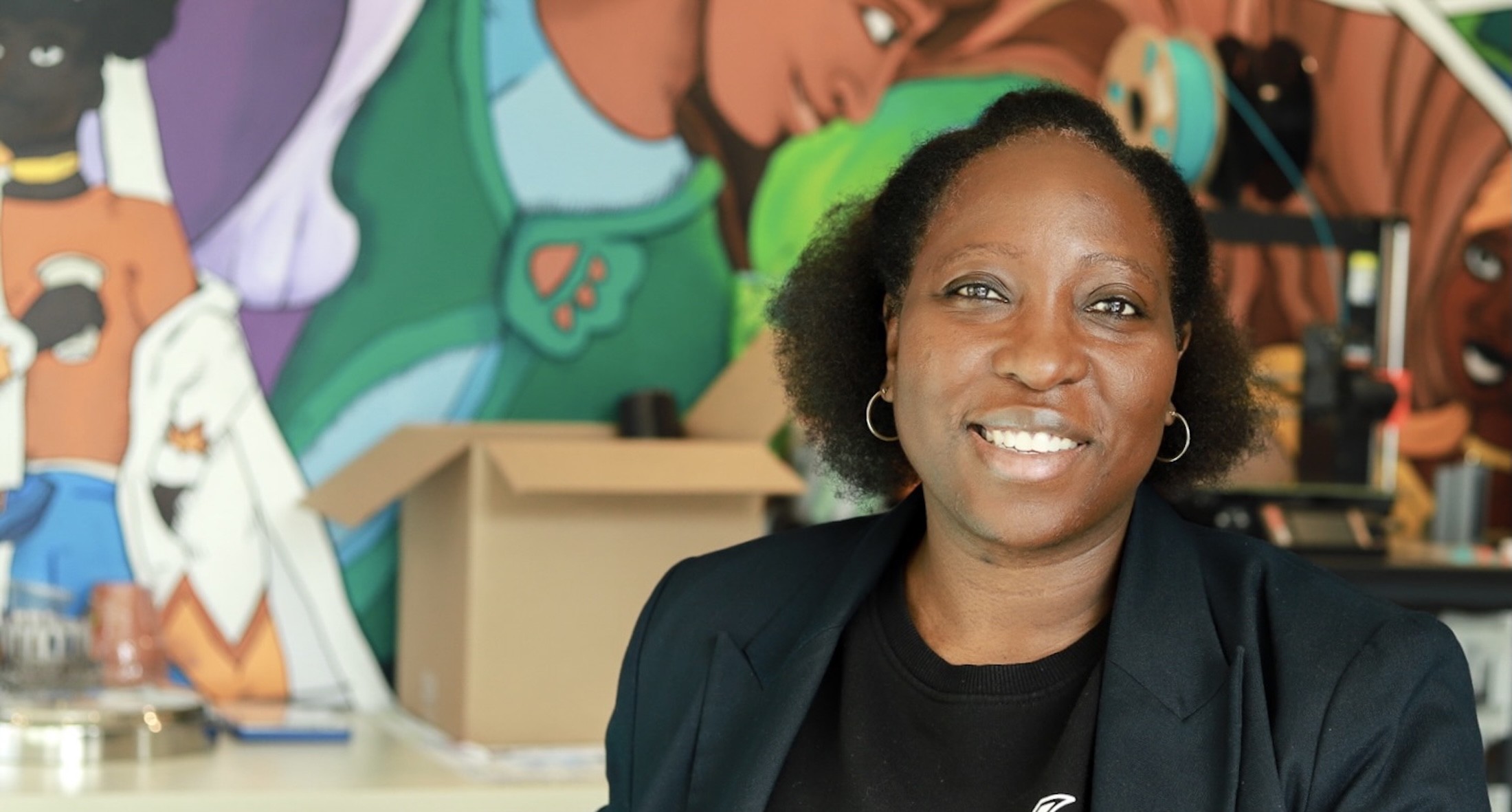
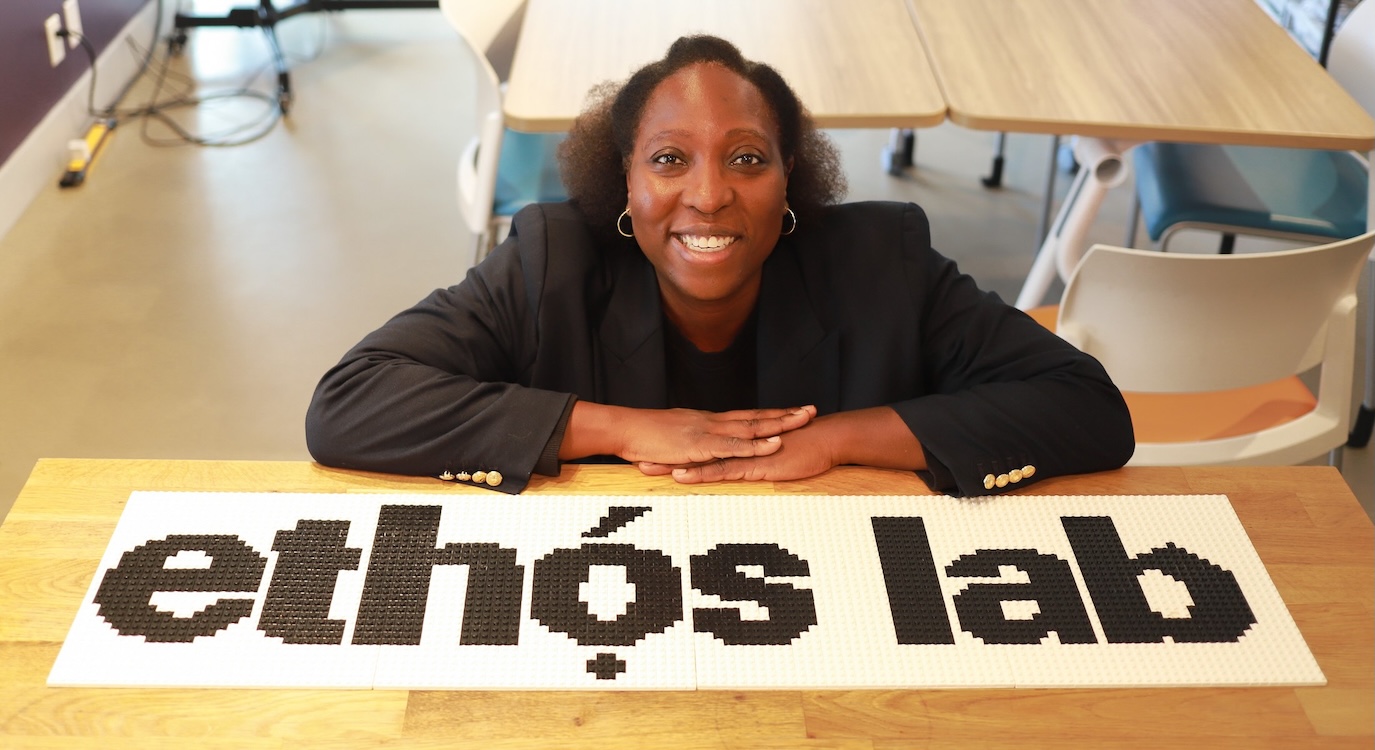
Anthonia Ogundele founded Ethọ́s Lab in the spring of 2020 in response to what she saw as an emergency.
Not the pandemic. A different emergency. The world was changing rapidly, even before COVID-19, and the fields at the forefront of shaping the future — science, technology, engineering, arts, mathematics, collectively known as STEAM — had a massive demographic problem. Black folks were markedly under-represented.
They still are, in large part because Black and racialized youth face significant hurdles when it comes to exploring a career in STEAM. Lack of access. Lack of role models. Lack of safe spaces to learn. Ogundele saw this firsthand as she and her husband struggled to find an after-school STEAM program in Vancouver for her daughter.
So she decided to build it herself. Ogundele quit her job at Vancity Credit Union and started Ethọ́s Lab, a Black-centred, Black-led innovation hub, open to everyone but devoted to empowering racialized youth, and increasing Black representation in STEAM.
Then the other emergency got in the way.
“Ethọ́s Lab started on February 28, 2020,” Ogundele said. “We did a launch at TELUS gardens with 100 of our closest friends — an aspirational launch, like, hey, we're starting this thing. Join us? We were running a camp for March Break.
“Then the world shut down two weeks after.”
The lockdown was ill-timed, but it showed Ogundele the scope of the problem.
“You very quickly saw that kids were sitting in parking lots, accessing the internet on their phones, and they didn't have access to laptops,” she said. “Or Mom and Dad's work computer was the house computer, or the kid had been mucking around online, and the parents took away the laptop, and then there’s no connection.”
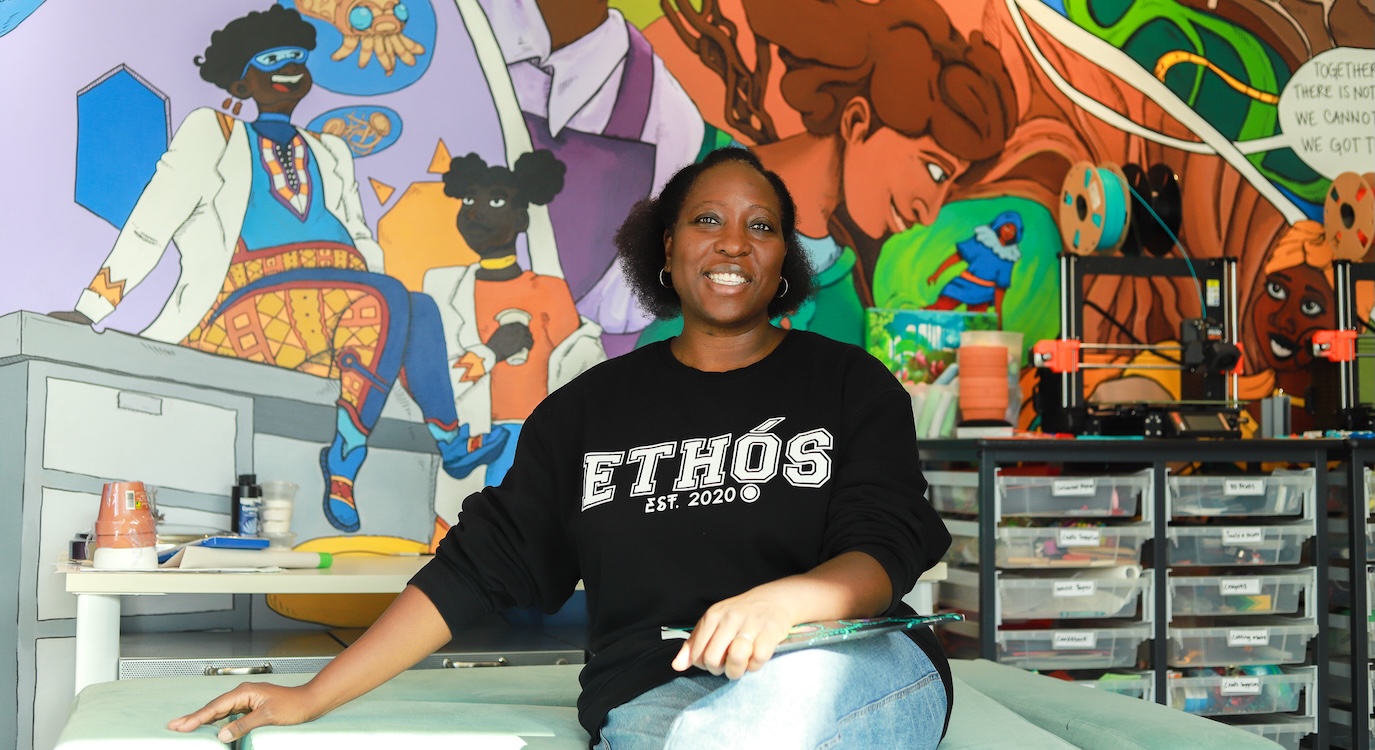
“It became very clear that there was inequitable access to technology, and these types of spaces and conversations, what we were doing,” she said. “What Ethọ́s Lab endeavours to do is to be able to create access to networks, resources, and tools that kids may not necessarily have consistent access to. Gaming computers. 3D printers. You get the opportunity to go to Microsoft or EA for field trips. Things that they may not have at their schools or at home. And then they're able to leverage it with mentors and community at our location.”
Ethọ́s Lab opened its physical space two years later, on the ground floor of an artist-focused Mount Pleasant housing complex. It continues to evolve. Currently, the space is undergoing renovation, with a launch planned for Black Futures month next February. As well, they’re entering into a new partnership with UBC Geering Up Engineering Outreach and the Hogan’s Alley Society. Another slate of fall programming is launching soon, and Ogundele is encouraging families to sign up.
But Ethọ́s Lab is about more than just access to cutting-edge tech or Hogwarts meets Wakanda, as one profile put it. It provides access to the broader Black community, and social support in a space that the majority of Black workers — less than 10 per cent of the STEAM labour force — have confessed can feel remarkably isolating. Ogundele has created a community hub that just happens to have 3D printers.
It also serves children from all backgrounds, all walks of life. From the west side to East Van, are all welcome.
“So we get to hang out with each other, and the context is excellence. Learning and growing, not stereotypes. You can just be yourself. That’s what I love about it. At Ethọ́s Lab, youth are being themselves.”
This interview has been edited for context and clarity.
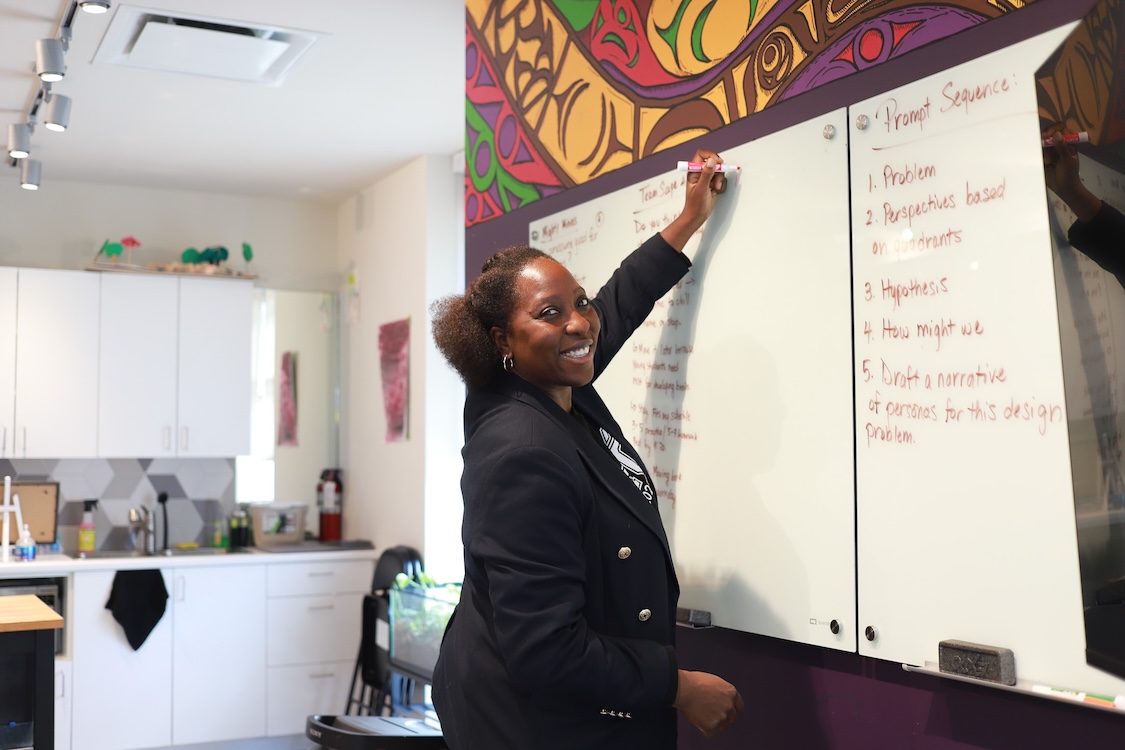
The Tyee: What is Ethọ́s Lab?
Anthonia Ogundele: Ethọ́s Lab is a place where young people are able to access interdisciplinary STEAM programming after school and on the weekends. Our approach integrates culture and it’s grounded in community. That’s the simple way of saying it. But it’s so much more when you experience it. Being a Black-led organization necessitates the acknowledgement of intersectional identities in the delivery of our programming, which creates a more inclusive space. And it just feels different.
How so? What is the importance of it being a Black-led organization and how is that different from being an organization that’s, say, only for Black folks?
Taking the humanity of the Black experience into consideration really guides our design at Ethọ́s Lab. We want to create a space where Black youth in particular are respected, reflected, connected and protected. And that creates a more inclusive space for all.
By designing for those that are marginalized, those that may not necessarily be represented, you are creating a space that everybody can feel welcome in. That’s the value of being a Black-led and Black-centred organization.
People ask if Ethọ́s Lab is just for Black youth. Of course not. Neither is Black History, or Black culture, or Black stories. They’re a part of the Canadian story. And our humanity remains the same. We all want to be respected, reflected, protected and connected, in whatever space we’re in, and I think that’s what connects us.
Certainly, a Black-led STEAM lab sounds more welcoming to someone like me than, say, other similar STEAM-oriented spaces, where Black and racialized individuals tend to be under-represented. In many cases, that’s because we’re discouraged to pursue careers within STEAM, or at the very least, it’s not encouraged. I’m sure that's a big motivator for you. What told you that a place like Ethọ́s Lab was necessary?
My background is in emergency management. I've been an emergency manager for 18 years, and I've applied some skills around taking a risk-based approach to this. Seeing what was happening with VR, and seeing what was happening with AI early on, I knew that things were going to move very, very quickly, and that the Black community, in particular, needed to find themselves more in this space. It became an emergency. I responded to it as such.
I’m also a mom. And I saw my Black daughter, the only Black girl — the only girl, sometimes — in these STEAM environments. And it didn’t have to be that way. I think that there is a real value in centring community and culture, in feeling safe to be your authentic self in those spaces.
I read a research study that talked about how to enhance STEAM efficacy in Black communities. And while a lot of people value Black mentorship, or seeing Black people in leadership roles, a strong and supportive community was articulated as the most important.
I know you didn’t necessarily say the phrase ‘safe space,’ but I heard it. People have a real problem with the idea of a safe space sometimes. Meanwhile, you very consciously created one here. What is the value, to you, of a safe space?
It’s interesting, because we can get into a whole conversation around safe spaces versus, like, courageous spaces.
Yes, let’s. What’s a courageous space?
That’s a phrase that I use quite a bit. Sometimes just being yourself is an act of courage. You’re going to make mistakes, and that takes a lot. What we’re seeing with the anxiety and challenges that young people face is that they don’t want to fail. They know fail means bad.
But in STEAM, failing is a big part of the learning process, and the growing process. So we want to encourage that, and give young people the space to be courageous.
What do they do with that space? Heck, what do they do in that space?
They’re not only picking up, you know, future-ready skills — learning how to use the Unity game engine, building worlds in VR, learning about biomechanics, going to hospitals, discovering different careers. Those are very real experiences that they can take away from this.
But what we’ve heard from the young people is that they’re making friends, that they’re building community, they’re learning how to talk to other folks and be a team. That’s been really beautiful.
How do you measure success at Ethọ́s Lab?
We’re a five-year-old organization. Last year was our largest cohort of graduates, the ones that started during the pandemic with us, now going off to post-secondary. The real measure of success, which is a long game, is that we start to see representation in STEAM, both in continuing education and, hopefully, pathways throughout their career. That’s the intention.
But we also see the value of them being able to make a conscious decision as to whether or not they want to go into STEAM.
Because now it’s an informed decision. Rather than counting yourself out from certain pathways from an early age — you know, in Grade 9, when you just say ‘I'm not good at math,’ or ‘I’m bad at physics,’ those types of things, or your peers say, ‘Oh, you should focus on sports,’ when you’re like, ‘But I really like science,’ and feeling embarrassed — our measure of success is being able to say: ‘I’ve done all of these different things, and I’m choosing to go this direction.’
Ethọ́s Lab is a very rare thing, you know? One question that I have, especially living in a place like Vancouver, where creating or curating Black spaces can be difficult, is: what made you think you could do this?
Prior to the pandemic, when I was still thinking about what this could be, my daughter and I went to LaunchPad in Toronto for a tour. We walked around, like, ‘Whoa, this is so cool.’ It was a co-working creator space, and Ethọ́s Lab was inspired by creative co-working spaces like LaunchPad and HXOUSE, which was created by The Weeknd in Toronto.
So we’re on this tour with, like, seven other people, and the seven other people were the principal of a private school, and architects, and designers. They were building a 10,000-square-foot innovation space. And I knew then: kids in public schools will not have this. Like, how can my daughter keep up?
Creating Ethọ́s Lab ensures that kids are able to access these tools. And I felt an urgency, given my daughter, who, by the way, if she was in Toronto and wanted to access LaunchPad, she wasn’t allowed to. A lot of maker spaces, you have to be 19 and older, or you have to be accompanied by an adult. Public maker spaces are not often accessible to youth.
That’s certainly what comes to mind of when I think of a STEAM lab. You get in because of who your parents are, or how wealthy your family is. Basically, I’m picturing a country club. But Ethọ́s Lab is not that at all.
You get into Club Ethọ́s by how curious, creative and community-oriented you are. We’ve started a robotics club. We do Blackathon, the Black History hackathon. We have a digital media program, gaming club, an AI experimentation program. We have an exhibit created by youth in the Museum of Anthropology. They’re getting, like, formal STEAM programming. I’m very focused on emerging technologies and ensuring that kids get the best. Being able to access learning, resources, knowledge… inequality is what I’m trying to address.
Raj Chetty is someone who really inspires me: the creation of social spaces, of social connection, in support of social mobility. The kids that go to more resourced high schools, they have a 90 per cent university rate, and now they have friends that are lawyers that can hook them up, real estate agents that can hook them up, they’ve got their family doctor starting from Grade 8 or 9. They have a lot of social capital.
Ethọ́s Lab endeavours to create a mixed-income space for those levels of social connection.
Plus you get to hang out with other racialized kids and form social and cultural connections too. Because it’s not just about knowing a guy. It’s about knowing a place you can go where you’re more than just someone’s Black friend, or the only Black person around. And knowing that spaces like that can be possible, even if you have to make them yourself.
It happens a lot. Even back in Toronto. With the number of Black people that are there, I was still the only Black person in the room sometimes. When I was working in government, in the public sector, I walked in and everybody thought I was the admin assistant, because there’s a class structure.
If you look at all my elementary and high school photos, I’m the only Black kid in my grade sometimes, despite the plethora of Black folks in Toronto. It’s still very much an issue, and the reason why we open up Ethọ́s Lab to all kids is so that Black youth can learn how to thrive in a space that is diverse.
We take a ‘not-the-only-one’ approach; at no time will a Black kid be the only Black person in the room. There will always be another Black person in the room.
Do you know someone in your community who is using their creativity as a force for good? Nominate them for a Creative Forces profile in The Tyee that celebrates people across the region making a positive, tangible impact on those around them. Fill out a nomination form online. ![[Tyee]](/design-article.thetyee.ca/ui/img/yellowblob.png)
Read more: Rights + Justice, Media










Notice about commenting changes
The Tyee’s commenting system will be moving to a new platform on Nov. 12. If you’re already a Tyee commenter you must register with the new system on or after Nov. 12 with your preferred username.More information can be found here.