


 SHARE:
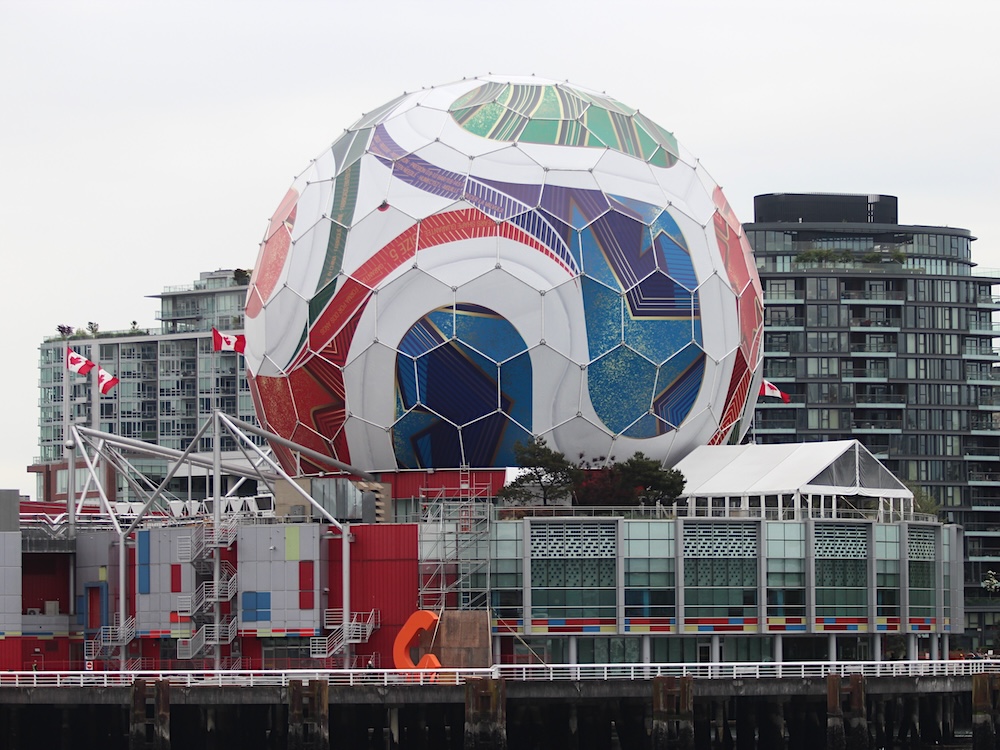
While soccer fans held their breath to see if Spain or Argentina would win the World Cup earlier this summer, a Vancouver organization that supports women experiencing abuse published a report detailing hundreds of incidents of intimate partner violence during FIFA World Cup 2026, and explaining why a proactive response is crucial.
The report also highlights that in British Columbia, governments didn’t adequately plan to respond to an expected increase in intimate partner violence.
“We did the preparation, and we tried to engage the government to do that as well. It was disappointing,” said Angela Marie MacDougall, executive director of Battered Women’s Support Services, or BWSS.
The City of Vancouver, which hosted seven World Cup games, supported BWSS in its public awareness efforts, granting the organization just under $10,000. But MacDougall said the city’s human rights plan for the sporting event wasn’t specific enough when it came to acknowledging that an increase in intimate partner violence — a specific form of gendered violence — can be expected during events like the World cup.
BWSS tracked a 37 per cent increase in first-time calls from women who needed help dealing with intimate partner violence during the World Cup period, compared with the same period in 2025. The organization received a total of 734 new calls during the June-July World Cup tournament, compared with 535 in June and July 2025.
“Temporary expansion of crisis-line capacity, extended operating hours, intimate partner violence dynamics, coercive control messaging, high-risk assessment, safety planning and formal referral pathways were not identifiable as components of tournament preparedness,” the report from Battered Women’s Support Services says.
“The result was an implementation gap between the evidence describing foreseeable intimate partner violence risk and the operational responses focused on during the tournament.”
The report emphasizes the need for specialized intervention to address rising rates of intimate partner violence during major sporting events and details how previous studies have shown a link between events like the World Cup and an increase in abuse women experience within relationships.
A 2014 study conducted in the United Kingdom tracked police reports during several World Cup tournaments and found that reports of intimate partner violence increased during the World Cup. While the study did not state that soccer causes domestic abuse, the authors concluded that televised World Cup games “could be associated with a foreseeable increase in domestic abuse.” The report called for a proactive response from police, officials and service organizations when major sporting events are coming up.
Because of that research, MacDougall said, BWSS expected there would be an increased risk of intimate partner violence during the 2026 World Cup, which was held in cities across Canada, the United States and Mexico throughout June and July.
The report notes that some of the increase in calls for help could be because BWSS had been running a public awareness campaign about intimate partner violence and the various forms abuse can take, including psychological abuse and “coercive control.” Coercive control is “a pattern of abusive behaviours used to control or dominate a family member or intimate partner.”
From the calls BWSS received during that period, MacDougall said staff also learned about what women were dealing with, “the horrific kinds of abuse and violence, and that in many cases their children are witnessing.”
BWSS extended its crisis-line services throughout the tournament to 24 hours a day and seven days a week. It originally sought funding to increase availability of its crisis-line services from the province, but its proposal was rejected. BWSS was ultimately able to fund its surge response through private donations, MacDougall said.
BWSS also partnered with Good Night Out Vancouver, a non-profit that offers workshops on sexual violence prevention and a street team to support women and vulnerable people in downtown Vancouver between midnight and 3:30 a.m. on Fridays and Saturdays.
“We gave [Good Night Out] safety cards, which were information about our services and how to access us, so that they could hand those out while they’re on the ground,” MacDougall told the Tyee.
“We made sure that all three of our teams had the cards, and we were giving them out to people along with stickers and information,” Stacey Forrester, director of education with Good Night Out Vancouver, told The Tyee. Forrester said the organization supported approximately 2,500 people over the six weeks of the FIFA tournament.
“We were really clear that we wanted to ensure that there were services based on the evidence that’s already been established,” MacDougall said.
MacDougall said BWSS has advocated for awareness of the link between sporting events and intimate partner violence in the past, including the Super Bowl and the Grey Cup.
But she has concerns about the province’s and city’s response to the increased threat of intimate partner violence during the World Cup.
“The research is really clear that we’re talking about intimate partner violence,” she said. Intimate partner violence, or IPV, falls under the umbrella of gender-based violence. “We were highlighting the need for specialized intimate partner violence response because that’s what the research talks about.”
The term “intimate partner violence” is used once throughout the Vancouver Host City Human Rights Action Plan, referring to the FIFA World Cup 2026 Vancouver Host Committee funding support for the Battered Women’s Support Services to increase awareness of IPV. The May 25, 2026, press release announcing the final version of the city’s Host City Human Rights Action Plan, however, used the term “domestic gender-based violence.”
“In the news release, the term domestic was used to distinguish gender-based violence occurring within the local host community (Vancouver) in the context of an international event taking place in cities across North America,” said Lindsay Kreeft, a spokesperson for the City of Vancouver.
MacDougall and her colleagues presented a proposal for a specialized intimate partner violence crisis-line surge response to the Ministry of Public Safety and Solicitor General and the Ministry of Tourism, Arts, Culture and Sport. But the province ultimately did not fund that proposal. MacDougall told The Tyee that “it seemed like the prevailing view was that IPV was not going to be a factor.”
In a statement sent by email, the Ministry of Public Safety and Solicitor General told The Tyee that “intimate partner violence is a serious issue, and the province understands the importance of raising awareness and ensuring resources are available to those who need them.”
When MacDougall reflects on BWSS’s work during FIFA World Cup 2026, one thing becomes clear: many people don’t understand what it means to have specialized services for survivors of intimate partner violence.
“What we learned through this journey is that people don’t understand the difference between an information referral crisis line and a specialized IPV response,” MacDougall said. “The provincial government doesn’t understand what it is, the City of Vancouver doesn’t understand what it is, and I’m not even sure the Vancouver Police Department understands what it is.” ![[Tyee]](/design-article.thetyee.ca/ui/img/yellowblob.png)
Read more: Rights + Justice, Gender + Sexuality, Sports









Tyee Commenting Guidelines
Please note that email notifications for replies are not currently working due to a software issue which may be resolved in a future update.
Comments that violate guidelines risk being deleted, and violations may result in a temporary or permanent user ban. Maintain the spirit of good conversation to stay in the discussion and be patient with moderators. Comments are reviewed regularly but not in real time.
Do:
Do not: