


 SHARE:
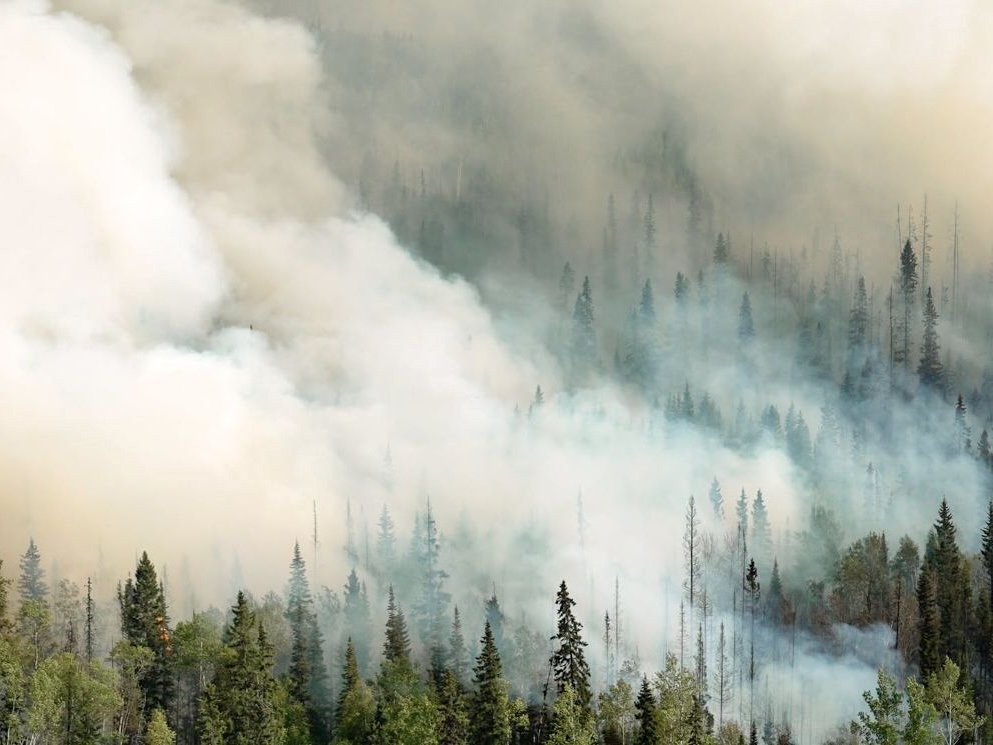
It’s not just the forests that burn. A recent scientific article reports that Canada’s 2023 wildfires released a total of 554 million tonnes of carbon, with “76 per cent originating from soil and peat combustion, and 24 per cent from live biomass burning.”
It seems late to be learning that forest fires are really soil and peat fires. But it adds to the sense that we have no prospect of reducing the frequency and size of wildfires. We and our children can expect to breathe smoke at least part of every year, for the foreseeable future.
Our own carbon emissions have helped to trigger those wildfires, and our emissions will only increase.
Canada under Mark Carney is supporting “nation-building” pipelines in aid of becoming an “energy superpower.” The world is clamouring for the fossil fuels trapped behind the Strait of Hormuz by the U.S. war against Iran.
Climate mitigation efforts against carbon dioxide emissions have been overwhelmed yet again by wildfires, especially here in Canada. In 2024, Canadian wildfire emissions amounted to 2.4 billion tonnes of CO2 equivalent (including methane), compared with human-caused emissions of 685 million tonnes. According to the International Fire and Safety Journal, in 2025, wildfire carbon emissions reached 263 megatonnes, with B.C. wildfires contributing a little under five megatonnes.
So far, according to the Copernicus climate monitoring website, 2026 wildfire emissions in Canada are below those of 2023.
This is cold comfort to the scores of millions of Canadians and Americans currently enduring smoke amid sweltering temperatures, not to mention the communities losing their homes to wildfires.
Reducing the health impact of wildfire smoke
We can’t do much to prevent losing more communities to wildfires, and we certainly can’t reduce the scale of fires in the boreal forest. But we can minimize the health impacts of wildfire smoke, which should help us deal with the economic impact of wildfires and other climate disasters.
First, we need to minimize the damage of PM2.5 and other particles in wildfire smoke. That would involve more airtight homes, workspaces and schools, plus air purifiers in every room and office. In new construction, air purification should be built right into the heating, ventilation and air-conditioning systems.
Second, we need to start using N95 masks whenever air quality drops from whatever cause — smoke, smog or dust. Such masks became very political early in the COVID-19 pandemic, but even those who oppose them will find they can breathe easier with a mask than without it.
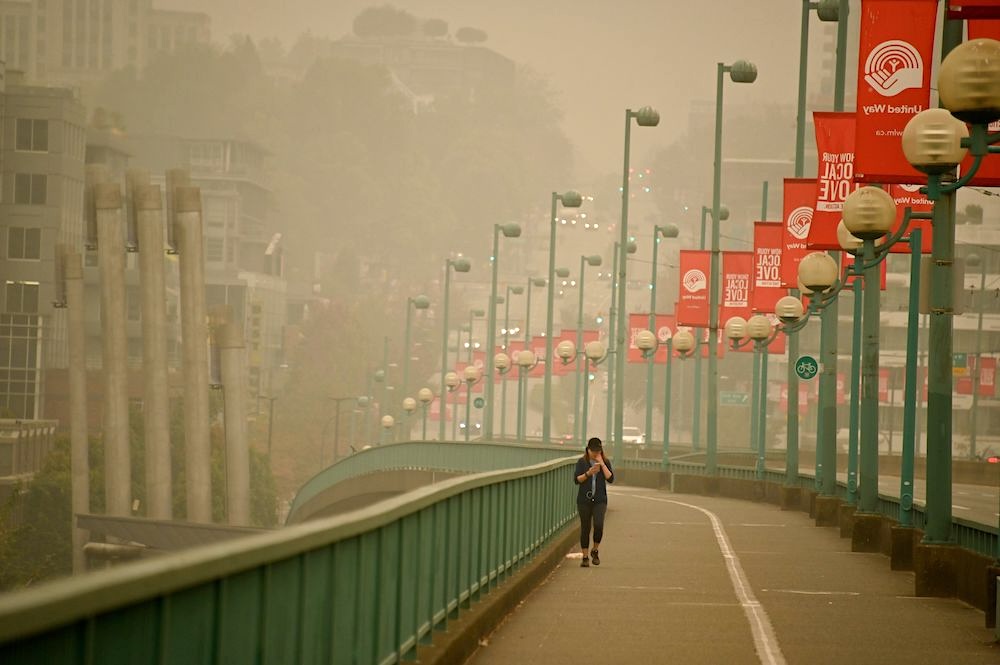
Third, we need to recognize that wildfires and heat waves can threaten electricity grids by damaging transmission lines. Households and businesses will be competing for electricity with growing numbers of data centres, which will also need unbroken supplies of electricity and water.
The remedy here would be installing enough solar power in homes and workplaces to provide them with sufficient energy to keep basic services going during power outages. That would be doubly true of data centres, which should install backup wind and solar power to keep operating when the grid can’t provide enough energy to meet the demand. Data centres lacking such reserves would be obliged to shut down during times of high demand.
Part of our energy demand should be to run air purifiers in every home, classroom and workspace, even when smoke is not in the air. We have PM2.5 particles from other sources, notably vehicles, coming from tailpipe exhaust as well as dust and wear on brakes and tires.
Clean air will always be necessary
A 2020 report in the International Journal of Environmental Research and Public Health found that regardless of the source, PM2.5 particles are associated with higher risks of heart disease, strokes, chronic obstructive pulmonary disease and premature mortality. So clean air will always be needed. Functioning, well-maintained purifiers should be required for every business licence and building permit.
We will also have to prepare for long-term health consequences of wildfires. A recent report on the Maui wildfires found that many survivors, three years later, are still dealing with problems like access to mental health services, depression, high blood pressure and respiratory issues.
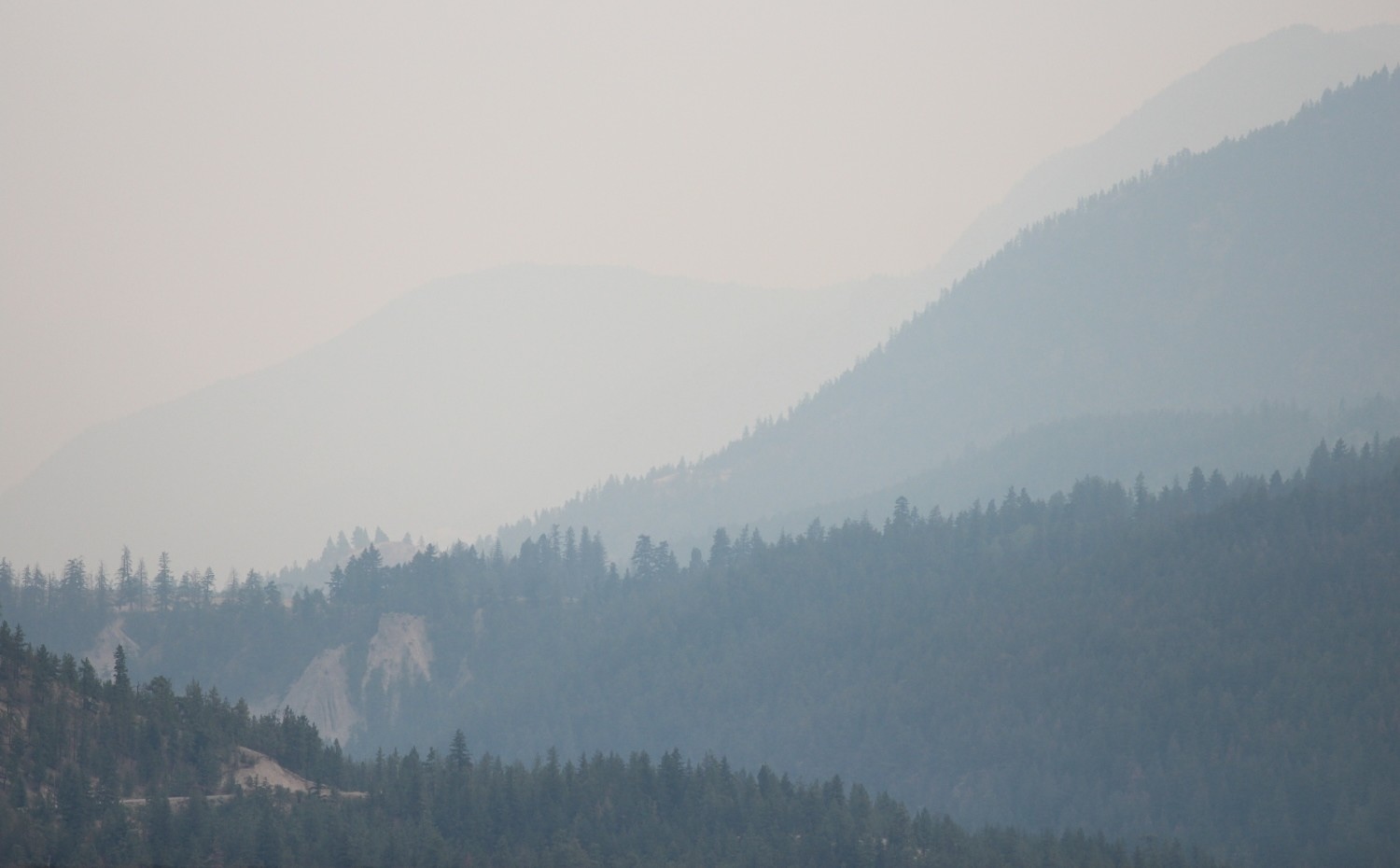
Another report, published late in 2025, found “greater vulnerability to the long-term effects of smoke for individuals under age 75, or with Black or other racial/ethnic identity, or living in a census tract with higher poverty,” among over one million people aged 60 or older living in Southern California. The report found that three-year exposure to wildfire smoke was associated with higher all-cause mortality for those groups than for the rest of the population.
These measures involve upfront costs and would make it more expensive to build and run homes, schools and workplaces. But not all may be that expensive: the United Kingdom is about to allow plug-in solar panels that hang on apartment balconies. A recent report in the Guardian newspaper said such panels would retail for about C$750, while cutting electricity costs up to C$200 a year.
Whether through rebates or tax credits, plug-in solar panels could be very affordable here in Canada.
With widespread adoption of do-it-yourself electricity production to energize air purifiers and air conditioning, we could also expect a drop in demand for health-care services, and less absenteeism among students and workers. According to a 2025 report in JAMA Network, high levels of smoke PM2.5 particles resulted in more hospitalizations of seniors for respiratory and cardiovascular problems.
Another JAMA Network report found that in Alberta and Ontario, wildfire PM2.5 “was significantly associated with a six per cent increase in emergency department visits for migraine and other primary headache syndromes.”
I would not be surprised if air purifiers and N95 masks also resulted in far fewer cases of routine respiratory illnesses such as colds and flu. Children and adults alike could remain healthy in flu season as well as in wildfire weather.
We have no chance of reducing the threat of wildfires in the foreseeable future. But we understand at least how to mitigate the effects of wildfire smoke on exposed Canadians.
Failing to take those measures will cost us far more. Not just in money, but in lives and health as well. ![[Tyee]](/design-article.thetyee.ca/ui/img/yellowblob.png)
Read more: Health, Environment







Tyee Commenting Guidelines
Please note that email notifications for replies are not currently working due to a software issue which may be resolved in a future update.
Comments that violate guidelines risk being deleted, and violations may result in a temporary or permanent user ban. Maintain the spirit of good conversation to stay in the discussion and be patient with moderators. Comments are reviewed regularly but not in real time.
Do:
Do not: