


 SHARE:
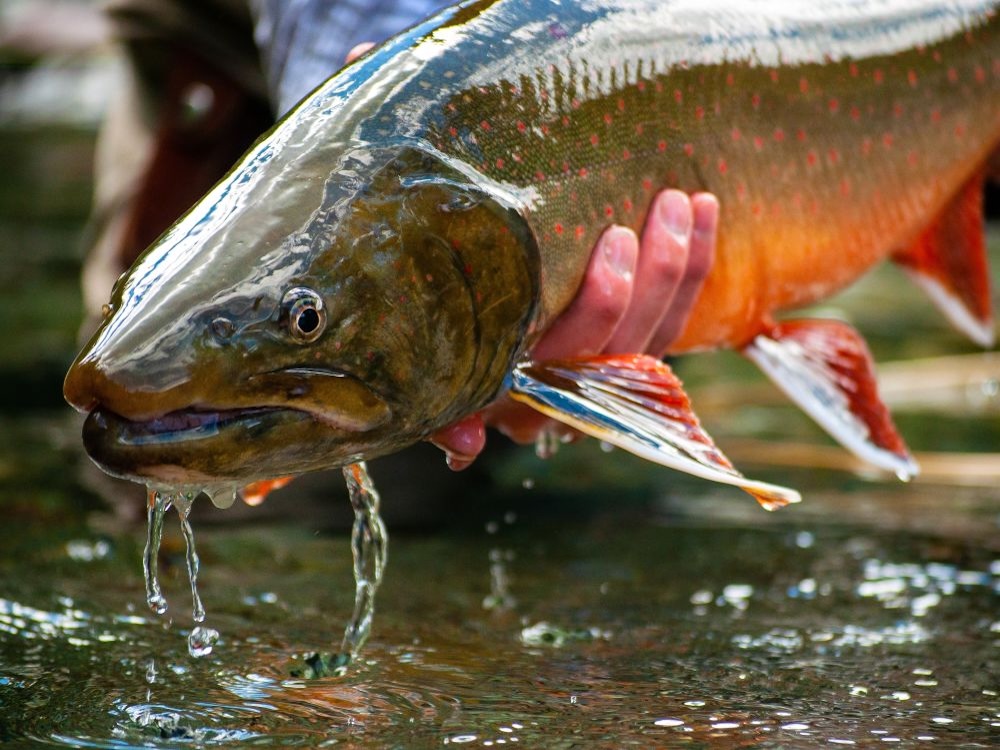
In a scenario that sounds like something in a Dr. Seuss book, bull trout and other fish are travelling past the Site C dam on the back of a Ford pickup truck as part of an elaborate plan to save fish in B.C.’s Peace River.
Their journey begins near the foot of the dam, where fish seeking to swim upstream can enter a flow channel to a holding pool at the dam’s $47.2-million fish passage facility.
From there, they are crowded into an elevator-like fish lock and lifted to a sorting area where they are sent in a chute to a tank and anesthetized.
The fish are then divided into “transport pods” before they are trucked up to 50 kilometres upstream in a tank and released into the Site C reservoir, which the B.C. government recently renamed Dreamer Lake.
Bull trout, a species at risk of extinction in B.C., are a primary focus of the “trap and haul” fish transport scheme because the $16-billion dam blocked their way to spawning grounds.
Whitney Deane, media relations and issues management spokesperson for BC Hydro, told The Tyee that the fish passage facility aims to maintain access to habitat and “preserve connectivity” for bull trout that historically migrated past the dam site.
She said the facility also supports commitments to First Nations, noting that fish are “an integral part of their cultural values and way of life.”
But two retired fish biologists question whether the facility can save the iconic fish, beloved by anglers, that is sometimes called an “aquatic grizzly bear” because it’s a top predator and needs healthy, wild ecosystems to survive.
Nick Baccante, the former regional section head of the B.C. government’s fish and wildlife branch, told The Tyee that the fish passage facility is “a waste of money,” while Alberta scientist Lorne Fitch compared labour-intensive efforts to move bull trout past the Site C dam to “putting lipstick on a corpse.”
The permanent facility — whose price tag more than quadrupled from an initial $10.6 million — was initially pegged to cost BC Hydro customers an estimated $1.5 million a year to operate, Deane confirmed. She said costs were about $1 million during the facility’s first full operating year and are expected to increase in the near term, before stabilizing.
Details about the fish transport scheme are in an unpublished technical memorandum to BC Hydro from WSP Canada, an engineering, science and infrastructure solutions company, that The Tyee reviewed.
‘Why are we doing this?’
According to the memorandum, 316 bull trout were transported past the dam last year, the first year the permanent fish passage facility was operating.
That’s slightly more than a quarter of the bull trout that migrated past the dam site prior to construction. (BC Hydro earlier reported an estimated 8,000 bull trout in the Site C dam region, while Deane said 15 per cent of the bull trout — about 1,200 — used to migrate past the dam site.)
But the fish passage facility was frequently out of commission last year, so about one out of every four bull trout transported past the dam were caught manually using a technique called electroshocking — sending an electrical current through the water to stun fish so they can be netted.
The memorandum shows that the facility was out of order on seven occasions, for a total of 55 days, during the seven months it was slated to be open last year — slightly more than one-quarter of the time. It was broken for the entire month of June and again for six days in August, with shorter outages in May and September.
Technical issues last year included a dislodged chain drive, broken wire winch cables, a failing stem nut and a corrupted computer system, according to the memorandum.
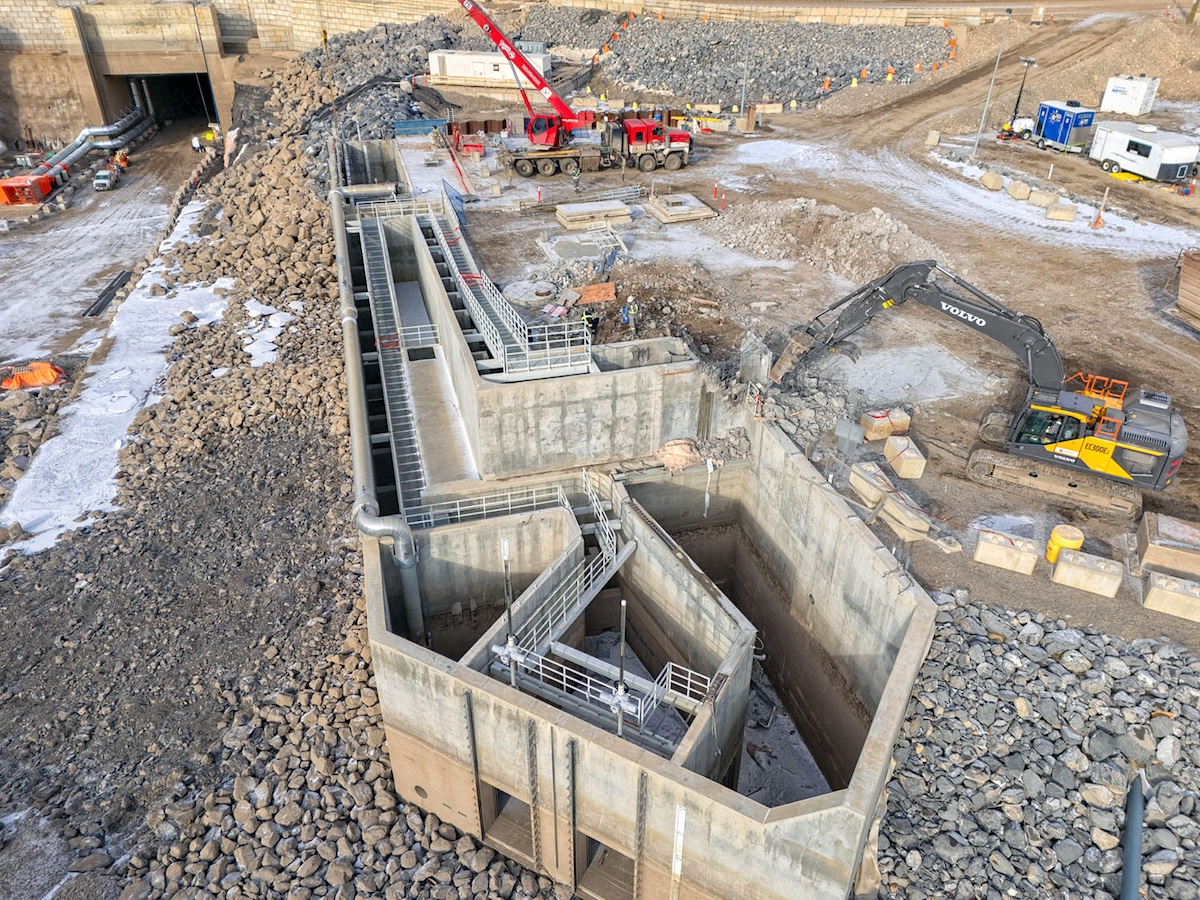
In addition to 86 bull trout, more than 350 rainbow trout, largescale suckers, longnose suckers and white suckers were also hand caught in nets when technical issues prevented the facility from operating.
The majority of the 12,600 fish that the facility processed last year — about 64 per cent of the catch — were mountain whitefish, a slim, trout-like fish that is found in abundance in the Peace River.
Baccante, who tracked bull trout movement patterns in the Halfway River, which flows into the Peace River upstream from the dam, said he told BC Hydro years ago that building a fish passage facility wasn’t worth the expense.
“I think it was more of a need to check the box for them, a kind of a feel-good thing to say, ‘Oh, we got fish passage built into this,’” he told The Tyee.
Baccante said he asked “Why are we doing this?” when BC Hydro requested him, as a senior fisheries biologist and regional section head of the government’s fish and wildlife branch, to comment on several different options for fish passage, including the “trap and haul” option that was eventually selected.
“I said we should look at the one option of no fish passage,” Baccante said.
He said he was troubled by what he saw as the lack of a management objective for the fish passage project, given that the dam would destroy river habitat for bull trout and other fish and replace it with reservoir habitat.
The dam, which was recently renamed the John Horgan Dam in honour of former B.C. premier John Horgan, flooded 128 kilometres of the Peace River and its tributaries in the fall of 2024, following almost 10 years of construction and huge cost overruns.
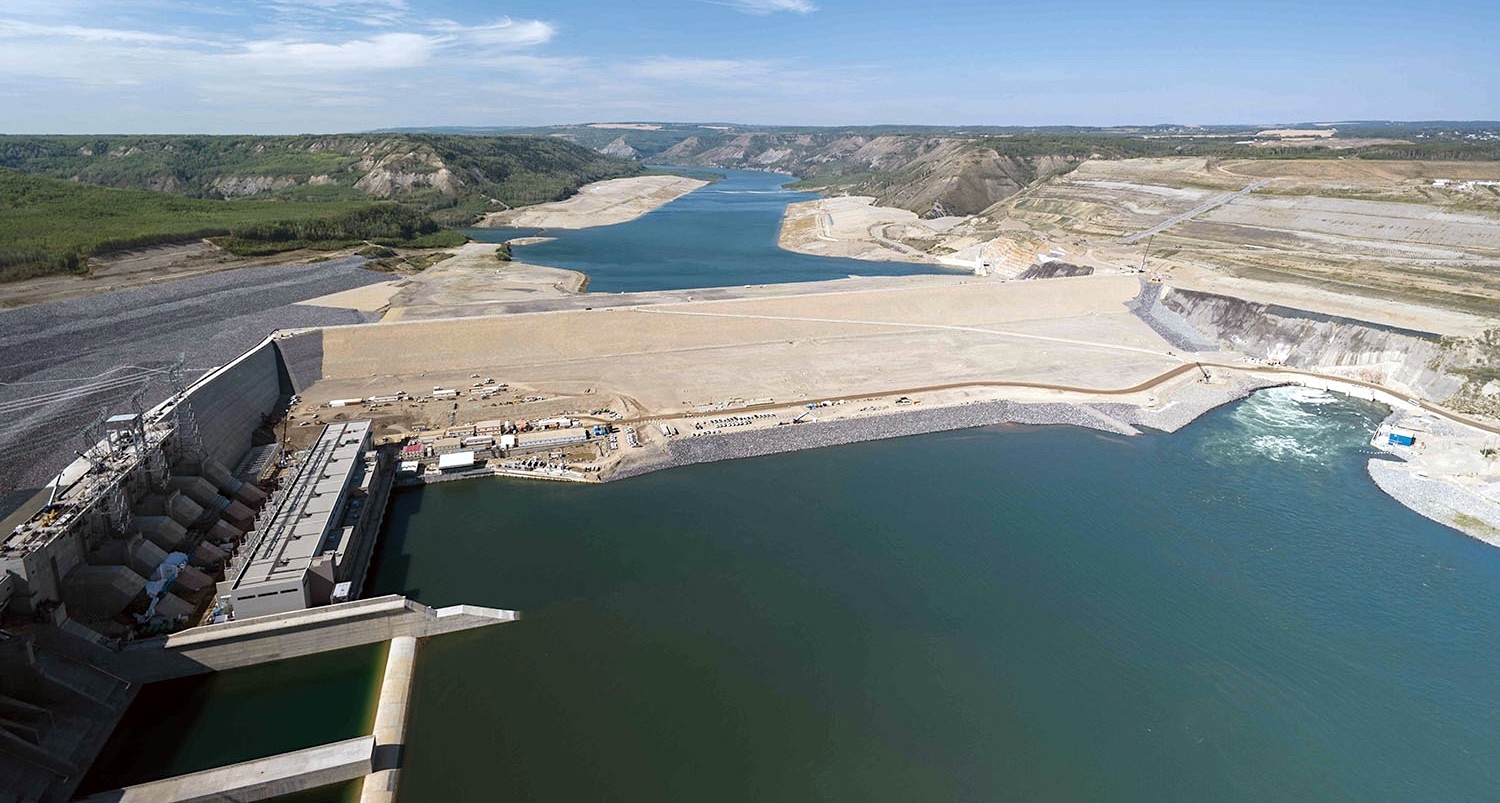
Electricity from the publicly funded dam will help power liquefied natural gas export projects and mines through the new North Coast Transmission Line that federal taxpayers will help fund with a recently announced $3.9-billion contribution.
BC Hydro earlier reported that the Site C dam would cause a net loss of fish habitat and a profound change in the type and character of the remaining habitat, during both construction and operation of the dam.
A joint review panel that examined the Site C dam for the federal and provincial governments concluded that “these effects would be probable, negative, large, irreversible and permanent so long as the Site C dam remains.” The panel also found that the habitat impacts “cannot be fully mitigated.”
Those impacts include methylmercury poisoning of bull trout and other fish, making them dangerous to eat on a regular basis. Methylmercury is formed naturally by certain bacteria as they decompose or feed on carbon in sediment or soil.
Hydro reservoirs, which flood vegetation and soil, produce an abundance of nutrients that feed the bacteria. Bull trout absorb high concentrations of mercury because they are long-lived and feed heavily on other fish.
Bull trout at significant risk of disappearing
Baccante said most Peace River bull trout, prior to the dam’s construction, overwintered at the confluence of the Halfway and Peace rivers — in what is now the Dreamer Lake reservoir — before swimming far up the Halfway River to spawn in its cool tributaries.
“There is absolutely zero need for me, in my mind, to get fish from below the dam and put them up above,” he said.
“What's going to happen to those fish? Are you contributing anything? You're just diminishing the population in the river.”
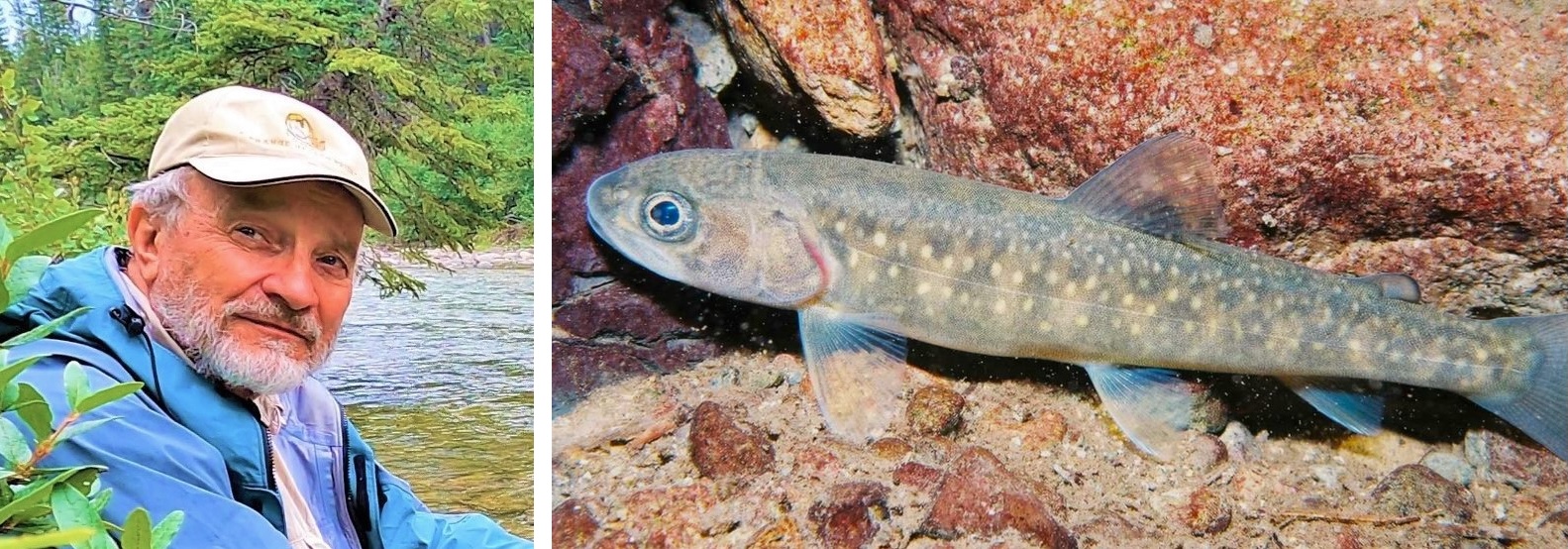
Deane said BC Hydro’s fish and aquatic habitat monitoring program includes assessing bull trout populations, movements and spawning activity in the Halfway River watershed.
She said tagged bull trout that were trucked past the dam in 2025 and released into the reservoir near the Halfway River were later detected in spawning grounds, but she did not provide further details.
Out of 2,740 fish that passed through the facility from April to July this year, Deane said, there were 219 bull trout, 31 Arctic graylings, 325 rainbow trout, 1,133 largescale suckers, 826 longnose suckers, 73 kokanees and 80 mountain whitefish.
Fitch, a former fish and wildlife biologist for the Alberta government and former adjunct professor at the University of Calgary, said the Peace River bull trout population is still at significant risk of disappearing, “even though there may be a few hundred trapped and moved.”
Bull trout in the Peace River migrate up to 280 kilometres downstream, as far as the Clear River in Alberta, in one of the longest bull trout migrations known.
Fitch said hydro dams truncated many bull trout populations in Alberta and, in some cases, rendered them locally extinct.
When the Oldman River dam flooded bull trout habitat in southern Alberta in 1992, Fitch said, biologists experimented with electrofishing to move bull trout past the dam.
“It was a dismal failure,” he said. “Those sorts of mitigation techniques are akin to putting lipstick on a corpse.”
Fitch said salmon seem to have a much larger drive to move upstream than bull trout, noting that designing an attraction flow at fishways to help bull trout find their way to the entrance is a challenge.
Bull trout spawn in very cold headwater tributaries and rear there until they are four or five years old, Fitch said. As they grow, they need more food, “and so they move downstream progressively, finding bigger and bigger prey items to eat.”
He said bull trout will travel through a dam’s turbines to swim downstream. Even with mitigation measures, they end up trapped and unable to move back upstream in most cases — “and that’s the end of those bull trout in terms of their ability to move back upstream to spawn and to help recreate the population.”
As BC Hydro considers building another dam on the Peace River, called Site E, it raises questions about the future of the fish passage facility.
Deane said “it’s too early to speculate” whether a Site E dam, downstream from the Site C dam, would require decommissioning of the existing fish passage facility, adding that the potential Site E project is in the earliest stages of assessment.
Fitch said another dam on the Peace River would be the “death knell” for bull trout.
The presence of wild fish like bull trout are an indicator of the health of a watershed, and when fish are abundant and well distributed, “it tells us that we have managed the watershed well,” Fitch said.
“When they start to wink out or when they disappear, that’s a report card that says we failed miserably.” ![[Tyee]](/design-article.thetyee.ca/ui/img/yellowblob.png)
Read more: Environment





Tyee Commenting Guidelines
Please note that email notifications for replies are not currently working due to a software issue which may be resolved in a future update.
Comments that violate guidelines risk being deleted, and violations may result in a temporary or permanent user ban. Maintain the spirit of good conversation to stay in the discussion and be patient with moderators. Comments are reviewed regularly but not in real time.
Do:
Do not: