


 SHARE:
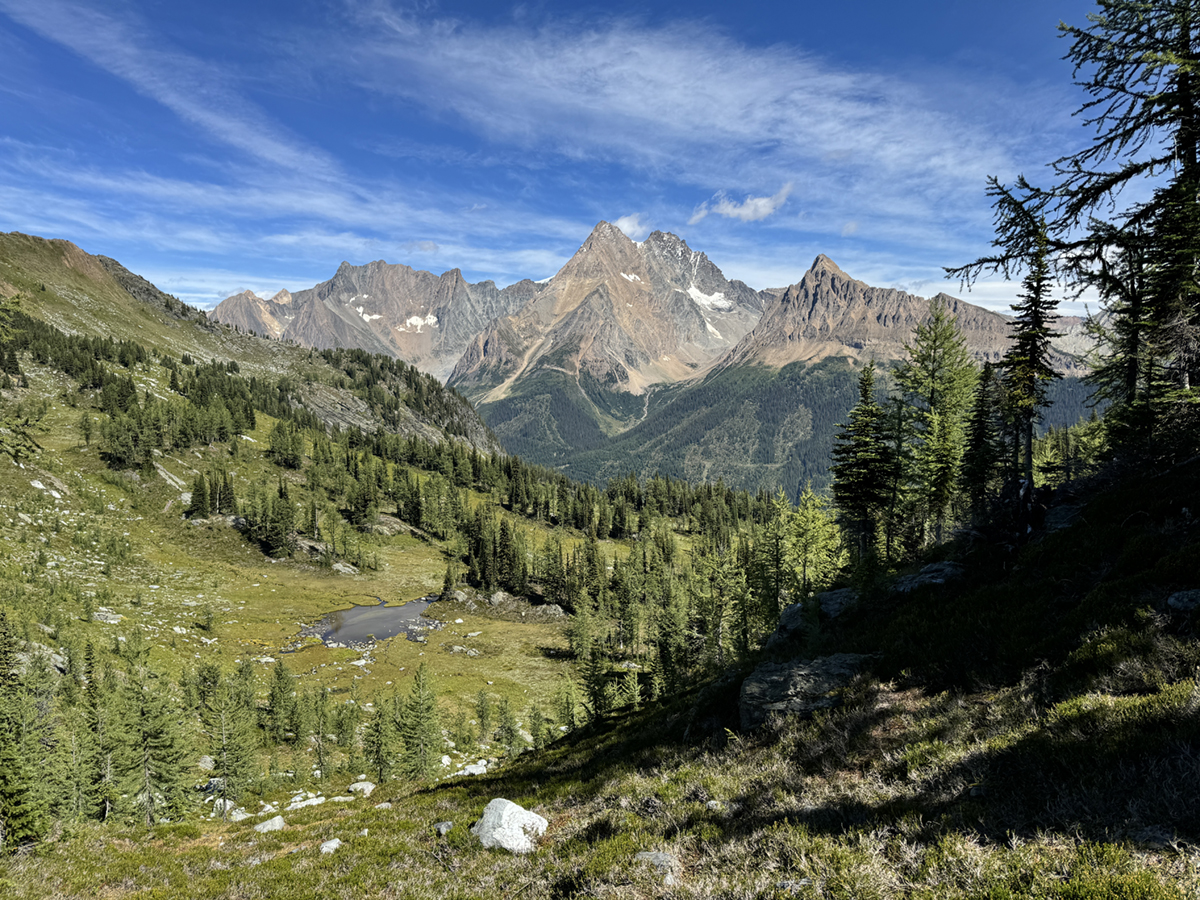
A grizzly bear haven, a long-contested watershed near Manning Park and a rare rainforest are the latest three areas proposed for Indigenous-led conservation in British Columbia.
The B.C. government announced this week that conservation planning is underway for the Jumbo watershed in southeast B.C., the Skagit River headwaters near the Canada-U.S. border and the old-growth Raush Valley in the inland temperate rainforest east of Prince George.
The three areas are culturally important for Indigenous Peoples and safeguard watersheds, ecosystems and wildlife, including many species at risk of extinction. Together, the proposed conservation areas total 1,270 square kilometres, an area 11 times the size of the City of Vancouver.
The announcement, made late afternoon Monday via a news release, could end decades of strife over resource extraction and other development and help B.C. and Canada meet commitments to protect nature amidst a deepening global biodiversity crisis that threatens economies and livelihoods.
“This is something that everybody who lives in B.C. and loves our outdoors can celebrate and appreciate,” Randene Neill, B.C.’s Minister of Water, Land and Resource Stewardship, told The Tyee.
Neill said while the three areas cover only 0.13 per cent of B.C.’s land base, they “punch above their weight in terms of the biodiversity and wildlife values.”
Kathryn Teneese, chair of Ktunaxa Nation Council, told The Tyee that the proposed conservation area in the Jumbo watershed, known as Qat’muk to the Ktunaxa, will safeguard an important ecosystem and an area of “huge cultural significance.”
“It has been a long time coming,” Teneese said, adding that the support of the B.C. government is “extremely important to us.”
The Qat’muk Declaration, which Teneese signed on behalf of the nation in 2010, outlines the spiritual significance of Qat’muk — a sacred place where the grizzly bear spirit was born, journeys to heal and returns to the spirit world — and expresses Ktunaxa sovereignty and stewardship principles.
The Ktunaxa declared Qat’muk an Indigenous Conserved and Protected Area in 2020, following a three-decades long struggle to safeguard the area from development, including a huge year-round ski resort planned for the Jumbo Valley in the heart of the Purcell Mountains.
Teneese said while Ktunaxa don’t want development in the conserved area, the intention is “not to close it off to anybody.”
“The most important thing is to let people know that they’re always welcome to come and experience the place.”
If approved, the Qat’muk conservation area would connect the Bugaboo and Purcell Mountain protected areas and help secure a vital international wildlife corridor for grizzly bears and other animals that roam widely in search of food, shelter and mates.
The conservation area, which is also of cultural significance for the Shuswap Band, would be 700 square kilometres, about six times the size of Vancouver.
Neill said a three-year pause on applications for new mineral tenures in the area was implemented on Monday while conservation planning is underway. She said the two forestry tenure holders in the Qat’muk area, Canfor and Cooper Creek Cedar, are voluntarily abstaining from harvesting in the proposed conservation area during the planning process and “have for quite a long time.”
The planning process is also intended to provide long-term security “to make sure that all of those people who enjoy existing recreation and outdoor activities in those areas will be able to continue to do that as well, regardless of the types of protections that we put in place,” Neill said.
An open engagement period for gathering feedback will begin in the fall, when more specific timelines will be announced, she added.
Neill said the announcement was made now because the provincial cabinet approved a mandate to work on creating new protected areas. “We wanted to share that good news with everybody,” she said.
The news follows last week’s announcement that major progress has been made in creating two new Indigenous-led protected areas in the province’s north — in the Klappan Sacred Headwaters in Tahltan territory and in Kaska First Nations territory — and expanding a third in the Meziadin River watershed, northwest of Prince Rupert.
Neill said the three most recently proposed conservation areas will help B.C. meet its commitment to protect 30 per cent of lands and waters by 2030 to maintain biodiversity.
The Skagit Headwaters
The proposed conservation area in the Skagit Headwaters would end years of friction over the future of an unprotected area near the Canada-U.S. border where mining giant Imperial Metals wanted to drill for copper and gold.
The planned conservation area, also known as the Skagit Doughnut Hole because it’s encircled by the Skagit Valley and Manning provincial parks, is about 58 square kilometres, roughly half the size of Vancouver.
It provides important habitat for threatened North Cascades grizzly bear populations and was home to endangered northern spotted owls before they became extinct in Canada’s wild.
In 2002, Imperial Metals relinquished rights to the area in exchange for $24 million raised by a coalition of groups opposed to mining in the headwaters of the Skagit River. The river is home to at-risk bull trout and the largest population of steelhead and chinook salmon in Puget Sound.
The proposed conservation area supplies water to downstream provincial parks, trans-boundary U.S. tribes and Seattle’s hydroelectric facilities.
The B.C. government said it has established a collaborative process with Sto:lo, Nlakapamux and Syilx Nations to work on the project, with support from the federal government.
Joe Foy, protected areas campaigner for the Wilderness Committee, told The Tyee that the announcement is “fantastic news” for ecology and human rights.
The Wilderness Committee has been working to secure protections for the Doughnut Hole since the early 2000s, when the group learned about impending clear-cutting in an area where endangered spotted owls nested.
“It’s been a long haul,” Foy said. “It’s a fascinating area, full of history, and it’s going to be hopefully really beneficial to the First Nations, their youth and Elders.”
Foy said the area is vital for wildlife to move back and forth across the Canada-U.S. border. Old-growth forests in the proposed protected area and surrounding areas could support spotted owl populations if the area is recolonized by owls moving north from Washington state, he said.
The Raush Valley
The Raush Valley, in north central B.C., is part of the globally rare inland temperate rainforest that scientists warn is nearing a state of ecological collapse following decades of industrial logging.
Salmon and trout spawn in the glacier-fed Raush River, which is fringed by wetlands, while an old-growth cedar and hemlock forest shelters wildlife such as endangered mountain caribou, grizzly bears and wolverines.
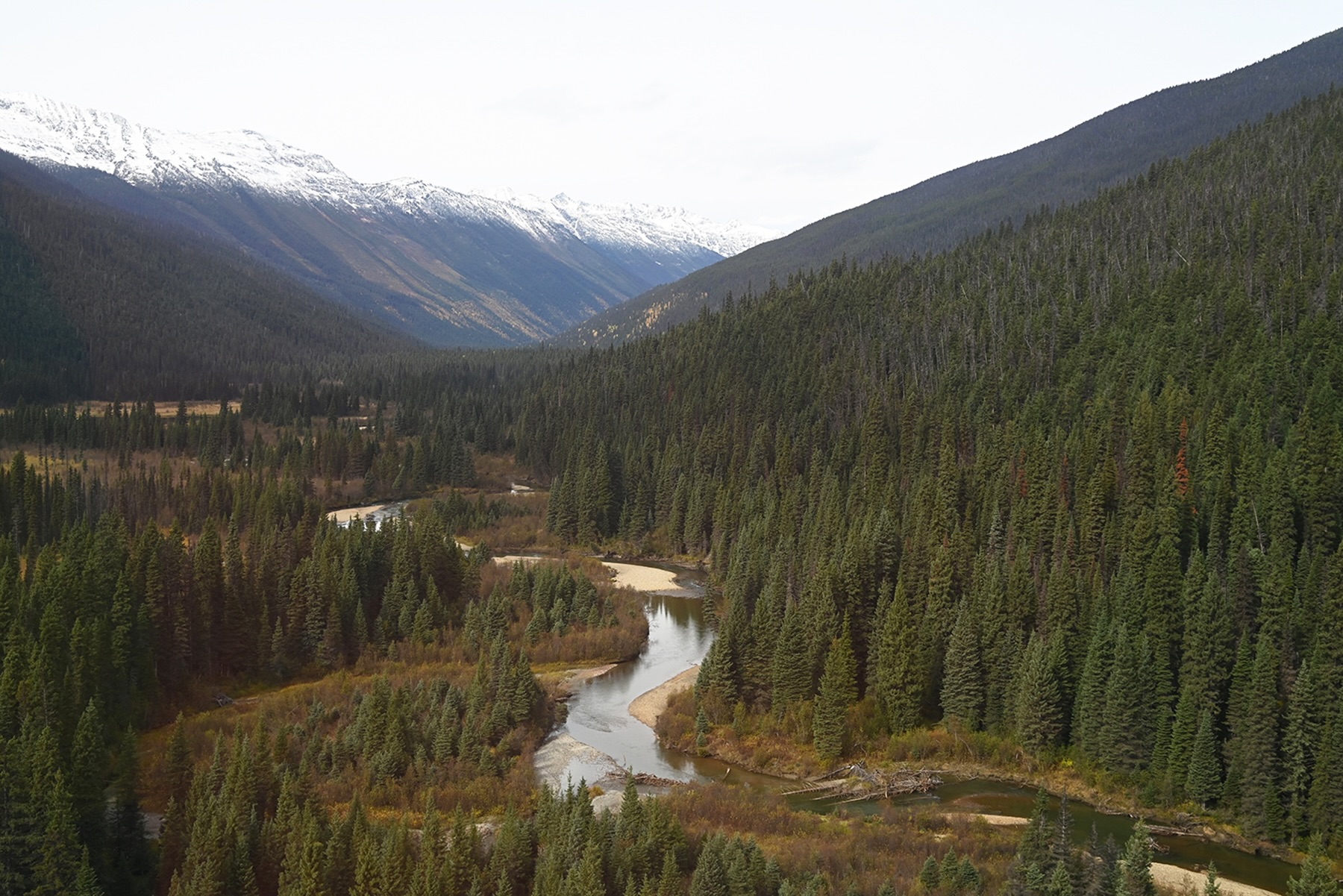
In 2023, two years after local loggers and ranchers spoke out about plans to clear-cut the valley’s ancient trees, Simpcw First Nation declared the Raush River watershed an Indigenous Protected and Conserved Area, saying the nation would take care of the land as it has since time immemorial.
Indigenous Protected and Conserved Areas, known as IPCAs for short, are gaining global recognition for their role in protecting biodiversity and safeguarding Indigenous ways of life.
Planned logging in the Raush Valley, which is ringed by the snowy northern Columbia Mountains, would have entailed building a logging road through the Lower Raush Protected Area, as well as a privately held grazing lease for horses and cattle.
The Raush protected area would conserve 510 square kilometres, slightly more than half of the unprotected valley area that stretches from the broad bottom to higher elevations. It would cover an area about four-and-a-half times the size of Vancouver.
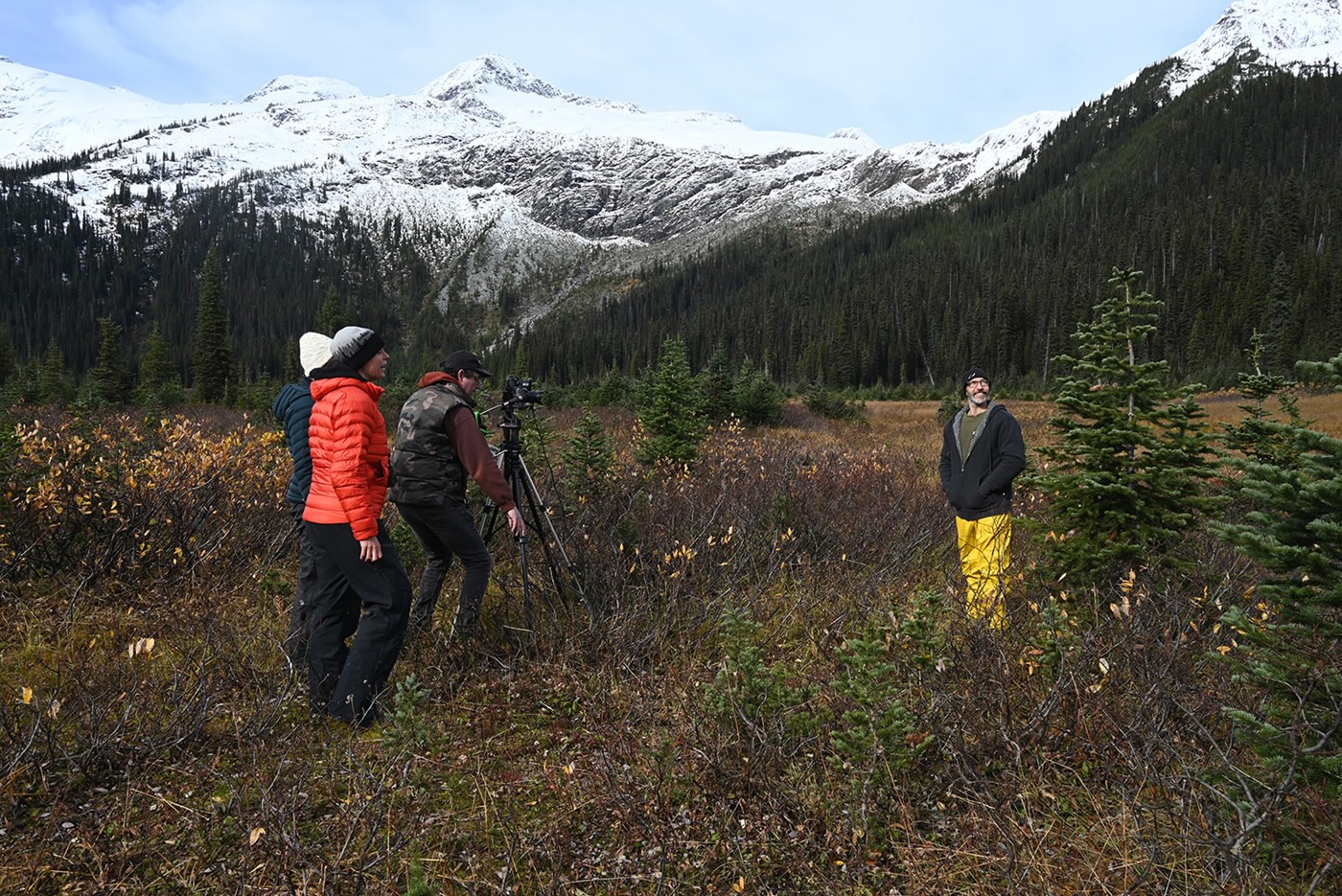
Neill said forestry and other tenure holders in the Raush Valley have agreed to work with the government during the planning process.
The Tyee reached out to Simpcw First Nation and will update this story if we receive comment.
Michelle Connolly, director of Conservation North, a science-based grassroots group based in Prince George, said the Raush is one of only a few largely intact watersheds left in north central B.C. after decades of industrial logging.
“One of the most spectacular things about the Raush River Valley is a really wide, flat area through the middle of it,” she told The Tyee. “You see the winding Raush River, you see beautiful aquatic habits and then you see the adjacent forest habitats.”
Connolly said she’s happy to see that the B.C. government recognizes the value of places like the Raush Valley that have not been crisscrossed by roads.
While protecting small patches of wildlife habitat is important, it’s also vital to safeguard large areas that support healthy populations of big animals such as caribou, grizzly bears and wolverines, allowing them to exist without interacting with humans, she said. Small patches are “lifeboats for wildlife,” Connolly said, “but you also need the arks.”
“It feels good that the province is recognizing the value of these places,” she said, adding that there are many other places at risk in B.C. that also need protection.
What’s next
Asked if the B.C. government is planning any more conservation announcements, Neill said, “I would love to say yes, but at this time I don’t know.”
She said the government is working hard to meet its commitment to protect 30 per cent of the province by 2030.
While Foy lauded the announcement, he said it “barely moves that needle” on protecting 30 per cent of B.C. in the next four years, noting that protections are urgently required given the growing list of species on their way to extinction.
Keean Nembhard, press secretary for Julie Dabrusin, Canada’s minister of environment, climate change and nature, told The Tyee that protecting nature “supports our jobs and economy, strengthens our nation’s sovereignty, and sustains our way of life.”
He said the federal government’s approach to conservation is founded on collaboration, including with the B.C. government and Indigenous partners, pointing to the recent establishment of the Mia-yaltwa Ha’lidzogm hoon National Marine Conservation Area Reserve as one example. ![[Tyee]](/design-article.thetyee.ca/ui/img/yellowblob.png)
Read more: Environment


Tyee Commenting Guidelines
Please note that email notifications for replies are not currently working due to a software issue which may be resolved in a future update.
Comments that violate guidelines risk being deleted, and violations may result in a temporary or permanent user ban. Maintain the spirit of good conversation to stay in the discussion and be patient with moderators. Comments are reviewed regularly but not in real time.
Do:
Do not: