


 SHARE:
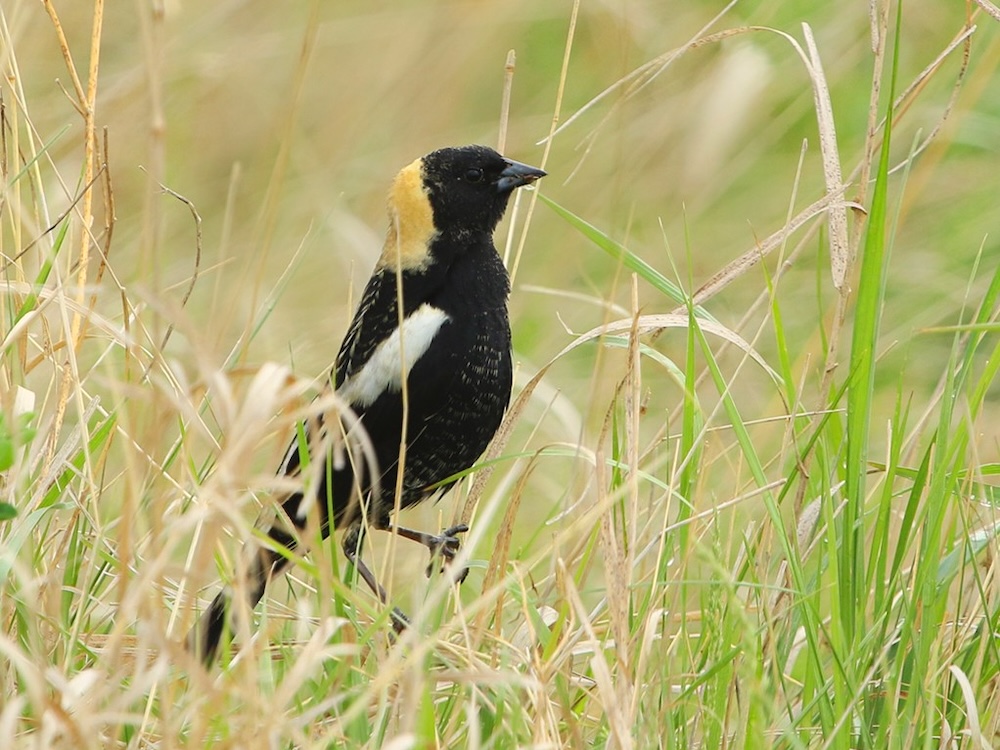
At this time of year, as breeding season nears, a male bobolink songbird looks like he’s heading to a formal event in a black tuxedo, with a jaunty yellow cap.
The bobolink is known for its joyous, banjo-like songs and epic migration from Canada to overwinter in South America’s pampas grasslands. But the bobolink can’t escape from changes to its summer home in B.C., where urbanization is encroaching on its nesting habitat and insecticides are contaminating its food sources.
In 2022, the bobolink moved from the B.C. government’s blue list of threatened species to the red list of endangered species, meaning it is at high risk of disappearing from the province unless known threats are addressed.
Yet it’s unlikely the songbird will receive the help it needs, according to a study published Monday in the journal Facets that found at-risk species in B.C. have little prospect of recovery, and genuine improvements in their status are “exceedingly rare.”
Study co-author Sarah Otto, a professor in the University of British Columbia’s zoology department and Biodiversity Research Centre, likened the plight of the bobolink to a person arriving at a hospital for treatment and waiting years for help in an under-resourced emergency department.
“We have very little action that we take when they enter the emergency room, which is why they're staying on this red list for a very long time,” Otto told The Tyee. “Our actions on the ground are not enough to get them healthy again.”
Officially, B.C. is home to 493 red-listed species and 1,233 blue-listed species. That’s a 25 per cent increase since 2008, Otto and her colleagues found, after combing through years of archived data and reports compiled by the government-run B.C. Conservation Data Centre.
“This study underscores the unfortunate truth that even the red- and blue-listed species in British Columbia are not afforded effective legal protections by the province,” the researchers concluded.
In the absence of a legal framework to protect species and their habitats, the researchers called the province’s wildlife listings “no more than an admission that highly endangered species exist in B.C.”
Most species that were at risk 18 or more years ago remain at risk, the study found.
‘Ghost’ species
Even the official numbers don’t tell the whole story.
Otto and her colleagues also documented 916 “ghost” species in the province — species known to be at risk of extinction that haven’t been assessed for placement on B.C.’s red or blue lists.
Ghost species include spruce dwarf tarantula, one of the world’s smallest tarantulas. About the size of a blueberry, the dwarf tarantula lives primarily in mature, older forests along North America’s Pacific coast.
Study co-author Peter Thompson, an ecologist and post-doctoral fellow at Simon Fraser University’s school of environmental science, said the teeny tarantula is “very, very rare,” with only a handful of observations worldwide.
“Just like the spotted owl and many other charismatic species, it is another reason to keep old-growth forests alive,” Thompson told The Tyee.
Though the dwarf tarantula is known to be at very high risk of extinction, Thompson said, it isn’t included on either the blue list or the red list in B.C.
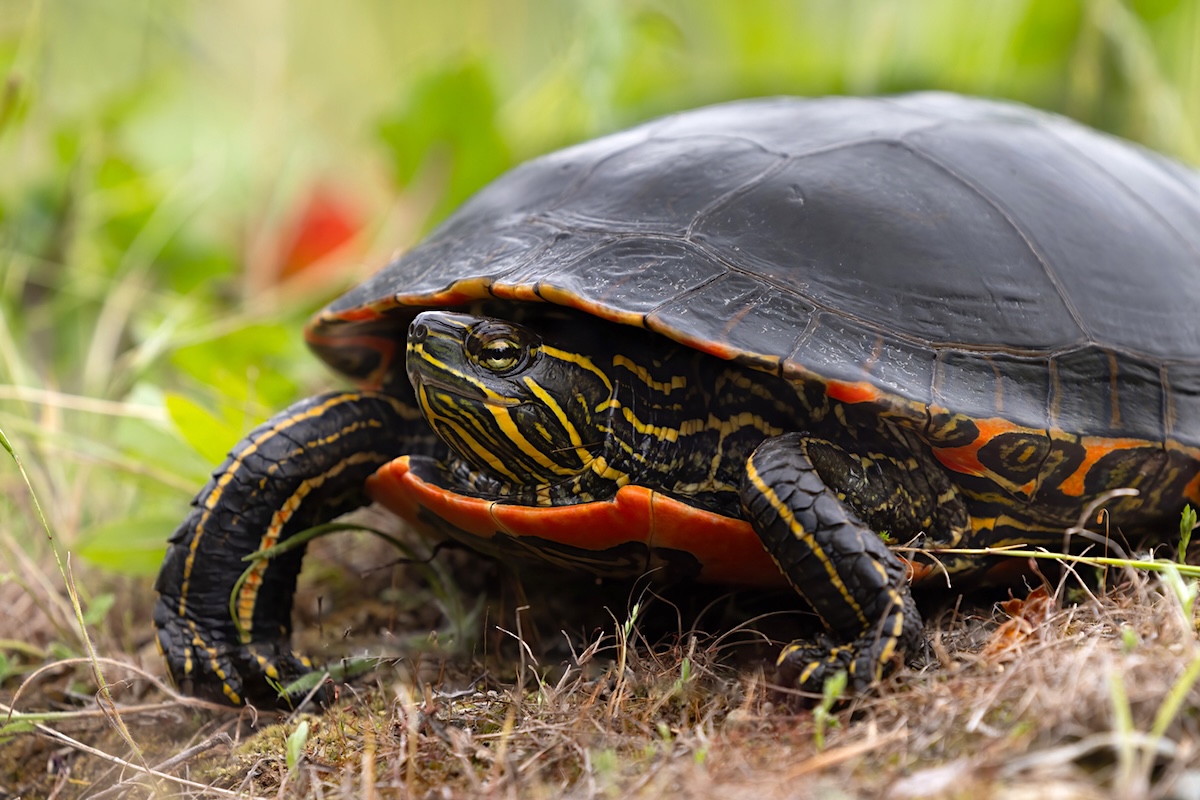
Most creatures on the ghost list are insects and other arthropods such as spiders, Thompson said. The list also includes 12 species, such as the painted turtle, American bison and great blue heron, that are listed as endangered in some specific geographic areas but have not been assessed at a provincewide level. The remaining 904 ghost species have no listing at all.
“Many of my colleagues who study insects are always a little bit peeved because they don’t get as much attention as the birds and the mammals,” Thompson told The Tyee.
Yet insects and spiders are vitally important creatures in ecosystems, he pointed out. “They are food for so many other things. They carry out all sorts of important ecosystem services. And as a larger group, insects are massively declining.”
14 endangered species showed genuine improvements
At first glance, Otto and her co-authors believed some B.C. wildlife trends were promising, with the number of red-listed species declining from more than 700 in 2008 to 493 today. But when they dug deeper, they found the vast majority of changes in the status of red-listed species were “not genuine.”
Hundreds of plant species, including the spurless touch-me-not, a tall, flowering herb found in moist forests, moved off the red list due to “non-genuine” changes such as new information or errors found in previous assessments, and not because threats were adequately addressed and populations rebounded.
“Very, very few species were improving because of our actions,” Otto said.
Only 14 species experienced genuine improvements, including humpback whales and fin whales, whose populations rebounded after hunting bans.
Three dragonfly species with evocative names — the blue dasher, western pondhawk and black saddlebags — also saw genuine improvements following range extensions in Canada.
“In their cases, it’s a little bit of bad news,” Otto said, “because it’s our harming the environment through climate change that has enabled them to spread a little bit more in Canada.”
In an emailed response to questions, a spokesperson for B.C.’s Ministry of Water, Land and Resource Stewardship said the 25 per cent increase in red-listed and blue-listed species “should not be interpreted as an indication of the overall state of species” in the province because the Conservation Data Centre has added 19,000 species to its database since 2008.
“When species become ‘at risk,’ protecting remaining populations and reducing habitat loss and degradation, and supporting recovery are priorities for the B.C. government,” the spokesperson said.
The Facets study follows a World Economic Forum report, released in January, that lists biodiversity loss and ecosystem collapse as the second-biggest risk the world faces in the next 10 years. Extreme weather events are listed as the biggest risk.
Justina Ray, president and senior scientist for Wildlife Conservation Society Canada, a non-profit group that aims to protect the country’s wildlife and wild places, said a main indicator of biodiversity loss is the number of at-risk species.
“Those that qualify for this endangered and threatened status are at the forefront of biodiversity decline,” Ray said. “Those are our main indicators. So, when that number goes up, it’s worrisome about the health of biodiversity in general.”
Ray said she applauds the study’s painstaking work tracking the status of at-risk species over time. That’s work she says, “quite frankly,” the government should be doing.
“It’s very important to be able to document where we are, relative to where we were before,” Ray added. “Those are the barometers of ecosystem health.”
What BC should be doing to protect species
B.C. is Canada’s most biodiverse province, with the greatest variety of species, genetic differences and ecosystems. Yet current laws and regulations are insufficient to safeguard biodiversity and recover species at risk in the province, according to the study’s authors.
While the province’s Wildlife Act provides some protection against harm for species at risk, only four species have been listed under the act since it was created two decades ago — the Vancouver Island marmot, burrowing owl, sea otter and American white pelican. And even those species have limited protections, Thompson and his colleagues noted, because the act contains no requirements for habitat protection, recovery planning or timelines.
Other provincial legislation, such as the Forest and Range Practices Act and the Oil and Gas Activities Act, offers limited and fragmented protection for imperilled species and their habitats, the study pointed out.
The BC NDP came to power in 2017 promising to enact stand-alone legislation to protect at-risk species, but it didn’t follow through. The lack of dedicated legislation is “particularly alarming,” according to the study’s authors, because 337 at-risk species in B.C. are imperilled nationally.
The spokesperson for the Water, Land and Resource Stewardship Ministry said the absence of stand-alone legislation “does not prevent the B.C. government’s important work on species at risk.”
Protections are provided through a suite of existing legislation, including the Wildlife Act, Forest and Range Practices Act, Energy Resource Activities Act, Park Act and Land Act, the spokesperson noted. The government also continues to implement regulations, such as ministerial orders, to protect important habitat for at-risk species, “as well as actively managing threats and enhancing populations,” often in partnership with First Nations, the spokesperson said.
About one per cent of B.C., including national parks and military bases, is automatically covered by Canada’s Species at Risk Act, which protects species from harm and habitat destruction on federal land.
“That means 99 per cent of our province doesn’t have protection,” Otto said. “People can destroy habitat and not even know necessarily that they’re doing that.”
Aquatic animals and migratory birds also receive some federal protections.
Active bobolink nests and eggs, for instance, are protected by the Migratory Birds Convention Act. But the bobolink’s varied food sources and habitat in B.C.’s southern and central Interior are not automatically protected.
B.C.’s natural beauty will eventually be unrecognizable if one species after another vanishes from the province, Thompson said.
It’s not just an issue of ecological integrity, he added, but also a “moral obligation to support our fellow living beings on Earth.”
BC’s stalled biodiversity framework
In November 2023, the provincial government released a draft biodiversity and ecosystem health framework, calling it an important step towards a commitment to conserve and recover at-risk species.
“When it first emerged a little over two years ago, it was quite hopeful,” Ray said, noting the biodiversity framework promised a broader, more thoughtful approach to species and ecosystem protections.
But no visible progress has been made, she said. “It’s not off the table, but it’s certainly not on the table.”
The spokesperson for B.C.’s Ministry of Water, Land and Resource Stewardship said the government is assessing how to advance the framework collaboratively, “to achieve the shared goals of healthy and resilient ecosystems that will support healthy communities and economies, including the forestry sector.”
The spokesperson said it is important to consider a wide range of perspectives “and take the time to get this right.”
The B.C. government has undertaken significant initiatives to advance conservation and support biodiversity and ecosystem health, the spokesperson noted.
These include commitments to protect 30 per cent of the province’s lands and waters by 2030, investing $150 million to protect ecosystems such as old-growth forests, wetlands and rare habitats, and advancing pledges included in a nature conservation agreement with First Nations and the federal government.
Thompson said he hopes the Facets study will help draw attention to the pressing need to protect biodiversity, even amid challenging times for B.C. and the rest of Canada.
“It feels to me, as someone who greatly cares about wildlife and science and conservation, that B.C.’s biodiversity is falling to the back of the stage a little bit. And I want to make sure that we keep thinking about it and keep doing what we need to do to preserve the beautiful biodiversity that makes this place so incredibly unique,” he said.
“It’s something that we absolutely need to fight for.” ![[Tyee]](/design-article.thetyee.ca/ui/img/yellowblob.png)
Read more: Environment





Tyee Commenting Guidelines
Please note that email notifications for replies are not currently working due to a software issue which may be resolved in a future update.
Comments that violate guidelines risk being deleted, and violations may result in a temporary or permanent user ban. Maintain the spirit of good conversation to stay in the discussion and be patient with moderators. Comments are reviewed regularly but not in real time.
Do:
Do not: