


 SHARE:
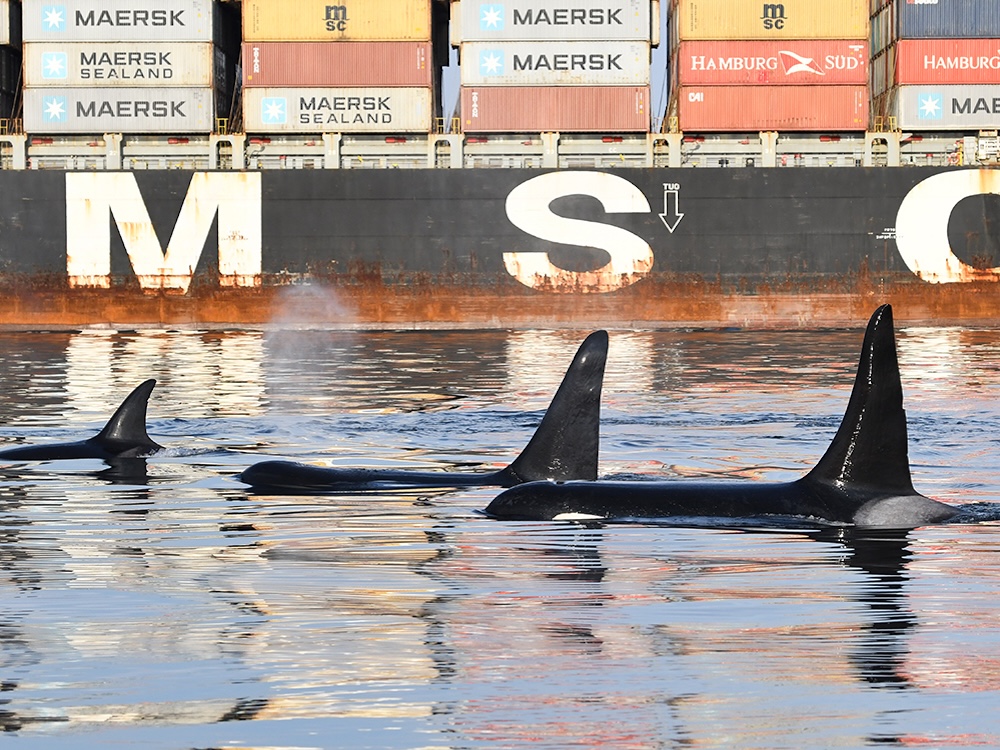
In March, nearly three dozen scientists gathered over three days in Vancouver with a single focus — to evaluate the state of the southern resident killer whale and figure out how to prevent its likely extinction.
Today they issued their report, “Strengthening Recovery Actions for Southern Resident Killer Whales.” It contains a detailed road map, including 26 recommendations, to reverse the population decline that has continued even though the whales have been on Canada’s endangered species list for the past 20 years.
While the report also offers suggestions for further research, most of its recommendations can be implemented now, Jeffery Young, a senior science and policy analyst with the David Suzuki Foundation, told The Tyee.
“We know what we need to do,” said Young, who studies policy and recovery initiatives for salmon, the killer whales’ main food source. “Dealing with noise, dealing with prey, dealing with contaminants — the control is in our hands. We actually can do this and remove these threats, or reduce these threats, to a level that we think would support their recovery.”
It’s been 50 years since researchers began taking an annual census of southern resident killer whales, a distinct species that is socially and biologically isolated from other orcas and ranges from southern Vancouver Island to northern California. The southern resident killer whale is listed as endangered under Canada’s Species at Risk Act and the United States’ Endangered Species Act.
The population was, by some estimates, historically more than 200 individuals. By 1976, shooting the marine mammals and capturing them for tourist parks, along with falling food sources, had brought their number down to 72.
Once the captures and shootings stopped, their numbers began to rebound. The population peaked at 98 whales in the mid-1990s.
But then began a gradual decline over the decades that followed.
The most recent census found 73 southern resident killer whales. Of those, 22 were observed to be in poor condition. Since then, there have been four births. Two of the new arrivals and one adult have since died, today’s report says.
The population has a “high probability of extinction” under current conditions, according to the report.
What’s needed to sustain the population
For the 31 scientists who gathered in Vancouver — including experts on killer whales and chinook salmon, underwater noise, toxicology and species conservation — the focus was simple. What will it take to save the population?
The group included scientists from Canada, the United States, France and Norway. It was organized by non-governmental organizations with a long history of working on killer whale recovery, including the David Suzuki Foundation, World Wildlife Fund Canada, Raincoast Conservation Foundation and Georgia Strait Alliance, and included representation from several universities and Fisheries and Oceans Canada.
They identified three main areas of concern: access to prey, underwater noise and contaminants.
The scientists found a lack of food is the “primary restraint” on southern resident killer whale recovery. The species is unique in its dependence on chinook salmon, Young said, specifically the early chinook runs that return to the Fraser River in the spring and early summer.
But those runs have been in steady decline, with scientists identifying a direct correlation between the health of salmon stocks and the health of the southern resident killer whale population.
Protecting salmon on both sides of the Canada-U.S. border — through things like fishing closures to protect the whales’ prey and protection of freshwater habitat needed for healthy salmon runs — is key to the southern resident killer whale’s survival, according to the report.
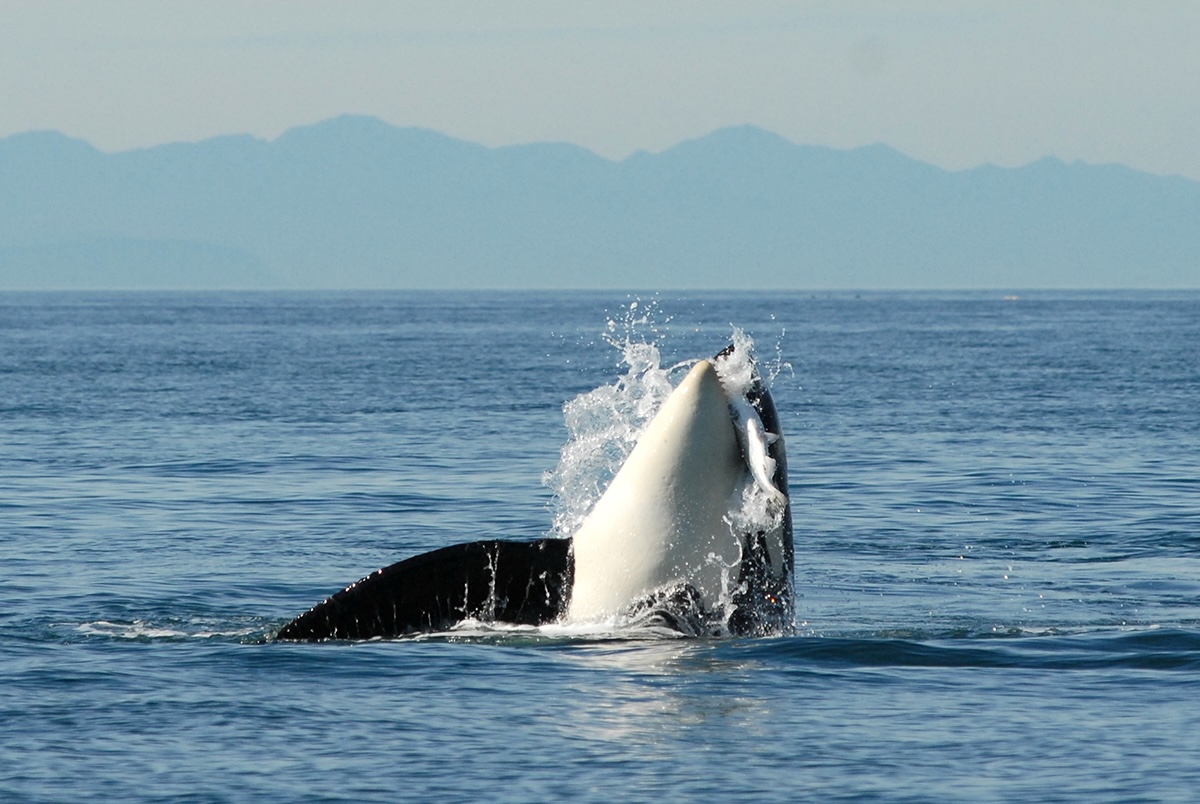
“Again, I think we know what we need to do there,” Young said. The whales have increasingly been observed early in the year with an “elongated body shape” that indicates they are starving.
That’s the time for additional measures to protect salmon and ensure the whales have access to their primary food source, he said.
Doing that would also benefit salmon populations, he said.
The report also recommends reducing noise and other physical disturbances caused by shipping traffic and other vessels. Those are “amongst the most pressing threats” to southern resident killer whales, it found.
The whales search for food using echolocation and use a series of clicks and buzzes to communicate with one another in group hunts. Marine noise has been found to interfere with the whales’ hunting, communication and locating prey, according to the report.
Some areas of southern resident killer whale habitat are already subject to seasonal closures or vessel slowdowns, and Canada has also implemented a “minimum approach distance” that requires vessels to remain between 200 and 400 metres, depending on season and location, from killer whales.
That falls short of U.S. efforts, which require vessels to remain at least 1,000 yards (914 metres) from southern resident killer whales.
Canada is currently considering extending the minimum approach distance to 1,000 metres.
But Young said that as shipping traffic increases, it’s ever more important to ensure southern resident killer whales are protected from marine noise.
“Even if you add quieting measures, the more ships you have, the more noise you have,” he said, pointing to the recent Trans Mountain pipeline expansion and plans to expand the Roberts Bank Terminal 2 in Delta as examples of how shipping is ramping up.
Given the coming increases, now is the time to lay ground rules related to noise, Young said.
Southern resident killer whale habitat is also surrounded by populated, industrialized areas, subjecting them to dangerous contaminants, such as polychlorinated biphenyls, or PCBs, which accumulate in the whales’ bodies.
The population is “among the most contaminated marine mammals in the world,” according to the report. Researchers believe that results in increased calf mortality, contributing to the population decline.
The report recommends stopping the flow of chemicals into waterways, remediating contaminated sites, tightening vessel wastewater regulations and better oversight of commercial pesticides and stormwater management.
It also calls for improving oil spill response as “virtually all” increased tanker traffic from the Trans Mountain pipeline expansion travels through the southern resident killer whale’s critical habitat.
Steps in the right direction
In 2019, the same group of NGOs filed an emergency order under the Species at Risk Act demanding government act to protect the southern resident killer whale.
That petition was rejected, but it prompted the federal government to commit to “a whole range of new processes” to move forward on a recovery plan, Young said.
They included setting up technical working groups and stakeholder processes to guide recovery.
But in the years that followed, those working groups “largely just became stakeholder bodies dominated by whale-watchers and recreational fishers,” he said.
“It became a negotiation with the government about what measures would come into place and which ones wouldn’t,” Young said. “It’s just balancing interests, rather than really looking at what it's going to take to recover the whales.”
The working groups lacked a scientific focus, he said.
The purpose of March’s workshop was to refocus the conversation around southern resident killer whale recovery on “science- and evidence-based solutions,” according to the report.
Six years into the federal government’s Whales Initiative, the recent workshop and resulting report are a chance to review what has been achieved and what is still missing, Young said.
“New science has come on board in the last five years and we wanted that to come to bear on how we were protecting the whales,” he said.
Earlier this year the scientists filed a request for a second emergency order aimed at forcing government to reconfirm the population remains in danger.
While government declined to issue the order, it made a number of new commitments, Young said, including the plans for a one-kilometre approach distance, noise limit objectives and improving salmon conservation.
They are “all fairly ambiguous commitments,” he said.
But Young hopes today’s report will propel them forward.
It’s impossible to know how long the population will last without meaningful action, Young added.
“It's a bit of a race that we don't know when we're winning and when we're losing,” he said. “It is urgent. We don't have the clear indicator to say this has to happen at this very moment, but every improvement we can make to their conditions, the better chance they'll have of surviving.”
The population of “highly evolved and highly intelligent” mammals is an indicator of overall ecosystem health — something humans should be paying attention to, Young said.
“If we’re taking care of them, we're taking care of ourselves,” he said. “The choice is ours. We can’t pretend this isn’t happening.” ![[Tyee]](/design-article.thetyee.ca/ui/img/yellowblob.png)
Read more: Environment










Tyee Commenting Guidelines
Please note that email notifications for replies are not currently working due to a software issue which may be resolved in a future update.
Comments that violate guidelines risk being deleted, and violations may result in a temporary or permanent user ban. Maintain the spirit of good conversation to stay in the discussion and be patient with moderators. Comments are reviewed regularly but not in real time.
Do:
Do not: