

 SHARE:
The B.C. government has been trying for years to reform its ramshackle system of royalties on natural gas production. That tortuous process is now nearing conclusion, with new royalties supposed to take effect on Jan. 1. The problem is no one yet knows what those royalties will be.
The government is still locked in combative (but confidential) consultations with the gas industry, First Nations and other stakeholders over the new regime. A hodgepodge transitional system (already extended two years beyond its original timetable) expires at the end of the year.
B.C. is notorious for undercharging petroleum companies for the right to extract and sell natural gas — a resource owned by the people of B.C., not the industry. An independent review of gas royalties in 2021 showed it was effectively subsidizing gas production and called for a complete restructuring of the system.
Royalty revenue has declined dramatically over the last two decades (with the exception of 2022, when gas prices soared after the Russian invasion of Ukraine). Despite record gas production, the government collected a measly net total of $672 million in gas royalties in the 2024-25 fiscal year. And most of that came from propane and other liquid condensates: byproducts of gas that fetch much higher prices than the gas itself.
In 2008-09, in contrast, the government collected twice as much royalties, from less than half the production. Gas royalties accounted for 3.4 per cent of the government’s total revenue that year. That fell to 0.8 per cent last year.
The collapse in revenues partly reflects low natural gas prices, but that should have been offset by huge growth in production. The problem is that generous loopholes, credits and cost allowances have allowed gas companies to largely avoid royalties, even as they doubled their take of B.C.’s gas. Oft-repeated promises by successive governments (of all stripes) that gas royalties would lead the province to fiscal prosperity have never materialized.
Now, even with an imminent boom in gas production and exports, those royalty riches will still be illusory — unless the government draws a line in the sand and ensures the public gets fair value for its own resource in the future.
Hollow threats from gas industry
In 2022, the government scrapped some of the biggest loopholes and launched a consultation process around a new royalty system. It set a goal of capturing 50 per cent of gas profits (after capital and production costs), deemed a fair return for the citizens who own the gas.
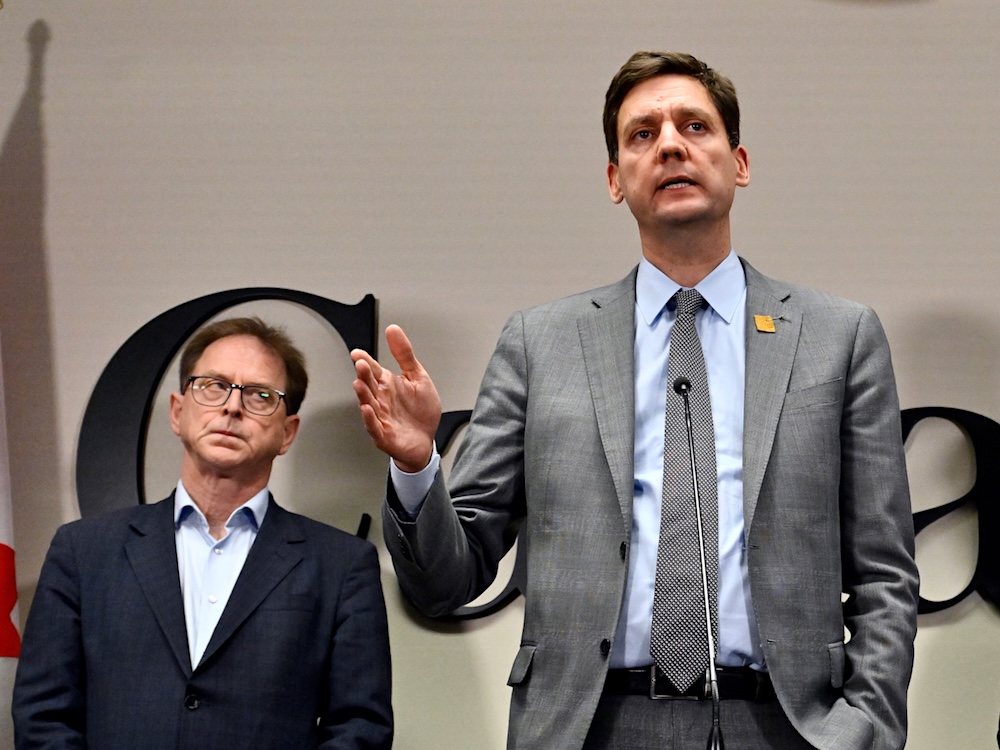
But from the start the government faced severe pushback from industry lobbyists wanting to preserve their sweet deal. A letter from Energy Minister Adrian Dix to the industry in April signalled the government was abandoning more ambitious royalty formulas. Who knows how far the bar has been lowered since then?
Industry lobbyists regurgitate age-old threats that changes to royalties will cause capital to flee willy-nilly from the province to more “competitive” jurisdictions. These threats are as hollow as they are tired.
Where natural gas is concerned, B.C. has two unbeatable “competitive” assets. First, the gas is here. Second, so is the ocean.
B.C. has swaths of natural gas. Production has grown by leaps and bounds in recent years, despite historically (and probably temporary) low prices. Provincial gas output surged 80 per cent between 2016 and 2025. It’s up another 12 per cent so far this year.
In fact, B.C. supplied 100 per cent of the net increase in Canadian production over this time: without B.C., there would have been zero growth in national supply. B.C. now provides 38 per cent of Canada’s total production, up from 24 per cent in 2016. The industry needs B.C.’s gas — all the more so as it mobilizes to supply Asian and European customers who pay 10 times more for it than we do.
That leads to B.C.’s second geographical advantage: its coastline. Canadian producers are drooling over future sales to offshore markets. Like them or hate them (and there’s plenty to hate), the spate of LNG developments springing up along B.C.’s coast (from Delta to the Alaska border) are a new and lucrative outlet for B.C.’s gas. With the prospect of selling gas to Japan for a hefty $20 per gigajoule, the industry can more than afford a reasonable return to the people who own the gas.
Sure, LNG plants can be supplied from Alberta (whose royalties are generally higher than B.C.’s), but that goes against fundamental economics. Pipeline transport costs more than the gas itself, and so producing from fields closer to the LNG plants is a no-brainer.
In sum, the government has a strong bargaining position to resist industry demands for a continued near-free ride. The gas industry is gearing up for a major expansion. The government has a historic opportunity to fix a broken system.
The stakes for First Nations
There is another important dimension to the royalty debate that government must also consider: the impact on revenue-sharing agreements with several First Nations in gas-producing areas in the northeast of the province.
A landmark B.C. Supreme Court decision (the 2021 Yahey case) confirmed that past petroleum developments across the lands of several First Nations had systematically violated their Treaty 8 rights to consultation and consent. That sparked ongoing negotiations over future resource developments, which have resulted in numerous revenue-sharing agreements between the B.C. government and First Nations.
Several of those deals ascribe a percentage of provincial gas royalties to the First Nations from whose land the gas is extracted. But if the province approves another sweetheart royalty deal for the industry, those returns to First Nations will be diluted.
At a moment when government and industry alike are loudly trumpeting Indigenous participation in new resource projects, B.C. had better ensure that its existing revenue-sharing commitments are genuinely fulfilled — and that First Nations do not become collateral damage in another resource giveaway.
For many reasons, therefore — reducing future deficits, internalizing environmental costs and fulfilling reconciliation commitments — the government needs to stick to its guns. Already this year the Canadian petroleum industry is reporting its biggest profits in history. This is no time to subsidize their profits even further. ![[Tyee]](/design-article.thetyee.ca/ui/img/yellowblob.png)
Read more: Indigenous, Energy, BC Politics








Tyee Commenting Guidelines
Please note that email notifications for replies are not currently working due to a software issue which may be resolved in a future update.
Comments that violate guidelines risk being deleted, and violations may result in a temporary or permanent user ban. Maintain the spirit of good conversation to stay in the discussion and be patient with moderators. Comments are reviewed regularly but not in real time.
Do:
Do not: