

 SHARE:
As the provincial government advances plans to carve British Columbia’s lands into zones where logging and other industrial activities are permitted or barred, a former longtime public servant says he is struggling to not be cynical about what could lie ahead.
In August, The Tyee broke the news that the provincial ministries of Forests and Water, Land and Resource Stewardship were proposing to divide B.C.’s vast and spectacularly diverse lands into “working forest,” “multiple-use” and “conservation and protection” zones. The details were included in a leaked internal government email.
The zoning exercise is happening as Premier David Eby tells Forests Minister Ravi Parmar to find more trees for companies to log in order to meet a logging target of 45 million cubic metres per year.
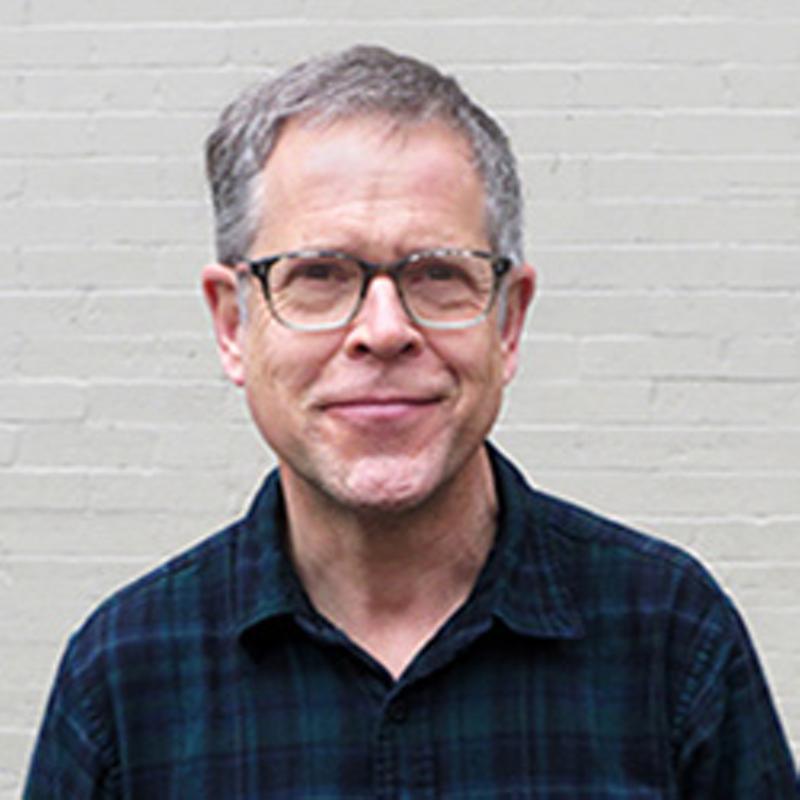
Forest ecologist Andy MacKinnon, who worked as a research scientist in the Forests Ministry for 30 years, said he worries that the “Path to 45” initiative will drive the zoning plan. That initiative largely focuses on expediting logging approvals and increasing logging rates.
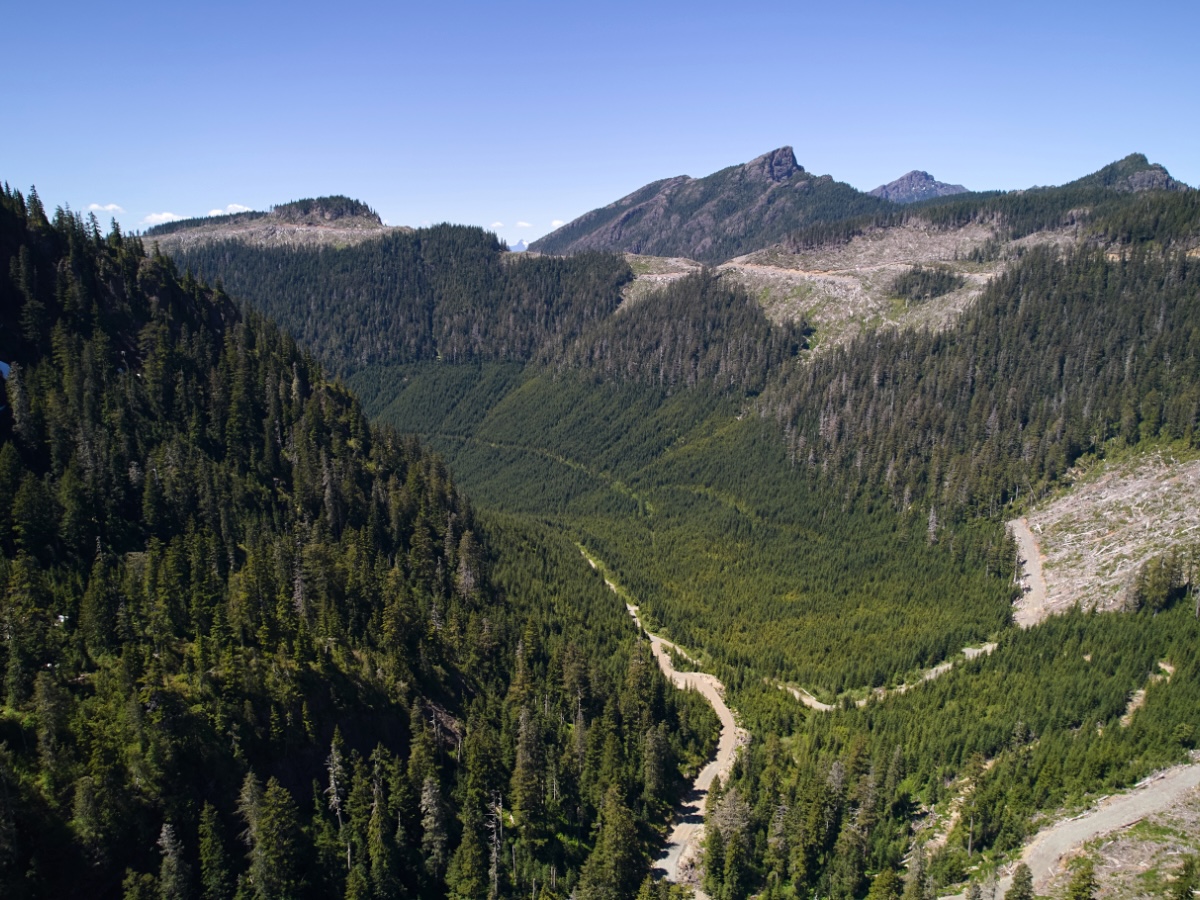
MacKinnon worries that if the zoning plan prioritizes logging, land placed in the proposed conservation and protection zone might be focused in extremely steep terrain or alpine areas where forests have little or no commercial value.
“It’s entirely possible to protect large percentages of an awful lot of the province without having any timber supply impact whatsoever,” MacKinnon told The Tyee. “A cynical man would suspect that that’s what the government is up to.”
The Tyee asked Parmar why the zoning process is needed when both his ministry and the logging industry have operated for decades on the understanding that there is a “timber harvesting land base,” or THLB, in the province where logging activities are permitted.
Parmar said that while the THLB continues to exist, it “is not the THLB of yesterday,” due to the surge in the number of wildfires and extensive insect attacks that have occurred in the province in recent decades.
He said that as the zoning process unfolds, a guiding principle will be that there is “no net loss” in either the working forest or the area of land that is zoned as conserved or protected.
Parmar said a zoning process for the province’s forests is not a new idea and was contemplated by Gordon Campbell’s BC Liberal government in the early 2000s.
Establishing a working forest zone would bring greater certainty to the forest industry in terms of where it is approved to operate and would reduce paperwork by clearly defining broad areas in which companies could operate over time, Parmar said.
“I don’t see why they should be submitting cutting permits block by block,” he said.
Randene Neill, the province’s minister of water, land and resource stewardship, said that more old-growth forests will be placed in the proposed conservation and protection zone and that the upcoming zoning decisions will be guided by advice the government received six years ago from professional foresters Al Gorley and Garry Merkel.
That advice took the form of a 72-page report calling on the government to make a “paradigm shift” in its management of old-growth forests. The government later solicited the advice of an expert panel that recommended that logging be deferred in 2.6 million hectares of old-growth forests in the province.
“We want to get folks on the same side to say, ‘How can we do this work together to achieve the goals of a good, sustainable industry, conserve the areas that we know are important and really do that through the lens of conservation?’” Neill told The Tyee.
The government is looking to apply the new zoning concept first in four candidate areas. It has identified one of those areas near Campbell River on Vancouver Island. It says the work will be done in partnership with the Na̲nwak̲olas Council, a group representing six north-Island First Nations.
In a news release this week, the government said the council, along with four of its member First Nations — Tlowitsis, Wei Wai Kum, We Wai Kai and K’ómoks — are established players in Vancouver Island’s forest industry and have a joint venture partnership with coastal B.C.’s largest forest company, Western Forest Products.
“We are all in to identify solutions that support workers, communities, First Nations and industry — delivering a working forest that will last for generations,” Parmar said, calling the government’s working relationship with the Na̲nwak̲olas Council a “powerful partnership.”
In the same news release, Na̲nwak̲olas Council president Dallas Smith said the First Nations’ “evolving participation in forest management” with the province will “keep people and mills operating, while also continuing to manage biodiversity issues like wildlife and fish habitat and old-growth values.”
The release did not discuss what specific mills, biodiversity or old-growth forests would benefit from the zoning exercise. There are no significant sawmills on Vancouver Island from Campbell River north and a diminishing number of mills to the south.
Northern Vancouver Island is home to numerous endangered, threatened or at-risk wildlife species, including the Vancouver Island marmot, Vancouver Island ermine, northern goshawk and marbled murrelet.
Earlier this year, The Tyee reported that Parmar’s ministry had approved logging of old-growth forest in the Tsitika River watershed, which falls within the territories of First Nations that are members of the Na̲nwak̲olas Council. The ministry said it did so after consultations with those nations.
Smith said at the time that “outsiders” who had made recommendations to protect old growth had failed to consider how First Nations were managing forests within their territories. The Tyee reached out to Smith for comment on this story but did not hear back prior to publication.
The government’s initial news release formally announcing the zoning scheme said the proposed “multiple-use” zone will be “focused on the restoration and enhancement of biodiversity and ecosystem functions.”
The release did not elaborate on what kind of restoration activities would occur or what would happen to the lands after restoration work was done.
In previous reporting, The Tyee chronicled restoration work in logged central Interior forests that had undergone intensive replanting. In some cases, the logged areas ended up crammed with as many as 10,000 trees per hectare as a result of planting and natural reseeding.
As the seedlings grew, the ground beneath the trees became heavily shaded and devoid of plant life, making it unusable for moose and other ungulates foraging for food. A subsequent restoration effort, funded by $1.5 million from the Habitat Conservation Trust Foundation, involved substantial thinning of some parcels, with only about 600 trees per hectare remaining. In other cases, small clearings were created, opening up the ground more fully to sunlight.
Moose were soon seen in the small clearings, while deer visited the thinned sites.
In the aftermath of such work, a question arises: Will restored or treated lands be logged again, or will they be left alone to see how they respond and how they benefit animal and plant life over time?
Neill said that question is still unanswered and will be tested in the four candidate areas where the zones will be applied.
MacKinnon said the restoration question has significant ramifications because many lands that would benefit from restoration activities currently often lie within areas that are considered part of the timber harvesting land base.
He noted as one example efforts to restore riparian or streamside forests on Vancouver Island to improve habitat for salmon.
“As far as they [the logging companies and Forests Ministry] are concerned, those areas are going to be logged again,” MacKinnon said. ![[Tyee]](/design-article.thetyee.ca/ui/img/yellowblob.png)
Read more: BC Politics, Environment





Tyee Commenting Guidelines
Please note that email notifications for replies are not currently working due to a software issue which may be resolved in a future update.
Comments that violate guidelines risk being deleted, and violations may result in a temporary or permanent user ban. Maintain the spirit of good conversation to stay in the discussion and be patient with moderators. Comments are reviewed regularly but not in real time.
Do:
Do not: