

 SHARE:
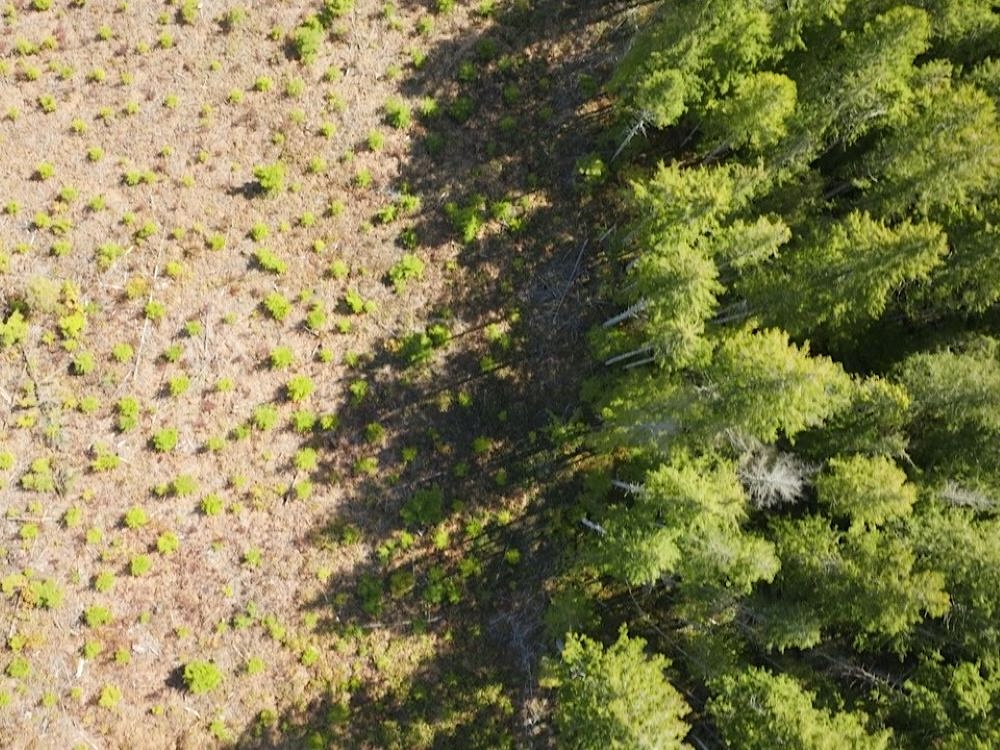
British Columbia’s government is contemplating carving the province into three zones to “provide greater clarity” to the timber industry, and discussions have so far left out First Nations.
The zoning plan is outlined in an email sent in early July to public servants in the Ministry of Forests and the Ministry of Water, Land and Resource Stewardship, a copy of which was provided to The Tyee by a source who requested anonymity.
“The concept will consider three zones: commercial forestry, multiple-use and conservation and protection,” the leaked email reads, adding the zones will “provide greater clarity to achieve both investment stability and community economic benefits, and biodiversity and ecosystem stewardship goals for the land base.”
The email provides no detail on how much forest might ultimately be placed in each of the zones, leaving open questions about just what impact the proposed plan would have on everything from at-risk species to rural and First Nations communities, and a logging industry that has been on a sharp downward spiral for years.
It also makes no mention of whether any parties with a stake in a reshuffled forestry deck received advance notice of the government’s plans. In response to questions, the Ministry of Forests said only that consultations “will begin shortly.”
The Tyee has learned that the email circulated widely to staff in both ministries and was sent by three senior political appointees — Makenzie Leine and Ian Meier, deputy and associate deputy ministers of the Ministry of Forests, and Lori Halls, deputy minister of the Ministry of Water, Land and Resource Stewardship.
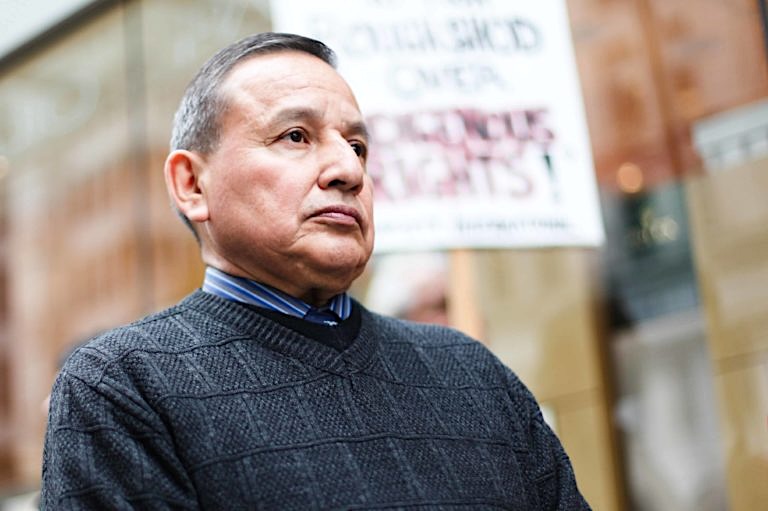
Its contents drew a sharp rebuke from Grand Chief Stewart Phillip of the Union of BC Indian Chiefs, who told The Tyee that the organization’s 140-plus First Nations members received no notice of the government’s intentions.
“I find it highly offensive that the provincial government would consider such a momentous shift... without even giving the First Nations, the title holders in this province, a heads-up to say we’re well into the planning of this,” Phillip told The Tyee.
“It’s a complete breach of DRIPA [the Declaration on the Rights of Indigenous Peoples Act] and the responsibilities that B.C. has under DRIPA to closely consult with First Nations.”
The Council of Forest Industries meanwhile welcomed the initiative, linking it to a Ministry of Forests objective to increase logging rates in the province’s forests to 45 million cubic metres per year — a target Premier David Eby set out in his mandate letter to Minister of Forests Ravi Parmar.
“We support the government’s commitment to achieving a minimum annual harvest of 45 million cubic metres and are prepared to work with government, First Nations and other partners and stakeholders to explore practical policy approaches that help deliver that target,” Michael Armstrong, the Council of Forest Industries’ senior vice-president and chief forester, told The Tyee.
Aim is ‘greater clarity,’ says ministry
The Tyee reached out to both ministries for comment and received an email said to be attributable to both.
“B.C.’s forest sector is under significant pressure,” the ministries said in a prepared response to questions, noting those challenges include “volatile markets, low pulp prices, increasing transportation costs, limited fibre supply due to challenges including the end of the beetle kill and wildfires, climate-driven wildfires, and punishing duties and tariffs imposed by the United States.”
The emailed response added that a zoning effort would result in more stability for an embattled industry.
“By providing greater clarity on where forestry activities will occur and where conservation will occur, we can support jobs, communities, and sustainable forest management, and also enhance biodiversity and ecosystem health outcomes,” the ministries said.
Zoning approach was floated before
The idea of zoning B.C.’s lands is not new. The Tyee has previously reported that calls to delineate areas of the province where logging and resource developments would be allowed, and areas where they would not, go back decades. But successive governments didn’t act — until now.
Almost 30 years ago, Clark Binkley, a former dean at the University of British Columbia’s faculty of forestry, was a notable zoning proponent.
As environmental groups battled organized labour and the forest industry over proposed protected areas during the so-called “war in the woods” in the 1990s, Binkley argued that there was ample opportunity to vastly expand parkland while also increasing timber production.
Binkley’s proposed solution was effectively a two-zone system where logging companies were permitted to intensively manage a portion of B.C.’s lands to grow trees and there was a corresponding increase in the number of protected forests.
“Such a policy could lead to substantially higher, sustainable timber harvests as well as a system of parks that covers more than half the province,” Binkley wrote in 1997.
More recently, the provincial government received a report it commissioned from two professional foresters on the future of old-growth forests in B.C. Authored by Al Gorley and Garry Merkel and released in 2020, the report called for a three-zone system for the province.
Gorley and Merkel’s zones included protected forests and ecosystems that would be “largely left alone,” converted forests where logging had continued and would likely continue to occur, and what they called “consistent” forests that would be managed to keep their ecosystems and biological diversity in a healthy state. The Tyee reached out to both Merkel and Gorley to ask their thoughts on the government’s proposed zones but did not hear back.
Test phase to be unveiled in the fall
The zoning email notes that the initiative will be led by two assistant deputy ministers — Jessica Coster from the Ministry of Forests and David Muter from the Ministry of Water, Land and Resource Stewardship.
It goes on to say that the “project team is in the exploration and assessment phase and will bring together teams from both ministries to examine options and identify how the model could be applied in practice to selected candidate areas.”
The email makes no mention of potential candidate sites or regions but says an initial report to the provincial cabinet on how such a zoning system might work could come as early as this fall.
“We will have more to say in the fall about the next steps in this process, specifically around a test phase,” the ministries said in response to The Tyee’s questions, adding:
“The test phase will include continued partnership and engagement with First Nations along with focused engagement with industry, local governments, environmental non-government organizations (ENGOs), and other interested parties, as well as ongoing public updates.”
The emailed response from the two ministries went on to say that “engagement” with various parties will begin shortly, and that those parties include industry, First Nations and local governments. It also said it would have more to say publicly on its plans in the next couple of weeks.
Worries about how lines are drawn
Mike Morris, a former provincial cabinet minister and thrice-elected MLA for Prince George-Mackenzie, expressed alarm at the initiative’s timing, which he noted comes on the heels of decades of heightened and unsustainable logging that has caused wildlife populations to tumble.
He went on to say that, to be credible, any rezoning effort must consider watershed boundaries or valleys, given the demonstrated damage that has been done as a result of extensive clearcut logging and road-building in many watersheds.
“There’s 30 years of science that says that clearcutting causes increased frequency, magnitude and duration of floods and droughts, which leads to increased wildfires and landslides and all that other kind of stuff,” Morris said. “If they don’t have science at the forefront [of this zoning effort], they will fail miserably.”
Peachland resident Taryn Skalbania agrees with Morris, saying that any new zoning exercise must recognize the importance of watersheds. She is the founder of the Peachland Watershed Protection Alliance, an organization that came into being after landslides in the heavily logged local watershed so contaminated the community’s drinking water with sediment that local residents were forced to boil their water for months on end.
Skalbania said that in the past year she and other Okanagan residents have met directly or been on conference calls with 11 MLAs in the Okanagan, Kootenay and central Interior regions as well as with Ravi Parmar and Randene Neill, minister of water, land and resource stewardship.
In every meeting, Skalbania said, the MLAs and cabinet ministers were told that more must be done to safeguard watersheds and that areas of unlogged forests in watersheds, in particular, should be considered as priorities for protection.
Skalbania said she favours a rezoned land base in the province that begins with conserving remaining unlogged natural forests and protecting community watersheds. She also advocates for a second “restoration zone” where lands damaged by previous industrial activities are treated with an eye to bringing back wildlife, stabilizing soils and safeguarding water supplies. And she favours a third zone where logging is permitted, but only on a portion of the land where logging has already taken place.
Old-growth forests should be absolute “no-go zones,” Skalbania said, adding that restored lands should be off limits as well. “We’re not restoring them just to cut them down again, but restoring them on the landscape to provide shade, water storage and biodiversity,” she said.
‘We’re in a biodiversity crisis,’ says conservationist
Anthony Britneff, who worked in several senior positions for the provincial Ministry of Forests over four decades, told The Tyee that it is hard to envision a rezoning exercise led by his former employer that places any restrictions on where logging companies may go.
Hitting the logging target of 45 million cubic metres would, he predicted, see all unlogged valley bottoms outside of existing parks placed into the proposed commercial forestry zone.
Lands designated multiple-use would almost certainly remain open to logging as well, Britneff predicted, noting that multiple-use has been a cornerstone of provincial forest policy for decades.
Finally, he said it is not out of the question that lands zoned for conservation and protection might be subject to periodic logging as well on the grounds that it would prevent wildfires or insects from allegedly damaging or destroying such forests.
Britneff warned that the cumulative effect of all that would likely be the logging of all remnant old-growth forests, leading to “the complete ruination of the province’s rivers and biodiversity.” Any rezoning of provincial lands, Britneff added, should occur only after a “public inquiry and widespread consultation.”
In response to questions, the ministries said that the proposed commercial forestry zone would “provide the greatest certainty for forestry operations.”
The ministries added that logging and other industrial activities would also be permitted in the second proposed multiple-use zone, although in that zone more of a priority would be placed on “biodiversity, restoration, and ecosystem health.”
In the third proposed conservation and protection zone, the emailed response from the ministries said “commercial forestry would not be permitted.” But it did not rule out that such zones might require “active stewardship” to “improve biodiversity, ecosystem health, habitat, and ecological function over time.”
It did not define what such active stewardship might involve.
Michelle Connolly, director of Prince George-based Conservation North, says “the only zonation system that works for biodiversity and ecosystem health” is one that protects so-far unlogged primary or natural forests from chainsaws.
She said her organization rejects any suggestion that some logging may be necessary in such old-growth forests to restore their health and make them more “resilient” in the face of disturbances such as wildfires and insect attacks.
“We’re in a biodiversity crisis and the only way to avert calamity is to build a three-zone system that protects all primary forest (Zone 1), allocates degraded land to restoration in a permanent way (Zone 2), and dedicates some previously logged areas to responsible forestry,” Connolly said in an email.
In addition to the Forests Ministry pushing to find more timber for the logging industry, Chief Phillip noted that the provincial government also recently pushed through passage of bills 14 and 15 — the Renewable Energy Projects (Streamlined Permitting) Act and the Infrastructure Projects Act. Both are intended to expedite major projects in the province, including new pipelines, liquified natural gas plants and mines, Phillip said.
“There’s a mindset within the provincial NDP government of fast-tracking everything,” Phillip said, adding that he worries the zoning exercise could be fast-tracked as well.
Rather than that, Phillip said, the government should approach any rezoning exercise as it did when it pursued creating new parks and land-use plans in the 1990s.
Phillip noted that when land and resource management plans, or LRMPs, were pursued in the 1990s, “there was intensive consultation with ranchers, the timber community, municipalities, regional districts and First Nations.”
“That process was very robust from the outset,” Phillip said. ![[Tyee]](/design-article.thetyee.ca/ui/img/yellowblob.png)
Read more: Indigenous, Labour + Industry, Environment





Tyee Commenting Guidelines
Please note that email notifications for replies are not currently working due to a software issue which may be resolved in a future update.
Comments that violate guidelines risk being deleted, and violations may result in a temporary or permanent user ban. Maintain the spirit of good conversation to stay in the discussion and be patient with moderators. Comments are reviewed regularly but not in real time.
Do:
Do not: