


 SHARE:

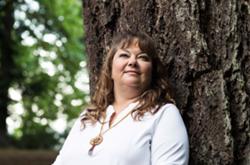
The first thing that Bek MacIntosh, a 42-year-old business owner and mother of three, wants Albertans to know is this: it is possible for a community to stop a $10-billion hyperscale data centre dead in its tracks.
Even when the local and provincial governments have different plans.
But the struggle will hijack your life for eight months, divide your town and build paradoxical alliances that will transform your community in startling ways.
“People are amazing,” says MacIntosh, the founder of Little Town Big Data, a grassroots advocacy group that offers support to communities opposing these massive projects.
The second thing to recognize is the fight will be relentless and overwhelming. Yet every community, says MacIntosh, possesses the three ingredients needed to defend their future: courage, conviction and clear communication in the face of overwhelming complexity and political power.
“They just have to find their voice.”
And the last thing MacIntosh wants to highlight before diving into the battle for Olds, something she and many others regard as a landmark event in Alberta politics, is that the AI data centre war isn’t over.
“We’re just getting started,” says MacIntosh.
By now, the reluctant activist has become such a persistent thorn in government’s side that even provincial cabinet ministers now know her by name.
MacIntosh is right about what lies ahead. The Canadian government has a plan to increase AI hyperscale data centre capacity from 0.3 gigawatts to eight gigawatts by 2030. That means scores of sprawling projects accompanied by massive power plants across the country.
Alberta is where 90 per cent of them will be located. Premier Danielle Smith has aggressively courted their arrival with friendly “concierge service” for industry and access to cheap natural gas to power their generators.
“The fallout could be monstrous,” MacIntosh told the Tyee. “We are not talking about dozens or hundreds of people. Without proper safeguards and rules the lives of hundreds of thousands of Albertans will be upended.”
As the Alberta government reviews some 60 applications for hyperscale projects, MacIntosh would like to see, at minimum, a dedicated regulatory agency with clear rules to site and oversee the operation of data centres in the province.
Her advocacy group also thinks a temporary pause on approving new facilities is a prudent idea “until appropriate environmental, operational and public safety regulations are in place.”
So how did we get here — and why is MacIntosh front and centre in the burgeoning movement to rein in data centres?
The battle for Olds
Alberta’s struggle over data centres erupted last January in Olds, a quiet agricultural town an hour’s drive north of Calgary.
The picturesque hamlet sits squarely in political terrain represented by Smith’s United Conservative Party. That’s why no one expected Olds to become a cause célèbre in the data centre wars. Nor did MacIntosh.
She moved to Olds from Ontario four and half years ago and couldn’t believe its conviviality.
“It is almost a time capsule of Canada,” MacIntosh says.
Neighbours cared about neighbours and kids rode their bikes freely down the streets. Families thrived in the community.
Then came the news that Premier Danielle Smith confidently telegraphed on X.
“Alberta is thrilled to welcome Synapse Data Centre to our province — which will be the largest data centre in Canada — a $10B investment coming with over 3,000 new jobs for Albertans!”
At that point nobody in Olds knew anything about the proponent, Synapse Real Estate Corp., or its owner Jason van Gaal, a self-described “serial entrepreneur” from Montreal. Nor did they grasp the size of the facility proposed and its energy requirements.
MacIntosh originally imagined the development as a few nondescript warehouses.
Bit by bit, the facts presented a different picture. Synapse, a company incorporated in January 2026, had applied to build a warehouse brimming with computing components that would cover two million square feet — about the size of New York’s Grand Central Station or 34 football fields. That would be powered by a 1.4-gigawatt natural gas facility composed of 30 turbines and generators along with 600 supporting diesel generators, bringing the entire footprint to 300 acres or 10 per cent the size of Olds.
MacIntosh was gobsmacked. How could an unknown company suddenly appear out of nowhere with plans to build the second-largest natural gas generation plant in the province — a facility that would generate enough electricity to run the city of Calgary?
And what would it mean to live directly next door?
MacIntosh and her neighbours wondered how the project might affect the safety, security and value of 2,000 homes within a three-kilometre radius of its humming heart. So, they got to work asking hard questions and holding meetings.
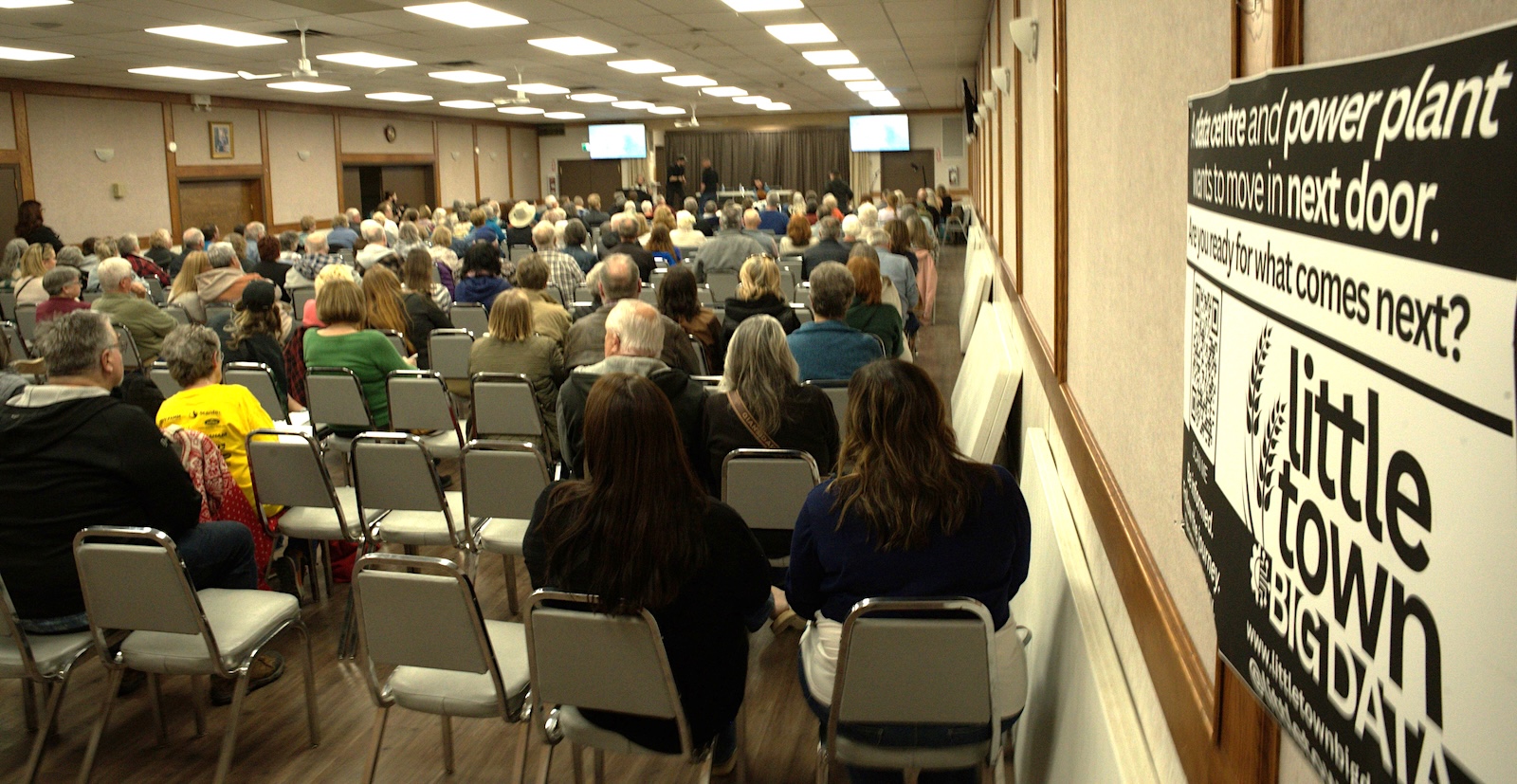
When it came to data centres, just figuring out which agency was responsible for permitting what resembled a game of hot potato, says MacIntosh. If the authorities weren’t stepping forward to fill them in, the locals would educate themselves.
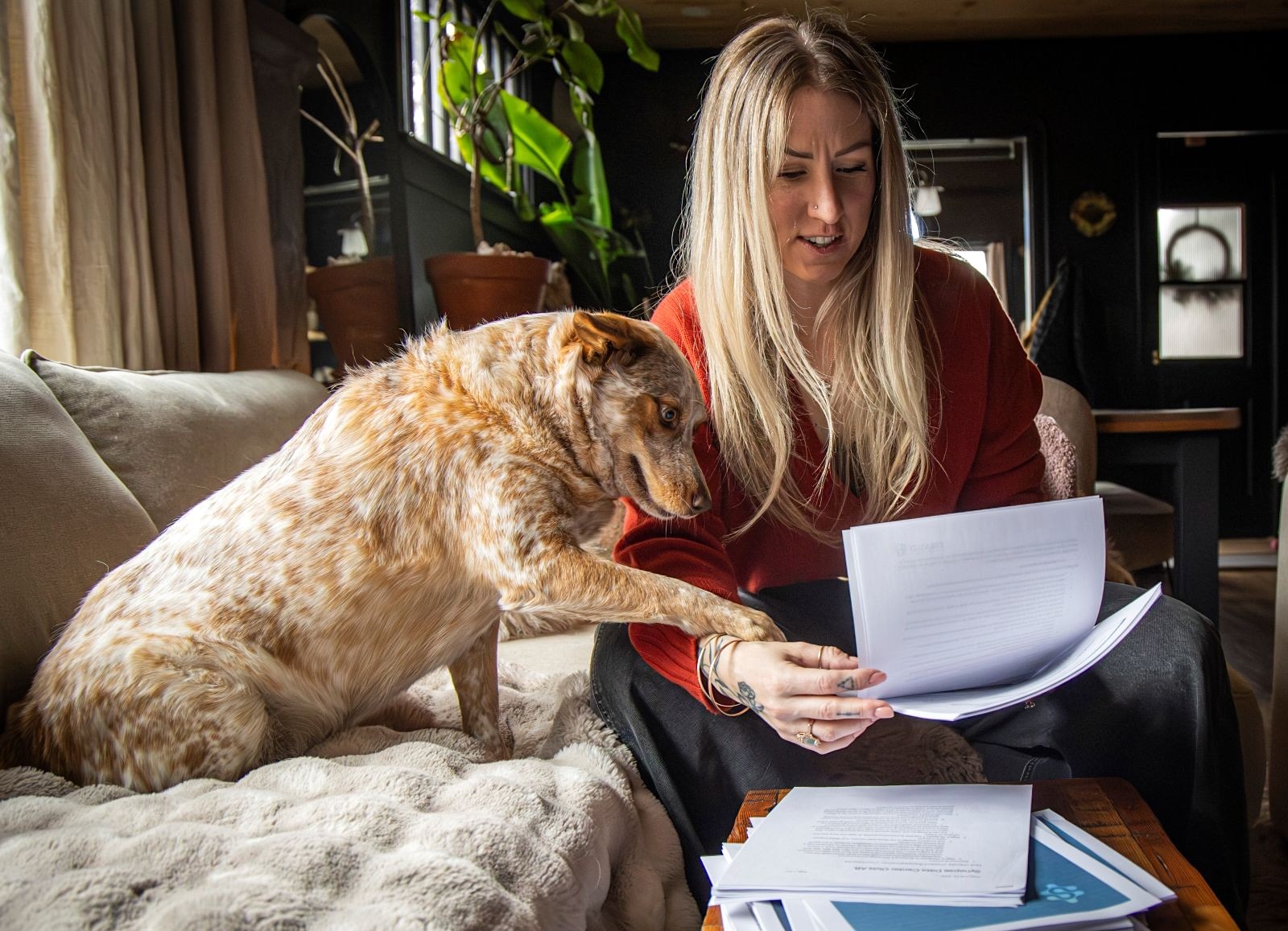
"Data Centre 101" quickly became a community-building exercise. Financial professionals, engineers, teachers, retired oil and gas workers and moms all stepped forward to pry more information about the project from the town, the province and the industry. They created a website, the Olds Transparency Project, and posted their findings.
Every day brought a sharing of new revelations, recalls MacIntosh, who catalogued and shared them relentlessly. “You would wake up at 3 and 4 in the morning and go to bed at midnight.”
Some volunteers tackled municipal zoning laws while others researched the obligations of regulatory bodies such as the Alberta Utilities Commission, or AUC.
Carol Edwards, an academic expert on big project economics who had just retired in Olds, couldn’t believe what was being proposed so close to a residential community. She recommended to one reporter that any data centre should have to make a $10-million bond deposit in a community trust, given the industry’s track record of broken promises and failures.
Pointing the lens
Meanwhile MacIntosh decided to make a documentary about the whole confusing process.
“I am a loudmouth,” she says. “That’s my superpower.”
Making the film also gave her permission to ask lots of questions. Of everyone.
In that capacity she began to reach out to experts on data centres and post her findings on Facebook.
Those experts “were more than happy to provide information about what we were facing.” A local doctor, for example, wondered how you can build a power station in a residential neighbourhood and ensure noise and air pollution would not harm people.
She held an illuminating hour-long interview with the proponent, during which van Gaal admitted that he had put together a 50-megawatt facility but had never built a gigawatt one.
“I have sometimes a tendency to oversimplify, but it also helps me in terms of making challenges manageable,” van Gaal told MacIntosh.
She wasn’t impressed.
As neighbours shared more information, they learned that hyperscale projects for AI came only in one size: giant. That meant constant industrial humming, lights, security and vibrations from generators and hundreds of cooling fans.
A facility's water-intensive cooling systems also emitted hot air, creating dramatic heat island effects that raised local temperatures by several degrees.
In addition, huge natural gas turbines spewed greenhouse gas emissions and toxins around the clock.
At Olds Municipal Centre, however, the people in charge viewed the project as “light industry” and an opportunity to increase the municipality’s tax base and create jobs. They estimated that the facility “could generate between $5 million and $7 million in annual municipal property tax revenue at full build-out.”
Council didn’t initially welcome an avalanche of questions and queries from the community.
When MacIntosh pointed out the project would devalue homes, possibly force people to move and generally unsettle the town, the exchanges, she admits, were volatile. A person can know when to use their “big mouth” for advocacy and otherwise be concerned and thoughtful. But MacIntosh says she got labelled “one of the crazy ones.”
Data centre proponents called her a “terrorist” and a dumb blond. She endured threats of lawsuits and online bot attacks and inappropriate AI-generated images sent by critics.
MacIntosh carried on, electing “to be considerate and respectful.”
“The debate created a huge division with the community,” MacIntosh says. “It created two different worlds: those who could see the fallout and those who could only see the money. The chasm got wider every single day.”
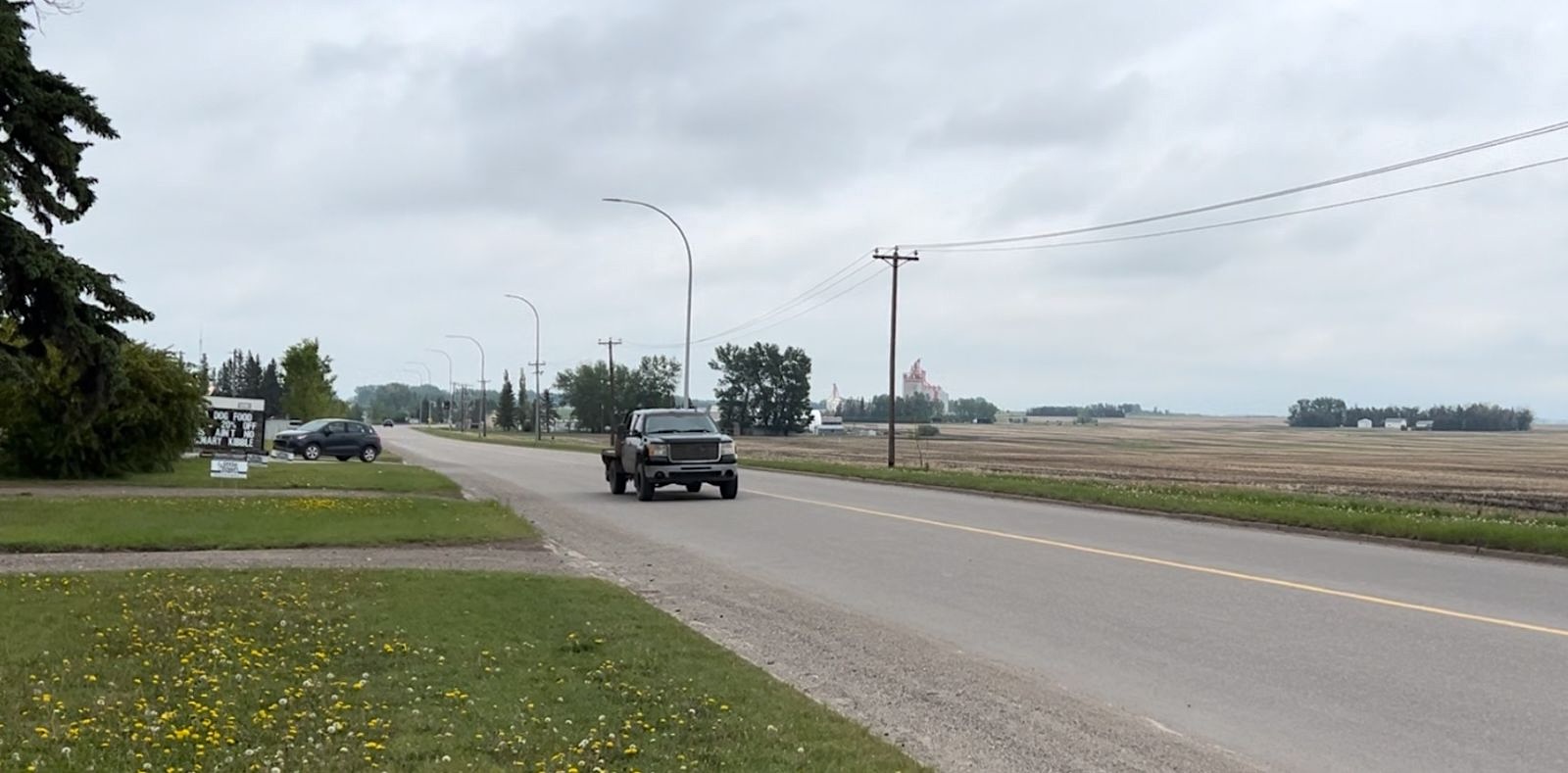
At one point the town’s chief administrative officer, Brent Williams, explained to a reporter: “Whether or not there's a bubble or whether or not AI will enslave the human race or make us all stupid or I don't know — that's way above my pay grade — but it's an opportunity, and that's why, at a high level, it's being chased by governments, people, industry across the globe.”
At a town hall meeting in April the province’s technology minister, Nate Glubish, made similar arguments. When residents told him that they didn’t think it was appropriate to put a giant gas plant attached to a warehouse next to a residential neighbourhood, he acknowledged that might be a problem.
“I’ll do a little homework to see whether or not there is a need for the province to put something into provincial legislation to deal with that,” he said.
Fighting to establish a precedent
By now it was clear to MacIntosh that if Olds became the precedent for industry dropping power stations and data centres next to homes and shops, “there will be no stopping this.”
“So what are we, a test subject? An experiment?” she asked at the time. “It felt like psychological warfare.”
It also disturbed MacIntosh that most of the residents caught in the uproar over the project’s inappropriate scale were elderly.
“On a basic justice front this just became intolerable.”
Then the Alberta Utilities Commission got involved. There are no provincial rules or guidelines on where to put data centres, even though the Smith government insists the energy-intensive industry must build its own power facilities. But the AUC regulates the siting of energy power plants such as natural gas generation in the public interest.
“Just learning how to sign in to their difficult website was a form of torture,” recalled MacIntosh.
In March the regulator summarily rejected Synapse’s first application due to a long list of “significant deficiencies.”
When Synapse reapplied again a month later, using AI to complete its second bout of applications, more than 1,500 citizens registered to participate in the hearing process — a historic number, according to the Alberta Utilities Commission. Volunteers trained concerned citizens how to navigate the onerous digital process.
Meanwhile, signs started to pop up throughout town: “Data Centres Do Not Make Good Neighbours.” To illustrate the industrial scale of the project for her documentary, MacIntosh organized the town’s residents. Two hundred and sixty-five citizens lined a road across from the site, holding hands in a “unity line” to show its size in human terms.
Finally, the community’s sustained protests produced tangible results. On Aug. 17, the commission rejected Synapse’s power application without a public hearing on the grounds it was “not persuaded that Synapse has demonstrated why this specific location is in the public interest.”
In response to the Alberta Utilities Commission decision, Synapse said “that the project in Olds will not proceed as proposed” but the company remained keen on pursuing opportunities in Alberta. “Alberta is uniquely positioned to lead North America by pairing its abundant energy strengths with growing demand for the AI and high-tech revolutions.”
An Alberta government spokesperson told CBC that “decisions like this prove that our framework is working and our regulatory bodies are doing their job to protect the interests of Albertans and our communities.”
MacIntosh and other folks from Olds celebrated — but did not rest. Days later she attended a series of tumultuous town hall meetings on data centres to raise more questions about the lack of specific rules and standards for communities. At the meetings, hundreds of Albertans booed and jeered government ministers.
An advocate’s seven lessons
MacIntosh says she originally joined the battle because she didn’t want to see Olds turned into a sterile “Silicon Valley of the Prairies.” Now she feels compelled to share her hard-won lessons with other Alberta communities facing hyperscale proposals so they can make informed decisions. Dozens of communities are reaching out to Little Town Big Data for help and advice.
MacIntosh shared with The Tyee seven learnings from the battle for Olds that she hopes will serve as a catalyst for thoughtful and community-minded reform on the governance of data centres.
To start, community comes first, she says. Organizing against Big Data embraced by Big Government takes collective effort and direct communication with fellow citizens.
“How you navigate that will be your community’s biggest learning and reward,” she says.
People will be overwhelmed at first by the complexity or the gritty politics, but “if you face the challenge, you will find the courage that you didn’t know you have.”
MacIntosh’s second lesson involves developing an old-fashioned appreciation for learning in groups. Social media has conditioned people to digest large amounts of information rapidly and alone. But that process doesn’t build community or help it organize in a non-partisan way against a common threat, says MacIntosh.
The only way to do that is by sitting down with neighbours, friends and colleagues to have face-to-face conversations.
She calls her approach old school — “with people, by people and for people.” The process is long, difficult and messy but rewarding.
She also notes that residents who initially relied on AI for answers and information about the project experienced much higher stress levels than those who worked with people on the issue.
AI is a potent player in the data centre debate. During the uproar over Synapse, MacIntosh documented — to her dismay — that both the town and the proponent regularly used AI to assess each other’s applications or even compose their own regulatory paperwork. Town officials “used AI for their statement of intent to participate in the AUC process and it was painfully obvious,” says MacIntosh.
Third, local actions matter. Long before a big data centre even comes to town or a municipality, watch for changes in local land zoning, cautions MacIntosh. Six months before Synapse appeared in Olds, the town quietly changed the definition of light industrial development to include data centres.
“Nobody realized what the consequences of that change could mean,” says MacIntosh. “Our town was trying to subvert the public interest.”
Fourth, it is important to pay attention to the local work of chief administrative officers. They play a pivotal role in the data centre debate, says MacIntosh. Why? Because they manage local municipal governments or towns. With salaries in the range of $200,000 or more, these itinerant professionals often push development schemes but rarely stick around to experience the consequences. As a group they view data centres as a solution to real governance issues.
One major AI investor recently confirmed this point in a critical article about the industry. He noted one of the strongest arguments against AI focused on how it changed incentives for local politicians.
“Because data centres require relatively few employees to run, and few direct connections to local business, schools or contractors once they’re built, they provide a politician’s dream: access to capital unencumbered by local citizens’ concerns,” wrote Jon von Vitruvius.
That’s a major problem, says MacIntosh.
Fifth, opposition to data centres is a non-partisan issue that brings the community together over shared concerns, including about the future of humanity. “Even people who love technology are having second thoughts about AI,” says MacIntosh.
MacIntosh also thinks that local, provincial and federal governments “will find themselves in jeopardy outside of the electoral process” if they don’t slow down and listen to the concerns of ordinary people.
Sixth, every data centre controversy is really an old story about the tortoise and the hare.
“Governments are not known for their speed of change and protection of communities,” says MacIntosh. Data centre developers go fast.
“In this debate, citizens have to push governments to move at the speed of the hare. It has been difficult.”
But, says MacIntosh, the pushback has forced Alberta’s government to consider provincewide setback rules and tougher water and noise standards.
Last but not least, the moral issues swirling around AI deeply matter.
The technology, MacIntosh says, is creating a pathway for machines to replace human thought, human ingenuity and human problem-solving. When humans rely on AI to expand ideas and pursue business, they lose the safety guardrails that should be part and parcel of these decisions, she warns.
“AI needs a time out. We don’t understand yet how to live harmoniously with it, and we are losing our grip on reality every second we subject ourselves to its wisdom above our own. It is not being used as a tool but as a replacement for responsible thinking.”
She pauses to reflect on why she’ll keep fighting. “There will be no way of going back if we don’t put on the brakes.” ![[Tyee]](/design-article.thetyee.ca/ui/img/yellowblob.png)
Read more: Alberta, Science + Tech, Environment









Tyee Commenting Guidelines
Please note that email notifications for replies are not currently working due to a software issue which may be resolved in a future update.
Comments that violate guidelines risk being deleted, and violations may result in a temporary or permanent user ban. Maintain the spirit of good conversation to stay in the discussion and be patient with moderators. Comments are reviewed regularly but not in real time.
Do:
Do not: