


 SHARE:
The Texas State Board of Education recently reported that its public schools’ curriculum will henceforth include excerpts from the Bible, from the primary grades through secondary school. This has caused some distress. Many taxpayers think that doing so will be a violation of the constitutional principle separating church and state.
Nevertheless, the Bible has a place in the public schools. It’s just not one that believers would accept.
Bible readings were actually routine in American schools through much of the 19th and early 20th centuries. But they used the King James version and other Protestant translations; American Catholics eventually created their own school systems to teach their own version of the Bible. It was different in Canada, where Catholic schools were supported to protect minority rights. They still have public funding in Alberta, Saskatchewan and Ontario.
Here in B.C., public schools had been secular from the outset in 1872. But in 1944 the legislature changed the Public Schools Act in 1944 to require the daily reading of a Bible passage, plus the Lord’s Prayer, without comment. The BC Civil Liberties Association protested such readings in 1969, but the law wasn’t repealed until 1996.
Such readings were of course a waste of breath; no one would have paid much attention to them, and no one was morally uplifted by them. But as society itself became more secular, and fewer children were exposed to the Bible at home, education suffered a major loss.
A floor of literacy
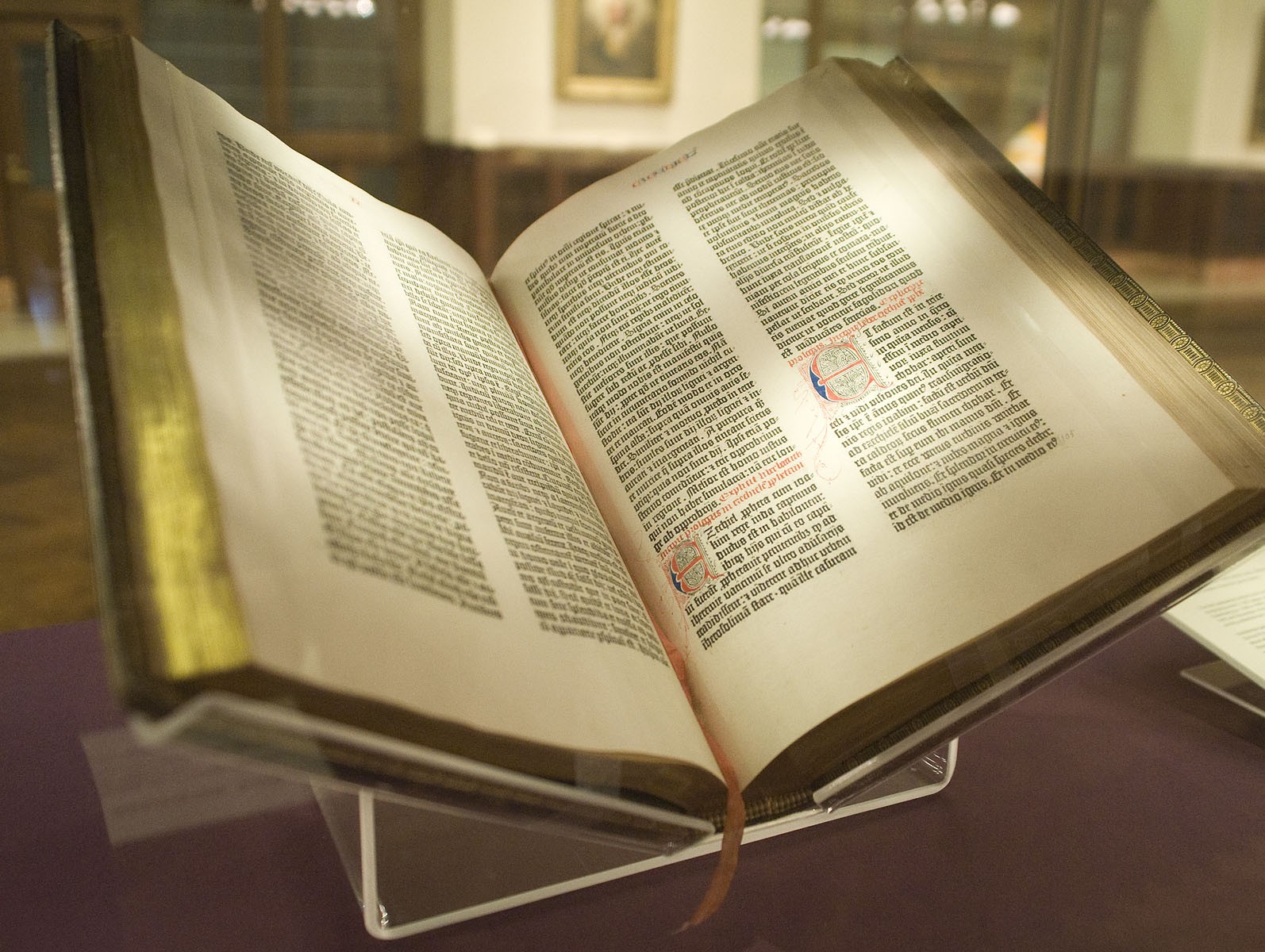
We forget that from the publication of the King James translation in the early 17th century, the Bible infused daily life and discourse for centuries. It arguably kept a floor of literacy under English society, and of course the American and Canadian colonies. The King James Bible was taught in schools, and in church Sunday schools. Even the illiterate could listen to readings and sermons and begin to think and speak in its rhythms and vocabulary.
But sometime in the mid-20th century, the Bible dropped out of routine use in millions of North American homes and in the public schools. People who went to church would still hear it, but few outside the active Christian communities actually read it and debated it.
As a university English major, I certainly heard about the Bible from my professors as we analyzed authors and poets. But I took the use of biblical allusions as just another influence among many.
That changed in grad school when I read Charles Dickens’s Bleak House — a sprawling, complex novel written in the 1850s. One of its two narrators is a young woman named Esther Summerson, who lives with her dour aunt, Miss Barbary.
Esther is the child of an illicit affair between a disgraced army officer and a young woman who has gone on to marry the wealthy Sir Leicester Dedlock. Esther’s existence must be kept secret, and Miss Barbary dwells on the shame Esther and her mother have caused each other.
One day when Esther is 13, she reads the Gospel of St. John to her aunt. At one point she recites, “He that is without sin among you, let him cast the first stone.”
Miss Barbary shouts, “Watch ye therefore! Lest coming suddenly he finds you sleeping. And what I say unto you, I say unto all, watch!” She then falls into a coma and dies a few days later.
That baffled me. What did Miss Barbary mean? I had to dig out my own Bible and find the passage in the Gospel of St. Mark XII, verses 35-37. In it, Christ foretells the destruction of the temple, and a time of troubles in which “children shall rise up against their parents, and shall cause them to be put to death.” He compares humanity to servants in a house from which the master is temporarily absent. They dare not shirk their jobs, for the master may return at any moment.
I didn’t understand the allusion to the Gospel of St. Mark, but Esther Summerson does; she understands it to mean she is an agent of society’s destruction and her mother’s death, doomed to bring down calamity “upon the stately house” of Sir Leicester and Lady Dedlock.
And Dickens’s readers understood it as well. Writing for a vast popular audience, he could turn Miss Barbary into a kind of oracle, foretelling the future with a biblical quotation. His readers would have heard those words from the pulpit, and pondered them in their own Bible study. Miss Barbary’s last words must have terrified readers as much as they terrify Esther.
That tells me that Dickens’s mass audience was more literate than most modern readers, who have likely read only Dickens’s A Christmas Carol, or watched movies based on his novels. His audience also had a longer attention span: Bleak House first appeared in 20 monthly magazine instalments in 1852 to 1853, before publication as a complete book of about 350,000 words.
The failure of literary analysis
Even more to the point, I realized that a modern critic identifying the biblical source of a literary passage is like someone explaining a joke.
It is a truism of storytelling that the stakes must be high for the characters, or the story is meaningless. Dickens’s readers would have instantly understood how high the stakes were for Esther — and for her whole society. That would make them almost frantic to turn the next page, and the next.
At Columbia University I took its first-year humanities course, a two-semester race through Western literature from the Iliad to Dostoevsky. One of my classmates was quite prepared to analyze excerpts from the New Testament, but he refused to regard the Old Testament as mere literature. Biblical stories, to believers, are sacred. They must be heard or read, and debated, but they cannot be analyzed.
Believers in Texas are clearly not interested in critiquing the story of Adam and Eve, or the sorrows of Job. They seem to want simply to expose students to such stories in hopes that something holy will rub off on them.
Speaking as a non-believer, I find it surprising that believers are willing to outsource religious instruction to teachers in the public schools, rather that ensure their own children are properly taught by fellow believers who know what they’re talking about. That’s what religious schools are for.
Tax-subsidized Sunday school
But the kind of religious instruction planned for Texas schools will be, in effect, taxpayer-subsidized Sunday school. A paper published by the Baker Institute at Rice University has outlined a curriculum in which kindergarteners are to read from, and discuss, the creation story in Genesis; Grade 3 students learn that Jesus performed miracles and rose from the dead.
By Grade 5, students are to read a long passage from the Gospel of Matthew about the Last Supper. Historical figures like Rosa Parks are mingled with biblical ones like Queen Esther, whose reality is still debated by scholars. She may be as fictitious as Esther Summerson.
Judaism, the Baker Institute says, is mentioned mostly in the context of the biblical period, and religions like Islam, Hinduism, Sikhism and Buddhism get only brief mentions. The institute’s paper says the curriculum “implies, when taken as a whole, that Christianity is more important than any other religious tradition.”
The Texas curriculum treats the Bible not as the object of devotional study but as part of history, as true as the battle of the Alamo or the start of Canadian Confederation in 1867. In some ways, that’s all right; children’s education should include something about the Bible as well as about the beliefs of other religions. But believers of most religions, like my classmate at Columbia, are likely to reject the view that their faith is “just a story.”
I suspect that the real intent of biblical content in the Texas schools is not to proselytize, or to treat such content as devotional. It is to make religious content just another part of public education, like geography or arithmetic. The effect will be to contravene the U.S. Constitution by legislating an establishment of religion — which government is explicitly forbidden from doing.
An established religion easily becomes the authority for other legislation, imposing its values and beliefs on believers and unbelievers alike. Historically, little has been more socially divisive for a country than religious establishment; whatever its flaws, secularism excludes such division and lets everyone get on with life in this world.
So let us have comparative religion courses in the public schools. They would make excellent high school elective courses, giving students a better understanding of their classmates — and perhaps themselves.
And if students object to thinking of their religion as “just a story,” they might reflect on how God created us to learn and teach through storytelling. ![[Tyee]](/design-article.thetyee.ca/ui/img/yellowblob.png)
Read more: Education








Tyee Commenting Guidelines
Please note that email notifications for replies are not currently working due to a software issue which may be resolved in a future update.
Comments that violate guidelines risk being deleted, and violations may result in a temporary or permanent user ban. Maintain the spirit of good conversation to stay in the discussion and be patient with moderators. Comments are reviewed regularly but not in real time.
Do:
Do not: