


 SHARE:
As Mary Ann McKenzie fled the Pear Lake wildfire in Clinton July 24, she stopped to snap a photo of a giant plume of smoke coming toward Willow Springs Resort on Highway 97.
Little did she realize it would be the last time she would see the trailer park and full-service campground that has been in Clinton for more than 40 years. Three days later, the resort’s owners wrote that the mobile home park, campground and home had all been destroyed.
Across the region, residents and business owners are coming to grips with a fire that has spared some, but left others with nothing.
In Clinton, the town centre and many homes have so far escaped destruction. But the fire has burned multiple homes, hayfields, cattle and businesses. It’s not yet known how many homes were lost, but Clinton locals are already setting up GoFundMe accounts to help those left with nothing.
It’s the Clinton way.
‘A huge community effort’
I grew up just west of town, graduated from school in Clinton and now, after a newspaper career in Vancouver, edit the local newspaper, the Lariat. (I live close to 100 Mile House and have yet to be evacuated.)
A village of 650, Clinton is located halfway between Vancouver and Prince George. Many of its residents have deep ties to the community, their families having lived there for generations. It’s a small town that depends on people helping people. Residents are the typical small-town crowd, cooking hot dogs on Canada Day, helping kids tie flies at the local fishing derby and delivering homemade soup to shut-ins.
Even those who grew up there and left still hold Clinton dear to their hearts, meeting annually at the May Ball Rodeo and Old-Timers’ Tea, or catching up at the local coffee shop or Friday night legion dinners.
Since the fires broke out, I’ve been contacted by several classmates wanting to know if so-and-so got evacuated; if their childhood home is still standing; if the power is on at Loon Lake “because I can’t reach my folks.”
At the Stagecoach Café, Nicholas Kosovic and his mom Maria worked around the clock to serve hungry firefighters. Normally a lunch place, the Stagecoach expanded its hours to include “hungry man” breakfasts and dinners.
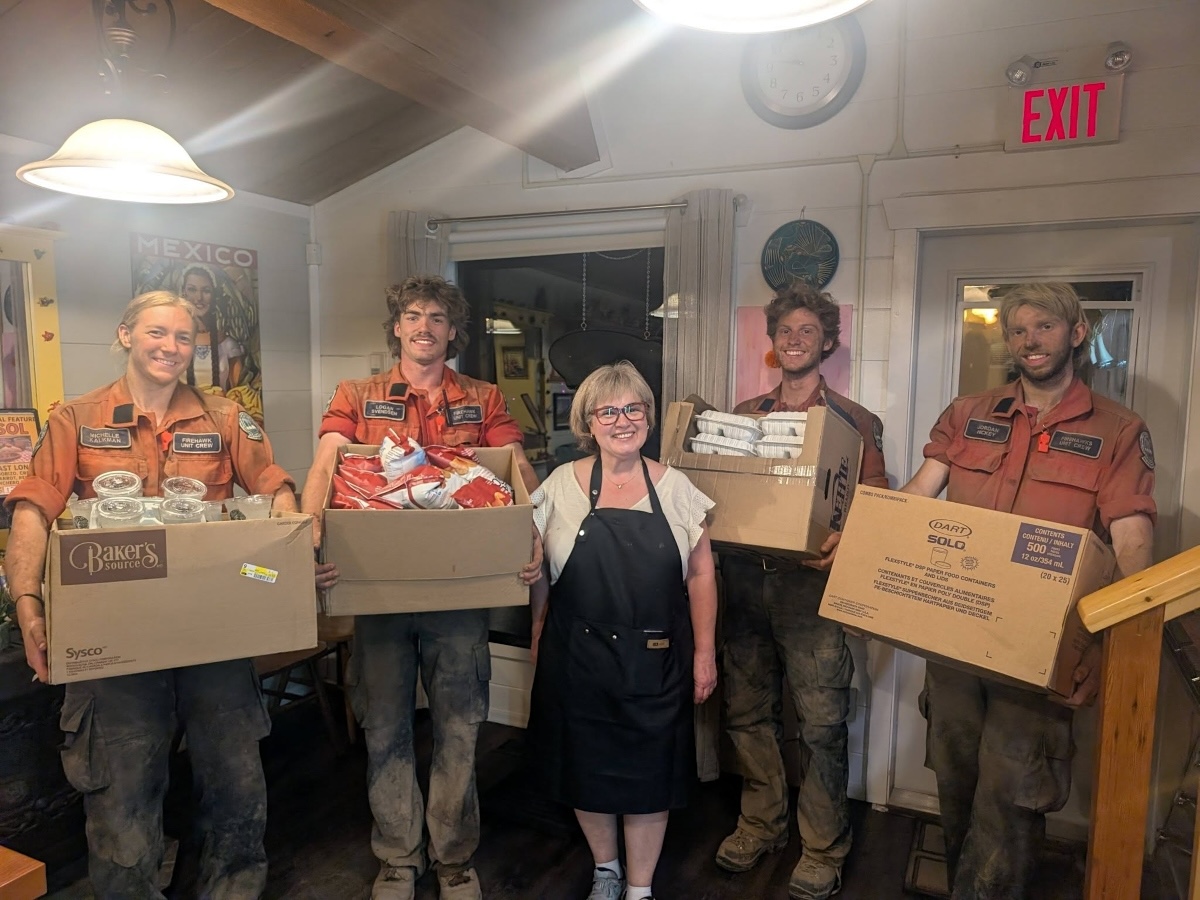
“It just steamrolled,” said Nicholas Kosovic, who is also a local councillor. “We couldn’t feed them with a normal meal. Their only instruction was more carbs, more meat. It had to be substantial. We had to get support from the community to get supplies.”
Freezers that had been full in the morning were empty at night, but Kosovic said they didn’t need to ask for help. The 100 Mile House food bank called, offering meat. Lo-Boy Market in Kamloops supplied cases of chocolate bars, energy bars, snacks and drinks. Regular customers dropped by with produce from Desert Hills in Ashcroft or radishes from their own gardens.
Before he was evacuated, Kosovic used the leftovers from the donated food to make sandwiches for firefighters and those at Emergency Support Services.
“It was just a huge community effort.”
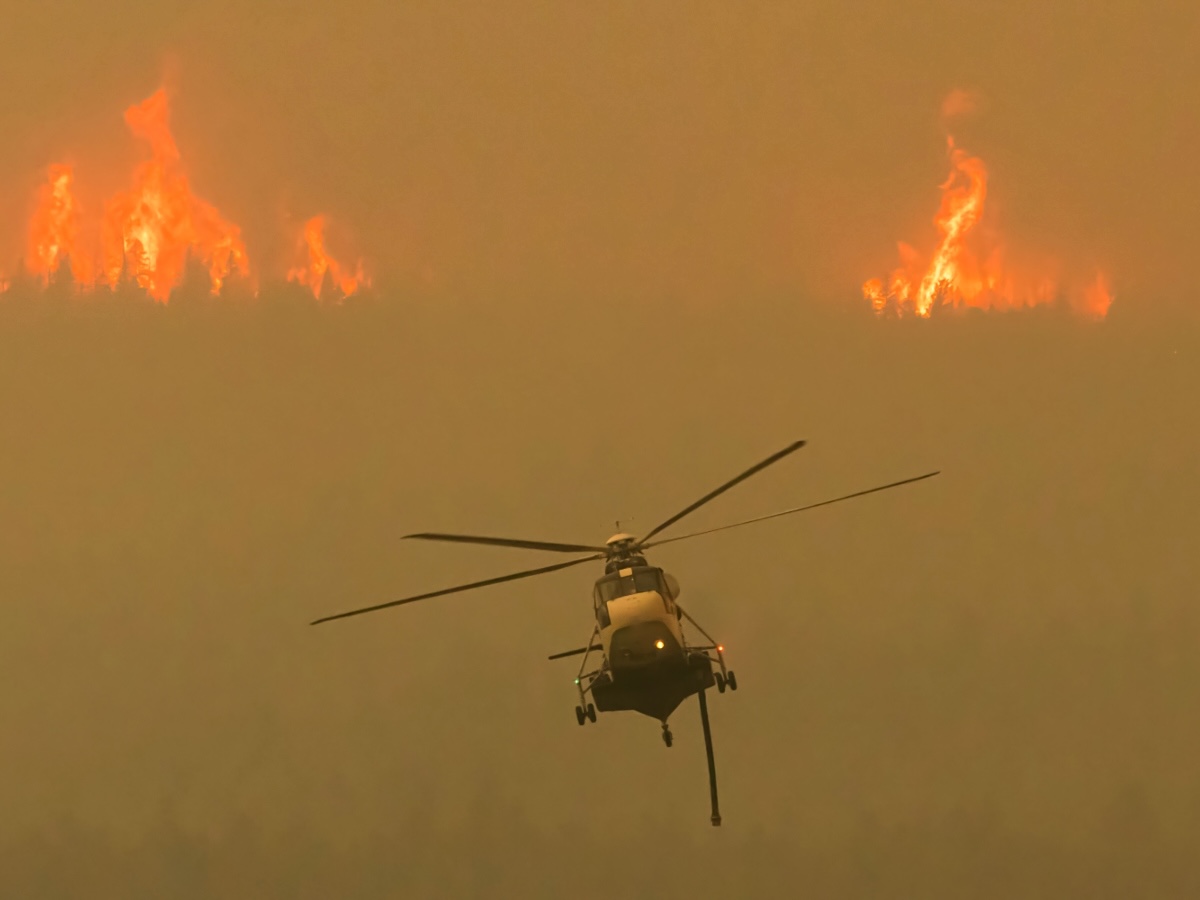
Residents weren’t surprised when they were told last week they needed to immediately leave their town. For days, Clinton’s townsfolk had watched and waited as thick plumes of smoke blanketed the village’s downtown, the ash turning from grey to black. Alerts and orders had already been issued for the nearby French Bar Creek and Fiftynine Creek fires. Now another fire was approaching.
The Pear Lake fire started on a steep and tinder-dry plateau about 18 kilometres east of Clinton, not far from Kelly Lake, which doubles as the town’s swimming hole. Two days later, as temperatures soared to 33 C, locals who had gathered at the lake to cool off fretted that the fire was still burning out of control.
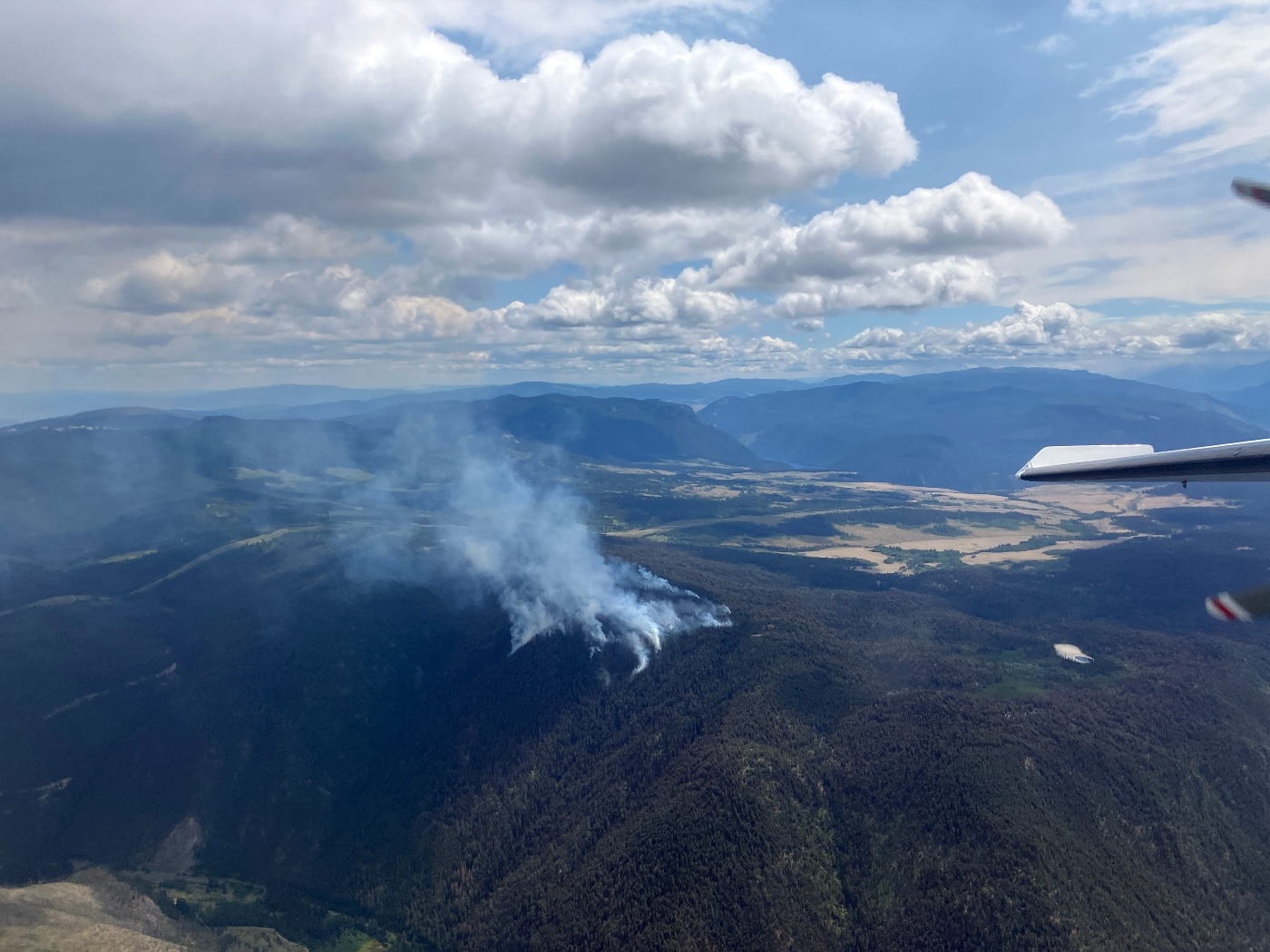
BC Wildfire Service said it had to battle the fire with helicopters, as the hot and dry conditions and steep terrain made it too dangerous for ground crews to access. The location was particularly worrying, with the prevailing winds from the west seemingly destined to push the flames closer to Clinton.
“There was a lot of concern and a sense of inevitability because you knew the way the winds were blowing,” McKenzie said.
An emergency meeting was called. Ranchers scrambled to move their cattle.
“After the public meeting, looking down toward Kelly Lake Road, the fire was all lit up and dark and I thought, ‘Oh God, if it comes this way,’” Clinton Mayor Roland Stanke said. “You could tell it was volatile and it was going to blow at any time.”
A history of wildfires
Clinton is no stranger to wildfires. In 2017, the town was evacuated after it was surrounded by the Elephant Hill wildfire in the south and Gustafsen Lake fire to the north. Frustration over back burns lit to fight the fire left a sour taste in many mouths. Nine years wasn’t long enough to erase the scars.
Even an inkling of an emergency meeting is enough to rattle residents’ teeth. People didn’t want to leave town for medical appointments for fear they wouldn’t be allowed to return. Others prepared to stay and fight, not trusting their homes or their neighbours’ homes would be there if they left.
“I figure if you’re going to lose everything I may as well be here to watch it burn,” said Rolly Higginbottom, who was born and raised in Clinton and stayed in town despite the evacuation order. “Everything is so dry. All it would take is one spark. If I’m here, I could put that spark out.”
But as the fire spread rapidly toward town, Higginbottom acknowledged the odds didn’t look so good.
The fire was intense, blazing a wild path toward town. It came dangerously close to the BC Hydro substation on Kelly Lake Road, which supplies power to millions of British Columbians. Power lines were torched. Homes, hayfields and outbuildings were destroyed.
BC Wildfire Service fire crews, stationed at Elliot Park on Kelly Lake Road, were relocated as the fire headed north up the hillside where it crossed Highway 97, south of Clinton. The blaze then split heading in two different directions.
One hundred fifty firefighters and 200 structure protection units worked around the clock, BC Wildfire Service fire officer Paula Walbauer said. But crews were challenged by prolonged drought conditions, high winds and variable terrain in the Kelly Lake valley, which includes a mix of ranchlands, cabins, forests and lakes.
“During times when the fire behaviour is quite extreme, we have to pull crews back from fighting directly,” Walbauer said.
The fire swept across the highway in multiple spots, destroying industrial businesses, homes and hayfields on its relentless march toward the village. The Clinton rodeo grounds, the heart of this cowboy town that just celebrated 75 years, is gone.
Nineteen cow-calf pairs had been sheltering at the rodeo grounds, after being evacuated from the Fiftynine Creek wildfire. Ryan McDermid, who had been contracted by the BC Cattlemen’s Association to help move livestock, got them out in the nick of time.
“It’s completely gone,” McDermid said. “Those cows would have died in there.”
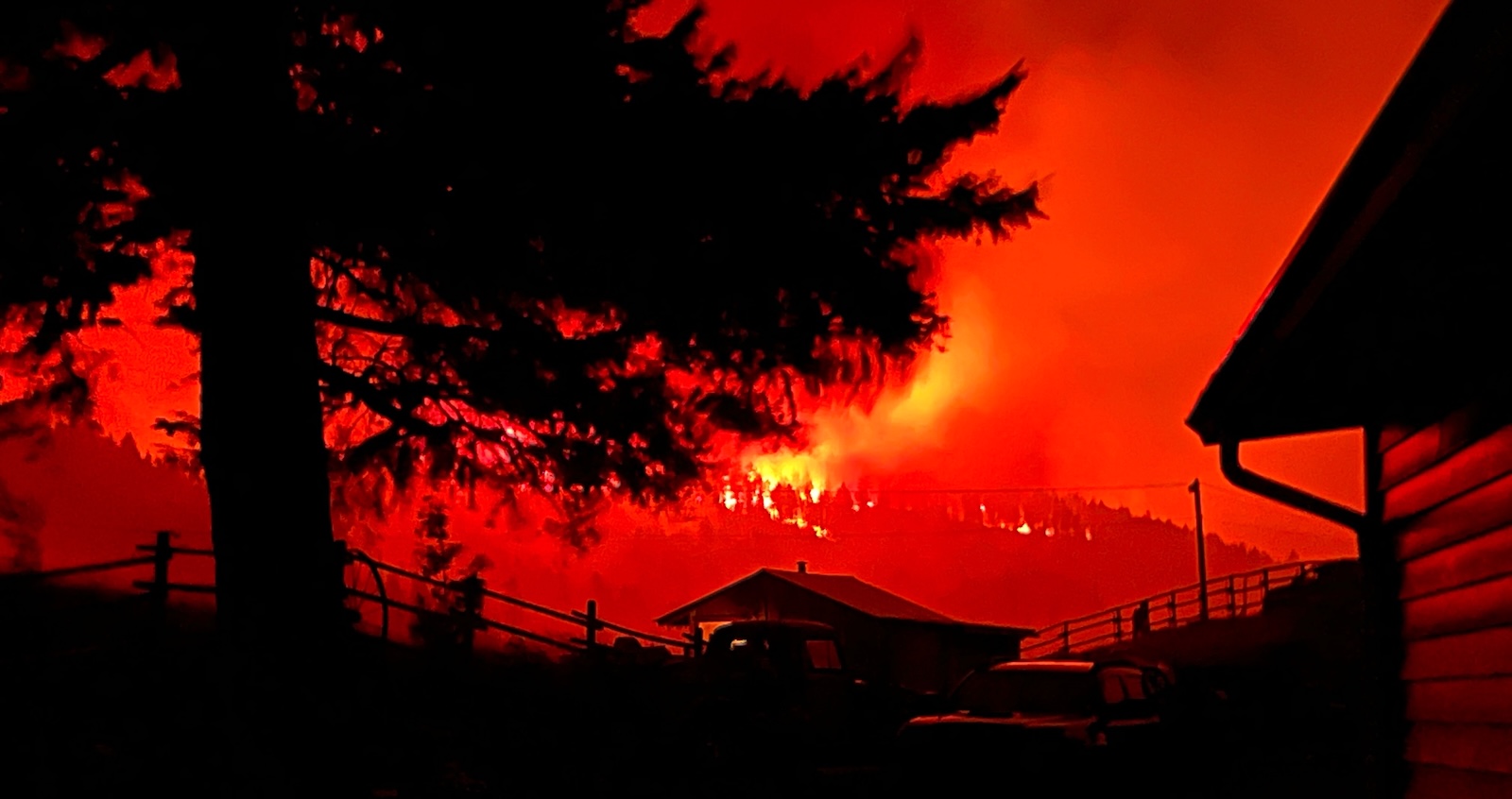
The fire seemed to pick and choose its routes and targets. Jessica Heikes, who lives on a 200-acre property south of Clinton in Cache Creek, was helping evacuate horses from Loon Lake when she saw the fire approach the turnoff to the lake.
“It was really scary,” she said. “When I initially got the call, I didn’t realize it was that close. It wasn’t supposed to be going that way. We weren’t expected to see it. It was like an atomic bomb when that went off.”
Back in town, the fire spared the local school as it closed in on the village. Firefighters, including members of the Clinton Volunteer Fire Department, worked all night to protect the town’s homes and businesses. At times, it seemed impossible.
“Nobody could see a lot because of the smoke,” said Higginbottom. “I looked across the valley, and I saw the fire going up the hill. It was on both sides of us, coming in. They fought hard, the choppers fought for hours. I thought they might have trouble saving the town.”
The next front in the fight
On the morning of July 25, the village issued an alert saying, “Clinton has been preserved from major loss.”
But the fires weren’t done. North of Clinton, the Fiftynine Creek wildfire, which had already destroyed 20 recreational homes on the south side of Big Bar Lake, merged with the Pear Lake fire. The combined fire, at 66,871 hectares, then turned its sights north toward 70 Mile House.
McDermid was called to haul livestock to Kamloops, Ashcroft or Merritt as the Thompson-Nicola Regional District issued an evacuation order. Firefighters raced to place sprinklers and other protection on homes and properties in the community around the Chasm Park, a provincial park with a 300-metre-deep canyon with colourful geological formations and ponderosa pine forests.
70 Mile resident Karyn Greenlees made five trips to evacuate her ponies and other animals. She planned to stay but left when the fire was seven kilometres away and the wind increased.
“It was leapfrogging in the trees,” Greenlees said. “It was common sense to leave.”
In the village, firefighters are assessing the town’s damage, while BC Hydro is working to get the power up and running. Despite damage to the watershed, Stanke said he expects residents should be able to return to Clinton in early August.
“It won’t be perfect, and we will have boil water, but it’s better for people to regroup and rebuild together.” ![[Tyee]](/design-article.thetyee.ca/ui/img/yellowblob.png)
Read more: Environment











Tyee Commenting Guidelines
Please note that email notifications for replies are not currently working due to a software issue which may be resolved in a future update.
Comments that violate guidelines risk being deleted, and violations may result in a temporary or permanent user ban. Maintain the spirit of good conversation to stay in the discussion and be patient with moderators. Comments are reviewed regularly but not in real time.
Do:
Do not: