

 SHARE:
The highlighter-yellow flowers of Scotch broom are hard to miss; the invasive plant is easy to spot in open areas and along highways, almost as ubiquitous as “Cut Broom in Bloom” signs in coastal B.C.
On Savary Island, a small, boomerang-shaped strip of land just off the northern Sunshine Coast, it has taken over forest areas and sand dunes alike.
And then there’s the contorted-pod evening-primrose, an endangered species that is near-impossible to spot — even on Savary, which is one of seven or eight known remaining populations left in the country.
The tiny plant lives only on coastal sand dunes, which aren’t common in B.C. They exist here, and on Sandy Island, to the southwest; they skirt parts of the outer coast of Vancouver Island, and on Rose Spit in Haida Gwaii.
Today, a sunny day in late May, the primrose has drawn a sort of search party to Savary.
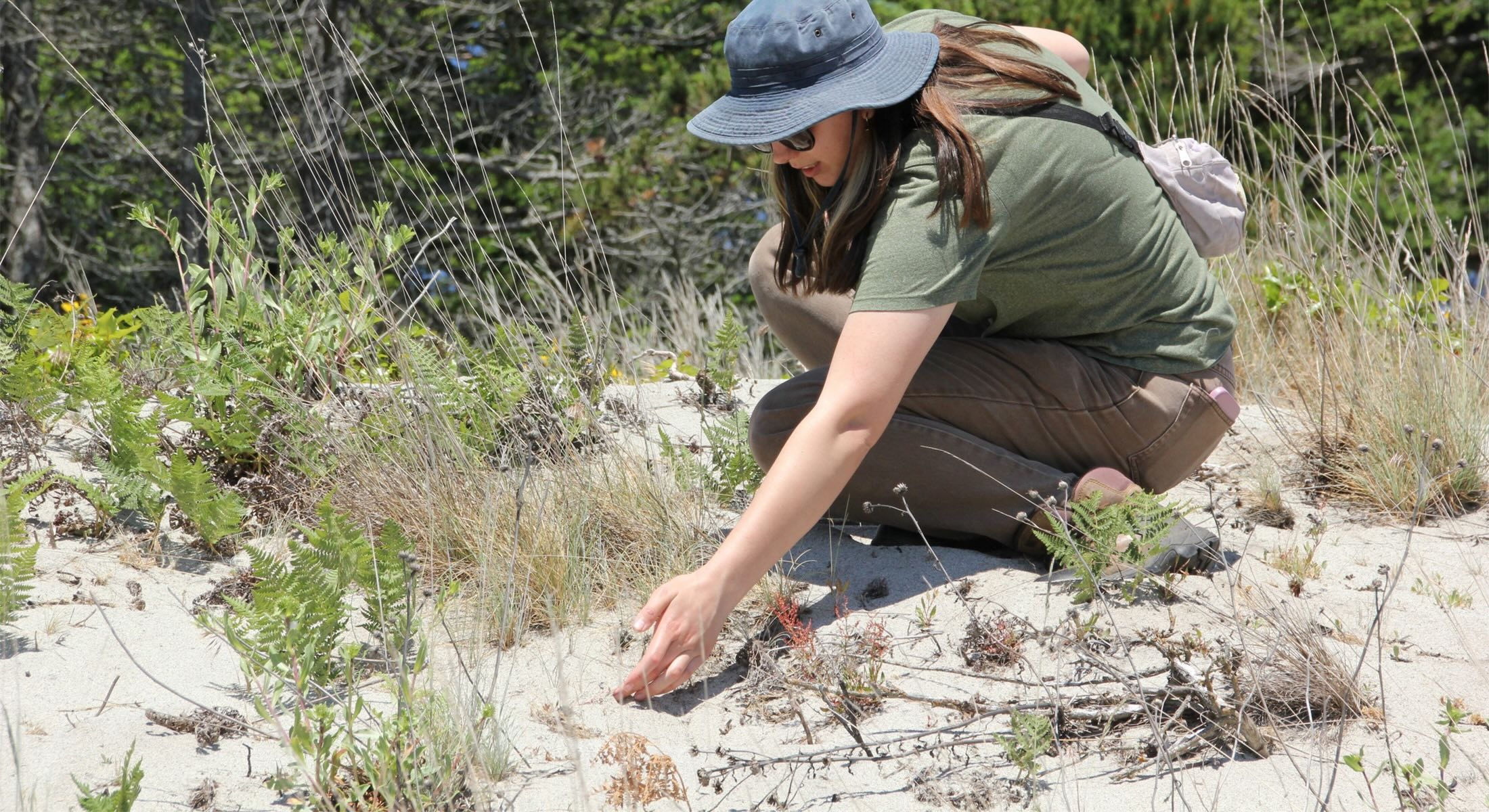
One by one, five people in their twenties walk up the soft bank of Duck Bay, on the south side of the island. They’ve got sunglasses on and hats pulled low to protect them from the sun’s glare. They spread out in a vertical line up the dune, each bowing their head to scan the ground in front of them.
The Nature Trust of British Columbia’s South Coast Field Crew has just one day to find as many of the rare plant as they can.
The contorted-pod evening-primrose is a sprawling herb with a red vine-like stem. It stores water in its short succulent leaves and occasionally sports a dainty yellow flower.
Last year, coordinator Laura Holt and her crew found 38 plants, the most she’d seen since joining Nature Trust in 2023.
This year, Holt is feeling nervous but hopeful. Since the contorted-pod evening-primrose is an annual, there’s no guarantee what the status of each population will be from one year to the next, even before considering the challenges it faces.
They’ll also discover, today, how well their Scotch broom eradication efforts have been working. Have they managed to keep enough at bay to make space for the tiny, endangered evening primrose?
An island returning to the sea
Savary Island’s sand cliffs are eroding at a rate of 25 to 45 centimetres a year.
In the summer, its dunes become “horribly hot and desert-like,” Holt says.
Native plants like the contorted-pod evening-primrose have adapted to living in these shifting sands, which don’t retain water — or many nutrients.
This habitat and its residents are fragile. Except for the Scotch broom.
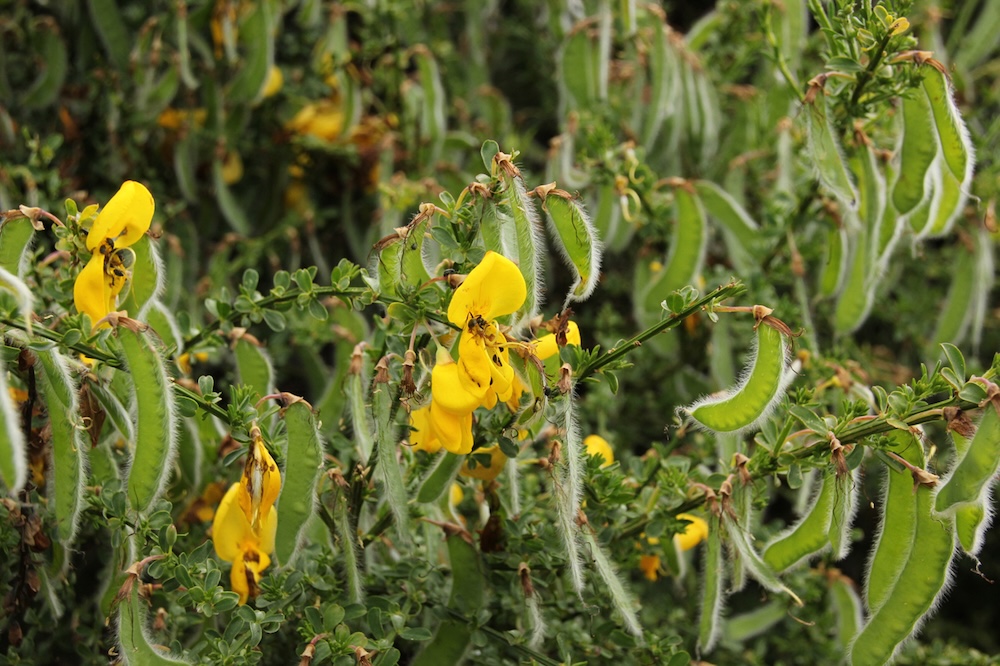
While the field crew looks for the tiny primrose in the spring, they return to Savary in the winter to yank out the invasive broom. Today, between surveys at Duck Bay and Beacon Point, the field crew members revisit a section of dune that was cleared of broom just a few months ago, connecting two other patches of open sand to create a long corridor.
Holt is grateful to see the invasive shrub hasn’t grown back as quickly as she’s seen at other sites. Shorn-off stumps can still be spotted, proof of their work. With the sounds of lapping waves at their backs and a pair of eagles watching from overhead, the crew pulls on gardening gloves to rip out any young broom before it can take root.
In her 2005 book about Savary Island, Magnetic Isle, Gladys Bloomfield recounts how settler development accidentally threw off the balance of this delicate, shifting landscape.
Logging and road building, she writes, created accidental wind tunnels. Residents watched as trees “fell like dominoes standing on their ends,” the result of lots cleared too close to cliffs.
Something, residents thought, had to be done to stop the accelerating effects of erosion. So, sometime between 1912 and 1914, they adopted a practice that had been brought to Canada about 75 years prior: the planting of Scotch broom to help stabilize sandy slopes.
By the 1930s, settlers had begun to understand that broom threatened native species; R. Sherman’s 1931 “Ecology of Savary Island” identified the shrub as “a menace to our native flora.” But on Savary, to most residents, the trade-off was worth it. In fact, Bloomfield wrote, residents accept broom as “Savary Island’s flower because of its stabilizing effect.”
Today, feelings are a bit more mixed.
“Owners who have property on the slope pay thousands of dollars a year to remove it,” Emer Dubois of Savary Island News told The Tyee.
But some people still keep it, enjoying its yellow bloom, and hoping it may help keep the island together. On one side of the street, a family may plant and grow the invasive as a border hedge; across the road, their neighbours may dedicate part of their annual landscaping budget to remove it.
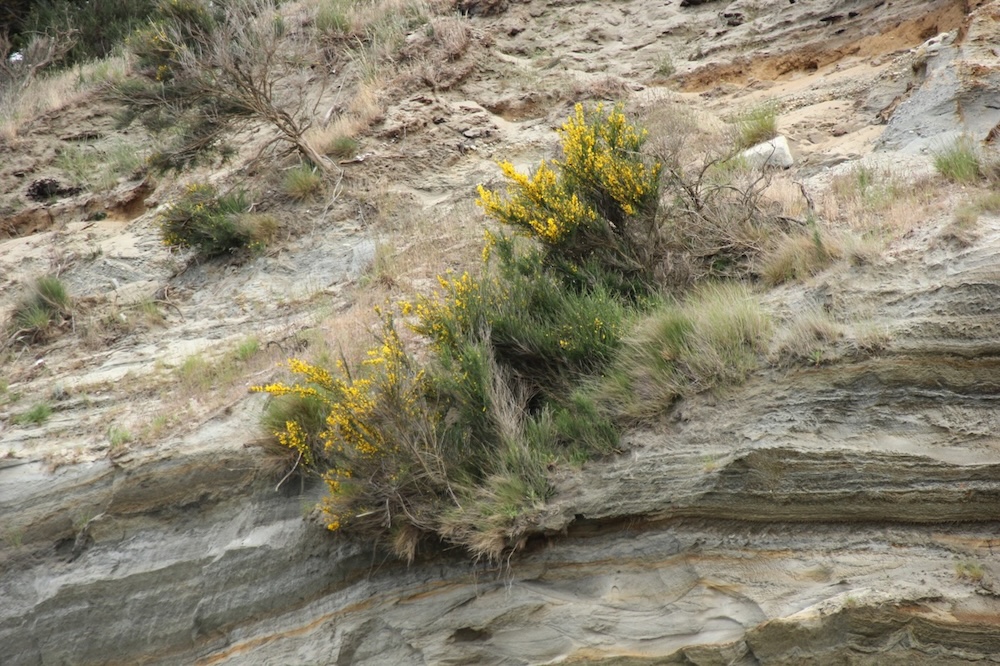
“If it had just stayed at South Beach, that would have been just fine,” Liz Webster, the executive director of the Savary Island Land Trust, says. “But, of course, it’s Scotch broom, and so now it’s invaded the entire island.”
A 2011 status report on B.C.’s coastal sand ecosystems found, based on six representative sites, that sparsely vegetated habitats have declined between 35 and 95 percent since 1930. Scotch broom chokes out native plants and the creatures that rely on them. Even deer won’t eat it.
Last June, the Savary Island Volunteer Fire Department issued a reminder to residents not to leave piles of cut broom abandoned by road allowances. Unlike most native plants, broom is “dangerous kindling for wildfires.” And, even after it’s been cut down, its seeds can continue to spread.
Search party success
Today, the South Coast Field Crew is focusing their efforts on one of the island’s remaining intact sand dunes — one that’s now protected.
In 1997, the Savary Island Land Trust formed to protect a 350-acre swath known as DL 1375 in the middle of the island from the proposed development of a gated community. After advocating for the land for 22 years and fundraising $4 million in just six weeks, the land trust was able to purchase a portion, Webster said. It was during this period, in 2003, that biologist Phil Henderson first identified the contorted-pod evening-primrose within DL 1375.
The land trust now includes intact dunes and three of the four local sites where the tiny primrose has been known to grow.
As the field crew scans the quadrant in front of them, the odd joke and false alarm — they’ve found sheep sorrel, not primrose — break the silence.
Then, suddenly, there’s a “Eureka!”
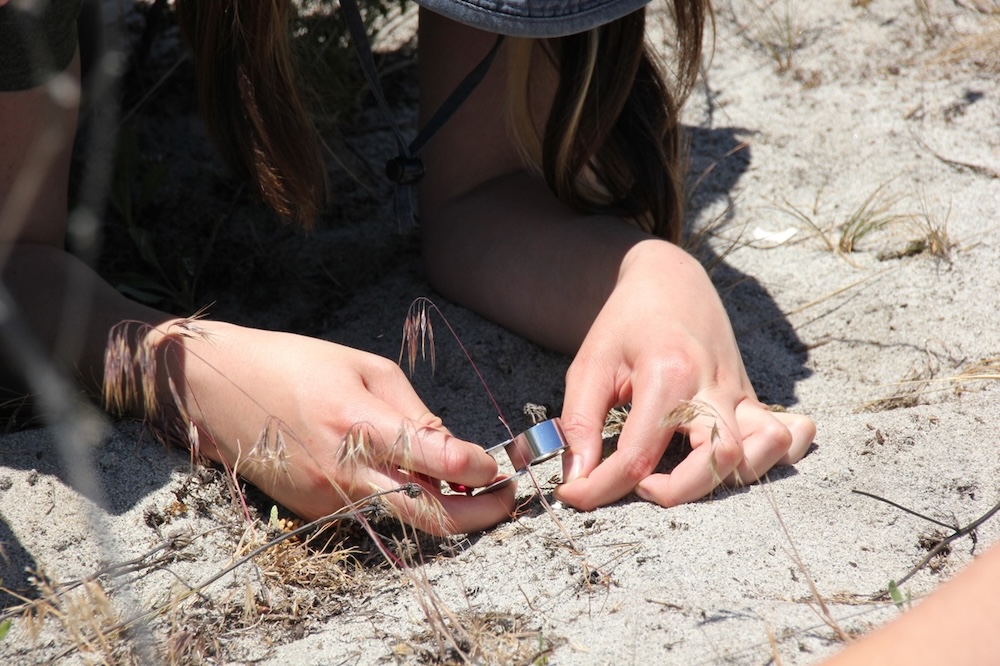
Ruby, the field crew’s newest member, calls out the team’s code word for spotting a contorted-pod evening-primrose.
Everyone freezes in place as Ruby crouches down to get a closer look. She’s right: she’s found a rusty, skinny pod bulging with a row of seeds. It looks like an encased string of pearls.
As if she’s broken a spell, more eurekas follow in quick succession; they’re standing among 40 primroses.
Lizzy and Kailey pinpoint the coordinates of the cluster and write down the number of plants to include in a report they will submit to the B.C. Conservation Data Centre.
Ten minutes later, the crew collectively gasps when someone spots a speck of yellow smaller than a pinky nail, the first of two primroses they'll see that still have petals. The primrose only blooms in a brief window in April and May before spending the summer as a seed. The field crew has come just in time.
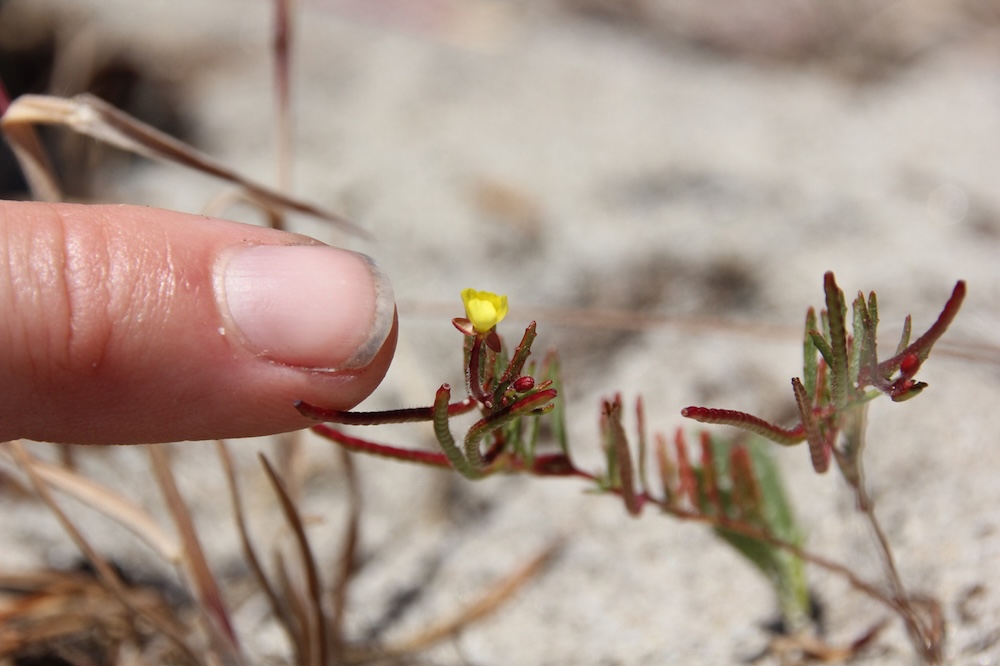
In the final stretch of the survey, the South Coast Field Crew discovers 62 more primroses in the area they previously cleared of broom. The day’s total count comes in at a record 209, including a population near Beacon Point where they’d previously only found one plant. Eureka indeed.
As the crew leaves the dunes behind, they walk through a path framed by a tunnel of Scotch broom glowing in the sun. In the fall, they’ll return to host “broom bashes,” hacking away at the mature plants with chainsaws and loppers, and burning the brush piles on the beach. Once the smoking branches have burned down, the volunteers and crew will roast marshmallows over what remains.
Holt tells The Tyee that she understands why some residents — in particular those with dwellings close to the island’s eroding cliffs — may have a more complicated relationship with broom.
But this dedicated conservation area, she says, ensures there is at least part of Savary “where the sand dunes can be in a dynamic state without being a risk.” ![[Tyee]](/design-article.thetyee.ca/ui/img/yellowblob.png)
Read more: Environment










Tyee Commenting Guidelines
Please note that email notifications for replies are not currently working due to a software issue which may be resolved in a future update.
Comments that violate guidelines risk being deleted, and violations may result in a temporary or permanent user ban. Maintain the spirit of good conversation to stay in the discussion and be patient with moderators. Comments are reviewed regularly but not in real time.
Do:
Do not: