



 SHARE:
The music industry has changed wildly in the last 20 years, and social media has become a huge part of an independent musician’s job. In addition to rehearsing, booking gigs and performing, independent musicians are also operating as their band’s social media managers, analysts and strategists.
It’s an interesting moment in the social web. It’s both ubiquitous and boring, all-consuming and, for some, repulsive. Independent musicians are navigating these tensions every day. In the process, they’re redefining their relationships with their fans, their art and the parts of themselves they broadcast on their feeds and the parts that remain private.
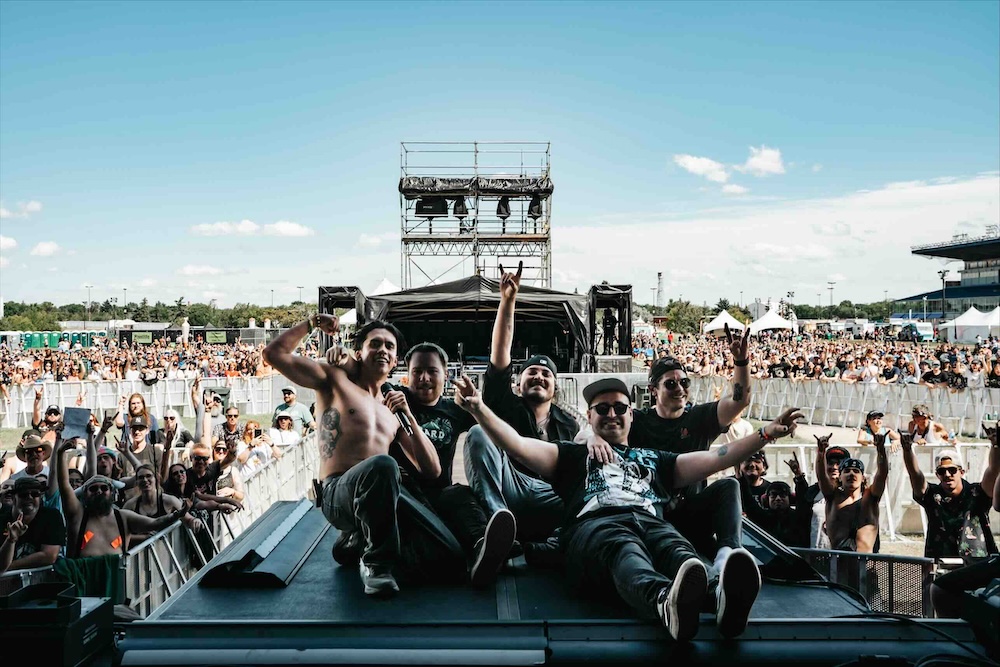
For Calgary pop-punk band Chilio, social media is always top of mind.
“I’m grateful for social media,” Chris Wirth, the band’s frontman said. “Chilio wouldn’t be where it is without it, but it’s a second job. I’m always filming, editing, checking numbers, and thinking about how something can be content, and it bleeds into my normal workday.”
On lunch breaks during his day job in construction, Wirth says he often finds himself responding to comments on Chilio’s social media accounts and posting new content, “sometimes ignoring the conversations around me, just trying to max my 30 minutes of lunch.”
John Jean, Chilio’s lead guitarist, said that having a band is having a business, and social media functions as their marketing department. Fans often tell them that they heard about Chilio’s performances through social media. “That random 30-second post on TikTok can bring five to 10 people,” he said.
While managing their social media takes up a lot of time, it has allowed the band to build a strong community. They are able to chat with fans and keep in touch, and they’re very open in their content, allowing audiences to see them for who they are as individuals.
“The more organic you can be, the better. People notice when you’re trying to be something you’re not,” Jean said.
From shiny curation to authentic scruff
“Being themselves” online is the complete opposite of what they (and all of gen Z) were told to do growing up, Wirth noted.
Parents of kids growing up in the 2010s were told to be hesitant about putting too much of themselves online. Even Canadian school curricula in those years echoed those sentiments.
For the most part, 2010s social media reflected this culture of cautiousness. The feeds were tightly curated, and people put only their best selves forward.
But with the rise of TikTok in the late 2010s, Wirth said culture shifted. People were bringing more personality to their social media accounts. Chilio released its first music in 2018, and they arrived on the scene in that new age.
“I remember being in high school when Instagram was more curated. It was just after Facebook and we were just learning how to not be anonymous on the internet. Back then I was a lot more conscious about making sure everything reflected the ideal version of what I wanted the band to be,” Wirth said.
“Then TikTok came around. Everyone wanted to be authentic. It was a lot more fun, it was easier, and a lot more connection was being made.”

Doing it for the clicks?
For Occultivators of Doom, a new B.C.-based punk-hardcore band, reckoning with social media and the streaming era has come with a lot of learning.
The band is made up of hardcore and punk scene veterans who formerly played in 1980s and ‘90s punk and hardcore bands SNFU and Burden.
Jason Kolins, the band’s vocalist, said that when the band first got going, social media wasn’t a focus. The band devoted their time to pressing vinyls and playing shows.
They were only posting live clips and posters on their social media channels, but on their last tour, they started sharing some of their moments on the road with online audiences.
“We realized there were a lot more people checking us out and it was getting more clicks than our posters or live clips. We got the most hits we ever had doing that,” Kolins explained.
Now, social media management has become part of the band’s routine. But it takes getting used to. Especially how the band’s social media metrics have attuned him to matters of performance analytics that he didn’t previously spend time thinking about.
Numbers as they relate to audience uptake and marketing were far from his mind in the heady days of the 1990s, when the band was primarily concerned with selling T-shirts and records at merch tables, which turned a profit.
He remembers his days in the band Burden, which began in 1997. Marketing was still part of the life of a working musician, but it took a different form. It was more hands-on. “You’d record a demo and get them out to friends and sell them at shows,” he recalled. Other musicians advertised through fanzines, by sending tapes to music distribution services or selling them at local record stores. “ But there wasn’t any real means of promotion other than that.”
Chilio’s Wirth and Jean explained that their follower and listener counts play a part in getting booked for shows. Venue bookers look at artists’ social media metrics to gauge whether they can fill a room.
“You don’t need to be thinking about those numbers all the time but they can definitely affect you,” Jean said. Wirth even noted that some artists can and do artificially inflate follower and listener counts on social media to try and sidestep this, allowing them to get in the door a bit easier.
As a whole, Wirth said that social media has allowed independent musicians to present themselves autonomously.
“I bet a big pop star or even smaller artists [under a label] have a team of people telling them how to market themselves and what kind of image, branding, and lifestyle they should convey,” Wirth said.
“It’s freedom. But we’re also sometimes a slave to an algorithm that changes every day.”
When going viral becomes a goal
For Laura Potts, who performs as Loamnet, a visual artist and self-described “computer musician from Alberta,” social media, the internet, and her music are intertwined. Potts said she uses lofi hardware sounds, samples from anime, overstimulating imagery and meme culture to create a unique digital presence.
She uses her personal accounts to post art, music and personal updates. Along with it, she uses memes, which, given their nature of circulation, also gets more eyes on her content and art.
“Whenever I post I like to throw a couple memes in there. I like to keep it friendly. I’m not making memes, but I was one,” she said. In 2024, a response to one of Pott’s posts on X comparing her to Paul Dano’s Riddler from Batman(2022) went viral, pulling 12 million views.
She said she does look at her metrics and virality is a goal to gain visibility. But she added that perceptions of success can be skewed. Numbers can get inflated, for example, depending on whether a song appears on a popular streaming user’s playlist, and where — all matters outside her control.
Sometimes the numbers can have an effect on her work. “It puts some pressure on. If numbers are falling off, I feel like I should do something or maybe rush the [creative] process. If you’re not posting enough, you’ll start losing followers. And the pressure is there, because if you have a lot of followers, you can go viral and gain a platform out of that,” she explained.
Small victories count, too
While virality is a goal, Potts’ personal posts and niche references create a tighter online community surrounding her work.
Smaller, focused fan communities sought by some musicians may also be a part of a wider trend towards niche marketing and incremental, steady growth in the music industry.
In Joel Gouveia’s widely shared February 2026 article “The Death of Spotify: Why Streaming is Minutes Away from Being Obsolete”, he writes, “we are witnessing the death of the ‘mass audience’ and the birth of the ‘micro community.”
Occultivators of Doom came out with a limited run of vinyls when they first started playing music, Chilio takes time to respond to fans and meet them after shows, and Loamnet shares personal updates and moments alongside music, all while seeking viral hits. These are all steps towards cultivating a real-life community and audience in an era defined by digital media.
With all this in mind, one band has still found widespread success without creating a personal relationship with their fans, and even being fully anonymous.
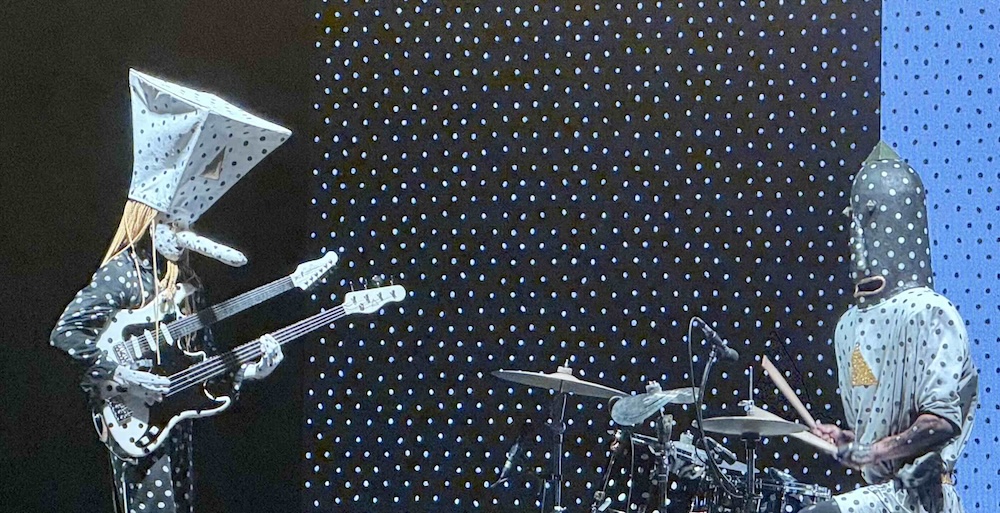
After going viral from a KEXP live clip, the Quebecois experimental rock duo Angine de Poitrine is absolutely everywhere. The pair consists of costumed musicians who perform anonymously under the stage names Khn de Poitrine, who is armed with a double necked microtonal guitar and bass, and Klek, a wild signature-changing drummer.
With their runaway success, Angine de Poitrine is proof that there’s still space for virality to work in getting an independent musician an audience without having to painstakingly self-market. The band does use social media, but it’s only really for clips of live performances and concert announcements.
Angine de Poitrine’s anonymity is a refreshing departure from the very-online world that can make parasocial online connections and viral hits seem like the whole point of the game.
The band has skewered expectations by making myths about themselves, telling mainstream media like the Guardian that they’re 333-year-old time travelers.
But realistically, Angine de Poitrine is all about the music. And maybe that, and the band members’ anonymity, is a huge part of their appeal. ![[Tyee]](/design-article.thetyee.ca/ui/img/yellowblob.png)
Read more: Music









Tyee Commenting Guidelines
Please note that email notifications for replies are not currently working due to a software issue which may be resolved in a future update.
Comments that violate guidelines risk being deleted, and violations may result in a temporary or permanent user ban. Maintain the spirit of good conversation to stay in the discussion and be patient with moderators. Comments are reviewed regularly but not in real time.
Do:
Do not: