

 SHARE:
Karsten Heuer learned a surprising thing or two from the buffalo now roaming the backcountry of Banff National Park — lessons he shared with me a few months before the renowned biologist, author and conservationist died in November.
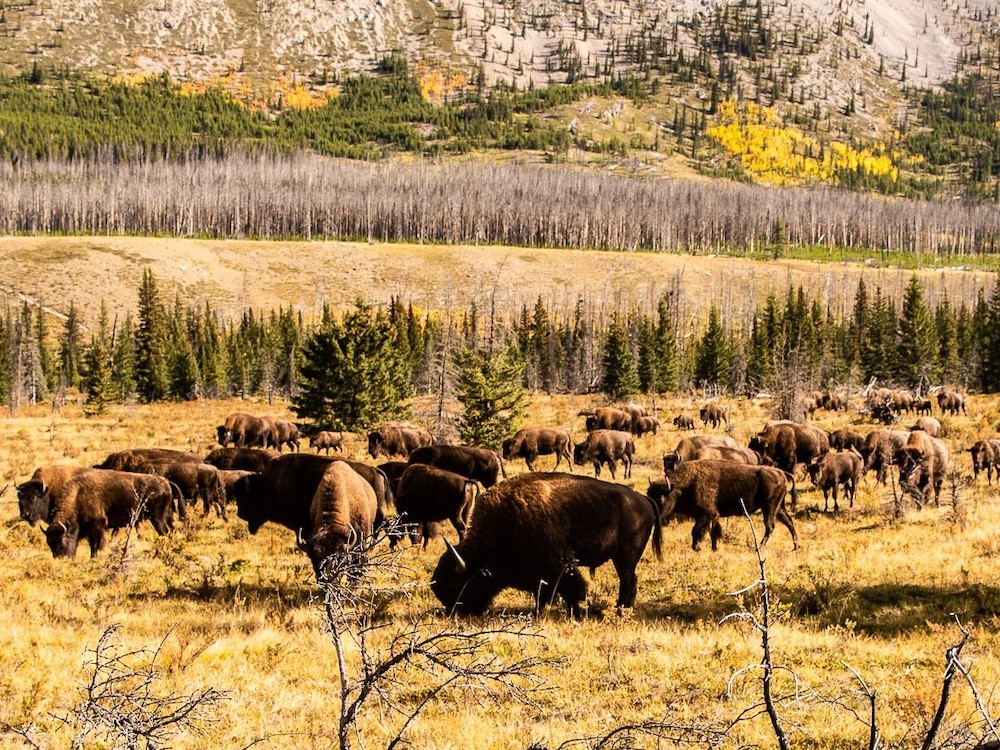
Heuer, a Calgary lad and park warden for 30 years, led the team that restored a wild roving herd to a 1,200-square-kilometre area after a 140-year absence.
Most know the dark history of plains bison.
More than 30 million bison once energized the short and tall grasslands of the continent. Their presence sustained a great diversity of Indigenous people from Alberta to Texas. Hundreds of species from reptiles to birds depended on the bison’s migrations.
But after the great colonial slaughter, only a few hundred buffalo survived in the 1900s, leaving Indigenous nations starving, impoverished and vulnerable to disease.
Since that ecological holocaust, bison numbers have rebounded to half a million. But most of these animals are now ranched for commercial purposes.
Fewer than 20,000 buffalo roam free on the continent as forces of ecological restoration on patches of land representing less than one per cent of the animals’ historic range.
The largest group of free roamers lives in Yellowstone National Park, where they are as disconnected from their brethren as most urban dwellers are from the natural world.
About nine years ago Heuer became part of this ongoing effort to bring buffalo back to large intact landscapes. Over the phone he described his buffalo adventure as both “moving and powerful.” He called himself a humbled student.
For starters, the buffalo confounded most of his conservation assumptions and made a mockery of wildlife theories. He added that he wasn’t sure anymore if the realm of science had the words to express the consciousness of iinnii, the fearless animal that once knitted ecosystems together in North America for 160,000 years.
From the comfort of his writing shed in Canmore, Heuer explained that he was struggling to rope some of these bison learnings into a short book. So, my call was auspicious.
Then the 56-year-old biologist explained that he had an unusual if not extreme deadline. He had contracted a mysterious neurological disorder called multiple system atrophy: “I am deteriorating pretty quickly,” he said. He walked with a cane and talked with studied effort.
Long known for his organizational skills, Heuer had already planned a medically assisted death for later in the fall. Now time was running over the stones of his life like the shrinking waters of a winter stream.
With a quiet eagerness Heuer explained that his interest in buffalo emerged from his love of caribou.
If bison resemble a carefree and blustering bulldozer with a lawn-mower-shaped mouth, he said, then caribou act and behave like fragile and skittish “ballerinas.”
“I am fascinated by herd animals,” he said. “There is an instinctual quality and consciousness that supercedes the individual. There is a shared intelligence that the herd can access from each other and the land.”
That fascination first took hold in 2003.
That’s when Heuer and his wife, Leanne Allison, an award-winning filmmaker, spent five months on the tundra following 120,000 members of the Porcupine caribou herd on their way to their calving grounds near the Beaufort Sea.
Walking alongside the mosquito-plagued herd provoked much reflection about what it means to be a conscious human animal in a world where most white people don’t know where they are anymore without a GPS gadget.
“What is home? What is meaningful? We have struggled with those kinds of questions for the rest of our lives.”
And then along came the provocative bison project. “I didn’t know much about them,” admitted Heuer. He sought out experts like Wes Olson and Johane Janelle, who had studied buffalo for decades and are authors of The Ecological Buffalo: On the Trail of a Keystone Species. Over a 10-day trip by horseback, they talked about buffalo and buffalo restoration.
“It became clear to me,” recalled Olson to The Tyee, “how dedicated he was to the project. It was a monumental task.”
In 2001 Cliff White, now a retired park warden, first proposed reintroducing a free-ranging herd of buffalo back into Banff. (A bison paddock for tourists closed in 1997.)
He thought the animals, a keystone species and landscape engineer, could restore energy to the park’s ecosystems. He argued that bison were as important as adding fire to the landscape. He also thought bison could help solve the problems of elk overabundance. More importantly, the return of the bison would finally honour their great historical and cultural importance to First Nations.
It took a while for the government to digest these ideas. Finally, in 2015, the Canadian government set aside a $6.5-million budget to get the job done over a seven-year period.
‘Less is just more’
Heuer’s team didn’t want to repeat the mistakes of a failed bison introduction to Jasper National Park. In 1978 Parks Canada and the Canadian Wildlife Service introduced 28 wood bison to Willow Creek on the park’s northern boundary without any First Nations involvement. Or much planning.
The bison spent only 43 days penned in a small area before being released into the wild. Then the 2,000-pound (1,000-kilogram) mammals took off. They wandered as far away as 350 kilometres to Grande Prairie. They broke down fences and rifled through farmers’ crops. And that pretty much ended that effort.
As a consequence, the Banff project, like a previous Yukon reintroduction, took a different path. It fully involved Elders and members of the Blackfoot Confederacy, Stoney Nakoda Nations, Samson Cree and Métis from the very beginning. As many as seven different nations blessed 10 pregnant females and six bulls selected from the disease-free bison herd in Elk Island National Park just east of Edmonton.
The Elders also prepared the new grounds for the bison’s arrival with more ceremony and prayer. That mountainous land, near Ya Ha Tinda, had the highest density of old buffalo wallows in the Rockies, said Heuer.
The biologist also proposed to keep the bison in a penned area (a “soft pasture”) for 18 months so the animals would be more anchored to the place before their release. Over that time, Heuer’s team fed the new arrivals with large-sized timothy-alfalfa cubes and 300 litres of water a day. Over two calving seasons, the population doubled to 31 animals.
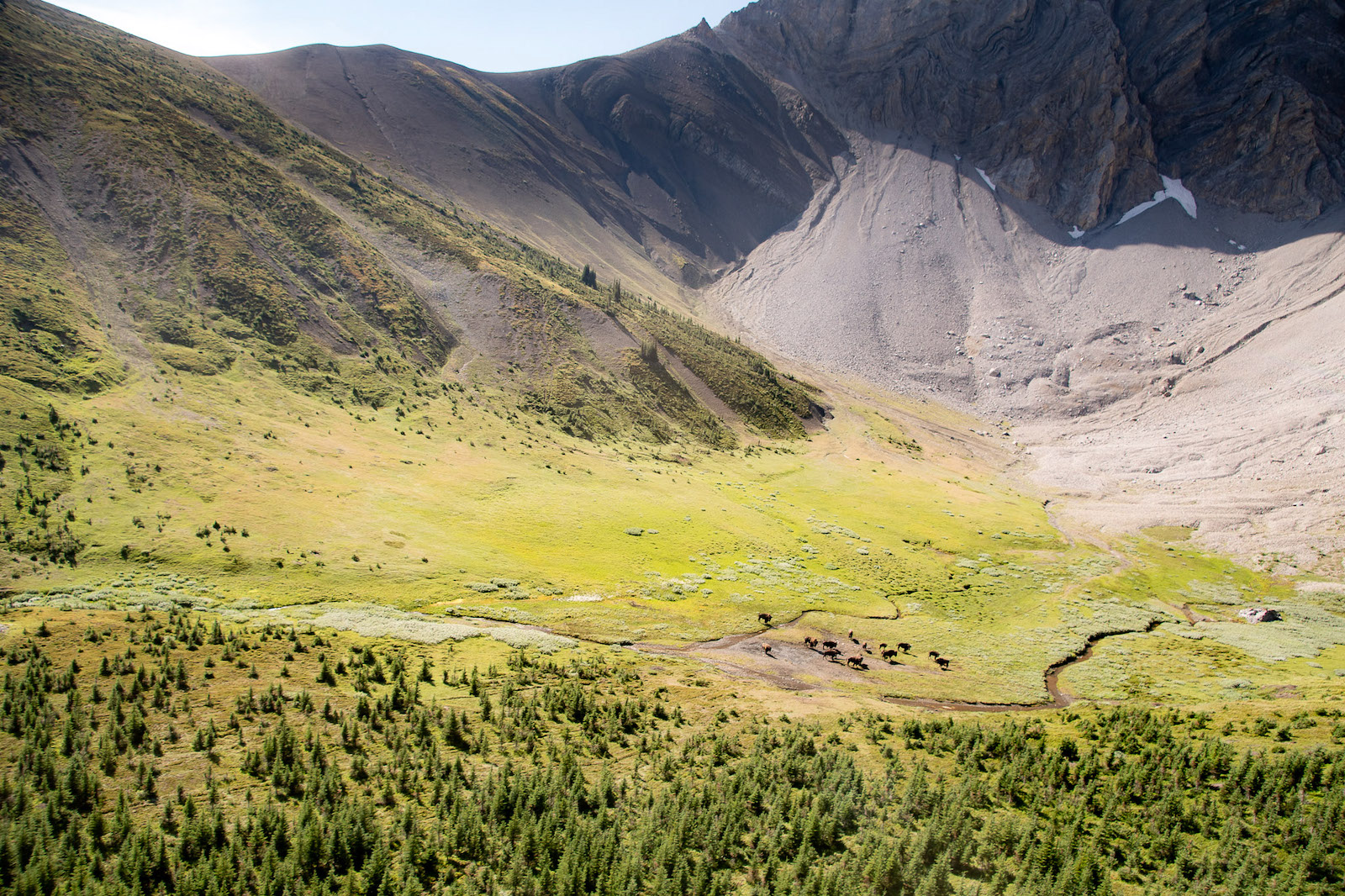
Then came “the pivotal day” on July 29, 2018. Karsten and colleagues cut the fence and waited. But the proud buffalo didn’t bolt till the middle of the night. “We’d thought we’d show and prepare them for where the grass is, but they did everything differently,” said Heuer.
In fact, the anointed teachers soon became the humbled students. “They taught us about adaptability. Less is just more for a buffalo,” explained Heuer. He paused and added: “They rubbed our ignorance in our faces in a nice way.”
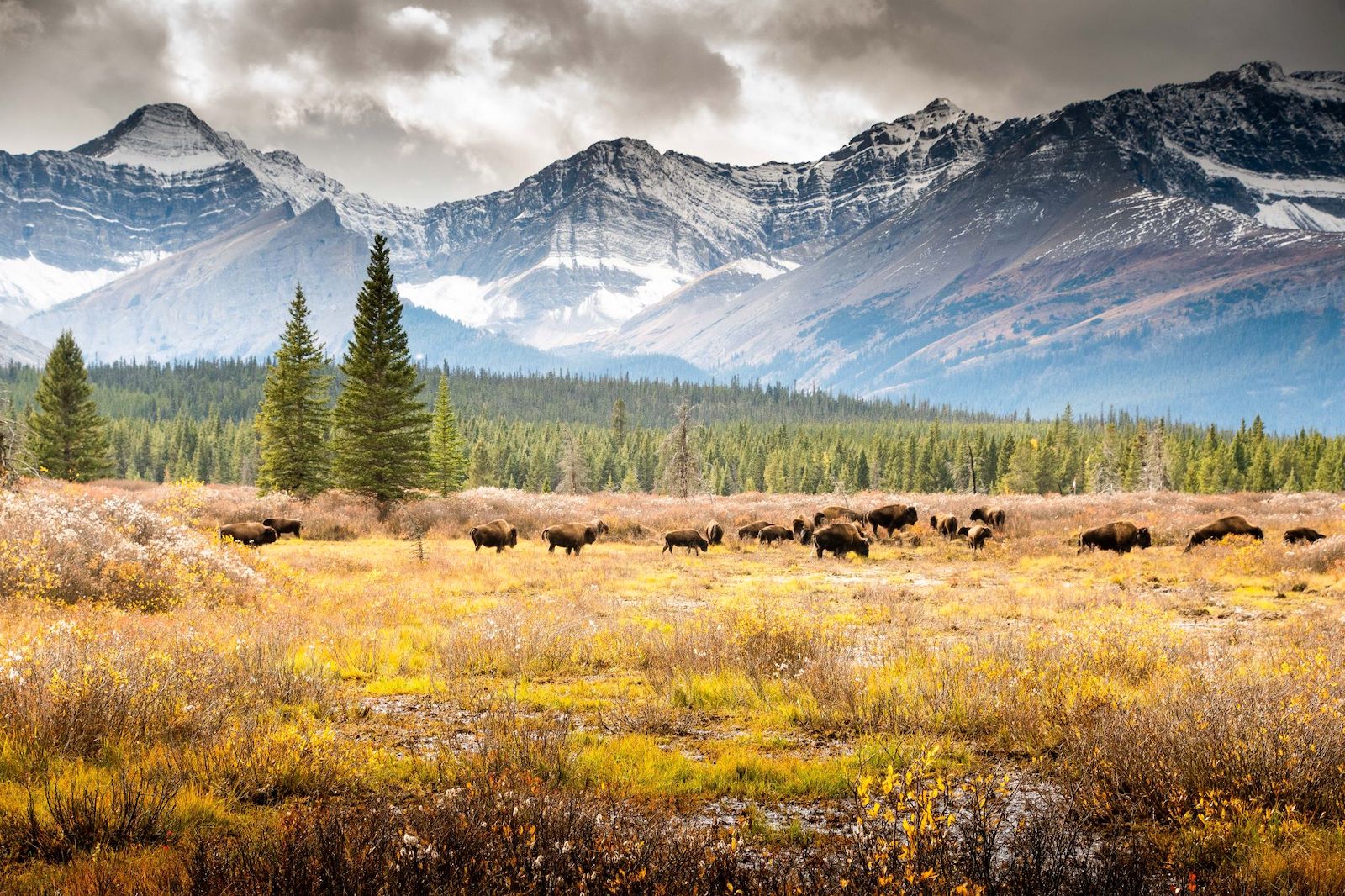
Everyone, including Heuer, expected the buffalo to lope to the river bottoms where the fattest grasses grew. But within hours they had climbed to the high ridges where the wallows of their ancestors still sculptured the ground.
Then he watched them reconnect with the old ways throughout the landscape: “They started excavating their ancestors’ bones by wallowing in old wallows and re-energizing old bison trails.”
In heading to the high ground, the bison contradicted something wildlife technicians call natal habitat preference induction, or NHPI.
It argues that when humans move animals to a new landscape, they will look for places to roam that are similar to the animals’ old home to avoid any big mistakes. But, as Heuer told me, the Elk Island bison shredded that theory.
Instead, they avoided anything that looked like Elk Island and immediately scooted for the “most rugged, high-elevation habitat” they could find.
Somehow, they knew that was where the best medicinal plants could be found, where the most nutritious forbs grew and where it was coolest in summer. They also knew it was their ancestral ground.
“They were following something we can’t sense and that only bison can tap into after 140 years. This is the idea of morphic resonance,” explained Heuer. “It is some sort of field, a magnetic field that mysteriously co-ordinates movement of the herd. So, after all these years, the buffalo were responding to that field, and it is invisible to us.”
Another thing Heuer got wrong was the assumption that buffalo would move in search of greater volumes of grass. But animals, like people, need medicines and trace amounts of certain nutrients found in specific herbs and plants. “Perhaps the need for trace amounts of medicine dictated how the bison grazed and where they moved, rather than the volume of food available. Perhaps, there is a lot more going on than I thought.”
‘It felt like we had brought them home’
Wes Olson, who spent 40 years studying and reintroducing bison in places as far afield as Alaska and Siberia, came to observe the newly freed bison in Banff in 2018.
Olson had been involved in other introductions, and in every case, “it felt like we put them in a strange place. In Banff, it felt like we had brought them home.”
Almost immediately the land came to life, said Olson. “I watched a group of ravens fly over and look down at these strange beasts. They could have been hovering in mid-air, they were so shocked. Then they went to gaggle in some spruce trees where they pondered the arrival, of something old yet deeply familiar.”
Within a few days Olson observed Columbian ground squirrels gathering shedded bison hair to line their birth dens as they had done since time immemorial. “After 140 years of their absence, I found that amazing.”
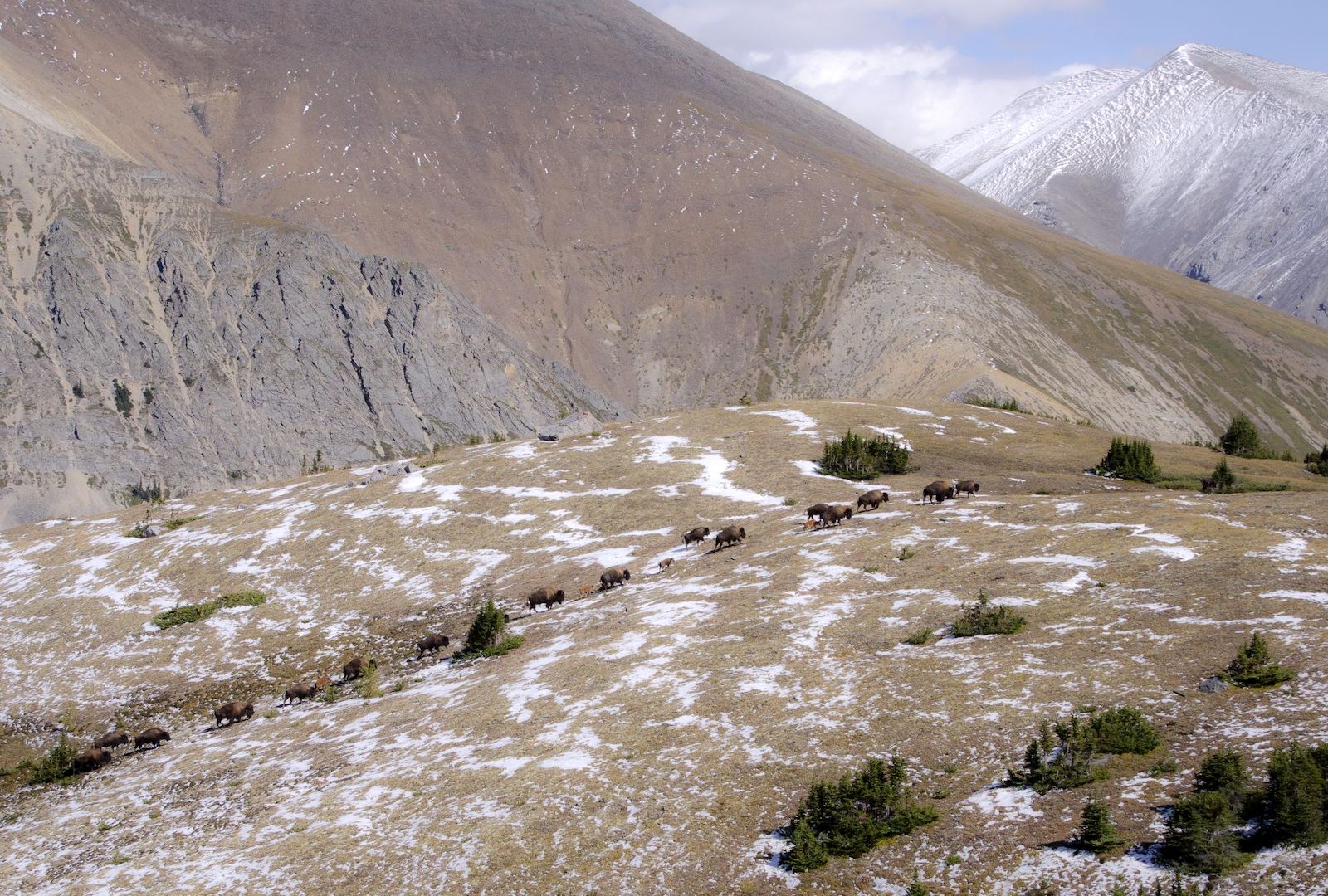
Heuer saw other changes, including expanded meadows where the nutrients of buffalo had renewed grasses. The land even holds moisture better now, he said. As the diversity of vegetation increased, other grazers have joined in the celebration.
“Some of the meadows are looking the best in terms of diversity and vitality than they ever looked,” added Heuer.
Ancient dancing partners such as grizzlies and wolves “are trying to figure out the old rules and how they work.” It may take a decade or two for old predatory practices to re-emerge.
More than 130 buffalo now roam the northeast border of Banff. A ceremonial hunt by First Nations took place inside the park in 2024, restoring a cultural connection that had been lost for nearly 150 years. The thriving herd can claim the distinction of being the fifth free-roaming bison population on their traditional grounds in the world. A few bulls that gambolled beyond the park’s borders were shot or relocated. The Alberta government does not recognize bison as wildlife.
“Right now, we have to keep them in the park, and that takes a lot of effort,” Heuer explained. “It is a false vigilance to enforce a false boundary.” Wouldn’t it be grand, he suggested, if the herd in Banff could be truly wild and reconnected with their brethren in Yellowstone some day?
“The most exciting chapter is about to start, and I’m sorry to not be part of it.”
‘Letting go and trusting fate’
Our conversation ended with some of the lessons that the buffalo had taught him over nine years.
The first, he said, is just being. “The bison are comfortable in their own skins,” enthused Heuer. “They accept themselves. And they’re infinitely confident about their capabilities. They are going to follow a deeper intelligent conscious herd mind that operates at a much higher plane.”
The second thing the buffalo taught Heuer was not to reduce animal biology down to its smallest pieces the way so much western science does to everything. The whole is always greater than the sum of its parts, and connections to other species matter. Animals have unexplained powers and are more conscious than most humans recognize.
The last lesson concerns control. The buffalo knew what they were doing in Banff better than their handlers, said Heuer. That meant finding “the beautiful dynamic of letting go and trusting fate.” Things meant to happen will happen, he confessed. “We shouldn’t try to control so many things and be content for that to happen.”
And then suddenly the time for our buffalo conversation had come to a natural end. I wished the buffalo student well, and we said goodbye.
On Nov. 5, Heuer took one last trip to his writing shack, where his family had assembled to say goodbye. A medically assisted death then took him away from this world and into the next. His wife Leanne wrote: “Letting him go reminded me of giving birth; there is no negotiating with it and surrendering is the only way.”
More than 600 people attended Heuer’s memorial service in Canmore. There was much talk about Heuer’s “buffalo spirit.”
The Blackfoot Elder and scholar Duane Mistaken Chief says that the buffalo just make a natural teacher. Whenever there is a great storm, the bison don’t retreat or tremble in fear. They turn into the storm and face it. The Blackfoot call that kind of gumption aksistooyiipaitapissin.
I think Heuer learned that lesson too. ![[Tyee]](/design-article.thetyee.ca/ui/img/yellowblob.png)
Read more: Alberta, Environment








Tyee Commenting Guidelines
Comments that violate guidelines risk being deleted, and violations may result in a temporary or permanent user ban. Maintain the spirit of good conversation to stay in the discussion and be patient with moderators. Comments are reviewed regularly but not in real time.
Do:
Do not: