


 SHARE:
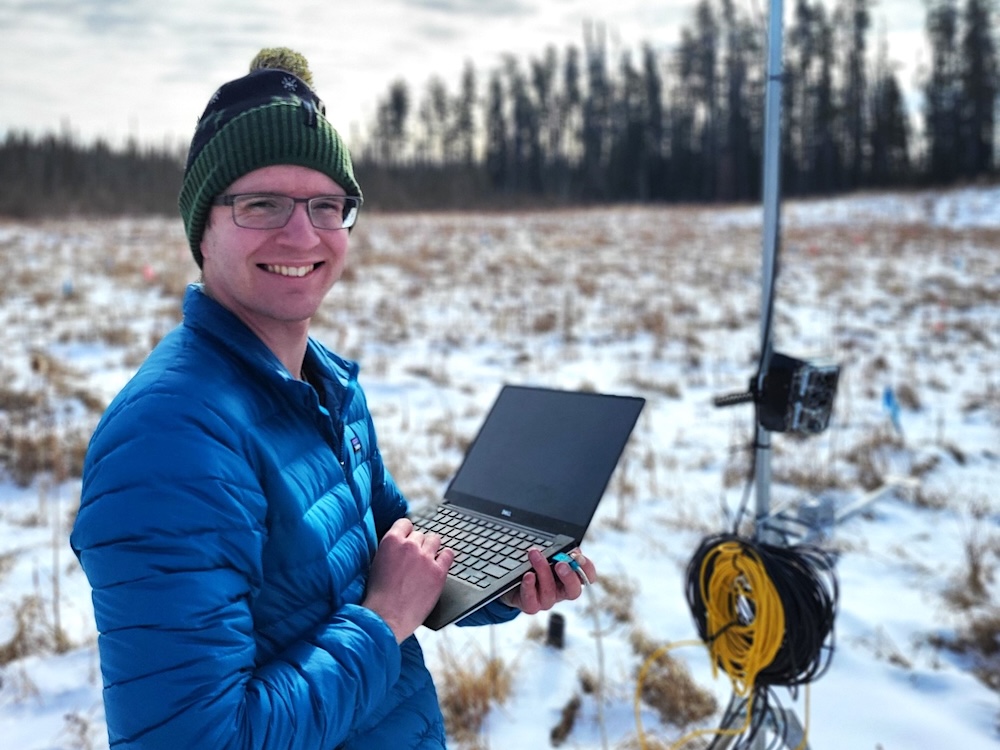
Deep under layers of sand and clay at abandoned oil well pads, the peatlands, a natural solution to carbon storage, lie waiting to be restored.
Murdoch McKinnon is trying to figure out the best way to bring them back to life.
McKinnon, a PhD candidate in the department of geography and environmental management at the University of Waterloo, told The Tyee he was drawn into the squishy lands of brightly coloured moss, tamarack and black spruce trees because they are where water and land ecosystems meet.
“It's certainly a challenge to walk through them, but they're just absolutely beautiful, beautiful places,” McKinnon told The Tyee.
They also play a critical role in lessening natural disasters and filtering water.
But in Canada, vast swaths of peatland ecosystems have been destroyed by oil and gas and forestry industry activities.
Constructing oil and gas well pads, for example. The pads are needed to keep the machinery in place, and building on wetlands can be unstable. To fix this, fossil fuel companies often dump sand and clay onto the area — burying the peatland in the process, McKinnon says.
“Ecosystems are very complex, and if you disturb even just one component of an ecosystem, you do oftentimes see cascading effects within that ecosystem,” said McKinnon. As peatlands are buried under tens of thousands of well pads, the world loses a prime way to capture carbon that adds to the climate crisis, said McKinnon. Losing peatlands also increases chances of flooding and overall drier lands, which can lead to an increase in wildfires.
Companies tend to meet regulations by “restoring” well pad sites by planting grass or trees. A new study shows why peatland restoration is preferable, and it also points to a “promising” method for making it happen. McKinnon conducted the two-year study alongside his University of Waterloo colleagues and three partner institutions: the Northern Alberta Institute of Technology’s Centre for Boreal Research, Mount Royal University and Athabasca University.
The Tyee caught up with McKinnon upon his return from his research stomping grounds in northern Alberta to dive deep into peat. Here’s our conversation, edited for length and clarity.
The Tyee: It seems peatlands have a lot to offer. Should they get more love?
Murdoch McKinnon: Peatlands, sometimes called swamps or muskeg, have been thought of as almost wasteland because it's hard to build on them. You can't farm within peatland areas very easily. And so they've often been somewhat disregarded as places that should be drained to be turned into more productive uses.
But I think we're starting to get a really good understanding that they play such an important ecological role, and leaving peatlands intact on the landscape really enables them to function at their full potential, continue to provide what we call ecosystem services.
What so-called ecosystem services do they provide?
One of the big ones is the fact that they do store so much carbon, and they've increasingly been recognized as a really important nature-based climate solution.
We see lots of emphasis on technical solutions [like carbon capture and storage] to help remove carbon dioxide or other greenhouse gases actively from the environment. But peatlands are already doing that naturally, and so if we enable them to continue functioning, we maintain their ecological integrity, they'll continue to store carbon and provide us with that service.
But beyond that, they filter water. They are wetlands, but water tends to move through them quite slowly. So, if we have a really wet spring, we actually see a lot of water being stored in peatlands and then being released slowly downstream. So, we may not get those really severe flood events that could damage infrastructure or people's homes.
Peatlands also take a lot of nutrients out of the water as well, so we have cleaner water downstream. Another big one is the fact that they provide critical habitat for a huge range of wildlife species in our boreal regions, including the threatened woodland caribou, which has an especially high amount of spiritual and cultural significance to many northern Indigenous Peoples.
Beyond helping to limit flooding, can peatlands help in other ways to lessen natural disasters?
Because they're quite wet environments, if we leave them undisturbed and intact, they can also act as natural fire breaks on the landscape. So of course, we're seeing an increased prevalence and frequency of fires, especially in some of our boreal regions. And if we leave intact peatlands around our infrastructure or around our cities and towns, they can, in many cases, actually slow fire down or prevent fires from getting into our communities.
If we start building roads or other disturbances through them, though, we oftentimes see that the water table — where the water is sitting — will drop down a little bit further into the soil, and that can create lots of dry fuel and biomass that can actually make fires worse.
Left intact, they can provide fire breaks and mitigate floods, but once we start disturbing them, they're much less able to provide us with those ecosystem services.
The peatland was there before the wells. So why hasn’t there been more effort to put them back when the drilling is done?
For many, many decades, the oil and gas industry has done a good job of planting forests and grasses on some of these sites, and they thrive in those dry conditions that we see after we place clay or sand into a peatland.
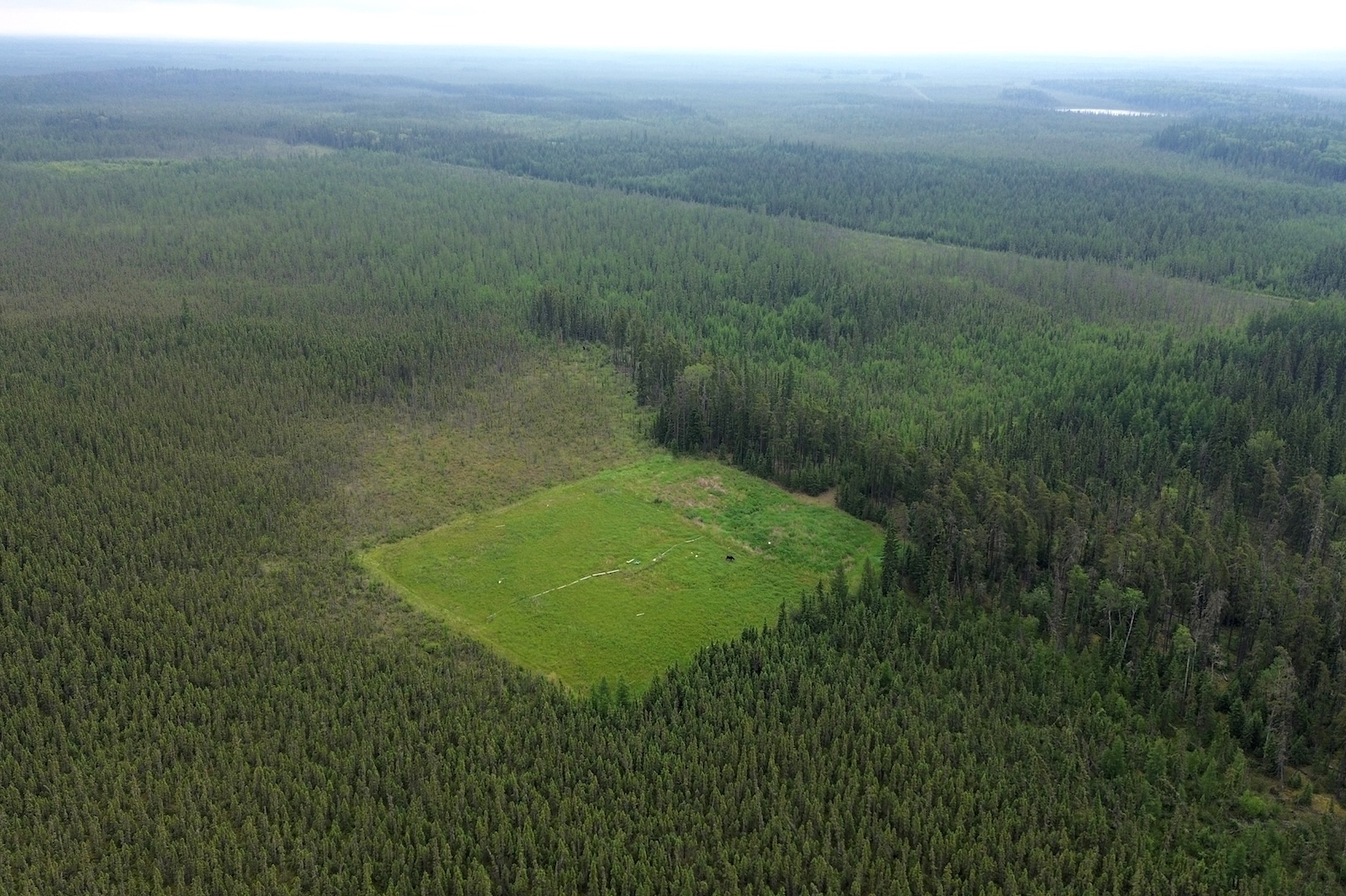
Peatland mosses can't handle those dry conditions, and so it's long been understood that we'll need to modify these sites somehow to make them wetter if we do want to get peatland mosses growing on them again.
However, there hasn't been a lot of scientific certainty around what methods would best do that. There's certainly been interest from the oil and gas industry and interest from the Alberta government in doing more peatland restoration. They just didn't want to invest a lot of resources in techniques that weren't certain to work and that had potentially a high risk of failure.
Where our work comes in is really starting to better understand how we can actually make these sites wet enough that peatland mosses can begin to thrive and actually form a self-sustaining vegetation community on some of these sites.
Your research looked for practical new approaches. What did you come up with?
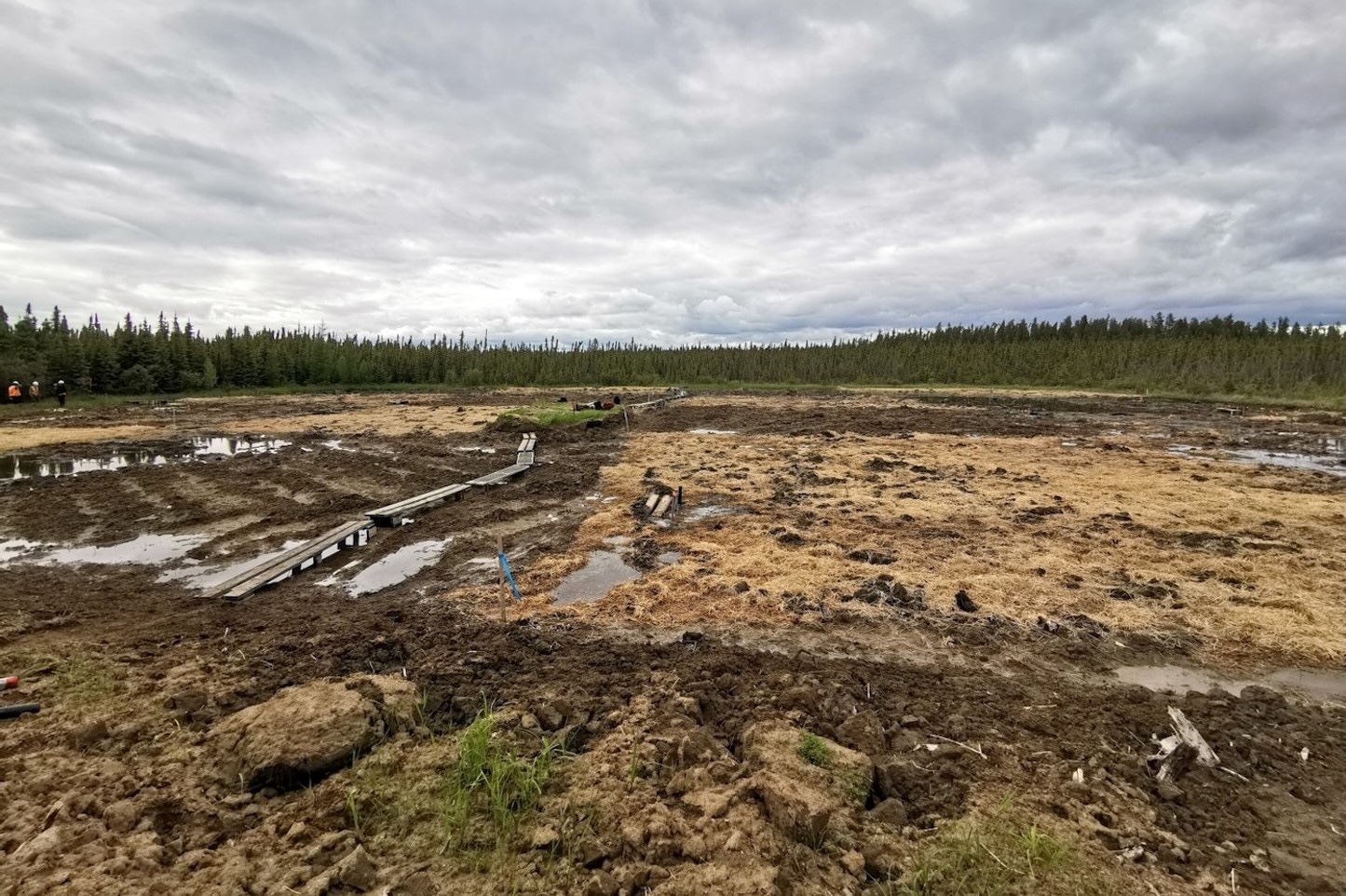
One of the first techniques that was trialled to re-establish peat mosses on well pads was completely removing the well pads and re-exposing the peat underneath them. Those sites were prone to flooding, which oftentimes pushed them more towards being a marsh, not peatland.
We wanted to trial a new technique that has been proposed to get fens to grow on these sites. So instead of removing all the clay and sand, we lowered the surface of a well pad and then introduced the mosses onto this new exposed sand, [and] clay. Kind of like building a peatland from scratch.
Did building peatland from scratch work?
The technique had been tested at a smaller scale previously by a number of researchers, including some from the Northern Alberta Institute of Technology, but it had never been scaled up to the size of a full well pad.
We wanted to see whether there could be reliably wet conditions across a full-size site or not. Overall, the results are promising in a typical year. In a year that received an average amount of rainfall, nearly half of the site had moisture conditions that were optimized for moss establishment, which is really great to see.
Unfortunately, though, in the second season we were studying the site, we had less than average rainfall and conditions were not optimized across most of the site in that year.
The technique has promise, but it needs more refinement and more development. Which means that we need to get better at getting water from the surrounding peatland into and towards the centre of these well pads.
It seems like drier conditions and water shortages are something that you might have to deal with more and more. What considerations must be made for peatland restoration in the changing climate?
There's a lot of uncertainty around exactly what our boreal region will look like in the future because of climate change, but all of the predictions right now are suggesting that it's likely to become a little bit drier, so we're going to see the atmosphere drying out the land surface.
We're concerned that we're already seeing some areas on these well pad restoration sites that are a bit drier than we would prefer. That could become worse if we see even more evaporation going into the future.
How would that impact the rest of the natural environment in these areas?
Our hope is that over the longer term, we would start to see a return of valuable peatland habitat for wildlife to these sites. Many species in the boreal region are threatened. For example, woodland caribou, they're facing a lot of pressure because of industry, and so we want to mitigate that.
We want to ensure that the landscape stays connected and that we don't lose too much habitat from the landscape. We would ideally like to see a sort of reconnection from one side to the other of these [peatlands] allowing water to flow across them once again. So that they can continue to act as natural fire breaks and continue to purify the water and mitigate some of the risks associated with flooding.
How do you convince people to invest in this type of restoration?
We need more sites where these techniques can be tested. We need more data behind them, and once we can be confident that these sites are on the way towards functioning like natural peatlands, we can have a reasonable degree of confidence that they'll stay on that path.
There's been recognition from the Alberta government that the oil and gas companies won't be able to get these sites back into fully functioning peatlands on short time scales.
It's really about developing indicators and better understanding what a self-sustaining peatland ecosystem on these sites looks like. So that we can ensure that what we create today, perhaps in 100 years, will actually look like the surrounding, undisturbed areas.
It seems like this is a long-term investment that you’re going for here, not quick solutions.
I don't know if there are necessarily quick solutions in peatlands, other than just trying to minimize the extent to which we disturb them in the first place. Once that disturbance has occurred, the restoration and reclamation process will be a long one. ![[Tyee]](/design-article.thetyee.ca/ui/img/yellowblob.png)
Read more: Alberta, Environment










Tyee Commenting Guidelines
Please note that email notifications for replies are not currently working due to a software issue which may be resolved in a future update.
Comments that violate guidelines risk being deleted, and violations may result in a temporary or permanent user ban. Maintain the spirit of good conversation to stay in the discussion and be patient with moderators. Comments are reviewed regularly but not in real time.
Do:
Do not: