


 SHARE:
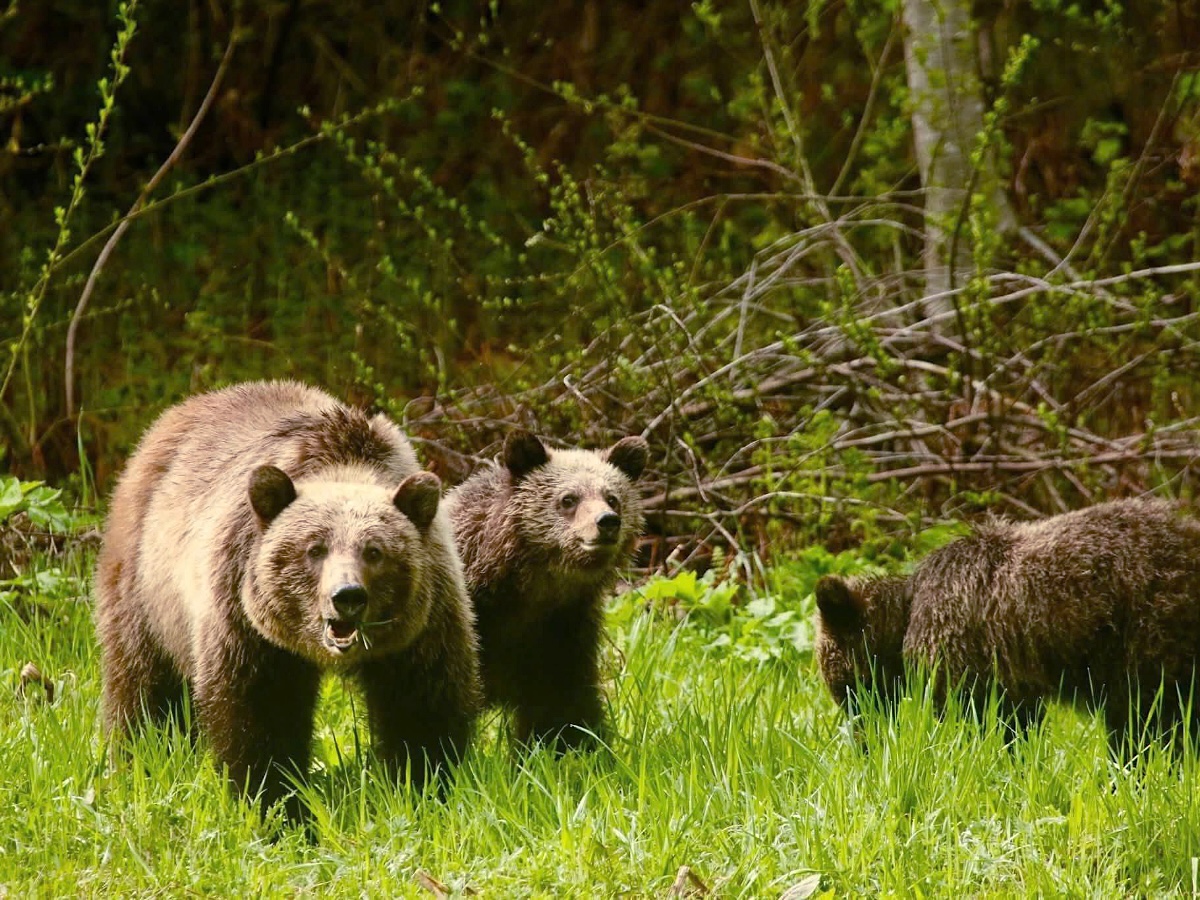
Last month, conservation officers killed three members of a grizzly bear family in the Kootenays, near Nelson.
Only one female yearling remains alive.
The deaths have left those who cared for the bears questioning why officials decided to kill the mother grizzly and her two offspring.
Although a provincial wildlife biologist has since told CBC the bears were “habituated to people” and seemed to have been eating human food for most their lives, locals had said the grizzlies appeared capable of coexisting peacefully with humans.
The decision to kill the bears prompted the resignation of Lisa Thomson, the local WildSafeBC community co-ordinator.
“There has been a failure on many parts,” Thomson said on Facebook following her resignation. “I am very saddened by what has happened.”
There are signs that the B.C. Conservation Officer Service is shifting away from lethal management of grizzlies, which are considered a species at risk. But although fewer bears are killed every year than previously, B.C. conservation officers still kill an average of 20 grizzlies annually. Meanwhile, communication between the decision-makers and the public remains limited, both before and after bears are killed.
The deaths raise questions about whether B.C. communities can learn to live with recovering grizzly populations — and about what can be done to improve trust between the public and the officials tasked with managing local bears.
Bad news before breakfast
On the morning of Aug. 12, Katie Graves woke her husband.
“They plan on killing the grizzlies — it’s go time!” said Graves, who is co-founder of the Ursa Project Society, a local bear advocacy group.
Two years ago, Nell, the mother grizzly, had brought two cubs to the outskirts of town. They were relocated but returned and stayed in the area for two months without any notable incidents.
Graves was alarmed by the news that conservation officers planned to kill Nell and at least one of her cubs. She moved to mobilize concerned locals online.
“I never actually got dressed that day,” Graves said.

Three weeks earlier, Nell and a new group of cubs had been seen in town, but when the Conservation Officer Service issued a statement, it didn’t indicate there were any concerns.
Graves said the mother grizzly seemed to be raising her cubs well.
“[Nell] was teaching those cubs, and potentially their cubs, how to be a good bear, how to coexist with people, because she certainly was willing,” she said. “Now we’ve taken that genetic trait out of the gene pool.”
Nell and her cub were killed two days later. In late August, officials announced a second cub from the family had been killed.
From calls to kills
Each year, thousands of British Columbians call the province’s Report All Poachers and Polluters hotline to report wildlife sightings and incidents.
About 500 calls involve grizzlies, compared with 19,000 involving black bears. The same bear can generate multiple calls, and in 2012, conservation groups and grizzly researchers created a hotline dedicated specifically to grizzly reports.
Grizzly attacks in British Columbia are rare but do happen. Last year, a bear seriously injured three children and a teacher near Bella Coola, and earlier this year, an attack north of Lillooet seriously hurt a hiker.
Conservation officers respond to about one-quarter of grizzly calls. Last year, 30 bears were euthanized or killed for what officials deemed to be public safety reasons. One was moved, and one was “hazed,” which involves subjecting a bear to a non-lethal deterrent to scare it. With only one shelter licensed to take grizzlies — and only orphaned cubs — the province rarely rehabilitates them.
Since 2020, just 12 cubs have been moved to the rehab facility.

Despite high-profile deaths like Nell’s, Grant MacHutchon, a Nelson resident and independent bear biologist with 40 years of experience in B.C. and Alberta, said he has seen a shift in how officials handle human-grizzly conflict.
“Historically, they would tend to go to lethal management fairly quickly when a grizzly bear showed up,” MacHutchon said. “Their mindset now is that ‘We want to try and keep grizzly bears alive.’”
Deciding a bear is a problem
In 2025, the province changed its public human-wildlife conflict data to distinguish between bears “dispatched” — killed for public safety — and those “euthanized” because they were suffering inhumanely. Last year, 27 bears were dispatched and three were euthanized.
In 2024, former conservation officer Bryce Casavant wrote in The Tyee that most calls involve bears behaving naturally. Officials classify these as “nuisance calls.” Casavant said officers often decide no physical response is necessary.
“No public credit is given to those officers who, day in and day out, make the initial call to ignore nuisance calls,” Casavant wrote. “They save countless bears, year after year. I have known many such officers personally.”

Residents have found it difficult to get information about what specific behaviour led the Conservation Officer Service to classify Nell and her cubs as a threat. The service declined an interview request and has not publicly provided detailed information about its decision.
Last week, though, independent wildlife ecologist Michelle McLellan wrote in the Nelson Star that the mother bear “had accessed garbage repeatedly” and that, in the days before she was killed, “she and her three 150-pound yearlings were on a resident's deck eating off a barbecue.”
The details had not previously been made public by provincial officials.
The provincial matrix treats repeated reports of grizzlies seeking human food or attractants as a higher risk to public safety. When bears meet that threshold, conservation officers rely on their judgment and advice from provincial biologists.
Why grizzlies come into town
Canada lists grizzlies as a species of special concern, while B.C. ranks them as vulnerable. Both definitions reflect their limited populations.
About half of Canada’s grizzlies live in B.C., where, of 55 population units, 14 are defined as facing high conservation risk. Those include the South Selkirk population around Nelson.
A recent five-year study of the South Selkirk grizzlies found the local animals meeting seven targets measuring their health.
For MacHutchon, the findings showed that the small South Selkirk population was not isolated and that bears were successfully reproducing and moving into the area. The population is doing well, but he said losing a mother grizzly could affect its recovery.
“It is always sad and tragic, especially in these populations where we're trying to recover them,” MacHutchon said. “It does have an impact on the recovery for sure, especially a breeding female like that.”

In spring and early summer, grizzlies seek roots and greens in wetlands, avalanche chutes, meadows and valley bottoms. They often share those habitats with people.
“Anywhere there’s water running down the hillside, getting lush growth, you can find grizzly bears,” MacHutchon said.
Later in summer, ripe berries draw bears into higher forests. When the berries fade, they return to roots, insects, grubs and rodents. During droughts or poor fish or berry years, scarce food can push bears toward communities. Plum trees, clover and dandelions offer easy meals near town.
Females with cubs may have another reason to wander into town: safety.
“They use people as a bit of a security buffer from other [male] bears,” MacHutchon said.
Simply entering town does not make a bear food conditioned. But accessible garbage and human food can change a bear’s behaviour, making it harder for them to distinguish between natural foraging and food-conditioned behaviour.
“It's hard for them to figure out ‘When am I in a human zone?’ and ‘When am I in a natural habitat that is OK for me?’” MacHutchon said.
Living in a ‘no-go zone’
In 2022, conservation officers killed nearly 20 black bears within Nelson’s city limits. That year, Katie Graves tried to have an orphaned cub rehabilitated at a large animal shelter but failed.
Conservation officers can refer orphaned bear cubs to shelters for rehabilitation, but Graves said Nelson cubs are considered ineligible.
“Nelson is considered a no-go zone,” Graves said. “Because we have the reputation of not securing our attractants, we don’t deserve the privilege of getting our bears rescued.”
Fruit trees, garbage and barbecues remain Nelson’s biggest attractant problems, Graves said.
Thomson, Nelson’s former WildSafeBC community co-ordinator, agrees.
“We can certainly do better,” she said.
A failure on many fronts
On Aug. 14, the day the grizzly mother was killed, Thomson announced on Facebook that she was resigning from her position. Thirty minutes earlier, the Conservation Officer Service had announced the deaths.
“I’ve come to this decision based on what has happened this week with the local grizzly bear family, a family that I have cared for quite deeply,” Thomson said in a video. “I am now no longer able to serve the community in this capacity.”
Before joining WildSafeBC, Thomson spent 28 years as an emergency critical care veterinary technician specialist in Australia and Canada. In 2023, her animal-handling expertise led the B.C. Conservation Officer Service to ask her to help relocate Nell and her two male yearlings, including collaring, tagging and blood collection.
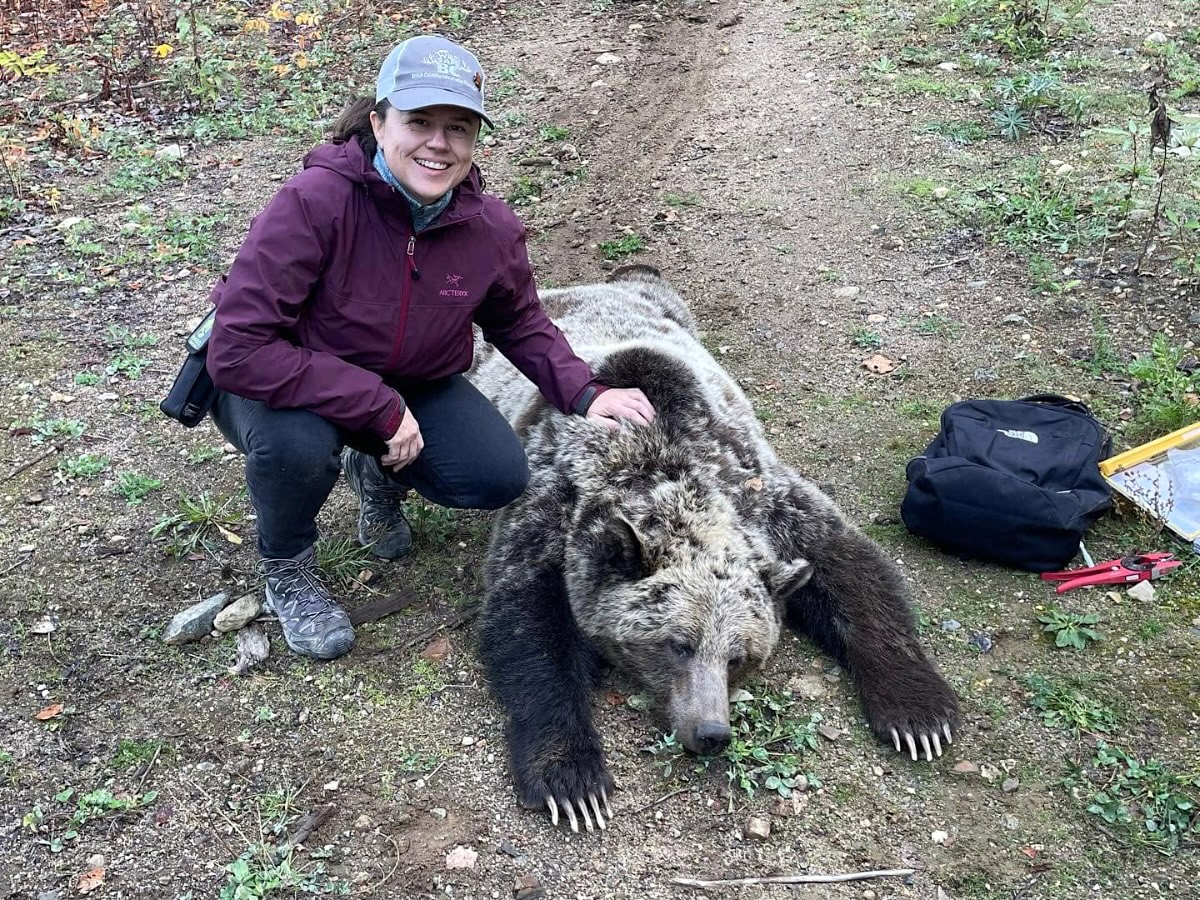
Thomson called the mother “Ms. Grizz.” Conservation officers moved the mother and two male yearlings away from town, though they returned just five days later. In 2025, when Nell bore a new litter of three cubs, Thomson followed the group closely.
“I physically cared for and felt very protective of that family,” Thomson said. “There was certainly that connection.”
The Conservation Officer Service did not share with Thomson the reports or evidence behind its decision to kill the family. She said she was unaware of any food conditioning involving barbecues or garbage.
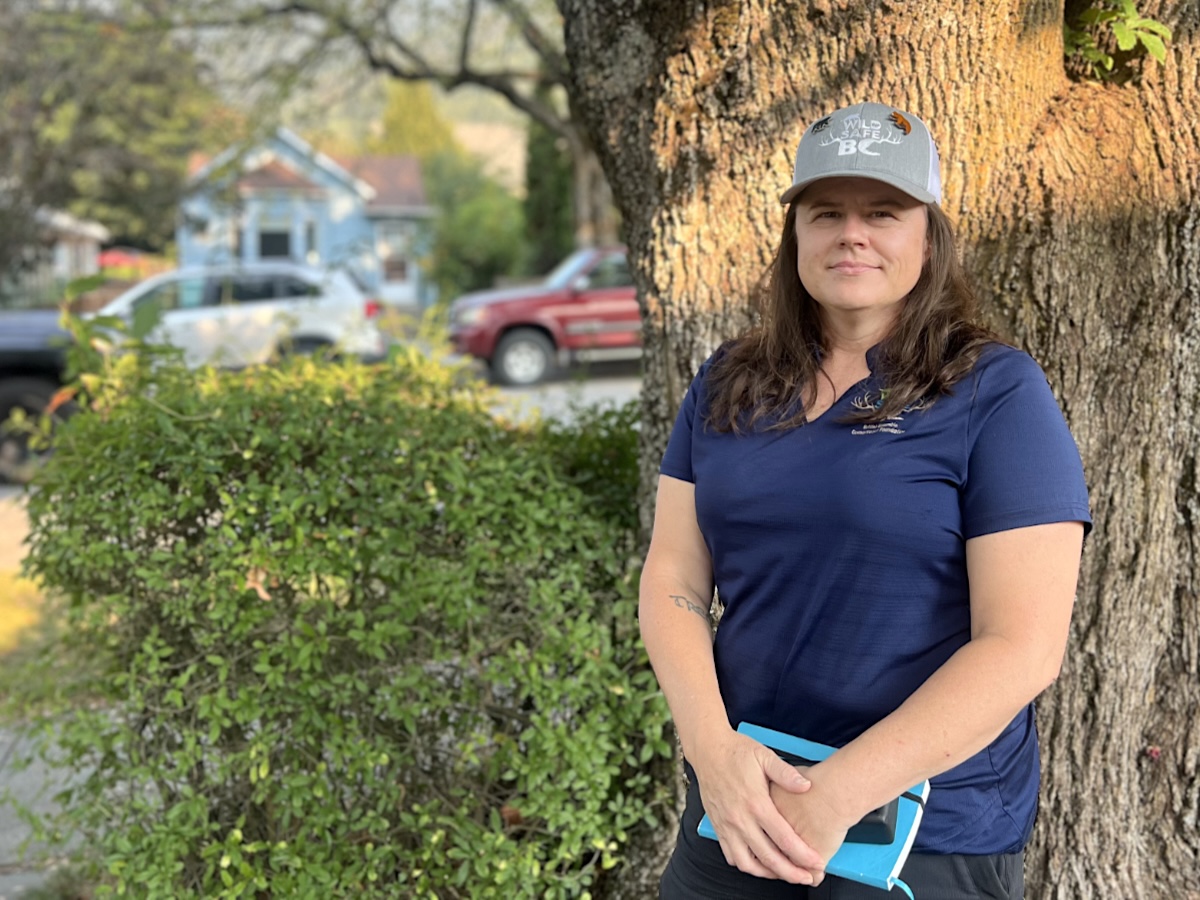
“I think there were a lot of failures, multi-levelled failures, towards this family and to other bears in the area,” Thomson told The Tyee.
Rebuilding trust between bears and people
Graves remains upset about the deaths.
In August, she helped organize a memorial for Nell and her cub Wander.
“We had created an acknowledgment that this mother grizzly and her cubs were safe, and we trusted her, and she trusted us,” she said. “There was this corridor of trust that had been developed over the years with her, and yeah, we broke that.”
Despite petitions and emails seeking answers about the grizzly deaths, the Conservation Officer Service and provincial government officials have remained largely silent.
Asked for comment by The Tyee, a spokesperson from the Environment Ministry wrote in an email that no one was available.
Given Nelson residents’ care for Nell and her cubs, MacHutchon said the Conservation Officer Service could have been more open.
“Sometimes it's really amazing to me that there isn't more communication,” he said.
Having spent years working to prevent human-bear conflicts, MacHutchon said healthy grizzly populations depend on collaboration, practical solutions and community effort.
That starts with humans talking to each other: at home, between neighbours and between communities, organizations and governments.
Despite their frustrations, both Graves and Thomson said they have seen some local progress.
Nelson has installed bear-proof garbage cans downtown, launched fruit-picking initiatives and increased enforcement of wildlife-attractant bylaws. But locals say communication and transparency still need work, and that human-wildlife conflicts may ultimately be as much a people problem as a bear problem.
“Trust is really important for a society to exist,” Graves said. “It really all comes down to trust.” ![[Tyee]](/design-article.thetyee.ca/ui/img/yellowblob.png)
Read more: Environment


Tyee Commenting Guidelines
Please note that email notifications for replies are not currently working due to a software issue which may be resolved in a future update.
Comments that violate guidelines risk being deleted, and violations may result in a temporary or permanent user ban. Maintain the spirit of good conversation to stay in the discussion and be patient with moderators. Comments are reviewed regularly but not in real time.
Do:
Do not: