

 SHARE:
This summer, the government of Canada rolled out its much-awaited National Food Security Strategy — a plan to make food more affordable, reduce Canada’s dependence on imports and impact from external shocks, and get more Canadian products onto Canadian shelves.
The strategy aims to help farmers earn more, families afford more and small businesses compete. These are good goals, as farmers are dealing with record costs, supply chain uncertainty and razor-thin margins. Families feel financial pain every time they pass through a checkout line, and small and independent grocers can barely compete in a market heavily skewed toward the largest players. A national plan that starts with these realities and invests billions into food infrastructure is most welcome.
But Canada’s food security strategy misses out on one of its biggest opportunities: food waste.
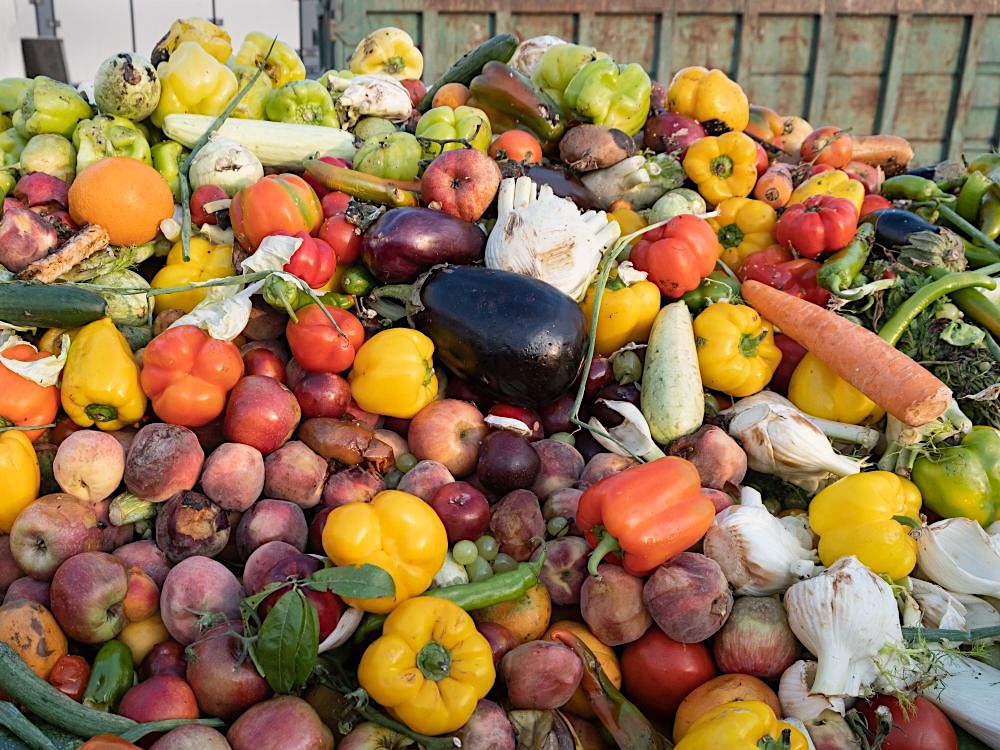
Canadians waste an astonishing amount of food — estimates range from more than a third to nearly half of all food produced. This waste drains up to $58 billion from Canada’s economy each year, and it’s so ubiquitous across farms, warehouses, transport, grocery aisles and kitchens (both domestic and commercial) that most people barely notice it. It’s like a bad smell we’ve all stopped noticing.
And yet it is there, at every stage of the food system, undermining every goal the strategy aims to achieve.
A way to fight climate change, too
Food waste means farmers lose the value of what they produce. It means processors, distributors and retailers carry the burden of inefficiency. It means fewer meals for fewer people and families everywhere paying more for the food they need.
For a plan meant to address food insecurity at a structural level, leaving out one of the system’s clearest and costliest weaknesses is a serious gap. The good news is that bringing food waste prevention into the plan would not alter its direction — in fact, it would only strengthen the course it has already set.
Indeed, Canada has made an international commitment to fighting food waste. In 2015, it signed on to the United Nations’ 2030 Agenda for Sustainable Development, which called for halving per capita food waste at the retail and consumer levels and reducing food losses across production and supply chains by 2030.
Measuring and reducing food waste will also help Canada meet its climate goals, as wasting less means fewer emissions across the entire supply chain, including the methane produced when food decomposes in landfills.
If we want to lower prices, strengthen domestic supply and provide better access to fresh food, we ought to pay closer attention to the food we produce but never use. Ottawa is right to talk about competition, import dependence and domestic processing. But a serious food security strategy should also ask: How can Canadians use more of the food we already have?
Solutions in other places
Other countries have shown what’s possible when governments treat food waste as a priority. Japan built a national framework around measurement and targets. France required large retailers to donate edible surplus food rather than destroy it. The United Kingdom used measurement, co-ordination and public campaigns to make waste reduction part of national food policy.
It is not too late for Canada to close this gap. The strategy could still adopt or support the practical recommendations put forward by the National Zero Waste Council, Reimagine Agriculture, Second Harvest and others. From clearer measurement and better best-before labelling to requiring the donation of surplus food by major food corporations and retailers, many of the solutions are already on the table. Canada also now has a new national standard, CSA K100, which allows for consistent measurement and reporting across the food chain.
Embedding food waste reduction into the plan would also maximize the return on Ottawa’s own $3.2-billion investment by cutting into the $58 billion Canada loses to food waste each year.
Canada’s food security strategy deserves recognition for responding to real and urgent needs. But if our government truly wants to stand with farmers, families and small businesses, as well as reach its climate and food justice goals, it cannot keep ignoring the staggering waste built into the food system.
Food waste stinks. But instead of pretending that we don’t notice the smell, tackling it would help Canada leap forward on food security and affordability, climate change, and food system efficiency. That would be a breath of fresh air.
This article is co-authored by the Metro Vancouver Zero Waste Committee, and is co-signed by Kate Parizeau, professor at the University of Guelph department of geography, environment and geomatics; BetterTable; Centre for Agri-Food Benchmarking; Circular Innovation Council; FoodMesh; JustFOOD Halifax Network; Second Harvest; and Ville de Montréal. ![[Tyee]](/design-article.thetyee.ca/ui/img/yellowblob.png)
Read more: Food


Tyee Commenting Guidelines
Please note that email notifications for replies are not currently working due to a software issue which may be resolved in a future update.
Comments that violate guidelines risk being deleted, and violations may result in a temporary or permanent user ban. Maintain the spirit of good conversation to stay in the discussion and be patient with moderators. Comments are reviewed regularly but not in real time.
Do:
Do not: