



Hallway medicine — where doctors are forced to, as one doctor puts it, “play Jenga” with patients while they try to find space to see or care for them, has been an issue in British Columbia for decades.
When hospitals are chronically overfull, it leads to stress for patients and hospital staff, worse health outcomes for patients, and staff retention issues.
In this series, we take a look at B.C.’s most recent hospital capacity data. We examine the roots of the issue, and why the province’s more recent attempts to address it have so far not managed to budge the numbers. And we share the stories of the emergency physicians, patients and patients’ family members dealing with the consequences.


In This Series
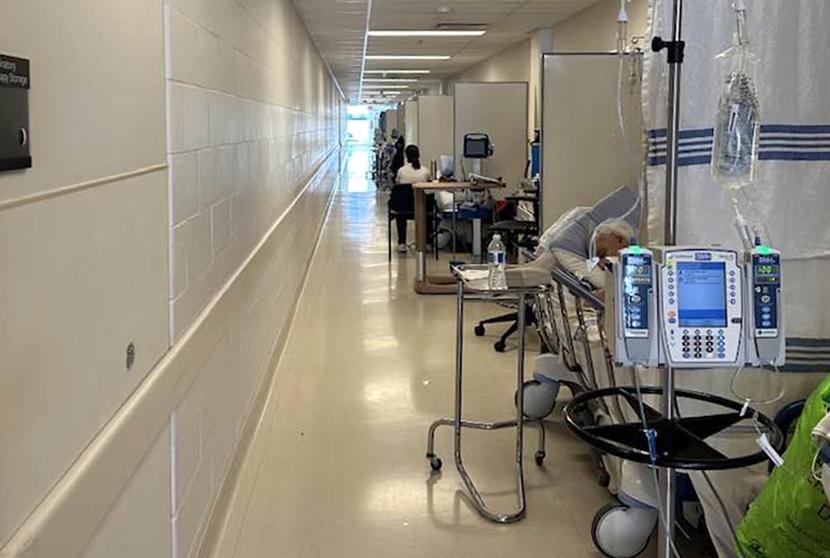
BC’s Hospital Crowding Problem Isn’t Improving, Data Shows
In the seven most overcapacity facilities, one in six patients was cared for in an unfunded ‘surge bed’ last year. First in a series.

Why Are BC’s Emergency Departments So Crowded?
How past policy decisions and the unmet needs of an aging population are pushing the system to the brink.

How Crowded Emergency Departments Impact Patients and Staff
Overfull hospitals are worsening delirium, causing bedsores and leading to patient care in hospital bays and bathrooms.