


 SHARE:
- Brewmasters and Brewery Creek: A History of Craft Beer in Vancouver
- TouchWood Editions (2024)
They buried Brewery Creek a century ago, not long after the independent breweries along its banks turned off their taps. Prohibition and corporatization had come.
Yet against all odds, craft beer returned in a big way.
Noëlle Phillips is sitting at a table at Vancouver’s Main Street Brewing in Mount Pleasant, sipping a hazy IPA. The neighbourhood has become the place to be for beer lovers in the city. There are now more brews and breweries for every taste than ever.
If you know where to look, there are hints of Mount Pleasant’s long history in beer making, Phillips says.
One of the walls at Main Street Brewing is brick, dating back to 1920 when it was the garage of the nearby Vancouver Brewery, known for its German lager made with Bavarian hops.
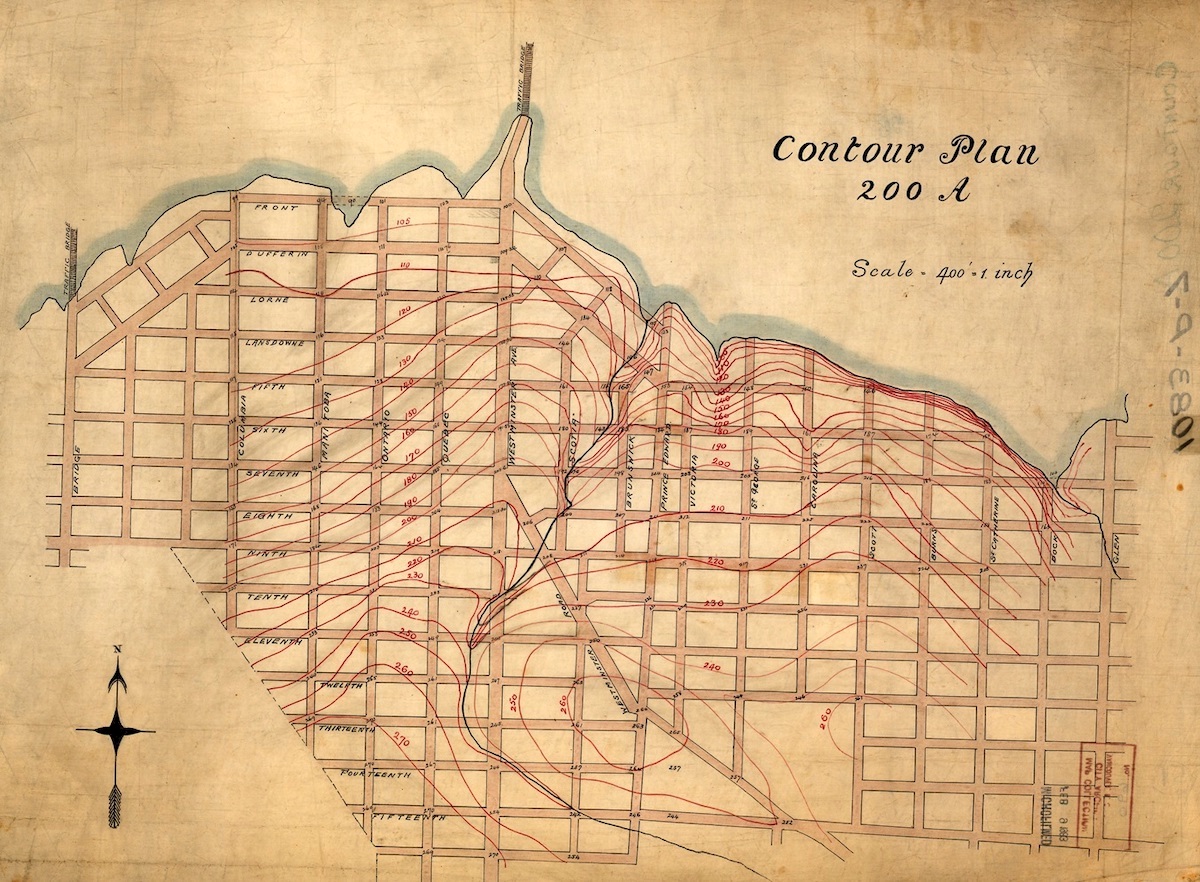
Up the hill, south of Broadway, a set of distinctive “tilting homes” has wavy fences and lumpy roads out front because they sit on top of what was once a mucky lake called Tea Swamp. It was formed after a bunch of beavers dammed the streams of the slope. Brewery Creek flowed out of it, providing the water and power for a pre-Prohibition industry that satisfied the thirst of early Vancouverites.
Phillips describes the convergence of history like this: “The street that is now populated by folks in expensive yoga pants walking their dogs was once a dirt road crowded by horse-drawn brewery wagons that were constantly arriving and departing with kegs of lager for thirsty hotel guests in the newly incorporated City of Vancouver.”
The setting is a perfect place for Phillips, a professor of English at Douglas College, to open her new book on the booms and busts of beer in this part of the world, titled Brewmasters and Brewery Creek: A History of Craft Beer in Vancouver.
It is an entertaining and well-researched book, and reviews are already calling it an essential history. B.C.’s What’s Brewing magazine — founded in 1990, early days for contemporary craft beer — says that in a beer scene full of “rumour and hearsay,” Phillips put in meticulous work to document what really happened, using public archives, old directories, personal memoirs and interviews with modern-day brewers and the descendants of pre-Prohibition figures.
Her history is driven by some truly quirky characters. Among the European entrepreneurs of the early city is a whip-wielding woman who managed a brewery. And then there are the lovable geeks who got their starts at home, whether by stealing barley meant for horses from their parents, or stashing brewing equipment in the backyard, prompting neighbours to think that a boat was under construction.
Prohibition might have ended in 1921, but Phillips shows us a different face of what persisted for decades: a highly regulated liquor industry that favoured big players, stifled innovation and led to boring beers, according to many experts cited in the book.
There’s no doubt that passion, creativity and business savvy drove the rise of craft beer. But the slow lift of strict government controls played a huge role in shaping its development. Phillips’s book pulls back the curtain on the regulatory history that has only begun to loosen in recent years, with some restrictions baffling customers.
Why couldn’t individuals sample more than 12.7 ounces of beer? Why couldn’t breweries open patios without food? Why does the province allow kids into breweries’ family restaurants while it recently ordered a play area inside of one to be removed? In the words of a liquor policy consultant, “Sometimes I think B.C. stands for ‘Before Christ’ when it comes to liquor licences.”
Phillips’s book might be a history of the beverage in the city, but it is also a history of the city through the beverage — how it played a host of cultural roles and transformed the very neighbourhoods where people sought out a cold one.
Brewery Creek’s raucous roots
You would have had no problem finding a place to drink in early Vancouver.
In 1886, there were 25 hotels and 19 saloons to choose from, one of them owned by John Deighton, the notorious Gassy Jack who gave Gastown its name. Vancouver was not yet a major metropolis, and these drinking spots served as the city’s social centre, where white men, in the words of historian Douglas Hamilton, went “to drink, eat, sleep, exchange gossip, gamble, pick up the mail, find a job, cash a cheque, play cards, hear the news and sometimes even attend church.”
They were rowdy establishments with spilled beer, tobacco smoke, disruptive drunks and frequent fights. The drinking would last until 8 a.m., capped off with a chorus of “God Save the Queen.” You can imagine the sounds and the smell, thanks to Phillips’s descriptions.
Racist exclusion was incorporated into the liquor licensing policy that governed these places. In 1888, the province prevented “any person of the Chinese race” from selling liquor and threatened to revoke the licence of anyone “giv[ing] intoxicating liquor to Indians.”
Phillips argues that this was about more than just the drink itself: “Provincial legislation was sliding discrimination right into the legal framework and cultural foundation of Vancouver: the places where men made deals over a pint and a handshake.” (Her previous book, Craft Beer Culture and Modern Medievalism: Brewing Dissent, unpacks the old-world romanticism of the contemporary beer movement that often promotes purity, conquest and imaginary whiteness.)
Beer in Vancouver, however, was not yet local. Most of these establishments got their supply from the United States and Europe, despite the fact that nearby Victoria was home to a burgeoning scene of independent breweries.
That’s where Carl Doering saw what was possible for Vancouver. He was a German-born hotelier who had settled in Victoria after some time in the United States.
Hotels needed beer. While it was easy to stock his Victoria hotel with supply from local breweries, his Vancouver hotel had only one local source to choose from.
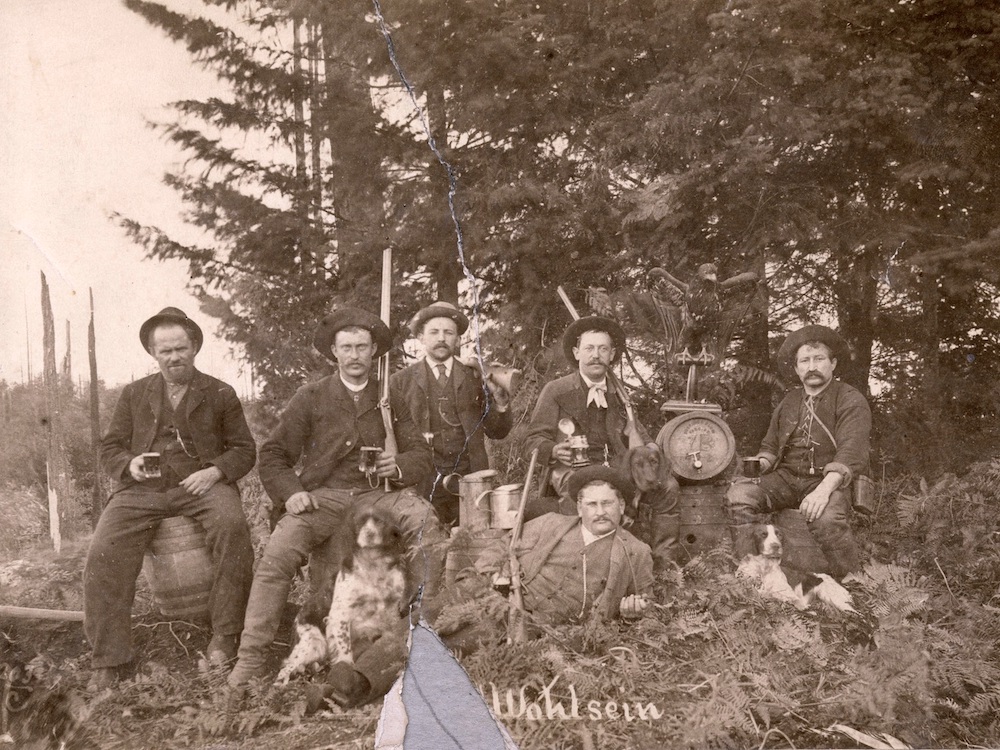
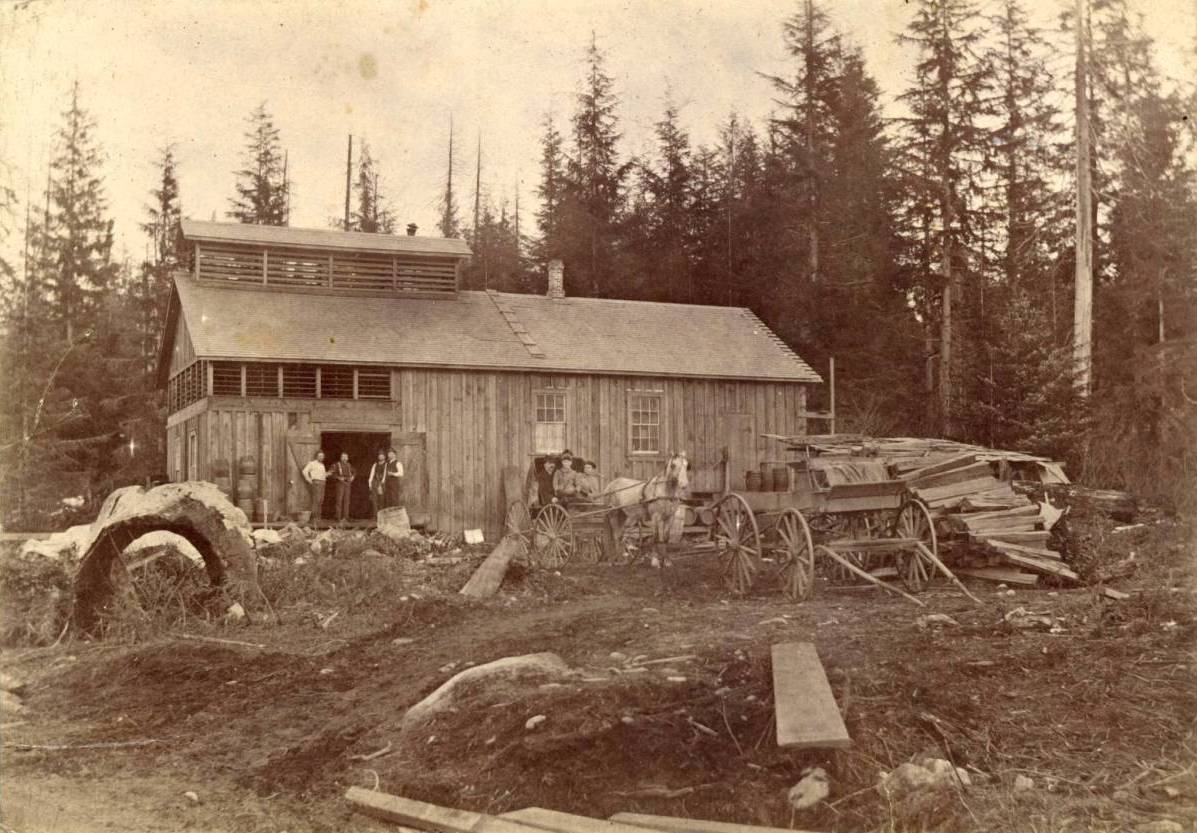
Doering decided to get into the industry himself. He took over a block in Mount Pleasant that would become home to his family, his horses and the brewery warehouse. He dammed Brewery Creek, using it to power the grain mill.
Vancouver Brewery was born. The German immigrant served authentic German lager made with Bavarian hops. One thousand and five hundred gallons were produced a day.
Doering became a popular man, even serving on Vancouver city council, and paved the way for eight other independent brewers. A beer culture began to emerge in Vancouver, not unlike the one today, for an increasingly knowledgeable clientele.
There were options that catered to everyone, like Doering’s Cascade beer, with “only the purest and most healthful of ingredients and is a drink fit for the most delicate lady.”
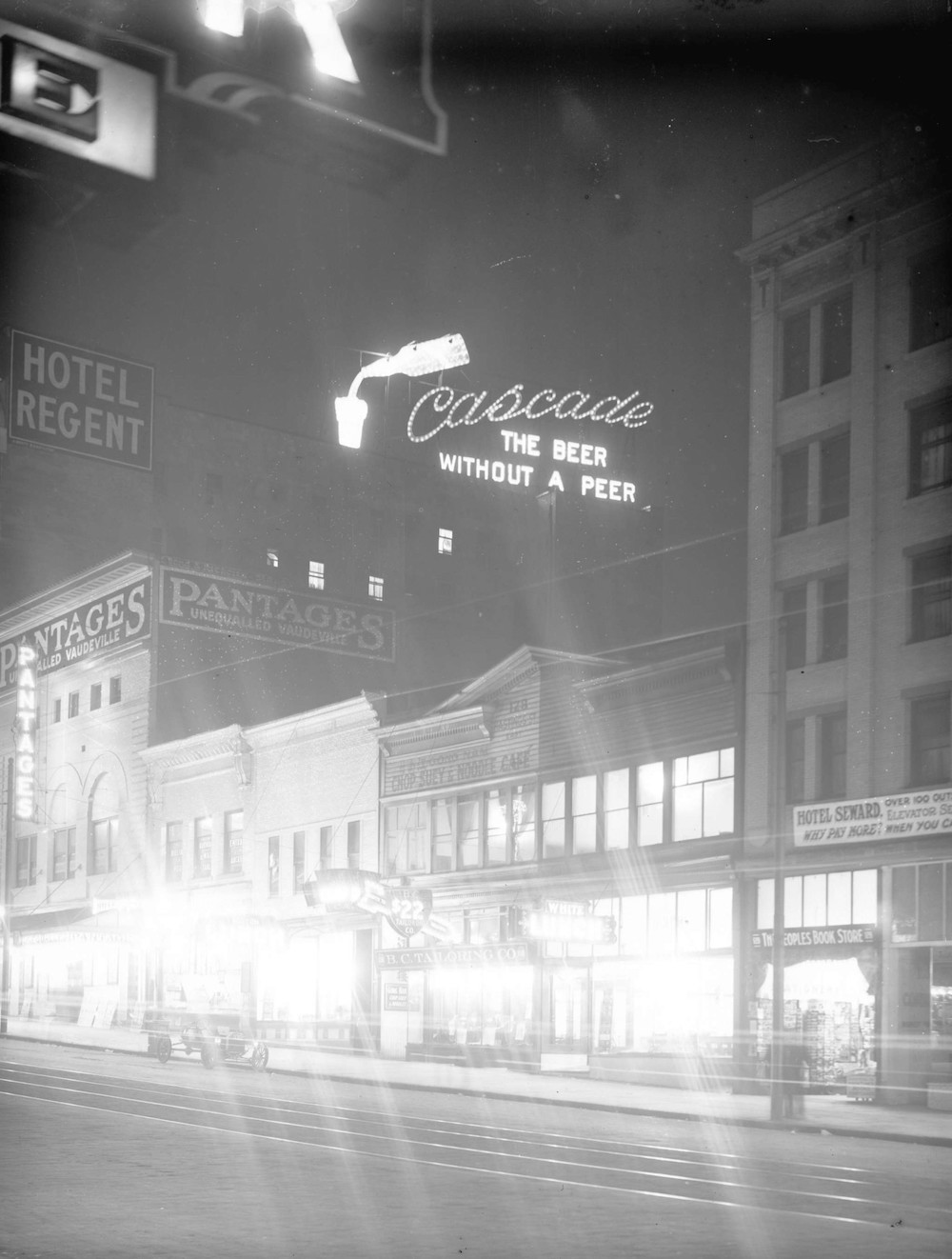
There were seasonal specialties, like Red Cross’s bock beer. There was a rise of British styles that rode the wave of British pride in the growing province, like Stanley Park Brewing’s English ales and porters.
These breweries might have started off to quench the thirst of European immigrants who missed the drink of home. But it wasn’t long before it took on a more local quality, with one brewer boasting of making his own malt using barley sourced from nearby Lulu Island.
This is the first of two very different eras outlined by Phillips in the book, with occasional flashes of violence carried out by rowdy settlers. It was a world of men, though Phillips surfaces the stories of prominent women who played a part in the growing industry.
There is a visceral episode featuring Mary Mueller, the first woman in the city to manage the notorious Columbia Brewery. After hearing that a local fish and game dealer had spread gossip about someone she knew, Mueller administered “a horsewhipping which left an ugly scar across his face, blackened an eye, and left him covered with bruises.”
In 1900, corporatization was foreshadowed when Doering’s Vancouver Brewery merged with another to become Vancouver Breweries. In 1911, they merged with a pair of Nanaimo brewing brothers to become BC Breweries.
By the time 1917 Prohibition hit, the Vancouver beer scene had already been watered down.
A number of mergers and acquisitions later, BC Breweries would become Carling O’Keefe, which would eventually be acquired by Molson Coors.
“All roads,” writes Phillips, “lead to Big Beer.”
Battling ‘big beer’
In 1978, the “big three” of Canadian brewing — Carling O’Keefe, Molson and Labatt — locked out their employees. They picketed on the streets while beer vanished from the bars and shelves of the Lower Mainland. It prompted some to try to bootleg it from the United States into Canada on their boats.
It just so happened that Frank Appleton was about to publish an article. He was a former employee of Carling O’Keefe who had long been frustrated with the monopoly of the big three and how their new tech turned beer into something that was mass-produced and took no skill whatsoever.
He wrote an article for a magazine called Harrowsmith titled “The Underground Brewmaster.”
“Like tasteless white bread and the universal cardboard hamburger, the new beer is produced for the tasteless common denominator,” he wrote. “It must not offend anyone, anywhere. Corporate beer is not too heavy, not too bitter, not too alcoholic, not too malty, not too yeasty and not too gassy. In other words, corporate beer reduces every characteristic that makes beer beer.”
Appleton’s words would become a manifesto that beer lovers looked up to for years.
It wasn’t long before he received a phone call from John Mitchell, co-owner of the Troller Pub (now the Troller Ale House) in West Vancouver, who then drove out to Appleton’s home in the Kootenays to speak with him.
It took a lot of lobbying of the province as well as the local government, with Mitchell arguing that the Vancouver region would look foolish if they were welcoming visitors for the upcoming Expo 86 without proper, local beer.
It was perfect timing, as the province had been upset with the big three engaging in price-fixing and wanted to give them some competition.
When Minister of Consumer and Corporate Affairs Peter Hyndman told the big three about it, a CEO replied, “We’re not worried — if we thought that was a good idea, we would have done it ourselves.”
Phillips writes in her book that those were “famous last words for breweries that, years later, would imitate craft breweries with their own ‘crafty’ beer brands like Shock Top and Blue Moon.”
Eventually, the Troller team was granted the approvals to become the country’s first contemporary craft brewery, cobbled together with old dairy equipment.
Even then, there were restrictions. The brewery could not be larger than 1,000 square feet. It was not allowed to produce more than 400 gallons a week. It was not allowed to sell beer on the premises. As a result, the brewery and the pub had to be two separate properties. And the beer could be sold only at the pub.
Their first creation was the Bay Ale, which was their clone of Fuller’s London Pride. It was a hit, outselling the brands of the big three. People came from far and wide to try it, sometimes emptying the supply by 6 p.m.
The prohibition of local beer was coming to an end, and the thirst for independent brewing was coming to a head.
Granville Island Brewing was next to make a major mark on the scene. It was backed by two entrepreneurs who had a background in oil and banking and wanted to do something for local beer that was bigger than the Troller Pub. They put their faith in a Berlin-educated brewmaster who they brought over on a visa to handle the beer, while they worked on the regulatory side.
Like the Troller team, they too used Expo 86 as an excuse. Do we really want Vancouver to be an embarrassment to visitors who knew their beers? They were given permission to sell bottled beer in stores and supply local restaurants, paving the way for the model that exists today.
The exacting brewmaster was impressed with the quality of the key ingredient in Vancouver: “The water was soft, soft, soft, perfect for brewing beer!” He produced product that met the standards of 16th-century Bavarian purity laws.
When the brewery opened in 1984, critics could taste the difference. One wrote, “It has more flavour than the pop beers, a touch of sharpness that the fans of imported beers will appreciate, more hops and other good things that make you think less of huge stainless-steel vats and chemical additives and more of the old brewmaster’s art.”
Troller’s brewing operation was unprofitable and eventually closed. Granville Island Brewing was unable to turn a profit and was sold in 1989 to a wine conglomerate before being bought by a subsidiary of Molson Coors.
Shaftebury, another prominent craft experiment with popular British-style ales, was sold to Sleeman and eventually Fireweed Brewing.
It was a sad end for these upstarts, but the love of craft continued to bubble.
From yuppies to hipsters: A Vancouver beer boom
By the 1980s, yuppie culture was on the rise in Vancouver. Phillips quotes a 1985 Province article that makes fun of them for driving BMWs, knowing mousse as “not a dessert but a hairstyling potion” and being discerning with their beers.
Blossoming in tandem with the yuppies was the West Coast embrace of grunge culture and an anti-corporate ethos. Ultimate Frisbee, considered weird and outside the mainstream, was taking off in those years, and Phillips says it was common to see bottles of Shaftebury and Granville Island beer at Ultimate practices.
Rich or not, anyone who loved an alternative sense of cool sought out craft beers. Places like Fogg N’ Suds and later the Alibi Room had extensive selections of rotating taps, helping customers develop their tastes and beer knowledge.
The 1990s saw the emergence of many of the popular brands that have become stalwarts of craft beer today: Storm, Yaletown, Russell and R&B.
There were eclectic people like James Walton, who founded Storm in 1994. He had a biochemistry degree from the University of British Columbia and a deep knowledge of fungi. After starting a mushroom farm and working in the pharmaceutical industry, he decided to start a brewery.
Walton represented an interesting shift. Storm was started not by a business person who sought out a brewmaster, but by a brewmaster who got into the business.
“In marketing books about starting your own brewery, they always said to start with a light beer,” says Walton in Phillips’s book. He decided to go against that. “I like rich, heavy beers, so that’s why I make them.”
Storm’s Red Sky Altbier and Black Plague Stout are still favourites today. The brewery is also known for its experimentation, from the science-y (using leftover yeast cultures from spoiled beer to make a sour lambic) and mad science (as demonstrated by the Turkey Dinner IPA and the Cinnamon Toast Crunch) to a blend of both (a sex tonic called Stiff Breeze).
In 2013, everything would change.
Until then, breweries were allowed to sell only small samples of beer on site, up to 12.7 ounces. Their primary source of revenue had to be wholesale, on tap at bars and restaurants.
That year, provincial legislation approved the tasting room, a cornerstone for every new craft brewery today.
Coun. George Affleck saw an opportunity for Vancouver. “Having been to Portland and experiencing the [beer] scene there,” Affleck says in the book, “I think we can do something special... I think Vancouver could be a real destination. People tour around to drink craft beer like other people go on cruise ships.”
It’s amusing to learn from Phillips that Vancouver’s craft beer industry, ever since the pre-Prohibition era, was boosted by people jealous of cities like Victoria, San Francisco and Portland.
The Vancouver industry rallied around the idea, and the city introduced policy that opened the floodgates for breweries, wineries and distilleries on industrial land to serve and sell the beverage they produced on site.
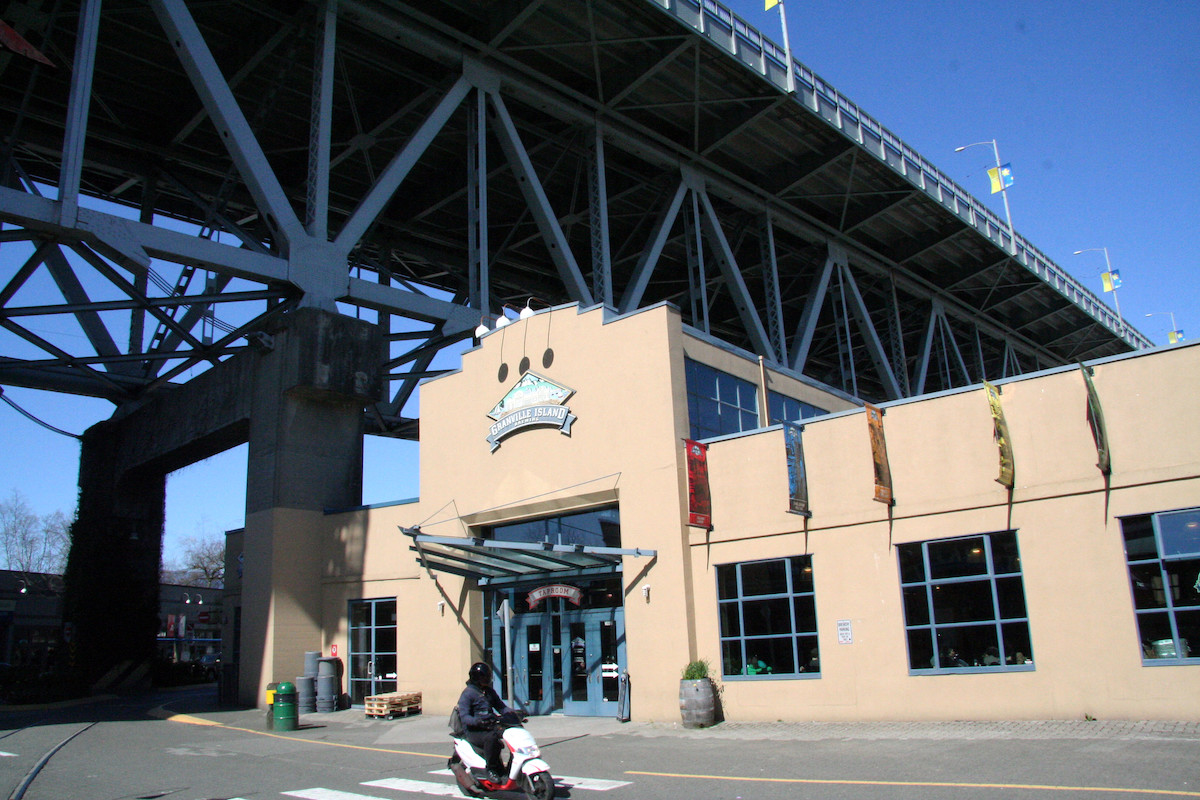
With the opening of Vancouver breweries like Brassneck, 33 Acres, Main Street Brewing and others, Brewery Creek was back. Farther east, another cluster had formed closer to Storm, with Strange Fellows, Luppolo, East Van Brewing and more.
They would transform Vancouver’s industrial neighbourhoods into sites of counterculture — which were soon eyed as trendy frontiers for real estate development.
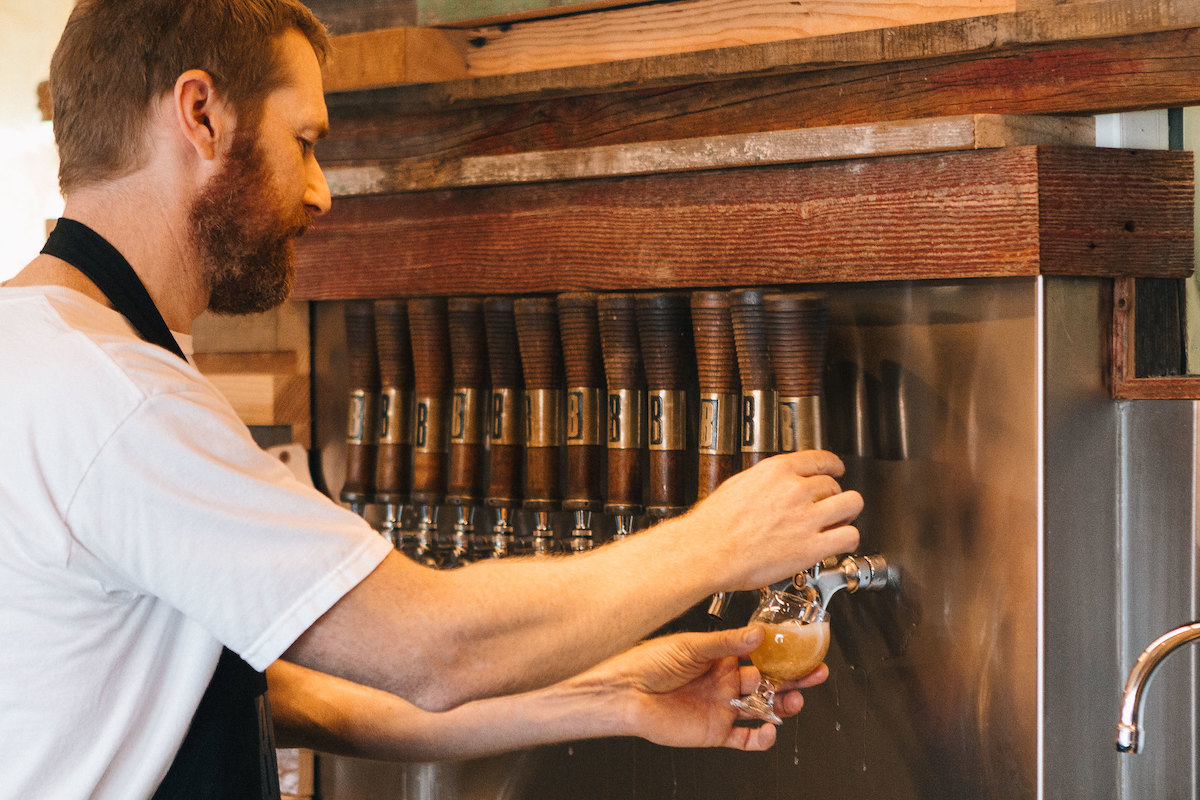
Barry Benson, the co-founder of R&B Brewing in Mount Pleasant, says it was a very different place back when they arrived in 1997.
“It was a nasty, nasty neighbourhood,” he is quoted as saying in the book. Benson expanded a bit more on this in a separate interview with the Vancouver Courier, talking about the sex work, illicit marijuana and needle debris in what was then a heavier industrial area with a stigmatized reputation.
“People were walking in and stealing our stuff. One day, we were sitting in the coffee shop next door, and we saw some guy walking down the street with a computer in his hand. And it turned out, it was our computer.”
These days, if you spot someone with a computer in hand, it is probably some creative or tech worker with their MacBook in what is sometimes called Mount Pixel.
While none of the book’s brewers use the word “gentrification,” they pretty much describe it. “I wouldn’t like to be opening a new brewery now” because the “heyday” is over, one says, with tax rates and rental costs in those hip areas now prohibitively high.
The demand for craft beer extended outside of Vancouver. Breweries like Dageraad in Burnaby, Steel & Oak in New Westminster, Four Winds in Delta and beyond have all taken advantage of the loosening of provincial regulations and become beloved spots for community.
After the boom years, many have told Phillips that we are now in a period of stabilization.
But the culture has changed. These days, it is not uncommon to visit a liquor store and find that the craft options outnumber the imports.
It is no longer strange to see someone toting a fresh growler full of craft beer on their way to a party.
Nor is it an exclusive thing that only hip urbanites enjoy. Even a suburban place like Abbotsford has a number of favourites, and families might bring their kids along to a brewery like Field House where there are yard games to play.
As Phillips puts it, “It’s no longer just bearded, plaid-clad homebrewers or university students who are into craft beer.”
Happy holidays, readers. Our comment threads will be closed until Jan. 2 to give our moderators a much-deserved break. See you in 2025! ![[Tyee]](/design-article.thetyee.ca/ui/img/yellowblob.png)
Read more: Books, Urban Planning


