
 SHARE:
Early in June, Joh Smolders came home to a surprise. Leaning against the white door of his condo in Airdrie, Alta., a parcel wrapped in bright, vermillion-red packaging stood waiting. Smolders’s heart skipped a beat. The first instalment of his subscription to LitResistance had arrived.
Filled with anticipation, Smolders, who is transgender, set the parcel on his kitchen table and opened the padded envelope. “I was excited to see what was in it,” he said.
Inside, Smolders discovered award-winning American author Malinda Lo’s lauded 2021 young adult novel, Last Night at Telegraph Club. The package also featured a bundle of cheerful pride swag — stickers, a magnetic bookmark and an enamel pin — plus a note from LitResistance founder Robyn Wilson. Her note explained the flimsy reasons Lo’s novel, about two teen girls falling in love in 1954, is one of close to 6,000 books banned from libraries in the United States.
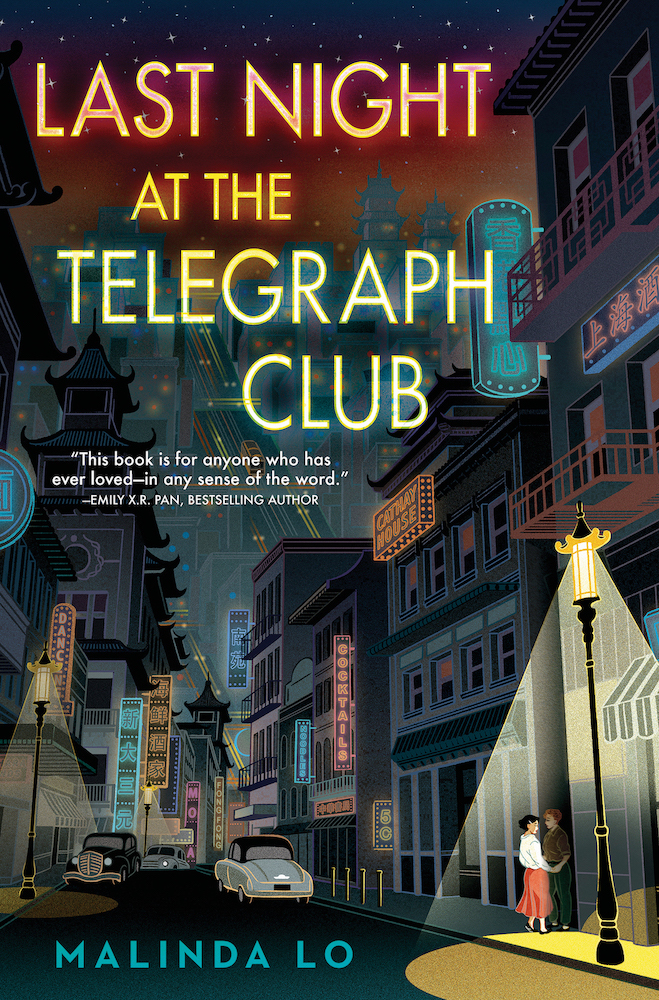
“This book is challenged due to obscenity and sexual content,” Wilson’s one-pager read. “The sexual content in this book includes a consensual makeout session involving two high school seniors that focuses more on personal discovery, emotional intensity and romantic connection between the two characters than on graphic sexual descriptions.”
Wilson, a social worker based in Edmonton, launched LitResistance in May to raise awareness of the diversity of voices censors are vanishing from libraries not only south of the border, but in her home province, too.
The Alberta book fight takes pages from an American playbook
“When I first had the idea for LitResistance, I was feeling the weight of everything that’s going on in provincial politics,” Wilson told The Tyee in a recent video call.
Last September, Alberta’s United Conservative government introduced a ministerial order requiring school authorities “ensure that school library materials containing any explicit visual depiction of a sexual act are not accessible or available to children or students at school.”
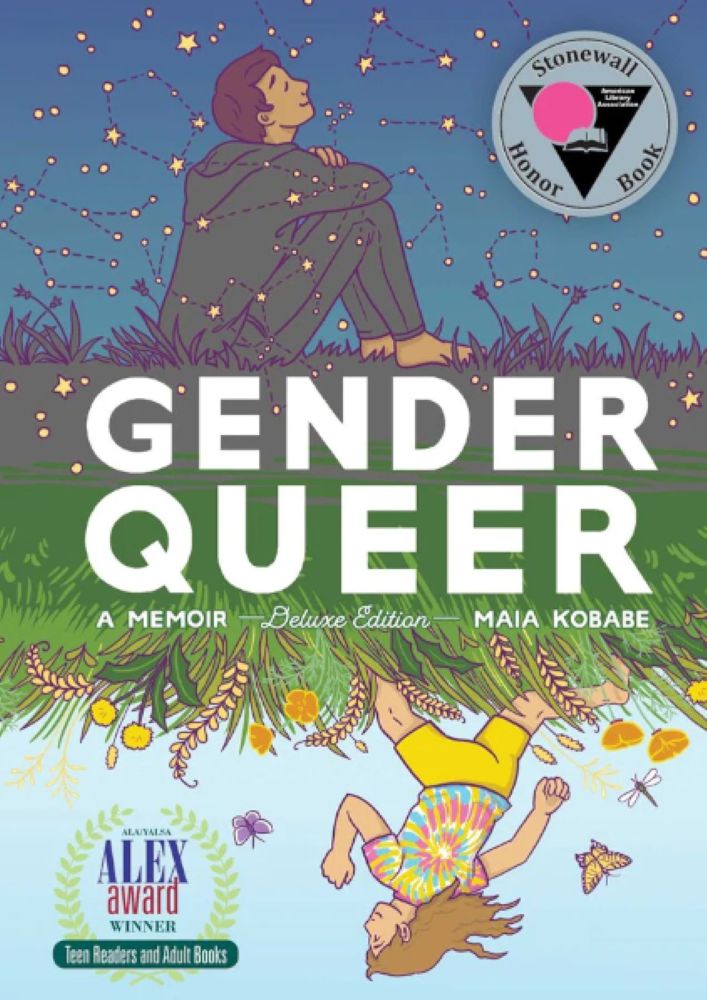
This led to the removal of at least 160 graphic novels and comic books from school libraries across the province, including titles such as Maia Kobabe’s Gender Queer and Mike Curato’s Flamer.
Both books have found a similar fate in the United States, where school boards and state governments have responded to the pleas of anti-LGBTQ2S+ groups.
According to the freedom of expression advocacy group PEN America, the number of book censorship challenges in the United States has almost tripled since 2021. Although Albertans can access the titles removed from school shelves at most public libraries in the prairie province, LitResistance allows Albertans to safeguard the diverse voices censors are trying to silence.
For professor Kit Dobson, who teaches English at the University of Calgary and is currently writing a book about book banning, access to diverse perspectives is essential for an increasingly complex society to thrive. “Books offer us complex stories and nuance,” he said.
While literature exposes readers to uncomfortable ideas and situations that enable critical thought, book censorship does the opposite, Dobson noted. “It forecloses the possibility of having a conversation about books we might not agree with in the first place.”
Reading censored books is one small action Albertans can take to prevent the erasure of marginalized groups from cultural discourse.
To neutralize censorship efforts, however, it is essential to understand the power dynamics that underpin them.
The United States offers an unsettling glimpse into what’s to come, if Albertans fail to take action.
Book censorship is about power
Emily Knox, a former librarian and now professor of information sciences at the University of Illinois at Urbana-Champaign, has dedicated her academic career to study the reasons American parents challenge books.
Her findings suggest that book censorship challenges don’t stem from a disregard for books, but the opposite.
Challengers know books are powerful artifacts. They contain ideas that shape minds and values, if not a community’s culture.
This is the reason why those in power have sought to ban books since the advent of the printing press six centuries ago democratized access to knowledge. Aided by propaganda drenched in morality, the Catholic church spent hundreds of years vanishing “heretic” books and their authors, a strategy governments followed to keep citizens from accessing unconventional ideas that threatened their power.
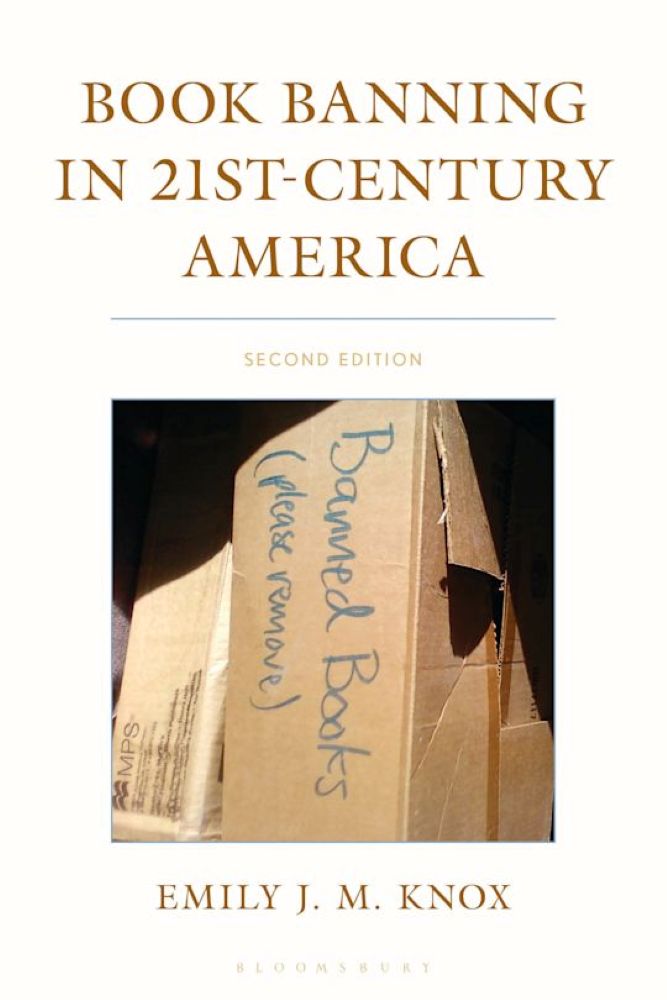
“The inherent push and pull between what’s acceptable and unacceptable for the reading public is an important aspect of censorship practices throughout history,” Knox wrote in her 2026 book, Book Banning in 21st-Century America.
In recent history, targeting educational institutions like schools and libraries has proven an effective tactic to unleash moral panic, or a manufactured fear towards those deemed to pose a risk to the status quo, and stall societal change.
A recent chapter in the peer-reviewed journal Critical Questions in Education uses the persecution of Florida teachers in the 1950s, when homosexuality was portrayed as a moral deviance that had no place in the classroom, as an example of a moral panic introduced by the state’s government to gain control of schools.
Protecting the innocence of society’s youngest from exposure to the “wrong” kind of knowledge can be easily co-opted by groups grasping to preserve the status quo. It is no coincidence that censorship movements in the United States have proliferated at a time when the voices of historically marginalized communities have risen to the forefront.
For parents, challenging books “is a way of saying that the values of their community should be a certain way,” Knox told The Tyee. “And the way that they keep control of those values is by not allowing some books into schools.”
Politicizing parental identity
But parents aren’t the ones driving censorship movements in the United States.
Conservative groups such as Moms for Liberty and Parents Defending Education have been instrumental in propagating a moral panic that attempts to vanish gender and racial minorities from collective memory.
Generously funded by undisclosed donors, these organizations, which members call “grassroots,” educate parents on the perils of introducing children to critical race theory and LGBTQ2S+ rights, and offer free training for those seeking to challenge books and influence education policy.
Meanwhile, far-right organizations such as the Heritage Foundation, the think tank behind Project 2025, give moral panic legitimacy by translating fear into the language of policy.
For more than a decade, the organization has produced hundreds of reports that frame issues related to race and gender as political indoctrination, leading to education policy and curriculum changes that claim to rid classrooms of harmful ideology.
These changes effectively replace diversity with intolerance.
Although attempts to ban books accelerated in the wake of the COVID-19 pandemic, Knox saw change was afoot in 2019. In writing for the International Journal of Information Diversity & Inclusion, she described the ways in which censorship movements use their symbolic power as parents and taxpayers to control who has the power to shape society.
“Books about diverse characters have two special roles to play,” she wrote. “First, they allow all human beings to see themselves reflected in books, and second, they allow everyone to learn about people who are not like themselves.”
A moral panic fueled by disinformation and social media
While censorship is as old as history, a key aspect differentiating the current culture war from previous bouts of moral panic is social media. Propelled by algorithms that prioritize rage bait over nuance, disinformation reaches concerned parents who feel the ground below them shifting — books on gender, sexuality and race may be seen to be responsible for a world they no longer recognize as their own.
To compound the issue, anti-intellectualism and an alarming decline in literacy have colluded to erode the trust parents once had of the teachers and librarians tasked with guiding their children into adulthood. It is education, after all, that shapes citizens and sustains democracy.
Book censors have flooded social media with out-of-context book excerpts and imagery to support their arguments. In 2025 alone, more than 4,200 titles touching on race, gender, and sexuality were challenged in the United States.
According to Paul T. Jaeger, a professor and scholar at the University of Maryland’s College of Information, the purpose of current censorship movements is not to simply remove individual books from library shelves, as is typically the case with concerned parents. Their goal is to erase entire groups of people from society.
Because censorship undermines literacy, disinformation becomes an effective tool to erase diverse perspectives from the discourse, Jaeger writes, supplanting them with a version of history that serves those in power.
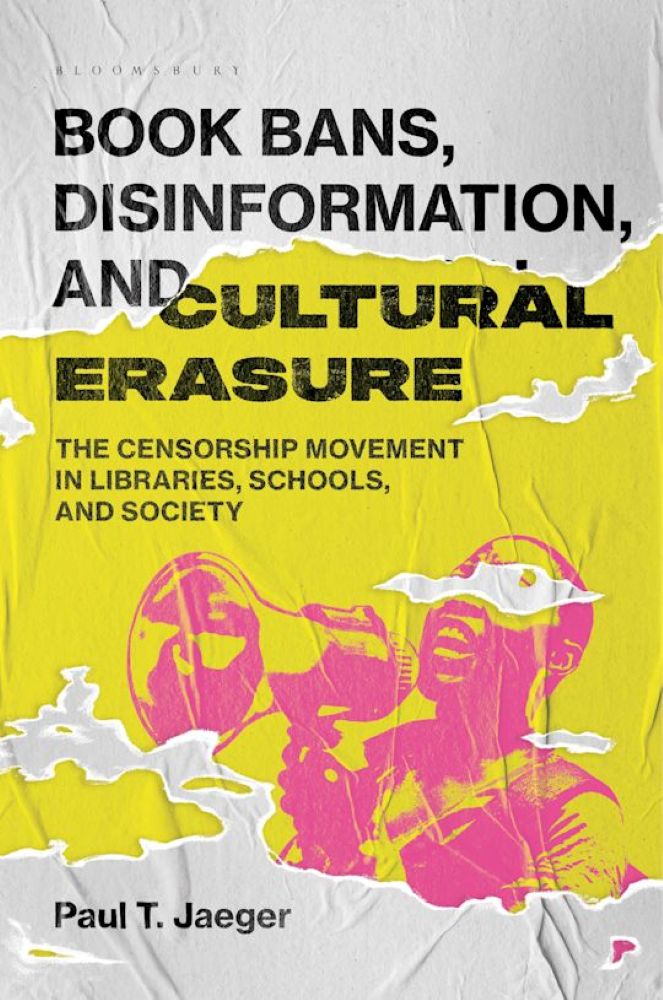
“The places where disinformation and censorship become closely linked, are also the places where marginalized groups are ready targets,” said Jaeger, whose forthcoming book, Book Bans, Disinformation and Cultural Erasure, is set to hit the shelves in November.
“Historically, governments have been inclined to blame problems on populations that don’t have much of a voice.”
What to do in the face of censorship
Canada isn’t immune to the issues ailing the United States. Up until recently, the Canadian government censored gender diverse books and authors that failed a test called the Hicklin test, which had roots in an English obscenity trial from 1868.
The removal of books from Alberta school libraries shows moral panic is well underway in Canada, as parental rights groups use disinformation to erode the trust Albertans have long conferred to educators, and replace it with a narrow, intolerant vision for the future.
Like their American counterparts, far-right groups like Action4Canada hold workshops to inform parents on the dangers of “sexually explicit” books, and instigate them to mobilize against LGBTQ2S+ rights, which they characterize as indoctrination.
When the Alberta government called for the removal of books with allegedly pornographic content in 2025, the group celebrated their victory on Facebook.
Meanwhile, conservative influencers in Alberta wield the power of social media to amplify bigoted messaging. Social media posts equating gender diversity to indoctrination have garnered tens of thousands of likes on Facebook. They give some Albertans the impression that school libraries are riddled with inappropriate content intended to tarnish the innocence of children with sexualized imagery.
Alberta’s United Conservative government seems well-attuned to this narrative.
Last summer, Alberta Premier Danielle Smith took to social media to condemn the exposure of schoolchildren to “pornographic content.”
A month earlier, Education Minister Demetrios Nicolaides posted on social media that “books with graphic depictions of oral sex and molestation” were available in school libraries across the province. “I will work with parents and schools to strengthen policies that will ensure materials are age appropriate,” he wrote on X.
(Incidentally, the premier has reported meeting with members of the Heritage Foundation, the far-right American think tank.)
Since the United Conservative government came into power in 2019, gender minorities increasingly feel unwelcome in their own province, and the book ban is one amongst several attempts to undermine LGBTQ2S+ voices.
Early in 2025, the CBC reported on the impact anti-LGBTQ2S+ narratives are having on Albertans. In Valleyview, a small town in northern Alberta, a 17-year-old became fearful of her own neighbours, who accosted the transgender teen for having stood up in support of LGBTQ2S+ titles in the public library’s catalogue.
To quell the moral panic, and stop what PEN Canada member Ira Wells calls the Alberta government’s “act of cultural vandalism” in regards to its book ban, Albertans must do more than read challenged books.
Preserving the voices of marginalized communities requires that Albertans keep censorship from gaining ground.
“People need to be vocal, be present, run for office,” information scholar Jaeger said.
“They have to be openly supportive of the organizations and the people facing censorship.” ![[Tyee]](/design-article.thetyee.ca/ui/img/yellowblob.png)
Read more: Books, Rights + Justice, Alberta, Gender + Sexuality









Tyee Commenting Guidelines
Please note that email notifications for replies are not currently working due to a software issue which may be resolved in a future update.
Comments that violate guidelines risk being deleted, and violations may result in a temporary or permanent user ban. Maintain the spirit of good conversation to stay in the discussion and be patient with moderators. Comments are reviewed regularly but not in real time.
Do:
Do not: