


 SHARE:
It’s around 6 p.m. on a warm Sunday evening in late May in Bareilly, India. I am at one of the many birthday parties I must attend that summer. I have a very full social calendar as a six-year-old. We are all clutching the spoils of a successfully broken piñata, giggling and ripping open packages of candy. I stuff all my wrappers into the pocket of my shorts, to be forgotten until they are released into the washing machine.
Then, as most children’s birthday parties go, it’s time for dinner. The birthday girl’s mother brings out the dish that makes an appearance at almost every birthday I attend that summer, and for good reason — the macaroni pasta in tomato sauce is quick to make, mostly hides the vegetables and adds nutrition to the standard party spread of pop and chips.
It will take about three more years to realize that the macaroni dish I eat at countless birthday parties is a distinctively North Indian adaptation of authentic Italian pasta. This specific dish is filled with an assortment of veggies diced up and tossed in a red sauce made with tomatoes, garlic, onion, a splash of lemon juice, cream and Indian spices such as cumin, red chilli powder and chief among them, garam masala.
It’s the spice I associate most strongly with home, and it’s the one I reach for whenever I’m in need of comfort as an international student in Vancouver. That’s why I’ve decided to explore my relationship with this ingredient and why it prompts such strong emotions.
A brief history of garam masala
Garam masala is a blend of different spices roasted whole, then ground and blended. Garm means “hot” and masal means “ingredients.”
But as Priyadarshini Chatterjee explains in an article for the Diaspora Spice Co., the word garam does not indicate the spice level of the blend but instead the taseer of the spices added. Traditional Ayurveda, a 3,000-year-old system of medicine, classifies ingredients based on taseer, their elemental potencies.
“Ancient medicinal systems like Ayurveda and Traditional Chinese Medicine identify ingredients by their elemental properties. Ayurvedic principles, for instance, classify substances into two broad categories according to their virya, or potency, into ushna or hot, and sheetal, or cold. This, in turn, affects the body’s energies, metabolism and digestion,” Chatterjee writes.
Some of the spices used in garam masala such as black pepper, cardamom, cloves, cinnamon, nutmeg and mace have heating properties that are considered to warm up the body from inside out. It affects bodily functions such as digestion and metabolism. This is why the spice blend is generally used in the winter season. Some of the spices used are also classified as aromatics in Ayurvedic medicine.
We don’t really know where, exactly, garam masala came from. Chatterjee writes that only two of the spices in the masala blend, pepper and cardamom, come from India. Cinnamon was primarily grown in Sri Lanka; nutmeg, cloves, and mace were originally imported from East Indonesia, with the production of cloves later being moved to Africa by the Sultan of Oman in the early 1800s, according to an article by Brayan Bwana for the Citizen. Black cardamom was brought in from the Eastern Himalayas.
Chatterjee writes that it would be reasonable to assume that garam masala was first prepared in the kitchens of royalty and aristocracy who were able to afford the expensive, imported spices. She adds that the art of creating spice blends to evoke different flavours precedes the Mughal Empire and the creation of garam masala.
The trade of the individual spices used in this specific North Indian blend is also linked to the history of European colonization. According to a post on the Maritime History Society website, the high demand for pepper in Europe led European traders and explorers to the Malabar Coast (now in Kerala, India), starting with the Portuguese and the French, and ending with the English.
The colonization of Sri Lanka started with Portuguese explorers coming across the abundance of “Ceylon cinnamon” (a colonial name given to Sri Lanka by British colonizers), according to the Ceylon History website.
The trade for cloves was dominated by the Dutch until the mid-18th century in the Maluku Islands of Indonesia. They later lost their monopoly to the Omani empire, who moved clove production to Zanzibar and parts of Tanzania in Africa in the early 19th century.
The spice trade was the start of globalization, according to archaeobotanist Marijke van der Veen.
According to Martha Henriques’s BBC feature on the spice trade in the ancient world, the same trade led to the colonization of the new world when Christopher Columbus accidentally reached the Americas.
‘It’s an estimate’
It has been hard to wrap my mind around the fact that the spices I have grown up seeing in my mom’s spice cabinet, the same spices I have learned to recognize by scent, could have such a complex and violent history.
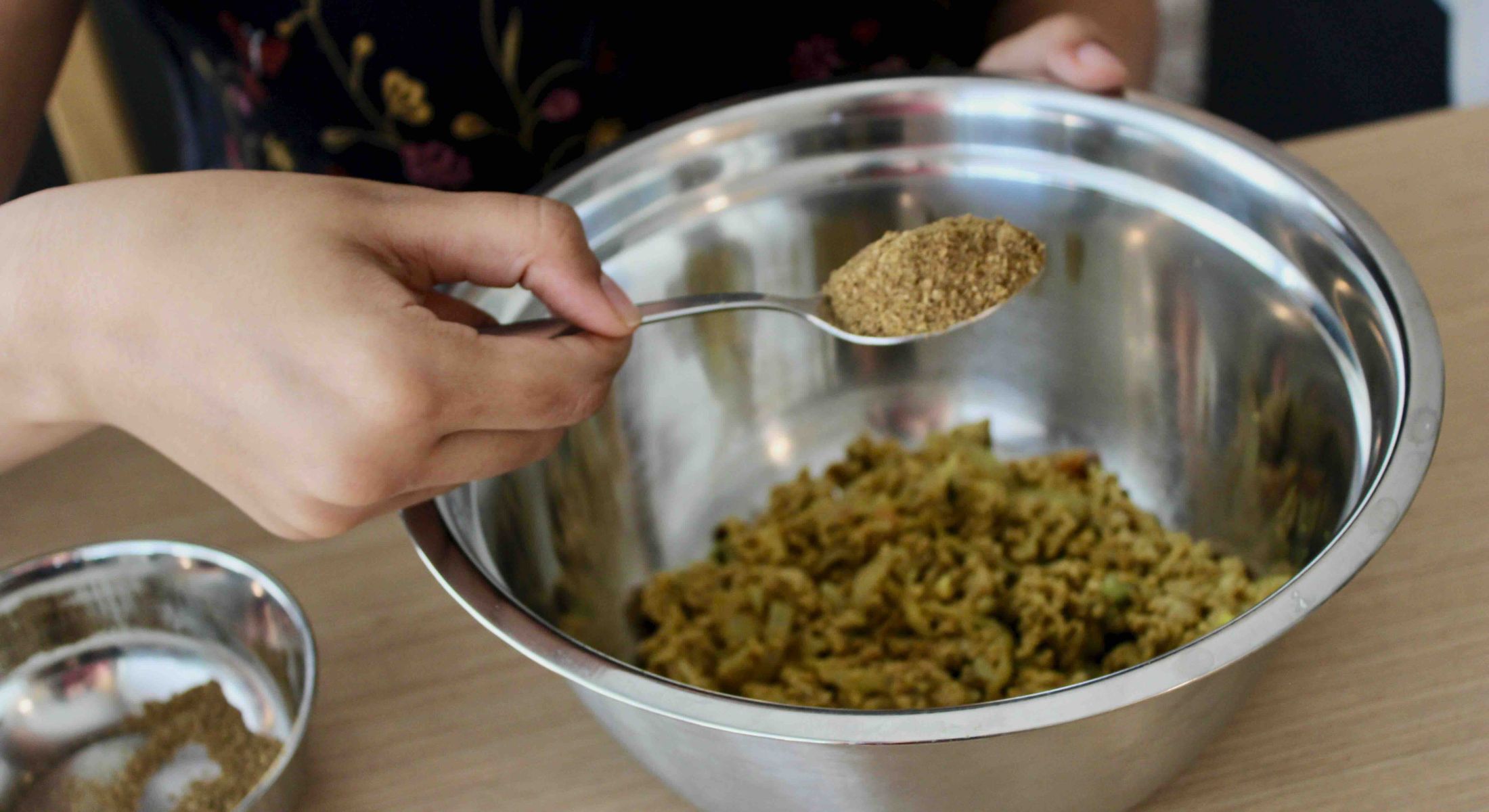
In my home, my mother makes her own garam masala blend by roasting coriander seeds, cumin, cloves, black peppercorns, ginger, black cardamom, cinnamon sticks, mace, bay leaves and half of a star anise flower. She adds them to her kadhai — a deep stainless steel pan with handles on both sides — and roasts them for just over a minute.
Then, she grinds the spices with a steel mortar and pestle. She never measures out the spices when she adds them. I have asked her how much of each spice she adds and have never received a real answer.
“Bas andaaze se,” she tells me in Hindi — it’s an estimate. This is also the answer I receive when I ask her how much cumin or chilli powder or garam masala I should add to a marinade.
I was talking to my friend Prisha about this. “My mom tells me she’s going to add one spoon of something and then adds three!” she said. “Make it make sense!”
Prisha’s experiences in the kitchen with her own mother ring true for many of the recipes my mom has shared with me.
For my mother, one spoon isn’t based on a commonly used metric. It is based on two things: the steel spoon, her measure of the standard teaspoon, that has been in her namak daani, also known as a masala daani, or spice box, for the last 10 years; and an ‘andaaza’ — the ability to make educated estimates that comes with decades of cooking.
One spoon can mean a teaspoon or three teaspoons.
For my mom, cooking combines intuition and muscle memory gained after preparing delicious meals for over two decades. Her hands hold the secrets to her dishes close to her heart just like she has held me and my siblings, just like her mother used to hold her.
I wonder if these incomplete recipes are just to keep me on the phone longer when I am trying to cook something or make me come home more often — because there’s only so long I can go without my mom’s anaardaana mutton.
An imprecise science
As I researched this story, I finally managed to get a garam masala recipe with exact measurements.
Kamal Dadrao, my close friend’s mother, immigrated to Canada with her husband 23 years ago and she uses the ingredient list her father wrote down for her before he passed away in 2021. She graciously shared it with me during our conversation.
For 500 grams of masala you need 200 grams of cumin, 100 grams of coriander seeds, 50 grams of black peppercorns, 50 grams cinnamon, 50 grams dry ginger powder, 20 grams of nutmeg or mace and 10 grams cloves.
It is already different from the one my mom uses. That goes to show that garam masala is something everyone makes their own. There are also different types of garam masala used in various parts of India and South Asia.
“Don’t think of it as the Punjabi garam masala, think of it as the Indian garam masala,” Vij told me. “‘Garam’ means “hot” and ‘masala’ means ‘spice’ so it’s just spices that evoke your palate through different tastes.”
Vij is a celebrity chef based in Vancouver and owner of the Michelin-starred restaurant Vij’s on Cambie Street in Vancouver.
“I would say about 70 per cent of the dishes on our menu use garam masala,” said Vij.
“I am using the garam masala from West Bengal called the panchpuran, or the garam masala from South India called gunpowder. So there are different kinds of variations and combinations of garam masala within India itself.”
When I asked Vij why he thinks North Indians add garam masala to so many dishes, he said it isn’t really about garam masala but instead about the love that goes into preparing the dish.
Yes, it is the finishing garnish of any dish, but what we are really doing is adding some love and care into the food.
This is also the philosophy he uses in the kitchen at Vij’s.
“My food is not just Punjabi food, or South Indian food, or North Indian food,” he said.
“My food is Vikram Vij’s food — Chef Vikram Vij has cooked this food for you with a lot of love and that’s all that matters.”
‘If we don’t use it, it feels bland to us’
Kamal said she feels dishes are incomplete with the addition of garam masala.
“We are so used to the taste that if we don’t use it, it feels bland to us.”
Garam masala is also a way for her to feel connected to her father and India.
“In India, my dad used to individually buy all the spices and grind them at home every time and use it in every sabji [cooked vegetable dish] and daal and that tasted different. I currently have the store[-bought] one and it has all the same spices, but it tastes different.”
She’s planning on using the recipe her dad left for her to make some garam masala at home. “Every Sunday at our home, he used to cook kadhi chawal and I still make it the same way,” Kamal told me. Her father taught her how to make it and she hasn’t changed the recipe since. “It was special for us.”
Kadhi chawal is a beloved dish across North Indian households. Punjabi kadhi is a tangy yogurt-based curry generally made by whisking together yogurt and chickpea flour along with Indian spices. It is served with pakoras (gram flour fritters) added to the curry. The dish usually served with steamed or boiled rice (chawal).
“Every Sunday for lunch we had kadhi chawal because my dad used to be home since Sundays are holidays. He was the one who did the pakoras and the masala and added the yogurt and chickpea batter and my mom took over after that,” she told me.
Her father didn’t usually cook, but the kadhi was his domain.
“When he used to live away from home before marriage, the people he rented from used to make kadhi chawal and he loved the taste of their kadhi. He got the recipe from them because he wanted to recreate that exact recipe for his kids.”
Kamal still makes kadhi chawal for lunch in Surrey, Canada, keeping the tradition that her dad established alive. It keeps her connected with her roots.
Chai masala, another type of roasted and ground spice blend, is often added to prepare the classic Indian masala chai (tea) with its strong aroma and layered flavours.
When I returned home for the summer holidays last year, my mom sent me back to Vancouver with a small container holding freshly prepared masala.
I have never been a chai drinker, but I will occasionally make a cup when I miss my parents.
My mom is a stay-at-home parent and my dad has his own business, so his hours tend to be irregular depending on meetings and the work for that day. But regardless of the time of day, they always have a cup of chai together. My dad often doesn’t finish his cup.
“I don’t always want the chai,” he told me in Hindi when I asked him about it. “It’s just an excuse to spend some time with my wife — you know how your mother is, always doing something. So this way I get to sit with her at the end of a long day and enjoy her company and some chai.”
I have also noticed that my parents often do this with their friends. They always ask them to stay for a late-night cup of green tea.
“At least have some tea, it’s good for digestion,” they say. But what they really mean is, “Stay a bit longer, there’s so much we can talk about and so many bursts of laughter we are yet to share.”
Their friends do the same thing. I have noticed myself doing it, too.
“Do you want coffee or tea?” I ask, even if my friend is just coming to pick something up. I will often add that I have chai masala, taking a small amount of pride in the fact.
South Asian cultures have always been collectivist and food habits such as eating together, sharing home cooked meals with your neighbours and slightly forcing your guests to at least have chai or coffee before leaving is part of the culture.
During my conversation with Kamal, she expressed a longing for the community she left behind when she immigrated to Canada in 2003.
“When I was in India before my marriage, whenever my neighbours made anything they would come to me and say, ‘Kamal, I made this tikki [cutlet], try some,’ or if kadhi was made at home I would take some to them and get the food they had prepared that day in exchange."
And for her, just like my parents, food is often an excuse to spend more time with her loved ones.
People can sit together, eat, drink some tea and talk. It lends a certain emotional intimacy to the conversation that only comes with sharing food.
My friend, Prisha, added to this during our conversation.
“I feel like food is the easiest thing to bond over. Even if it’s something bad you are having at a restaurant, at least you can talk about it or you can talk about something you tried at another place. That’s something you can share, so a connection is formed.”
According to Vij, it’s because “food and music bring people together. It’s human nature.”
“If you go to India, the first thing they offer you is a cup of chai,” he said, adding he used to do the same at Vij’s.
For him, Vij’s is not just a restaurant. He wants to embody the feeling of someone visiting his house, and this is what he has cooked for them.
It’s often this feeling of home that I miss as an international student, and so does Prisha.
‘Something is missing here’
Prisha’s favorite memory from back home is the rajma chawal (red kidney beans in a thick gravy, rajma, often served with rice or Indian flatbread, such as paratha) her maternal grandmother makes.
While she often cooks the same recipes from back home, Kamal always feels like the food doesn’t taste quite the same.
“If we cook daal or sabji here and the same in India, the taste is different. Something is missing here.”
I have been thinking about what the “something missing” might be. Is it that instead of watching my mom calmly juggling three pots, I am at the stove double-checking every ingredient in a frenzy? Is it the half-empty cup of chai sitting in my sink because I didn’t make it just right?
These musings have led to more frequent phone calls to my parents, some with tears, as I tell them I miss them, I can’t wait to see them and I am running low on the garam masala my mother made for me.
It was during one of these phone calls that my mom shared one of her secrets with me.
“If you ever make garam masala in the summer, you should add fennel to it because it cools your body down,” she said.
I still don’t have an exact measurement for the fennel — but I am sure if I ask she will say, “Oh — just a spoon.”
However, it turns out that gathering my friends to eat Indian style-macaroni, chilled tetra packs of Frooti mango drink in hand, can help fill that hole.
My friends and I will be making these gatherings more frequent, cooking together and stirring up fond memories of home. ![[Tyee]](/design-article.thetyee.ca/ui/img/yellowblob.png)
Read more: Food











Tyee Commenting Guidelines
Please note that email notifications for replies are not currently working due to a software issue which may be resolved in a future update.
Comments that violate guidelines risk being deleted, and violations may result in a temporary or permanent user ban. Maintain the spirit of good conversation to stay in the discussion and be patient with moderators. Comments are reviewed regularly but not in real time.
Do:
Do not: