


 SHARE:
The first time most Canadians would have heard about a problem with electricity exports involving Brookfield, a giant global private company, would have been in relation to Prime Minister Mark Carney’s conflict-of-interest screen.
This was one of the 17 “situations” where Carney, who was chair of Brookfield Asset Management before becoming prime minister, needed to be absent from cabinet decision-making because of his personal stake in the issue.
The Brookfield case currently before the Canada Energy Regulator merits far more public attention than it has received. It is an application by Powell River Energy Inc., a Brookfield Renewable Partners subsidiary located in Powell River, B.C., to export power to another Brookfield subsidiary in the United States, BR Pacific Hydro Power.
The application for a 30-year licence greatly exceeds normal export permits of 10 years and involves sending up to 700,000 megawatt hours of electricity a year to the United States.
This is important because the decision will be precedent setting and, if successful, an incentive for private companies to increase private electricity exports independent of Canadian needs.
The fact that a Canadian Brookfield company will be selling to a U.S. Brookfield company also raises concerns about transfer pricing, that is privileging the U.S. subsidiary in the price it pays for Canadian electricity.
The exports would also greatly affect the economic health of the Powell River area, currently struggling to recover from a mill closure.
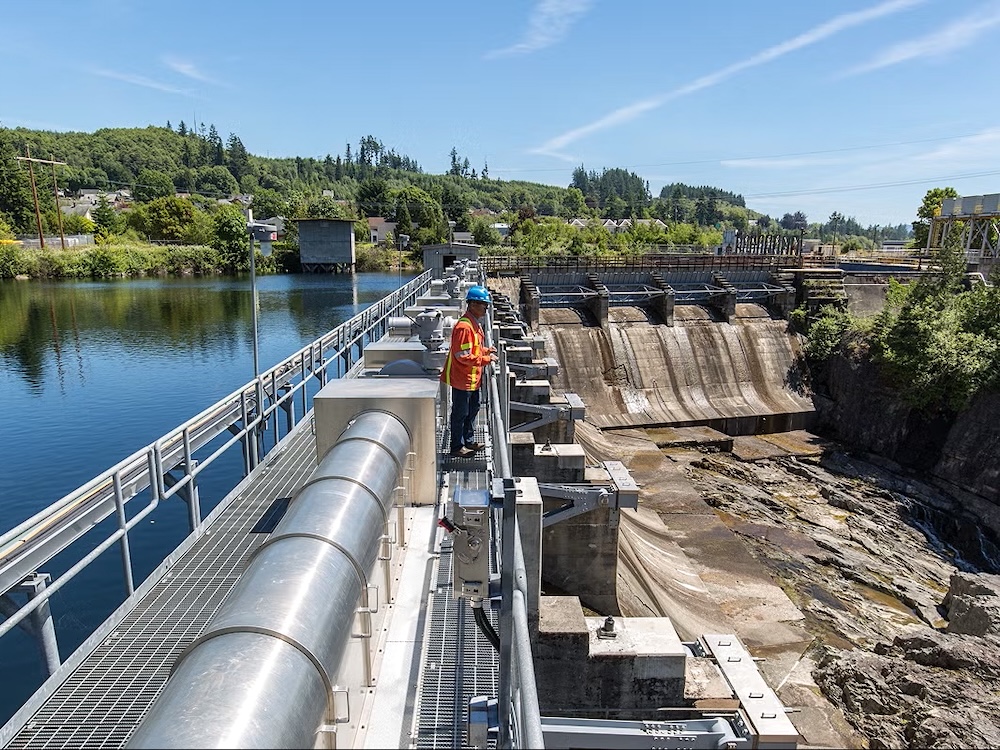
At issue is the electricity generated by two Powell River Energy-owned dams and generating stations (Powell River and Lois Lake) that were built in the first half of the 20th century to serve the paper mill, once the largest producer of newsprint in North America and a major source of local employment.
Since the early 2000s, as the mill downsized and ownership shifted, the surplus electricity had begun to flow south. This changed dramatically in 2021 when the mill closed, and all the electricity generated was exported to the United States through another B.C. Brookfield company that had a 10-year export permit. These big dams produce a lot of electricity, having a capacity of 85 megawatts, which is enough to power a small city.
In Canada most electricity generation and transmission occurs through provincially owned power companies. Building large dams for electricity generation, as occurred in B.C. beginning in the 1960s, meant that huge amounts of power would be available long before it was needed within the province. Exporting to the United States was important because it created significant income for the province and helped pay for the dams.
But when the United States deregulated its electricity system in the 1990s to allow increased access to transmission of power by private companies, Canada, including BC Hydro, also deregulated its transmission systems. This change stimulated the push for more privatization of electricity generation.
In B.C. a significant boost to the private sector occurred in the early 2000s when the BC Liberal government required that all new electricity generation, except from large dams, be provided by independent power producers, or IPPs, rather than BC Hydro. This means that BC Hydro must buy new forms of “green” electricity, such as wind, solar and other hydro generation, from private companies.
Brookfield’s power ambitions
Brookfield was drawn to electricity generation through the expansion of both renewable energy projects and private generation. In Canada Brookfield now owns 43 IPPs with one in Alberta, five in B.C., 30 in Ontario and seven in Quebec. Most of these are hydroelectric facilities.
Brookfield’s “green energy” initiatives received accolades from many environmental groups, although some criticism arose for its “greenwashing” and mishandling of environmental aspects of electricity generation in the United States.
Brookfield was ahead of the curve in understanding increasing electricity needs, primarily because of AI demands. Its recent annual report notes that “we are experiencing a dramatic shift driven by the AI revolution, one of (if not) the most significant advancements in technology in our lifetime. This is driving demand for our product, which has never been higher, supporting the highest development returns we have seen in over a decade.”
Powell River Energy’s application to the Canada Energy Regulator would tie up this electricity until 2055. This is new and dangerous because of the precedent it sets with no benefit for Canada.
Since President Donald Trump was elected, Brookfield has been laying off its Canadian managerial staff, saying it wants to integrate its North American operations.
Powell River Energy will likely pay no corporate tax on the profit it earns from electricity exports because its parent company has its corporate offices in Bermuda.
The export approval will also likely have significant environmental implications because Powell River Energy would be allowed to export the maximum electricity its dams can produce with no controls over how drawing down that much water would affect the environment, fish and local communities.
But perhaps most disturbing is that Powell River Energy is setting aside the Tla’amin Nation’s interests and land claims and the development needs of Powell River, and refuses to enter negotiations with BC Hydro, which wants this electricity for B.C.’s energy needs. The monetary terms of the export agreement are kept private and even BC Hydro is not allowed to know the agreed price.
A pivotal moment for Canada
Canada is in a nation-building mood to lessen the damage of Trump-caused upheavals, mainly through diversifying merchandise exports to lessen the reliance on the United States. With about 70 per cent of Canada’s total exports going to the United States, this shift matters, if it is done well.
Considering the need for diversification, it would make the most sense to strengthen the Canadian economy with more focus on domestic needs and using resources within the country. Yet domestic control of electricity exports is receiving surprisingly little attention, although governments are promising to ratchet up electricity generation for Canada’s massive anticipated future energy needs.
Canada’s new energy plan, “Powering Canada Strong,” envisions a more electrified economy by building new infrastructure to double electricity supply by 2050. The details are still to come, but if this means relying increasingly on the private sector for new electricity generation, as seems highly likely, things can get complicated, particularly if foreign investment is involved.
Canadians have long been warned about the U.S. designs on Canadian water, specifically through outright water exports or river diversion.
But this new threat to Canadian water through its use to generate electricity for export may be even more serious. Trump specifically warns: “AI, for whatever reason, needs massive amounts of electricity, right? More electricity than the entire country produces right now by double.”
And that is where Canadian water comes in, and where what private electricity companies do matters.
Canada needs to ensure that electricity exports serve the public interest. Locking in power exports for decades as Powell River Energy wants to do adds nothing to the Canadian economy and diminishes the economic prospects of communities where the dams are located.
Foreign investors have very different objectives than provincially owned electric companies. Perhaps the biggest takeaway from this is the realization that the more natural resources are owned by the public, the greater the economic security of the country. ![[Tyee]](/design-article.thetyee.ca/ui/img/yellowblob.png)
Read more: Energy, Politics, Environment












Tyee Commenting Guidelines
Please note that email notifications for replies are not currently working due to a software issue which may be resolved in a future update.
Comments that violate guidelines risk being deleted, and violations may result in a temporary or permanent user ban. Maintain the spirit of good conversation to stay in the discussion and be patient with moderators. Comments are reviewed regularly but not in real time.
Do:
Do not: