


 SHARE:
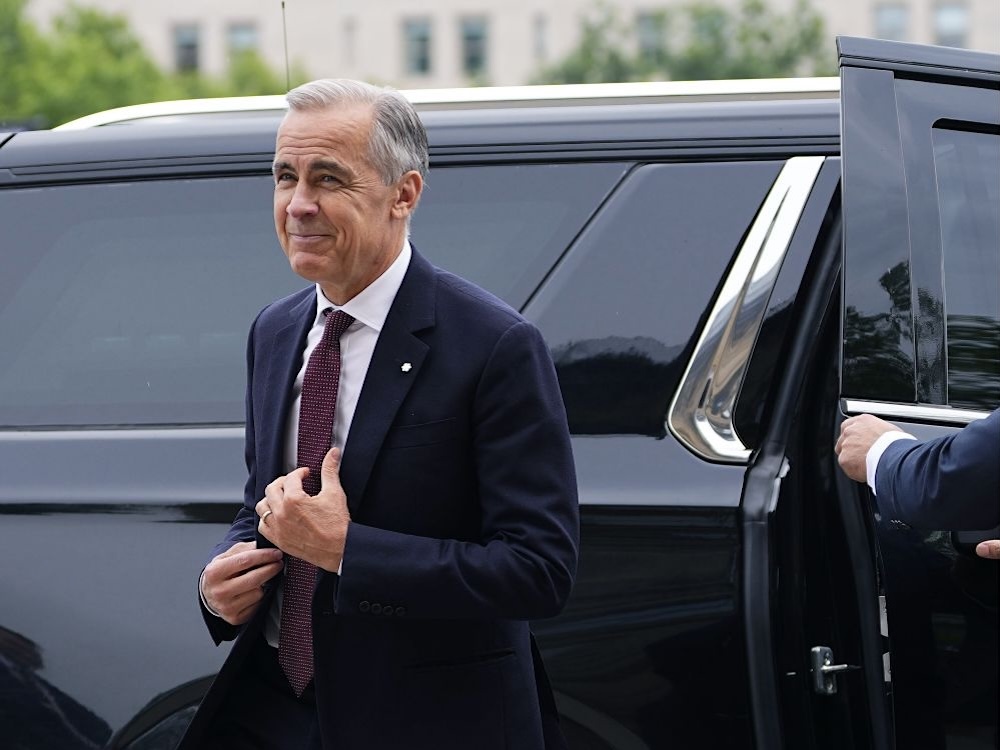
The Canadian political landscape is fundamentally shifting under Prime Minister Mark Carney — and to be informed participants in our democracy, Canadians must recognize this reality.
The tipping point came yesterday when Scott Gilmore officially assumed the role of Carney’s new principal secretary.
Gilmore (no relation to me!) had been serving as Carney’s senior adviser on foreign, defence and security policy. Now, he’s filling shoes left empty by Tom Pitfield, whom Carney just appointed to the Senate.
Here’s where things get interesting (or perhaps, more accurately, revealing).
In a post announcing he’d be joining Carney’s office about a year ago, Gilmore said he has “been hoping for well over a decade that [Carney] would enter politics.”
There’s something else Gilmore was publicly advocating for just under 10 years ago, too: a new conservative-leaning party. Specifically, a progressive conservative one. In fact, columnist Paul Wells wrote at the time that Gilmore had been “wandering the land looking for signs of a Red Tory revival.”
Looking back, the man who would go on to become Carney’s principal secretary appears almost prophetic: today, Mark Carney is prime minister — and Canada arguably has a Red Tory party.
The latter just so happens to still be called “the Liberal Party of Canada.”
Yes, the Liberals are moving to the right
Carney’s Liberal party has been making announcements at a dizzying pace, all while dismissing criticism and questions with reminders of the “more dangerous and divided world” that we’re living in.
When looked at together, those announcements take an interesting shape. Canada is set to spend massively on a new pipeline — one that would make us money only if the world gives up on preventing climate catastrophe. We’re also spending big on military and defence, including a new submarine purchase that’s set to be the biggest defence splurge in our country’s history.
Still, Carney will tell Canadians there are other things we can’t afford. To hear Carney tell it, we can’t afford to meet our greenhouse gas emissions reductions targets — that would be too expensive, he said in a recent “Forward Guidance” video (despite the astronomical price tag of climate-induced damage).
Carney also scrapped a proposed increase to the capital gains tax inclusion rate, a tax that would have applied only to the ultra rich — those who make more than $250,000 per year off stocks, mutual funds or investment properties. That decision stripped more than $17 billion of potential revenue from federal coffers, according to an estimate from the parliamentary budget officer. In a country with the worst wealth gap in our recorded history, apparently asking the ultra-rich to pay a bit more isn’t something we can afford — lest we fail to, as Carney put it, “incentivize builders.”
All that sounds a lot like right-wing politics to me. While some might argue this is a return to decades-old, pre-Trudeau iterations of the Liberal party, even Liberals who served in those governments have started to raise the alarm about what their former party has become.
Lloyd Axworthy, who served as foreign affairs minister under Liberal Prime Minister Jean Chrétien, authored a piece published in the Walrus under the headline “Carney’s Liberals Are Governing Like Conservatives — Just More Politely.”
The former Liberal cabinet minister highlighted a lot of what I already spoke about, but also touched on budget cuts that will harm Indigenous communities and cruel new immigration policies.
“Small-l liberals — people who still think of the Charter as a living thing, who care about refugee protection, Indigenous justice, gender equality, international law — are running out of political space,” Axworthy wrote in the piece.
“Their values haven’t disappeared. The party that used to carry them is just moving on.”
The Liberals aren’t the only ones shifting
The Conservatives under Pierre Poilievre, meanwhile, have gone even further right.
They’ve got MPs posting about “pervert costumes” in an attempt to denigrate Pride parades, and their leader is incessantly attacking the rights of transgender people. Poilievre has also adopted a Trump-like habit of attacking journalists for doing their jobs and a disturbing willingness to parrot conspiratorial language.
It’s enough to make Carney’s conservatism seem almost palatable in comparison — until you remember that he’s also rewarding Alberta Premier Danielle Smith with pipelines while keeping mum about her attacks on transgender youth and erosion of public health care.
In fact, Carney’s conservatism is so overt that it’s fuelling conservative infighting as strategists, influencers and supporters debate how to best someone beating them at their own game.
One former spokesperson for Poilievre said that Carney has been “on an absolute tear since becoming PM.”
“On every metric, the Liberals have been absolutely outclassing us across the board,” Anthony Koch wrote on X, setting off a firestorm of debate and infighting that saw former Poilievre staffers square off with right-wing influencers about the future of the party.
So we’ve got Conservatives that have gone full populist right, and Liberals that are effectively a reborn federal progressive conservative party.
On top of that, the NDP is still licking its wounds after an absolute clobbering in the last election. Recent polls suggest their new democratic socialist leader, Avi Lewis, is making some significant headway on that front — but he’ll need to become more known if he’s going to really challenge the two-horse race our first past the post electoral system incessantly tries to impose on us.
To change a reality, we first have to accept it
While it can feel depressing to confront ourselves with how right-wing our politics have become, it’s also essential that Canadians acknowledge reality “as it is — not as we wish it to be,” to quote our current prime minister.
Partisans who have long identified with the Liberal brand are twisting themselves into pretzels, repeating the word “pragmatic” as a cheap salve to soothe the gnawing feeling that these are the very policies they’d decry if they came packaged with a Conservative logo.
That’s exactly what makes Carney’s government so threatening for anyone with progressive values.
His Liberal government effectively serves as a Trojan horse for these right-wing, pro-corporate policies. Before we can even discuss the policies themselves, we first have to convince people there’s something they might not have expected inside.
That’s not to say there aren’t Liberals who genuinely do champion these policies. The party has always been centrist, sometimes teetering more rightwards and, in other iterations, a bit more towards the left.
But what’s startling about the discourse around Carney is the number of people who fail to see the major political realignment that has taken place under this prime minister’s tenure.
Canada doesn’t have a Liberal party and a Conservative party as we previously understood their ideologies, with Liberals as the “centrist” option and Conservatives on the right. We now have a progressive conservative “Liberal” party and a hard-right option in the Conservatives.
Within this political landscape, Canadians can support whomever they want.
But I’d argue we can’t have conversations or debates about Canadian politics unless we acknowledge our new political reality.
This is adapted from an earlier post to Rachel Gilmore’s Substack Bubble Pop. ![[Tyee]](/design-article.thetyee.ca/ui/img/yellowblob.png)
Read more: Federal Politics









Tyee Commenting Guidelines
Please note that email notifications for replies are not currently working due to a software issue which may be resolved in a future update.
Comments that violate guidelines risk being deleted, and violations may result in a temporary or permanent user ban. Maintain the spirit of good conversation to stay in the discussion and be patient with moderators. Comments are reviewed regularly but not in real time.
Do:
Do not: