


 SHARE:
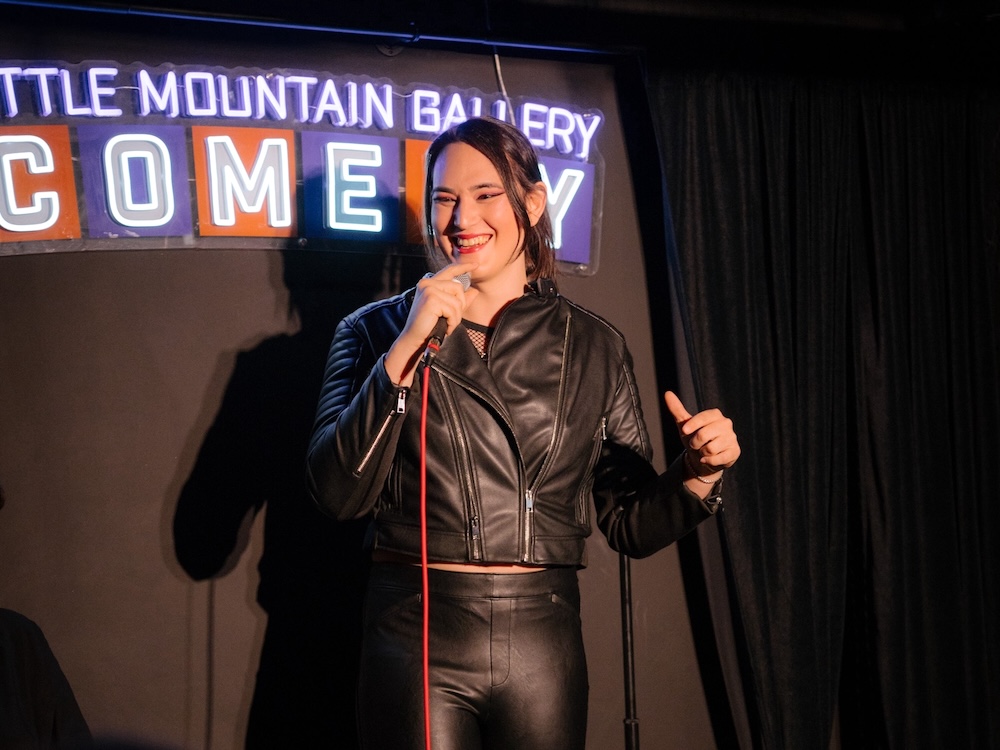
Kay likes to open her shows with one simple line: “I love being trans.”
The mononymous Vancouver comedian made the decision early in her career to never make self-deprecating jokes about her identity — it’s been important for her to be unapologetically herself, particularly in a context where queer and trans people have not always been welcome.
“For a lot of queer and trans people, their perception of comedy is not a positive one,” Kay explains. She notes how mainstream standup comedy can be openly hostile towards queer and trans people. Celebrated comedians like Dave Chappelle and Ricky Gervais tout Netflix specials filled with transphobic jokes that have garnered millions of views.
And even when trans folks try telling jokes themselves, it can be isolating and challenging to break into a scene dominated by straight cisgender men.
To foster a more inclusive comedy scene, Kay found a simple solution — get more queer and trans people onstage.
In 2023, she started an open mic comedy night called Laughs in Queer. The show is for LGBTQ2S+ people and allies and takes place each month at Vancouver’s Slice of Life art space.
The response has been overwhelmingly positive, with each show drawing larger crowds than the last, supporting a growing scene of queer and trans comics. It has even inspired similar events in the city.
Laughs in Queer is a welcoming space for people to try out their comedic chops — even and especially if they don’t plan to become a comedian. “For a lot of these folks, it's a really great experience to just get to tell jokes to a crowd,” Kay says, “and realize this is a hugely affirming thing. There’s many people who get me and laugh at the things I have to say.”
Drawing from talent she discovered at the Laughs in Queer open mics, Kay produced and hosted the city’s first all-transfemme comedy show last year called “Trans Girls Raw and Uncut.”
The show ran three times, selling out each time, before catching the attention of Just for Laughs Vancouver programmers who gave the show two spots in its 2025 festival this month.
For Kay, who has a background in community organizing and education for diversity, equity and inclusion, comedy is about more than getting a laugh — it’s a way for marginalized people to challenge and reclaim social power.
She explains that while jokes that punch down at queer and trans people rely on and reinforce harmful stereotypes, jokes made by queer and trans people can punch up at those stereotypes, breaking them while revealing something about the systems that created them.
“A lot of the stereotypes about trans people are that we have negative relationships with ourselves, with our bodies, with the media, with the people around us,” Kay says.
“Which is why a lot of my comedy is grounded in trans celebration and trans joy.”
Laughing through injustice
From an outsider's perspective, trans joy may seem hard to come by right now. World leaders are implementing policies based on transphobic catchphrases about the existence of “only two genders.”
The Alberta government is pushing legislation that restricts trans youth’s access to gender-affirming care.
Conservative Party of Canada Leader Pierre Poilievre has voiced support for a ban on trans women’s access to women’s sports, changing rooms and bathrooms.
But to Kay, that’s exactly why queer and trans people should embrace comedy.
While politicians and mainstream media frame queer and trans identity as a subject of debate, comedy allows queer and trans folks to reclaim power over these narratives and normalize their lived experiences.
Comedy is a powerful tool that can reveal “new ways of thinking about the world,” Kay explains. “When you remove the social stigma attached to transness, living a trans or queer experience is objectively hilarious.”
Research supports that comedy is a uniquely persuasive and memorable method of communicating complex social issues.
In their book A Comedian and an Activist Walk into a Bar: The Serious Role of Comedy in Social Justice, authors Caty Borum Chattoo and Lauren Feldman argue that comedy is a powerfully unifying force against injustice because it allows us to critique systems of power while remaining hopeful. When something makes us laugh, they say, we make a positive emotional connection that can inspire engagement and action.
Kay points out how making these connections with audiences can also combat the rising hate against queer and trans people.
“You can’t teach people the right words to say to make them not prejudiced. The only way that people will change their opinions about something is they have to build a personal connection,” she says.
“Comedy is perfect for that because when you laugh with someone, that’s you building a personal connection.”
‘For the longest time, I felt like I was the only trans girl in comedy’
For queer and trans people, getting stage time to share those laughs isn’t always easy.
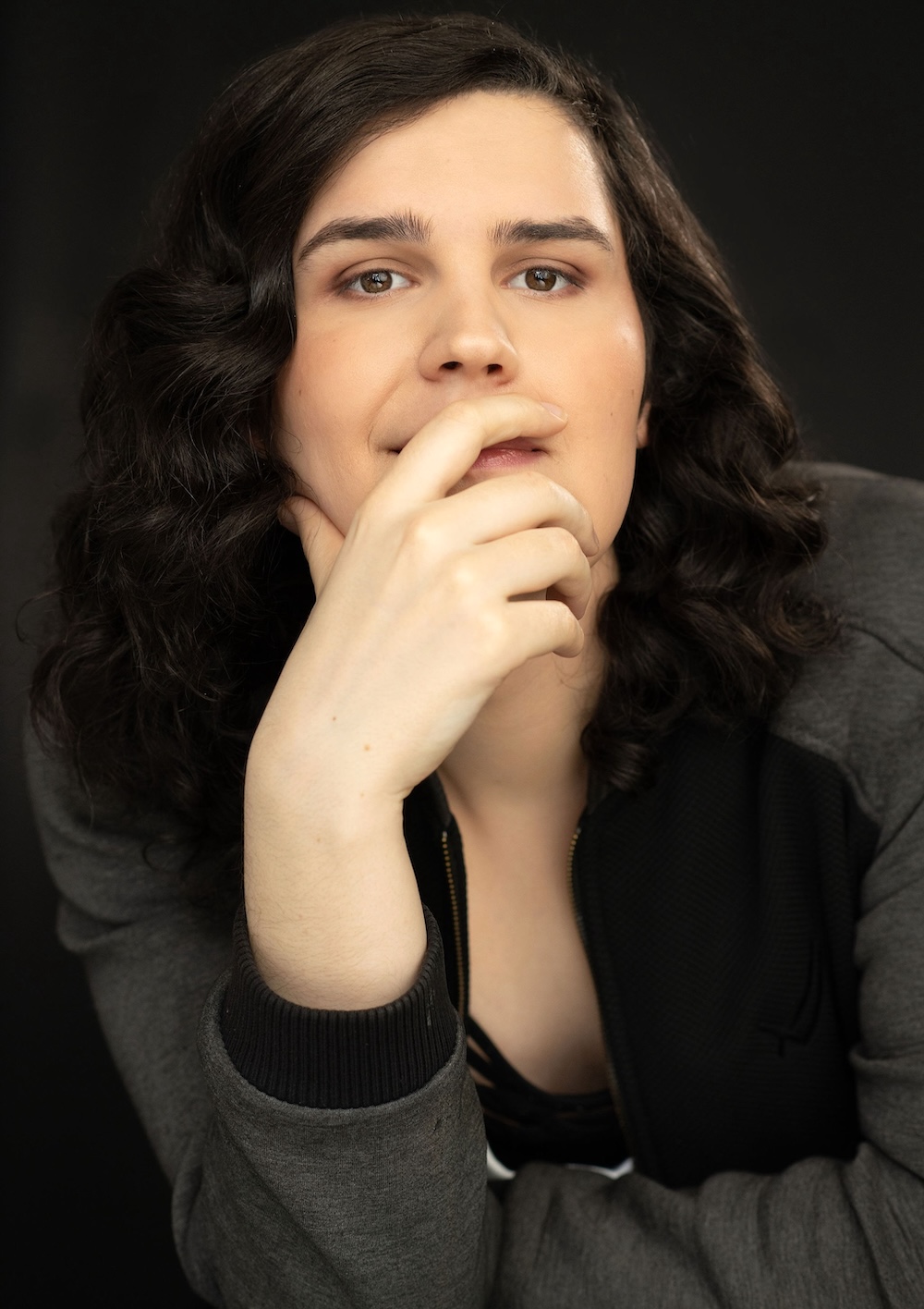
Eden Kaminski, another comedian and part of Kay’s lineup in the Just for Laughs Vancouver show that ran this week, has been doing standup in Vancouver since 2018.
As a trans woman, Kaminski says she’s struggled to carve out space in the more general comedy shows still dominated by straight cisgender men. “I feel like there's a ceiling of how far I can actually go.”
Success in comedy is a game of networking. You grind at open mic nights, attend shows and hope to meet the right producer to book you for a gig. But without queer and trans producers in the scene, Kaminiski felt like she was held back from opportunities given more freely to her cisgender peers.
“For the longest time, I felt like I was the only trans girl in comedy,” Kaminski says. She saw other transfemme comedians online but explains that before Kay got started, she was the only trans woman she knew of pursuing comedy in Vancouver.
Now, she’s performed in several sold-out comedy show lineups featuring all trans women like her.
“To have something that's in Vancouver, in my city, and seeing all these different girls getting up and performing and sharing their own form of comedy really warms my heart and makes me feel less alone in the world,” she says.
Identity is just one thing
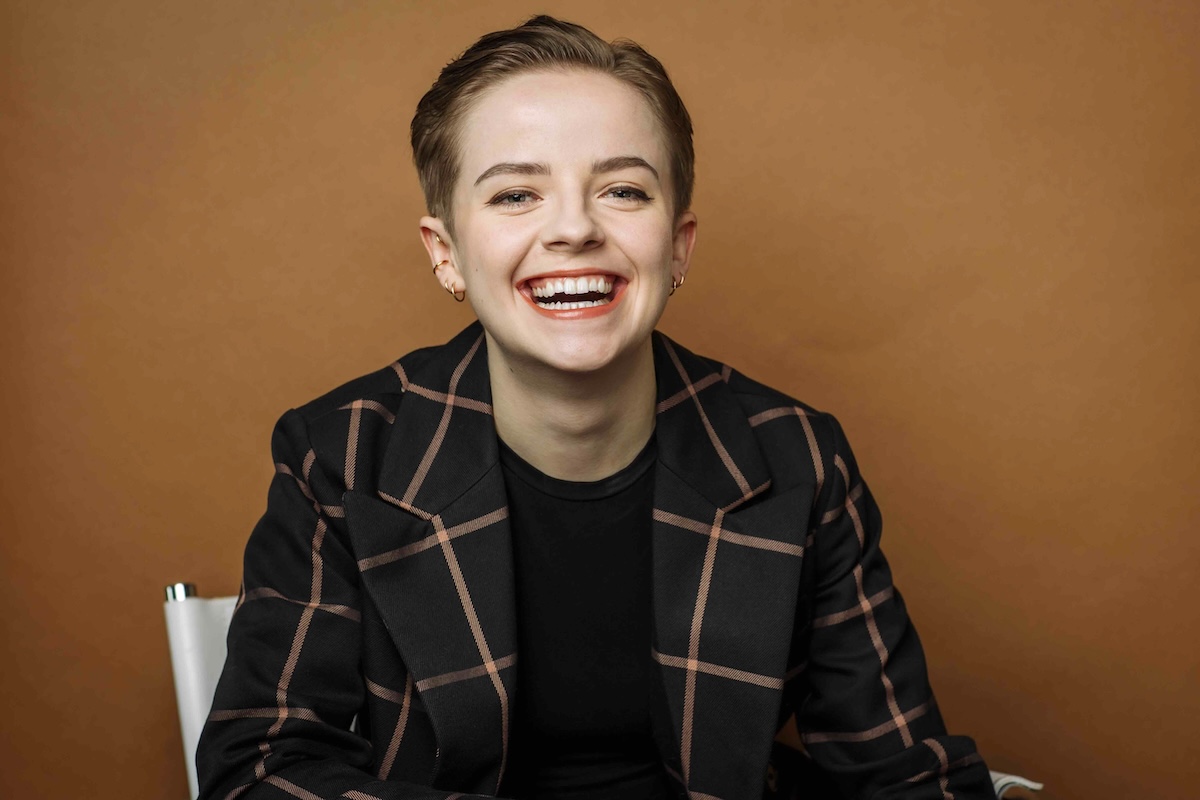
Another comedy show that gives stage time to Vancouver’s queer and trans comedians is That’s Gay!, produced by queer comic Erin Purghart at Little Mountain Gallery.
When Purghart started That’s Gay! in 2022, they expected it to be a one-time offering. But there was so much demand for it to return that they’ve kept the consistently sold-out show going bimonthly — including at this year’s Just for Laughs Vancouver festival.
“Representation is so important,” Purghart says, noting that comedy can replicate power imbalances that can be alienating to those who don’t see themselves reflected onstage. They’re passionate about making standup inclusive of more people.
“If you're going to a comedy show, and the lineup is like five guys telling the same kinds of jokes, and you can’t relate to any of them, you’re not going to go out and laugh,” they note. “And we [queer and trans folks] need to laugh, especially right now.”
While Purghart books exclusively queer and trans comics for the show, they stress that performers are not required to do material exclusively about their identity. “Our identities are the least interesting things about us. We are all just people,” they say. “I feel like there's so much spotlight on queer people’s identities in a way that cishet people don’t have to move through the world.”
Standing onstage under a literal spotlight might seem counterintuitive to Purghart’s point, but ultimately the goal of their shows is to normalize queer and trans people's existence in public life — including onstage doing comedy.
“I think there is a sort of laughing at us to laughing with us pipeline that comedy can bring,” they explain. “Truly, I want people to be like, ‘These queer and trans folks are so fucking funny. I'm gonna come back and laugh again.’”
Conventional comedic wisdom breaks down the structure of a joke into two elements: the setup and the punchline. The setup establishes the joke’s premise, setting the scene and building tension until, bam — we’re hit with the punchline, breaking the tension with a laugh.
Genderqueer comedian Hannah Gadsby explains the relationship between the setup and the punchline as a question with a surprising answer.
When Kay starts her set by declaring “I love being trans,” she invites the audience into a world where that statement isn’t radical, where she can pose questions about gender, sex, relationships or even something benign like grocery shopping without having to justify queerness or transness.
“It’s really easy in comedy to build laughs as a coping mechanism... but I often feel like that type of comedy doesn't provide any real, meaningful, sustained change,” Kay says.
“Yes, I know the world is awful. Yes, I know that there's a lot of shit happening... but just for a few moments, can we just act as if we are free?”
The answer might surprise you — and make you laugh. ![[Tyee]](/design-article.thetyee.ca/ui/img/yellowblob.png)
Read more: Rights + Justice, Politics, Gender + Sexuality, Media







Tyee Commenting Guidelines
Comments that violate guidelines risk being deleted, and violations may result in a temporary or permanent user ban. Maintain the spirit of good conversation to stay in the discussion and be patient with moderators. Comments are reviewed regularly but not in real time.
Do:
Do not: