

 SHARE:
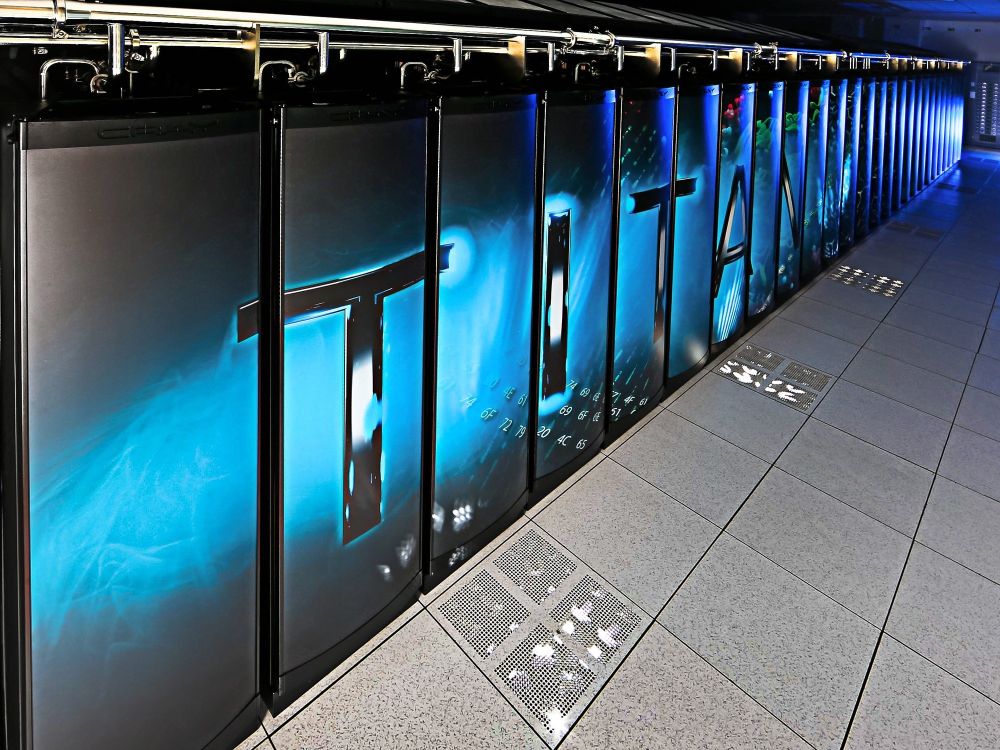
The United Conservative Party government remains ill-prepared to deal with an onslaught of proposed new data centres that could require 20 gigawatts of power to run, says NDP Deputy Leader Rakhi Pancholi.
With Alberta the possible home for around 90 per cent of Canada’s anticipated power draw for major AI data centres, the government’s approach is all wrong, NDP speakers said during the party’s public consultation in St. Albert last week.
The government is “going full tilt” on projects when it should have first spoken to affected communities, Pancholi said.
“We want to see what the economic development plan is,” said Pancholi, who represents Edmonton-Whitemud, in the first of three consultations put on by the party.
The second NDP consultation took place Aug. 12 in Red Deer at 6:30 p.m., which will be followed by an online event at 6 p.m. a week later.
Also happening Aug. 19, in Ponoka, is the first UCP town hall on the subject.
Last Thursday, the province announced it had launched an online information hub on AI data centres and will provide “comprehensive information” at a series of town halls.
The proposal rush
The advent of AI data centres in Alberta has been powering up rapidly since the UCP launched a strategy in early December 2024 to address their development.
Within days of the strategy’s publication came the announcement of Wonder Valley, a proposal for an AI industrial park in the Municipal District of Greenview near Grande Prairie, northwest of Edmonton.
Touted by proponent and celebrity entrepreneur Kevin “Mr. Wonderful” O’Leary, the controversial proposal would produce 7.5 to nine gigawatts of power, he speculated.
Today, at least 13 campuses for distinct, large-scale AI data centres are proposed in Alberta, according to data compiled from public disclosures by independent researchers.
Twenty gigawatts — the possible future requirement from Alberta data centres dedicated to serving artificial intelligence — would run 15 million to 20 million average homes. Alberta had a total power production capacity of 23.1 gigawatts at the end of 2024.
“This is not about saying yes or no to big projects,” Pancholi said during the St. Albert event. “It’s about making sure we have the right framework in place so Albertans can be assured that they have a strong plan going forward, and that the things that they care about are also protected.”
Nathan Ip, the NDP critic for technology and innovation and MLA for Edmonton-South West, was blunt. “It’s clear that the Wild West approach the government is taking just isn't working.”
But in an earlier interview, Technology and Innovation Minister Nate Glubish said his government is acting on a thought-out plan.
Given more rushed examples set by other jurisdictions — many in the U.S. — Albertans have been “asking the right questions,” he said.
“It’s been important to me to try and make sure that we validate the concerns that Albertans have, because they are rooted in real-world examples,” said Glubish, the UCP member for Strathcona-Sherwood Park.
“But then I highlight for Albertans that we chose not to be first in this industry. We wanted to be the smartest, so we spent two years developing a regulatory framework to protect their interests.”
He said a “bring-your-own-power” model means Alberta proposals won’t negatively affect the grid.
So far, the electricity generation that proponents bring comes mostly from burning natural gas.
UCP meets the public on issue
First up for the UCP sessions on AI data centres is an in-person town halls in Ponoka on Wednesday and Sturgeon County the next day.
A provincewide virtual town hall takes place a week later, on Aug. 27, followed by another in-person event in Grande Prairie. All the UCP town halls begin at 6 p.m.
Last week’s NDP event was held in St. Albert in Sturgeon County, about 50 km away from the site of a controversial AI data centre being built by social media giant Meta.
The $13-billion project would feature nearly 270,000 square metres of data centre buildings on a 1,750-acre site.
The largest AI data centre in Canada so far, Meta’s project would incorporate closed-loop cooling.
“It acts like a car radiator. It’s the same fluid in and out the whole time, for the entire life of the facility,” said Glubish.
Meta’s facility will use less water than an average golf course, he said, calling it “a testament to modern, state-of-the-art, best-in-class technology to run this data centre so that they can minimize their impact on the environment.”
“That’s what we want to see when we talk about large-scale data centres coming to Alberta,” he said.
But at the St. Albert event the NDP noted that Meta proposes to start operations in about three years and will require about one gigawatt — almost five per cent of provincial capacity — from the provincial grid for about a year until it starts generating its own power.
Meta’s data centre is expected to start drawing heavily from the grid sometime in 2028.
“I think there are questions about what are the safeguards in place to ensure that the increases won’t be passed on to ratepayers,” Ip said, “and I don’t think we have clear answers from government.” ![[Tyee]](/design-article.thetyee.ca/ui/img/yellowblob.png)
Read more: Alberta








Tyee Commenting Guidelines
Please note that email notifications for replies are not currently working due to a software issue which may be resolved in a future update.
Comments that violate guidelines risk being deleted, and violations may result in a temporary or permanent user ban. Maintain the spirit of good conversation to stay in the discussion and be patient with moderators. Comments are reviewed regularly but not in real time.
Do:
Do not: