


 SHARE:
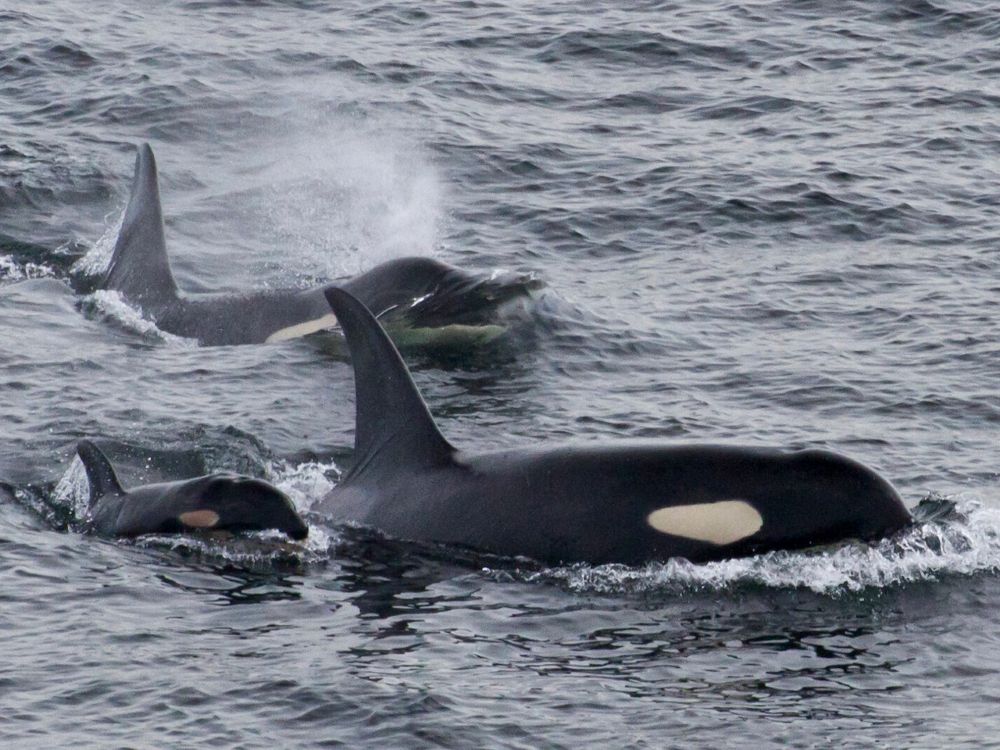
In an urgent and unprecedented plea, five former chairs of the Committee on the Status of Endangered Wildlife in Canada are sounding the alarm about a Carney government proposal that would allow the “wilful extinction” of species across the country.
The five scientists say the Species at Risk Act will become “meaningless” and “merely paper protection” if the government follows through with a plan to exempt major projects — such as the West Coast oil pipeline — from what’s known as the “jeopardy test” if projects are deemed to be in the national interest.
The test prohibits Ottawa from authorizing projects or actions that would harm listed species and their critical habitats if they would jeopardize their survival. More than 600 species, including B.C.’s spotted owls and killer whales — also known as orcas — are currently listed under the act.
The recent announcement that the West Coast pipeline may be deemed of “national interest” places B.C.’s endangered southern resident killer whales “directly in the crosshairs of this change,” the scientists said Tuesday in a media release.
“Are Canadians willing to bet this unique population of killer whales against another oil pipeline?” they asked.
The scientists, who are from B.C., Quebec and Nova Scotia, said the pipeline “could decimate the entire population of the imperiled killer whales through time” by increasing tanker traffic noise and significantly destroying habitat for the whales’ main prey, Pacific salmon.
But under the proposed change to the Species at Risk Act, they said, “this real risk of extinction would be moot.”
“Canadians must learn about this, or risk becoming unknowingly complicit in the wilful extinction of Canadian wildlife species,” the scientists said.
The Committee on the Status of Endangered Wildlife in Canada is an independent advisory panel to the federal government that assesses species at risk of extinction and makes recommendations to list them as endangered, threatened or a species of special concern.
Recent budget cuts have left the watchdog committee struggling to do its job as the number of at-risk species in Canada steadily climbs.
‘Why would they do that?’
The committee’s five former chairs also published an open letter Tuesday that they sent to the federal government on July 21, strongly urging Carney and his cabinet to remove the proposed alteration to the Species at Risk Act from any impending legislative changes.
David Green, a biologist and McGill University professor emeritus who chaired the committee for four years, told The Tyee that the current government might use any new discretionary power judiciously, “but future governments may not.”
“That’s the real danger,” Green said. “Once the species is gone, it’s gone forever. You’re not going to bring it back if it goes extinct.”
The letter comes as the Carney government takes stock following a public comment period on sweeping changes it proposes for environmental regulations and permitting to speed up approval and construction of major projects such as pipelines, ports and mines.
The changes would also make it easier to destroy fish habitat and allow Carney and his cabinet to create federal economic zones where a broad range of industrial development could be pre-approved.
Cabinet would also be able to pre-approve pipelines before a route is established and exempt them from federal impact assessments.
The proposed change to the Species at Risk Act, which has been in place since 2002, comes as nature is in an unprecedented decline and the World Economic Forum warns that biodiversity and ecosystem loss is the second biggest risk the world faces in the next 10 years. One key measure of biodiversity loss is the number of species at risk of extinction.
The change is also being proposed as other jurisdictions take a hatchet to legislation aimed at protecting at-risk species.
In Ontario, Premier Doug Ford has weakened what was widely viewed as Canada’s gold standard for provincial endangered species legislation.
South of the border, U.S. President Donald Trump is in the process of dismantling his country’s Endangered Species Act, which safeguarded wildlife on private and state lands as well as federal lands.
Green said Canada cannot rely on the United States to save species. “They have no interest in that. That’s clear. So, it’s our job. It’s our heritage.”
He said it’s the first time that the five living ex-chairs of the committee have issued a public appeal and written to the government.
The other former chairs are Marco Festa-Bianchet from the Université de Sherbrooke, Marty Leonard, a retired professor from Dalhousie University, Eric Taylor, a professor emeritus at the University of British Columbia and John Reynolds from Simon Fraser University.
Green said he signed the letter because he can see “a danger” in the proposed changes to the Species at Risk Act, which was passed by a Liberal government led by former prime minister Jean Chrétien.
Green was the committee’s chair from 1998 to 2002, when the government was garnering support for the act from the provinces and territories.
“They put an enormous amount of time and effort into it,” he recalled, adding that the government brought the act to the House of Commons three times before it finally passed.
“To see the current Liberal government propose an amendment that would just override the whole thing seems to me just really strange. Why would they do that?” he asked.
The Species at Risk law is in place, Green said, so that we “have to think really hard before taking actions that will potentially destroy things that can’t be replaced.”
He said he hopes people care about nature the way they care about great works of art or literature, and that Canadians will think about the ramifications of removing the jeopardy test from the Species at Risk Act.
“You may think this is expedient now, but what does that mean in the future?” ![[Tyee]](/design-article.thetyee.ca/ui/img/yellowblob.png)
Read more: Environment











Tyee Commenting Guidelines
Please note that email notifications for replies are not currently working due to a software issue which may be resolved in a future update.
Comments that violate guidelines risk being deleted, and violations may result in a temporary or permanent user ban. Maintain the spirit of good conversation to stay in the discussion and be patient with moderators. Comments are reviewed regularly but not in real time.
Do:
Do not: