


 SHARE:
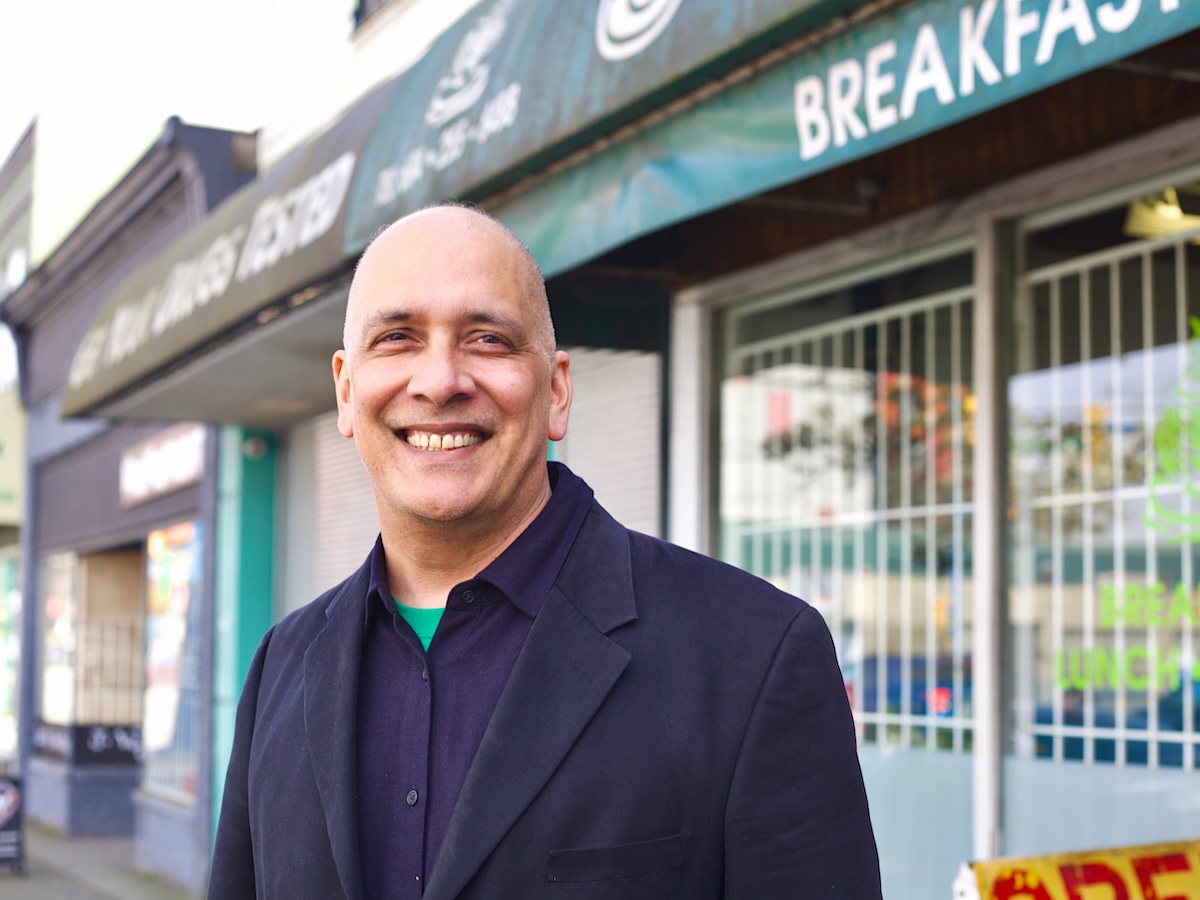
With the highest favourability rating among Vancouver’s mayoral candidates and his left-leaning rivals clearing the field for him as the consensus progressive candidate, Pete Fry should be poised to become the city’s next mayor. But Fry must still define what exactly he represents, solidify his own electoral coalition and demonstrate that the Green Party of Vancouver has the organizational capacity to convert his personal popularity into enough votes to win.
Incumbent Mayor Ken Sim of the ABC Vancouver party has a durable bloc of voters that has sustained him as a front-runner in the mayoral race, despite a decline in broader popularity.
With the Coalition of Progressive Electors, or COPE, and OneCity withdrawing their mayoral candidates, Fry is well positioned to leverage his political advantages, consolidate the progressive electorate behind him and seriously challenge Sim.
In August, a Research Co. survey put Fry’s favourability at 45 per cent, with a net favourability at plus 12, the strongest among Vancouver’s mayoral candidates. A Justason Market Intelligence poll released Sept. 16 found Fry overtaking Sim among decided voters.
Fry also benefits from considerable name recognition. First elected to city council in 2018 with the second-highest vote total of any council candidate, he survived the 2022 municipal election as just one of three non-ABC councillors elected amid an ABC Vancouver landslide.
Since then, Fry has emerged as one of the most prominent opposition voices to Mayor Ken Sim. Fry can campaign on his eight years of city council experience without carrying the burden of the administration’s record.
By comparison, Vote Vancouver mayoral candidate Rebecca Bligh also has eight years of city council experience but spent more than two years as an ABC Vancouver city councillor before being expelled from the party. Vancouver Liberals mayoral candidate Kareem Allam has never served on council and was Mayor Sim’s first chief of staff before being terminated within four months.
But while Fry is well known, well liked and well positioned, he has yet to clearly define what exactly he represents as a mayoral candidate.
Defining Pete Fry
After nearly eight years on Vancouver city council, Fry points to his record of establishing Vancouver’s first renters’ office, introducing North America’s first ethical procurement policy to include animal welfare, and advancing reduced speed limits on residential streets. At least, those are the signature accomplishments highlighted on Fry’s campaign website.
But that record is not exactly an elevator pitch for a Pete Fry mayoralty.
To his credit, Fry has made some policy announcements. Last week, he released the Vancouver Greens’ housing plan.
But even then, Fry’s emerging agenda on housing is not a dramatic departure from ABC Vancouver: faster approvals, more housing supply and fewer regulatory barriers. This should not be surprising, given how Fry has voted with the ABC position on eight of nine significant housing votes (89 per cent), the highest rate among non-ABC councillors.
Of course, there are differences between the Vancouver Greens and ABC Vancouver. Fry wants to preserve Vancouver’s stand-alone building code, while Mayor Sim and ABC voted to explore aligning it with the provincial building code. But the broad similarities on housing — a defining issue in Vancouver — suggest that much of the Greens’ housing agenda has already been “absorbed into ABC’s priorities.”
Compounding Fry’s lack of an elevator pitch is the absence, so far, of a detailed policy agenda on public safety and affordability, the two issues central to ABC Vancouver’s electoral identity. Fry has offered broad principles but few concrete ideas.
In contrast, ABC Vancouver is straightforward. Its affordability pitch centres on freezing property taxes, and its public safety agenda has emphasized increased police spending, removing encampments and restricting harm reduction services.
What matters here is not the merits of ABC Vancouver’s approach, but its clarity. Fry has yet to articulate an equally clear alternative beyond his opposition to ABC’s policies.
ABC is already exploiting the contrast between Sim’s clarity and Fry’s ambiguity. The party has rolled out online and radio ads targeting Fry’s public safety record, portraying him as soft on crime and hostile to police. Although Fry has called the ads misleading, the attacks expose the vulnerability created by his poorly defined candidacy: ABC is filling in the blanks for him.
Defining Pete Fry’s coalition
Pete Fry must also define his constituency.
ABC Vancouver has already done this. Its electoral fortress is built on property owners and voters who believe that the response to public disorder has been too permissive. Sim knows who his Vancouverites are, but Fry still needs to identify who completes his winning coalition.
The obvious starting point is progressive voters.
With COPE and OneCity withdrawing their mayoral candidates, Fry has an opportunity to consolidate Vancouver’s progressive electorate behind him.
But that coalition is not guaranteed. COPE and OneCity can clear the field for Fry, but under the Vancouver Charter, Fry cannot be formally endorsed by more than one municipal party. More importantly, the withdrawals of COPE and OneCity’s mayoral candidates do not constitute a merger of political organizations, campaign machinery or other resources. The three parties are still running their own candidates and pursuing their own electoral interests, which have, at least in the past, come into conflict.
There is also a risk in Fry’s informal association with other progressive parties: their candidates remain outside his control, but their political baggage may not.
Since the 2025 byelection, ABC Vancouver has obsessively attacked COPE Coun. Sean Orr, including accusations of antisemitism and insinuations that Orr supports terrorist organizations, and, more recently, a false claim that Orr distributed illegal drugs. Whether substantiated or not, Fry risks being forced to answer for them simply by association.
Fry may not share Orr’s politics or controversies, but the closer Vancouver’s progressive parties align behind Fry, the easier it becomes for ABC to blur those distinctions.
ABC Vancouver has already demonstrated its willingness to do just that. In a recent campaign ad, the party tied Fry to former mayor Kennedy Stewart, framing Fry as part of the pre-ABC era of rising crime and disorder that Sim successfully campaigned against in 2022.
In effect, the broader Fry’s coalition becomes, the more political baggage ABC can try to make him carry. Fry’s own poorly defined political identity only makes those associations easier to draw.
The lack of definition also makes it harder for Fry to distinguish himself from the candidates competing closer to the political centre. Despite their previous ties to ABC Vancouver, Vote Vancouver’s Bligh describes herself as socially progressive, while the Vancouver Liberals’ Allam has positioned his party as a centrist alternative with ties to the NDP and labour.
Both Bligh and Allam are competing for progressive-minded voters who may not necessarily identify with Vancouver’s organized left.
And while the organized left may have championed Fry as their consensus candidate (their “guy”), he will still need to build a broader coalition that reaches beyond them. Roughly 30 per cent of the vote was enough to elect Kennedy Stewart in a fragmented mayoral field in 2018. But a slightly higher share was not enough to re-elect him against Sim four years later.
Delivering Pete Fry
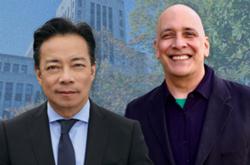
Even with a defined coalition, Fry needs the campaign apparatus to win. Notably, former OneCity mayoral candidate William Azaroff had openly questioned the Vancouver Greens on this.
Before withdrawing from the mayoral race, Azaroff pointed to OneCity’s fundraising, volunteers and door-knocking operation as evidence that his party had far superior campaign infrastructure. Those are resources that do not simply transfer to Fry’s mayoral campaign alongside OneCity’s political support.
Azaroff’s concern is supported by the parties’ finances. In 2025, the Vancouver Greens raised less than $69,000 in political contributions, compared with nearly $327,000 for OneCity and $606,000 for ABC Vancouver. That organizational disadvantage was apparent in the 2025 byelection when the Greens failed to elect a successor to longtime Coun. Adriane Carr, while candidates from COPE and OneCity won both available seats.
Fry’s name recognition may reduce the need to spend heavily in order to introduce him to Vancouver voters. But he still needs the staff, advertising, voter identification and get-out-the-vote operations required to run a citywide campaign.
Maybe the Vancouver Greens are better resourced now than their 2025 finances suggest. But with less than a month before the municipal election, they have little time to demonstrate that their campaign machinery has caught up to meet Fry’s extraordinary political opportunity.
Fry is personally popular. His rivals on the left have cleared the field for him. And he is facing an incumbent whose broader popularity has shrunk by 40 per cent.
But an opportunity is not an electoral strategy. Fry still needs a clear identity, a broad coalition and a powerhouse campaign capable of delivering votes. With just 26 days until the election, time is running out.
His path to the mayor’s office may have become considerably clearer, but the task has not become any easier. ![[Tyee]](/design-article.thetyee.ca/ui/img/yellowblob.png)
Read more: Municipal Politics





Tyee Commenting Guidelines
Please note that email notifications for replies are not currently working due to a software issue which may be resolved in a future update.
Comments that violate guidelines risk being deleted, and violations may result in a temporary or permanent user ban. Maintain the spirit of good conversation to stay in the discussion and be patient with moderators. Comments are reviewed regularly but not in real time.
Do:
Do not: