

 SHARE:
When I saw the trailer for 41-year-old American director Josh Safdie’s film Marty Supreme, my first thought was “Ping-pong? Huh?”
Ping-pong, or more correctly table tennis, might not seem the stuff of high drama, but as with anything that poses a challenge, there are hidden depths here.
Really, the movie is not about the game of ping-pong, although it sort of is. It’s more about ambition, and what it means to sacrifice everything you have on the altar of greatness.
Energy is the name of the game here. And it takes many forms: mania, hubris, the full-tilt electric boogaloo. Set in 1950s New York, it tells the old story of affixing wax wings to one’s back and attempting to fly directly into the sun. Although in this instance, the wings are a small paddle and an extremely bouncy set of balls. Take that as you will.
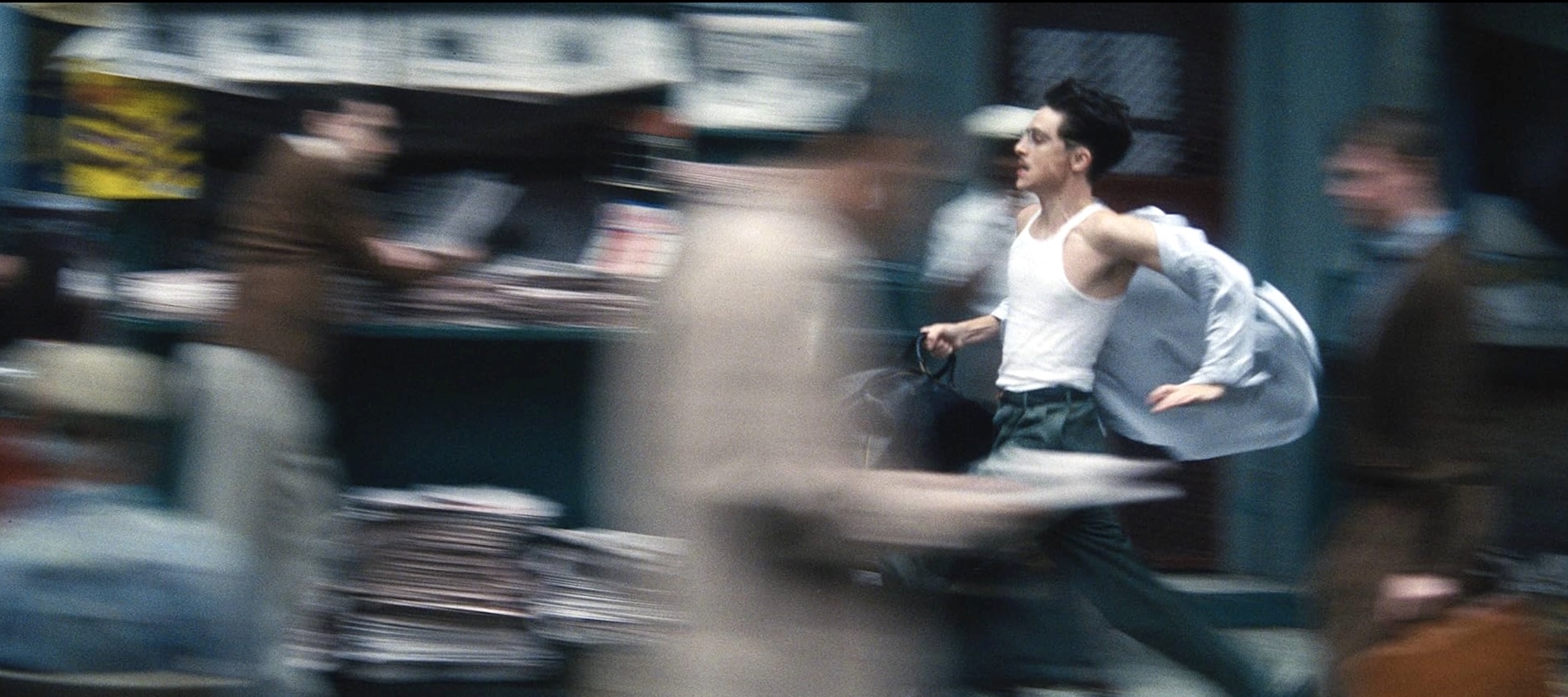
When we first meet the unlikely hero of this fable, Marty Mauser (Timothée Chalamet) is working in a shoe store. Young Mauser is a woman charmer, a money hustler and generally a giant pain in the ass to everyone in a five-block radius.
The character, based very loosely on table tennis champion Marty Reisman, is one of those classic American types. He is a Bugs Bunny fast talker with a snake-charming patter and the ability to rope almost anyone into his schemes. Is he a nightmare, a genius or equal parts of both?
The film answers that question in the first few scenes, wherein Mauser steals from his employer, threatens his fellow worker with a gun, impregnates his childhood friend, battles his mother, then flies off to England to attempt to win the world title in table tennis.
This film moves heaven and earth. And balls
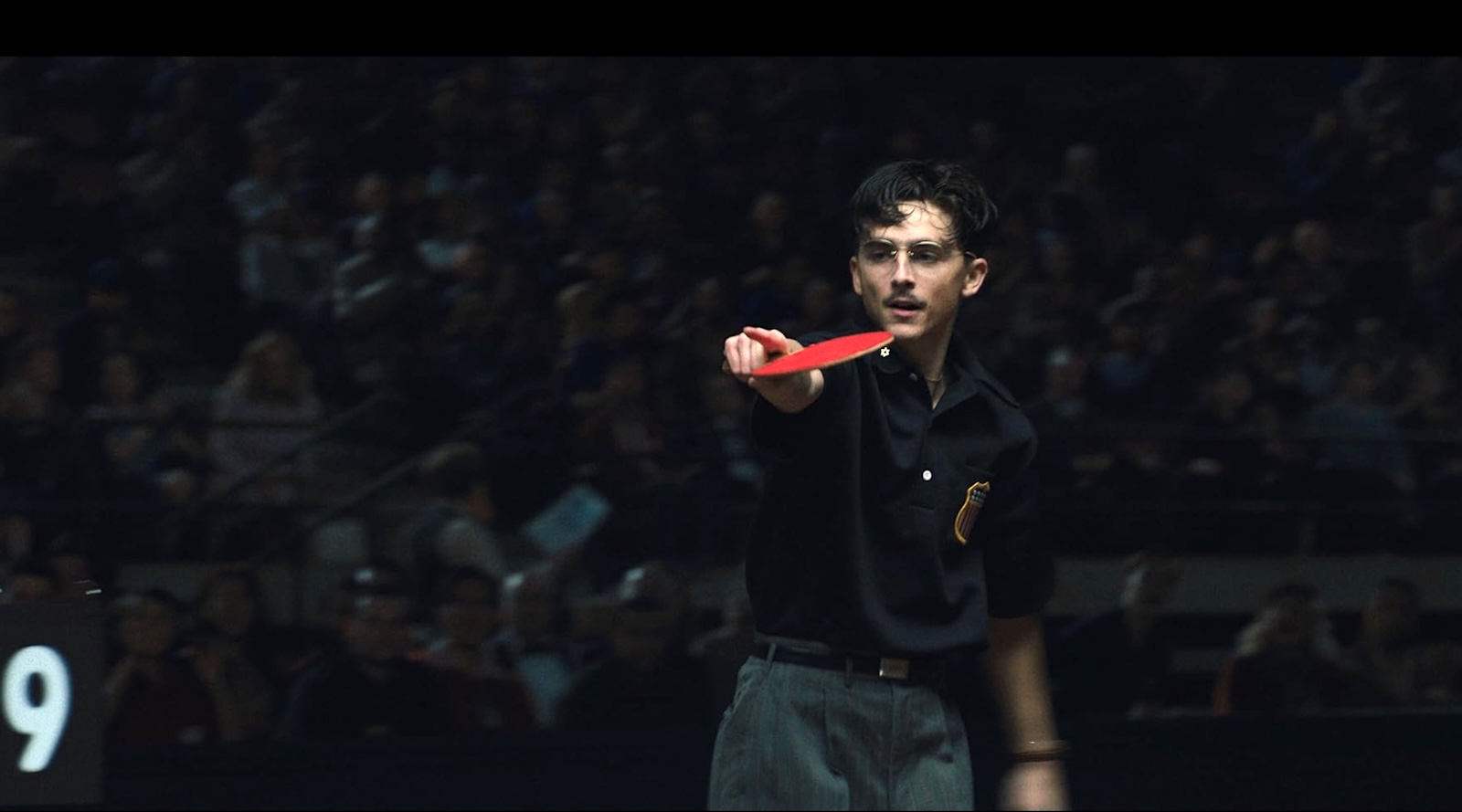
Strap in and hold on, my loves. This film is a rocket ride from start to finish. Even if Mauser is a terrible human being, he does have one superpower: the ability to hit small balls over a net. He stands out in the patrician world of 1950s table tennis, where competitors dress in slacks and crisp shirts. The sport’s international organizers, adamant about manners and protocol, are hard pressed to deal with the likes of Mauser, who never met a rule he didn’t want to bend or break. In this aspect, the character is emblematic of the American era.
In the film, post-Second World War realities are being worked out, the United States is on the rise, Japan is still recovering from the war, and the rest of the world is jockeying for power and position. All of this plays out in a series of pitched ping-pong battles.
After beating the reigning European champion, Mauser faces an unlikely challenger from Japan. Endo (Koto Kawaguchi), a deaf former child prodigy who has turned table tennis into a means of reconstituting national pride and identity, beats the American upstart soundly in the competition.
More than anything, Mauser wants and needs a rematch, not simply for revenge, but for a more profound form of vindication. Meaning, you might call it. But in order to get to that place of ultimate victory, and a plane ticket to Japan, he needs money.
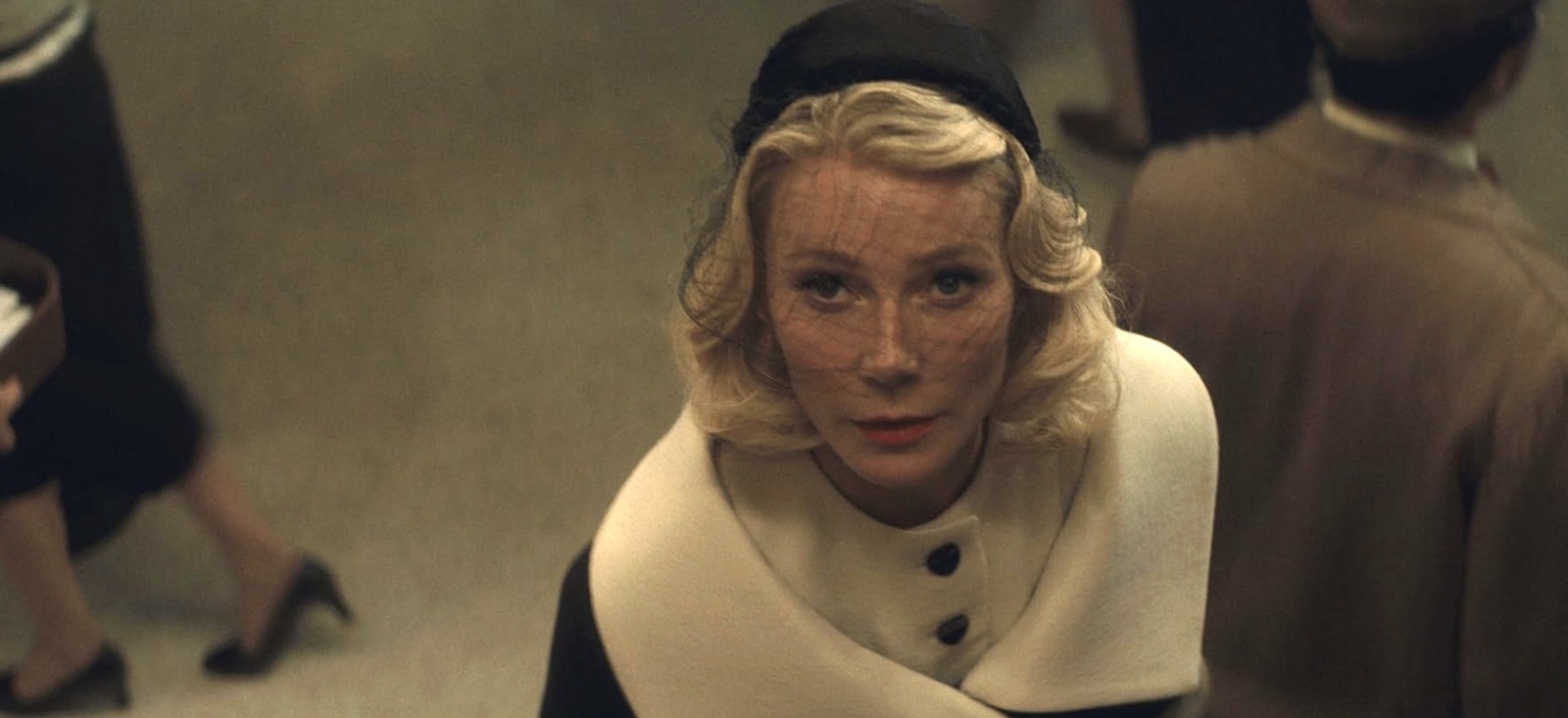
After he scams his way out of the threadbare accommodations reserved for British Open players and into the heady confines of London’s Ritz Hotel, Mauser is blessed by fate. In an interview with the press, where he boasts that he, a Jewish world-beater, is Hitler’s worst nightmare, he sees aging film actress Kay Stone (Gwyneth Paltrow) checking into the hotel.
Before you can draw a full breath, the young man has talked his way into her bed while simultaneously attempting to coax money out of her wealthy husband, who made his fortune in pens.
Kevin O’Leary (yes, him, Mr. Wonderful) is well suited to the role of Milton Rockwell, an old-school corporate monster, who sees Mauser for the hustler that he is. Rockwell also sees the means to turn Mauser’s skill into dollars by staging an exhibition match and marketing event in Japan with the newly crowned world champion, Endo.
This is just the beginning of the action. Along the way are dognappings, shootouts, outdoor sex in Central Park, gasoline fires, hard-core spanking and the machinations of the theatre world.
Star turns, and exquisite details
The Marty Supreme cast alone is something to behold. In addition to 29-year-old Chalamet, who gives a positively incendiary performance, there is Paltrow, Odessa A’zion, Fran Drescher and Sandra Bernhard, as well as filmmaker Abel Ferrara, playwright David Mamet, musician Tyler, the Creator, fashion designer Isaac Mizrahi and magician Penn Jillette.
And just when you think it couldn’t get any stranger, it does!
Billionaire John Catsimatidis plays a variation of himself as the father of Mauser’s friend, who comes on board with the idea of producing bright orange ping-pong balls, the better to be seen against a white shirt.
With a soundtrack fuelled by ’80s hits like Tears for Fears’ on-the-nose anthem “Everybody Wants to Rule the World,” and composer Daniel Lopatin’s synth-drenched score that manages to be both ominous and uplifting, the entire production is rich with Safdie-esque atmosphere.
As in many of the films made with his younger brother Benny (Uncut Gems, Good Time), director Safdie sets a frantic pace and then keeps upping the ante until you feel like your head is about to explode.
Sometimes the pace is just that, a desperate foot race through the rough and raunchy streets of New York City, sprawling with tenement housing, dirty cops, sad housewives, laundry on the line, petty crime and the grittiest of grime.
The Safdies’ previous films were very much the work of young men about young men. So it is here as well. The film’s female characters, with the exception of Paltrow’s aging femme fatale and A’zion’s desperate young mother-to-be, watch from the sidelines. Powerhouses like Drescher and Bernhard are given precious little to do.
Leaving aside such quibbles, one of the great joys of this film is the little curlicues of story embroidered into the greater tapestry of Mauser’s rise, fall and rise-again saga.
After he takes the title from the former world champion Bela Kletzki (Géza Röhrig) at the British Open, the pair team up with the Harlem Globetrotters to perform exhibition matches in frilly velvet outfits across Europe.
In a flashback, Kletzki tells Mauser about how he survived the Nazi extermination camps. It is a strange little journey all its own. When the prison guards take note of Kletzki’s ability to concentrate on small details, he is sent out to disarm bombs in the nearby forest, far enough away that if he fails, the only repercussions are that he blows himself up.
One day in the woods, a visit from a lone honeybee leads Kletzki to a large beehive. He breaks it open, smears honey all over his chest and returns to the camp, where he lets his fellow prisoners lick the honey off his body to get extra calories that will help to keep them alive. In this scene and across Marty Supreme, survival is truly the name of the game.
A startling portrait of the American dream
So, what is this fruitcake concoction really about?
As a number of critics have pointed out, the film speaks to the strivers at the centre of its production, namely director Safdie and star Chalamet. Both men have thrown down the gauntlet and are going for it, no holds barred, no fucks given, in rapid pursuit of victory at all costs. It’s a quest for creative immortality, Icarus-like in its scope and drive.
In this aspect, the movie is the American character, writ large and in the flesh. Appetite and ambition drive the story where hustler culture rules, and everyone and everything that can get used, will get used. Morals, loyalty and decorum go flying out the window.
It is strangely fascinating to witness a character doing whatever they have to do to get what they want, even if it means destroying everything that stands in their way.
It’s that hoary old notion, the American nightmare/dream, as a recent interview with director Safdie in the Guardian makes clear.
“I think that the victory of the Second World War really set aflame the idea of the American dream. That an individual can change the world,” he told Guardian film editor Catherine Shoard in an interview. “You can be anyone from anywhere and you can find glory and there’s a reason to your existence.”
Coming hot on the heels of the ongoing American implosion, the film proves a fascinating watch. As much as one might want to wrest attention away from the drama that is the current state of the U.S., it often feels downright impossible — just when we think it couldn’t get any stranger or more ridiculous, it does.
As it goes in table tennis, so it goes in life. First you ping, and then you pong.
‘Marty Supreme’ is now screening in major theatres.
Happy holidays, readers. Our comment threads will be closed until Jan. 5 to give our moderators a much-deserved break. See you in 2026! ![[Tyee]](/design-article.thetyee.ca/ui/img/yellowblob.png)
Read more: Film