



 SHARE:
At some point before the end of the school year, the Vancouver School Board will roll out artificial intelligence chatbot accounts for students aged 13 and up.
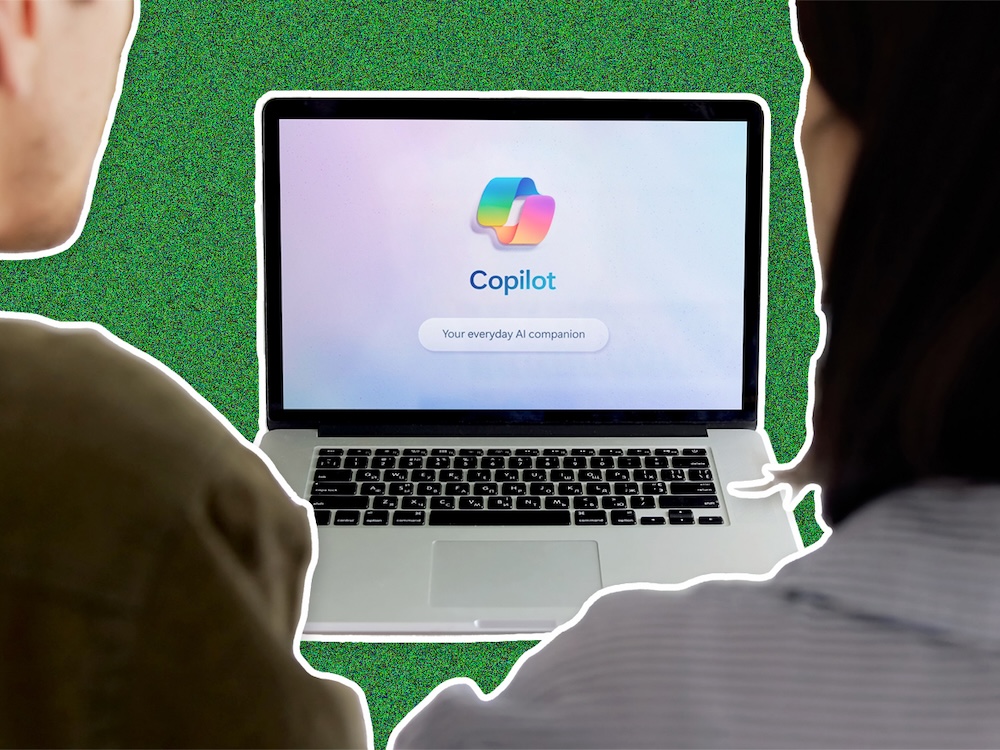
The district, joining other public districts such as Langley, will team up with Microsoft Canada to provide students with school accounts for Copilot, the software giant’s AI chatbot.
Copilot may not be the most popular of the AI chatbots available, with one tech critic going so far as to call it a “mistake.”
But the Surrey school district is also exploring Copilot accounts for students. At the moment only teachers use the program.
Chatbots are a form of generative AI designed to mimic human thinking and learning.
Generative AI tools can create original text, sounds or images based on the existing information they are trained on: vast digital libraries of news reporting, fiction and non-fiction books, music catalogues, films and other open-source and copyrighted works — the subject of several lawsuits.
Copilot will show up on Vancouver high school students’ screens as soon as the district has finalized its AI guidelines, said Pedro da Silva, the Vancouver School Board’s associate superintendent of learning and information technology and educational services. A spokesperson for the VSB told The Tyee that Copilot 13+ has been added to the VSB’s Microsoft Suite license at no additional cost.
The goal is to “leverage” Copilot so that students can access AI in “a safe environment, where teachers can help them through their learning journey,” da Silva told The Tyee.
Eventually, after students and teachers have used and shared feedback about using Copilot, the district will establish administrative procedures and policies around AI use in schools, da Silva said. But not until the district understands the impacts of using AI in schools.
“Our responsibility as an education system is to provide environments to prepare students for life after school. And those environments are going to be using AI. We need to get on that, and we need to do it in a safe way.”
But some students — including Henry van Iersel, in Grade 10 — are pushing back.
Citing generative AI’s impact on the environment, student safety, privacy and the negative impacts of chatbot use on learning, van Iersel and three other students created a petition to stop the adoption of Copilot in Vancouver’s schools.
“We’re normalizing this technology that has a fairly limited scope of applications, and a fairly large and broad implication for the environment,” van Iersel said.
Van Iersel, 15, said he’s been coding for fun since he was 10. So he’s not anti-technology — but he told The Tyee he doesn’t understand the district’s rush to roll out Copilot.
“We’re trying to suggest a moratorium to pause for two years to make sure that we really understand the technology,” he said. “And then we can come back and make a final decision on whether we should really be using this in our schools.
“I don’t think it’s a good idea to beta-test on our student population,” van Iersel added.
How Copilot might show up in schools
Da Silva disagrees with van Iersel’s characterization of their AI rollout as “beta-testing” on students.
The planning to gather feedback and input on AI chatbot use in schools began two years ago, da Silva told The Tyee.
Students have told the school district via feedback sessions about AI and even the recent district budget that they are already using AI chatbots outside school. They want to talk about how to use them in their education, da Silva added.
Copilot is a “safer” introduction to an AI environment for students, da Silva said, than other chatbots like OpenAI’s ChatGPT, xAI’s Grok, Anthropic’s Claude or Google’s Gemini, which lack the privacy and data protections of Copilot.
Providing students with a safeguarded chatbot “gives us an opportunity to lean into the learning,” da Silva said, “and help the students in the journey through a very system-altering technology.”
Student data collected by Copilot will stay in the district, he added, on Microsoft servers based in Canada. And Microsoft won’t use students’ “prompts” — their questions or statements to the chatbot that initiate tasks — to train its chatbot.
Teachers will have autonomy over how and if they implement AI as part of the curriculum.
Tobey Steeves, a teacher at Sir Winston Churchill Secondary in Vancouver, began using AI in his job in 2023.
“I use AI as a teacher-controlled, professional tool to improve the quality of my instruction. I also use AI to support efficient workflows,” said Steeves, who currently teaches English Language Arts 9, Social Studies 9 and New Media 11.
“I also use AI to support students’ digital literacy and higher-order thinking skills. But through all of those examples, my professional judgment is at the centre. I’ve got the vision, and I’m trying to leverage the power of the machine to realize it.”
Students in Steeves’ classes don’t currently have AI chatbot accounts, as they are limited to those 18 and older. He also cautions his students against disclosing any personal information while using chatbots, including their names.
“I would not ask students to go home and use it. I cannot supervise it,” he said. “If it’s for an activity in my class, it’s happening in my class when I’m there watching.”
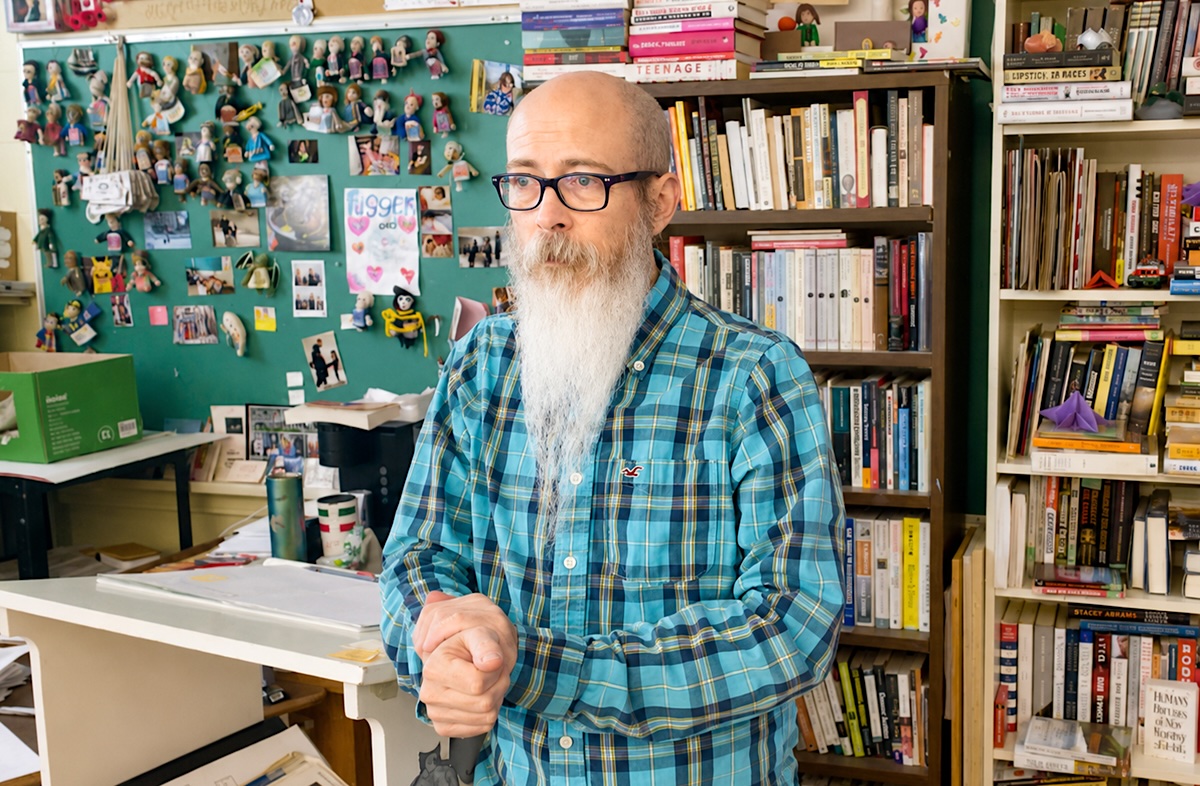
One task Steeves’ students use AI for is helping them with their final assignment: a three-act puppet show.
He provides students with a chatbot-created workflow, which they use to write their scripts.
It’s a project Steeves has been assigning for a decade now. But student outcomes have significantly improved since they started using AI, he said.
“I can use this custom-framed workflow to push the students through a series of steps, leading to a three-act play that is something they can actually perform,” he said. But ultimately it’s the students, not the AI chatbot, who write the scripts.
“There’s so many layers to their stories that they’re able to include, that previously they didn’t have the skills to do,” he said.
Steeves typically assigns students to use chatbots during group work and sets the parameters for the chatbots’ responses to be specifically within his students’ age range.
He pairs students who are uncomfortable with the ethics of using AI chatbots with students who are OK using the tools for the group work. Most students appreciate the practice in using the tool, Steeves said.
“My job is to support the literacy of students. So I have done work to try to support students’ prompting and prompting fluency, and how they interact [and] talk with their AI,” he said.
That being said, Steeves acknowledges chatbots can at times “hallucinate” or completely fabricate information.
“AI is useful, but that doesn’t make it infallible,” he said, adding that the frequency of hallucinations has decreased as chatbot models improve.
“I don’t think it should be used as an unquestioned authority. In fact, I think one of the most important digital literacy lessons of the moment is that fluency isn’t the same as truth. Students need to learn that a confident answer from a machine still has to be checked.”
The downsides of generative AI
Microsoft's own research into generative AI use has demonstrated results that trouble Vancouver student van Iersel, such as finding fewer critical thinking skills among those who had more confidence in generative AI than they had in themselves. And that the benefits of traditional note-taking outweigh those of solely using generative AI for students’ text comprehension and retention.
However, researchers also found that students who combined note-taking with asking a chatbot for info had similar outcomes for retention and comprehension to those who only took notes.
Da Silva said that while most Vancouver parents’ feedback on AI use in schools has been positive, one of the biggest concerns for the parents who do take issue is the technology’s impact on the environment. That’s a concern van Iersel shares.
Generative AI has increased global electricity demand and emissions. It caused a 29 per cent rise in Microsoft’s announced emissions over 2020 levels, for example.
Many data centres have also been built in or near marginalized communities, negatively affecting their air and water quality.
“They’re very legitimate societal questions,” da Silva said.
But weighing the pros and cons of generative AI use versus its impact on the environment is a conversation that needs to happen at the provincial and national government levels, he added.
“As an educational institution, what we can do is have conversations about the ethical use of it,” da Silva said. “So that when these students become educated citizens, they can partake in conversations around the environment.”
Then there’s the impact of AI chatbots on users' mental health. Family members of people who committed suicide are suing OpenAI for the impact it had on their loved ones. They have cited conversations their loved ones had with ChatGPT expressing intention to self-harm or suicidality before taking their own lives.
This includes the families of students injured and killed in the Tumbler Ridge mass shooting in February.
Grok, the xAI chatbot designed exclusively for users of the social media service X, allegedly told one user that government and xAI agents were coming to the user’s home to kill them.
Da Silva said the school board is trying to be “really sensitive” and “go at the speed of trust.”
Copilot has been trained to detect when students use language that indicates potential self-harm, for example, to support that student to get help, da Silva said.
“We’re trying to be really respectful and roll out appropriately,” he said.
Are students left behind without AI?
Parents have told the district they recognize that when their kids graduate, the working world they will enter and the technology they will need to use will differ greatly from today, da Silva told The Tyee.
Not providing students access to a chatbot in schools would be doing them a disservice, he said, because generative AI will be part of the future workplace.
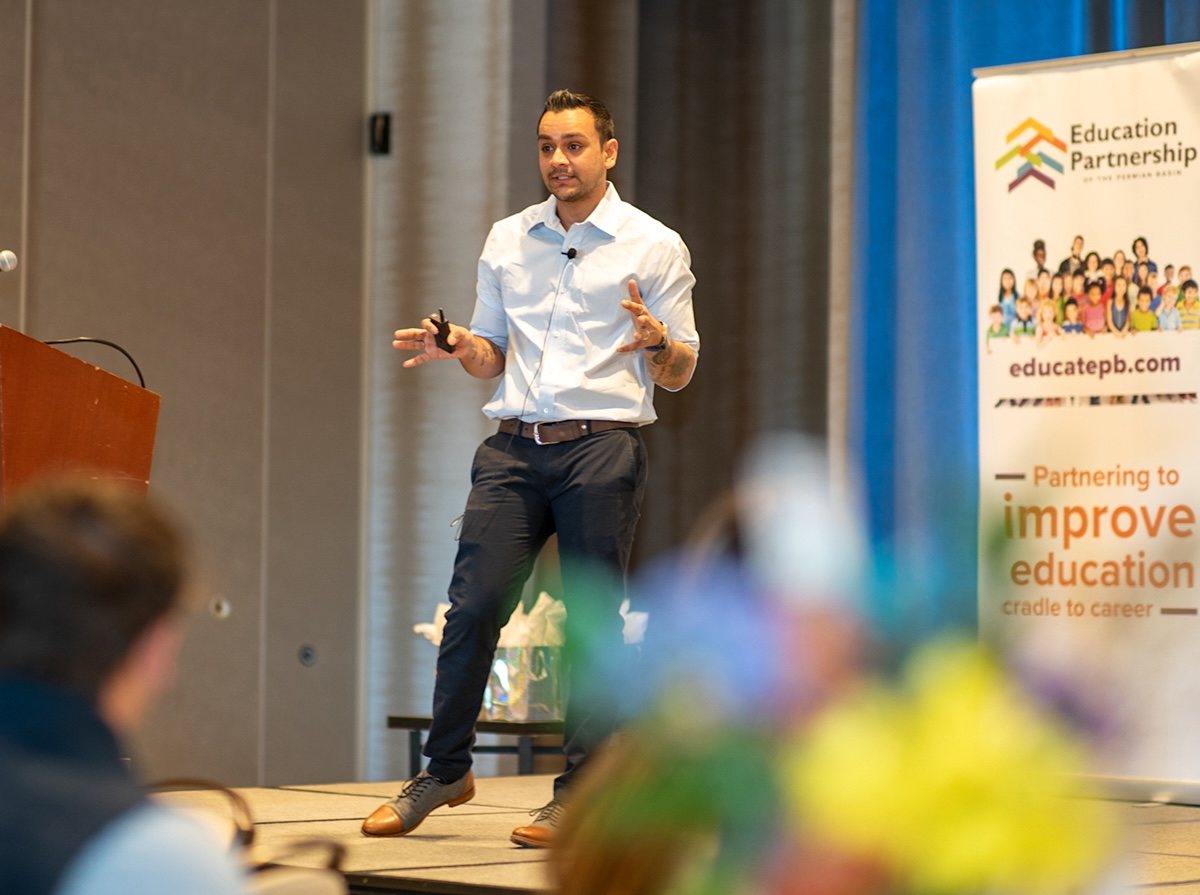
But Priten Soundar-Shah, an entrepreneur, author, associate in the Harvard University philosophy department and self-described AI ethicist, pushes back on the assertion that students are left behind if they don’t use chatbots in school.
Because the technology is progressing so fast, the AI tools students are being trained on today won’t be the ones they use in the workforce, he said.
“Even something you might have taught a senior in high school in 2023 for how to use AI is completely irrelevant for 2026,” said Soundar-Shah, whose latest book, Ethical Ed Tech: How Educators Can Lead on AI and Digital Safety in K-12, tackles AI ethics in education.
“Instead I think there’s ways to still teach students to think about AI and start figuring out what AI is. How do I make decisions about it? How do I safely use it? That can all be done without having them sit at a computer and chat with the AI chatbot.”
You don’t have to wait until a student is 13 to instil critical thinking skills towards AI, either, he said.
One idea Soundar-Shah got from an early childhood educator was introducing kindergarteners to the concepts of “real” and “fake,” and how to tell the difference. No computers or AI chatbot exposure is required.
As students get older, classes can engage in conversations about the roles generative AI plays in our society, the different policies corporations and institutions create around AI and the history of the technology.
“All of that can still prepare them for figuring out what AI means for their world and their careers, without having them learn these how-to skill sets about the AI tools themselves,” Soundar-Shah said.
“I think that’s what they need long-term.”
Soundar-Shah wouldn’t speak directly to the Vancouver district’s decision to introduce Copilot accounts for students 13 and older.
But he did say that in general a school district should establish policies around how AI is used in schools before they provide students with chatbot access or accounts.
“Policy comes before practice,” he said, adding that an AI policy should cover which chatbot models are safe and adhere to privacy best practices. But it should also still allow for teacher autonomy in how and when AI tools are — or aren’t — used in their classrooms.
Academic integrity and ‘levelling the playing field’
Using chatbots to cheat in school is another concern.
While plagiarism is nothing new, students can now use a few well-crafted prompts to have a chatbot write an entire essay or project for them.
Vancouver district educators have raised their concerns about cognitive offloading — having the chatbot do the students’ thinking work for them — as well as academic integrity, da Silva said.
But da Silva sees Copilot as a tool for levelling the education playing field between students who have access to tutors and highly educated parents and those who don’t.
“A lot of the worries about cognitive offloading, academic integrity, are a little bit more heightened,” da Silva said. “But there’s been strategies in the past to address this, and I think there’ll have to be strategies to address this moving forward.” Strategies such as talking to a student suspected of using AI to cheat, about the difference between the quality of that work and the skills and learning they have demonstrated in class up to that point. A student may be required to redo an assignment under a teacher’s direct supervision.
Data security and sovereignty
Da Silva told The Tyee that Microsoft Canada’s data is under the district’s control, stored on Microsoft’s Canadian-based servers. But he directed The Tyee to Microsoft to ask whether student data and access were protected from foreign government interference or access.
“Who knows what happens in the cybersecurity world. But one of the things I can say with confidence is Microsoft is aware that data that’s stored, we want it to stay in Canada,” he said.
“Now who has access to it? I’m assuming that they’re a corporation that doesn’t let governments have access to it.”
In an emailed response to The Tyee’s question about data sovereignty and security, Mary Warner, Microsoft Canada’s PR lead, would not speak specifically to the Vancouver district’s data storage.
But she did share Microsoft Canada’s five-point plan to protect Canada’s digital sovereignty, which includes investing in Canadian data storage and AI technology.
Alexander Rudolph, a Carleton University political science PhD candidate with an expertise in cybersecurity, said it’s not that simple.
Any information stored on Microsoft servers, regardless of where they are located, is subject to the U.S. CLOUD Act, which stands for Clarifying Lawful Overseas Use of Data Act.
It’s not the only legal tool the U.S. government can use, either, to access Canadians’ data.
“We’re seeing that right now with Homeland Security trying to get data on a Canadian individual from Google, using the Customs Act from 1930,” said Rudolph, referring to an anonymous Canadian the U.S. government is trying to unmask by accessing their Gmail account, because they made social media posts critical of U.S. President Donald Trump.
Last year the U.S. government allegedly used its power to influence Microsoft to lock Karim Khan, a British chief prosecutor for the International Criminal Court, out of his email account.
Rudolph also has questions about Microsoft Canada’s pledge not to use Vancouver students’ data to train future versions of Copilot.
“If it’s a specific, separate model or service for the school board, then I can fully believe that they wouldn’t train the model or use the data in that way,” he said.
But if it’s the regular Copilot program stored on Microsoft servers with data from other Copilot users, he has less faith in the pledge to not use students’ data to train AI.
In an email to The Tyee, a Vancouver School Board communications staffer said the district’s Microsoft data is stored separately from that of other Microsoft users, but on Microsoft’s servers.
“When students use Copilot 13+ with their school accounts, all interactions stay inside VSB’s ‘Microsoft cloud,’” reads the emailed statement to The Tyee.
“Governed by Microsoft’s Data Protection Addendum, Microsoft cannot look inside, use the information for advertising or use student work to train their AI.” ![[Tyee]](/design-article.thetyee.ca/ui/img/yellowblob.png)
Read more: Education, Science + Tech, Environment


Tyee Commenting Guidelines
Please note that email notifications for replies are not currently working due to a software issue which may be resolved in a future update.
Comments that violate guidelines risk being deleted, and violations may result in a temporary or permanent user ban. Maintain the spirit of good conversation to stay in the discussion and be patient with moderators. Comments are reviewed regularly but not in real time.
Do:
Do not: