



 SHARE:
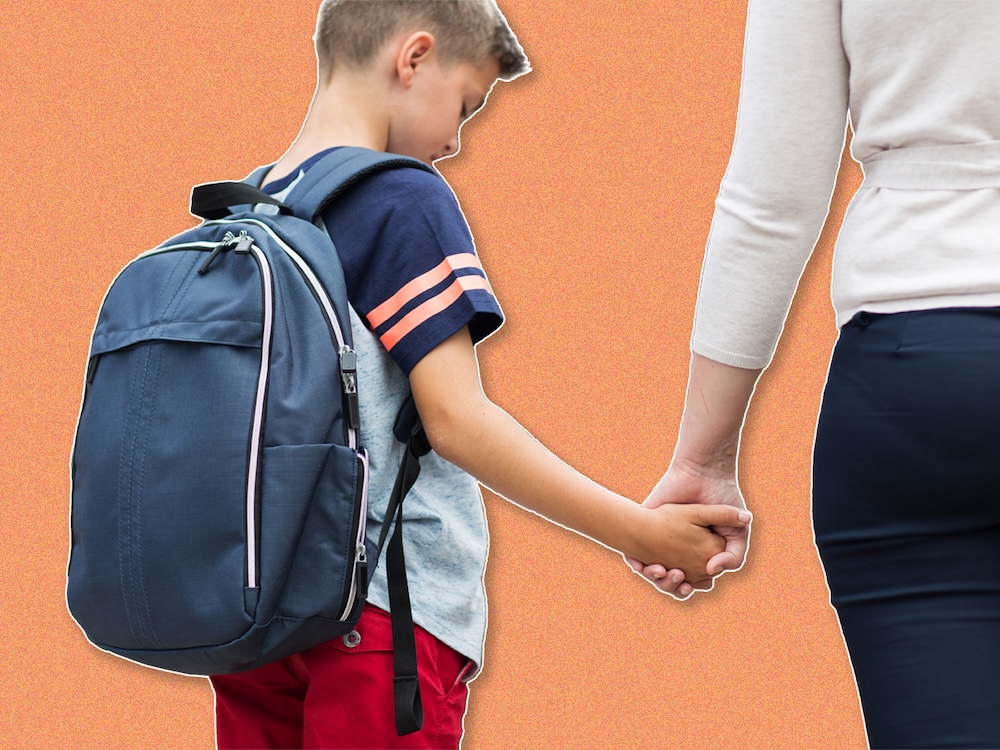
Over a year after a provincial election put the spotlight on in-school support for students with disabilities, the NDP government has yet to fulfil its pledge to place an education assistant, or EA, in every kindergarten to Grade 3 classroom.
But even when students with disabilities or diverse abilities do have one-on-one support from an EA — which isn’t guaranteed, even if it’s part of their individualized education plan — it doesn’t mean the student’s needs are being met.
Everyone’s learning is interrupted when a student whose needs are not being met lashes out in frustration, says a B.C. primary grade teacher who spoke to The Tyee.
For example, a six-year-old student in the teacher’s school goes into a separate room with her support worker when she becomes dysregulated, which for this child takes the form of screaming. Sometimes for up to an hour. It’s not a soundproof space and the noise can be very upsetting for other students, the teacher says.
“I’ve said having her at school is reckless and irresponsible,” said the teacher, whose name we are withholding as public B.C. teachers are penalized for criticizing their employers.
The student often runs away from school, the teacher told The Tyee.
“The support workers aren’t allowed to chase her, but they have to follow her,” she said, adding the child has expressed suicidal ideation and talks about self-harm.
It is clear this student has experienced trauma, the teacher says, and neither her teachers nor her support workers have the necessary training to support her needs.
“But we’re told, ‘You just keep them at school,’” she said.
Other students with disabilities or diverse abilities who struggle to communicate when their needs aren't being met or they feel dysregulated may throw chairs or even punches, the teacher added.
When a school isn’t able to meet the needs of some students with disabilities or diverse abilities, those students can often be told to stay home or are sent home from school. Others are only allowed to attend school for partial days.
This causes havoc for parents left scrambling for child care so they can go to work. It also denies the child their legal right to attend public school and receive — depending on their grade level — the mandated 853 to 952 hours of annual instruction.
The Family Support Institute of BC hosts the National Exclusion Tracker where parents are encouraged to self-report when their kids with disabilities or complex learning needs are excluded from school or daycare.
While the tracker leaves it up to families to define exclusion, it is often understood to include being told to stay home or being sent home, being isolated from their peers when they do attend, or allowing only part-day attendance.
This school year is the first the tracker will be open to parents’ reports from across Canada.
It is difficult to determine how many students are excluded annually from the tracker results because the tracker is anonymous; it doesn’t reach every family of a school-aged child with a disability; and it accepts multiple exclusion reports for the same student in a single school year.
But the number of reports increases slightly every year, says Angela Clancy, the institute’s executive director. Last year there were over 5,000 exclusion reports in B.C.
“I don’t think I’ve seen the school system worse than I see it right now,” said Clancy, who has led the Family Institute for 25 years.
The Family Institute supports families in meetings with schools. In one such meeting about a Grade 2 student with support needs who hadn’t been in school for more than 15 minutes a day since kindergarten, Clancy brought up the provincial School Act’s section on mandatory instruction hours.
“Their response was ‘Yeah, we know about the ministerial order. And there’s nothing we can do about this,’” she said. “‘This kid can’t come to school more than 15 minutes a day.’”
The funding conundrum
B.C.’s minister of education, Lisa Beare, points out that spending by the province to support students with disabilities is at an all-time high, and graduation rates for students with disabilities have improved significantly. “We know there is more to do,” she said in an email from her ministry.
A joint November press release from the BC Association of Aboriginal Friendship Centres, the Federation of Community Social Services of BC, Inclusion BC and the BC Association for Child Development and Intervention estimates anywhere from 55,000 to 83,000 kids and youth with disabilities in B.C. are not getting the support they need, in and out of schools.
Another 10,800-plus kids and youth were on a diagnostic assessment wait-list as of March 2024, the release added, with wait times in some regions as long as 27 months.
There is no provincial funding for in-school disability supports without a diagnosis. Even when a student has a diagnosis, provincial funding levels vary from zero to tens of thousands of dollars.
Students with learning disabilities, attention deficit hyperactivity disorder and mild to moderate mental illnesses, for example, don’t trigger any additional funding.
On top of the base per-student funding districts receive for every child enrolled, the province provides per-student funding for those with the following disability diagnoses:
- $51,300 per physically dependent or deafblind student enrolled;
- $24,340 per student with moderate to profound intellectual and physical disabilities, chronic health or visual impairment, deaf or hard of hearing and autism spectrum disorder;
- and $12,300 per student with a serious mental illness or who requires intensive behavioural interventions.
Every school district pools its provincial special needs funding to cover support for all kids who need it, including those without funding and/or assessments but who are clearly struggling.
Because kids with the greatest needs require the most support, students with more moderate needs aren’t receiving the support their individualized education plans call for, says the teacher who spoke with The Tyee.
“I would hate to see if our district ever got audited,” she said.
For example, there are four education assistants supporting four students in her school. But she estimates another 25 to 30 students aren’t receiving the support they need to thrive academically.
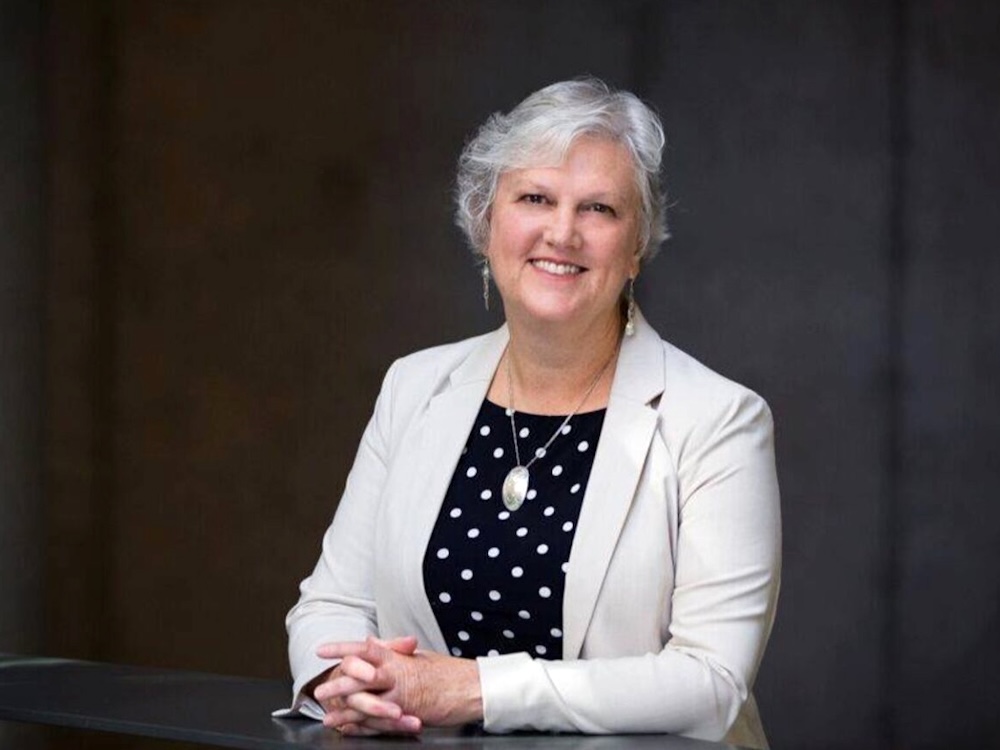
Representative for Children and Youth Jennifer Charlesworth says diagnoses are important. But children shouldn’t have to wait years to get an in-school assessment — or their parents shouldn’t have to pay thousands of dollars for a private assessment — in order to be supported in school.
“Fundamentally, we have a discriminatory system that is not equitable across the spectrum of disabilities that kids are experiencing in this province,” she said.
“If nothing changes, I just see it as a system that stays not really supporting the needs of those special-needs kids. I see them not making the progress that potentially they could,” the teacher told The Tyee.
But Clancy with the Family Support Institute of BC says funding is a distraction.
“The supports have to be tied to the student’s actual needs,” she said. “It shouldn’t be tied to an arbitrary calculation of funding. It shouldn’t be tied to the availability of an education assistant.”
Clancy doesn’t dismiss the need for education assistants and calls for more money to attract, train and keep them in schools.
But some kids need other supports, like having extra time to take tests and complete reports, being allowed to use cue cards during tests or taking the test in a different room.
“There’s a whole lot of different creative things that happen all across the province, and I don’t know that it always has to be on education assistants,” Clancy said.
Violence in the classroom
When education assistants aren’t taking paid stress leave for burnout resulting from supporting high-needs kids without adequate training or resources, the primary teacher told The Tyee, they are sometimes wearing Kevlar sleeves and padded vests to physically protect themselves from some dysregulated students.
An education assistant at another school in the teacher’s district suffered a concussion after a Grade 7 student punched them in the head, the teacher says.
“The district’s answer to her was ‘You should start wearing a helmet,’” she said. “They look like they’re in SWAT gear. How does that look like a safe place for kids to learn?”
Kindergarten and elementary education assistants, who are also referred to as education support workers, teaching assistants and student support assistants, face the highest rates of workplace violence in public schools.
According to WorkSafeBC, between 2015 and 2024 they filed 2,332 claims with costs related to short-term or long-term disability benefits, or survivor benefits. In comparison, kindergarten and elementary teachers filed 521 claims during that same period.
Of the 177 serious injury claims made by elementary and kindergarten education assistants during those nine years, 157 were for concussions. “People” were listed as the main injury source for all public school employees’ serious injury claims in that period.
The 2024-25 BC Teachers’ Federation membership survey summary report found 15 per cent of teacher respondents had experienced violence on the job. Teachers in primary grades had more experience with violence than their high school colleagues.
The report doesn’t pinpoint causes for the violence or identify perpetrators. But it does note that a third of the teachers who reported their students' academic needs were “not at all” being met that school year also reported experiencing violence.
Nearly half of teachers who reported working with students with disabilities or diverse learning needs reported that their students’ needs were met “slightly” or “not at all” that year.
It’s unfair to talk about kids with disabilities who lash out physically without the full context behind why, Clancy says.
“When we talk about violence, we are essentially stigmatizing kids, and we’re not actually giving the context of what is going on for that individual student,” she said.
The missing context is these kids aren’t getting their needs met in the classroom. This leads to frustration and emotional dysregulation, and kids may not have the ability to communicate this without lashing out at those around them.
“If we expect students to regulate and manage themselves without supports, then we’re missing a whole cohort of kids that can’t attend school without support,” she said.
Clancy is also concerned that talking about violence from some kids stereotypes people with disabilities as violent. In reality people with disabilities are far more likely to be victims of physical violence than perpetrators.
When kids do lash out physically, it is common for entire classrooms to evacuate for their own safety.
The Surrey District Parent Advisory Council, representing parents in the province’s largest public school district, recently launched an online reporting system to monitor how often these situations, which they refer to as “room clears,” happen in B.C. school districts.
Questions include whether education assistants were present in the classroom and whether unmet student needs, lack of staffing and/or an individualized education plan not being followed were contributing factors.
Data shows strategies are working, government says
The Tyee requested an interview with Education Minister Lisa Beare, but she was not made available. Instead we received an emailed statement from her office noting — as their political predecessors have similarly done — that education funding for kids with disabilities is the highest it's ever been.
“The Province is providing the highest funding levels to education ever — including over $1 billion to support students with disabilities or diverse abilities this school year,” the email reads.
“This funding supports inclusive education services such as providing additional classroom accommodations, help from education assistants, learning assistance, assessment services and more.”
While every kindergarten to Grade 3 classroom in the province does not yet have a full-time education assistant, the ministry says nearly 80 per cent of those classrooms have some level of education assistant support.
The province also has two Provincial School Outreach teams, consisting of a school psychologist, a counsellor, a speech language pathologist, an occupational therapist, a board-certified behaviour analyst and a learning service teacher, who can help support schools to assess and design supports for kids’ learning needs in districts facing a shortage of these professionals.
In the 2024-25 school year, the two teams supported 234 students from 82 schools in 29 districts in B.C.
An emailed statement attributed to Beare said an increase in graduation rates for students with disabilities and diverse abilities shows that the government’s investments in supports for these students are paying off. In the 2023-24 school year, the most recent data available, students with disabilities and diverse abilities had a 78 per cent completion rate, compared with 91 per cent of all students. That means they graduated with a diploma within six years of enrolling in Grade 8.
That marks a significant increase from the 2009-10 school year, when just 60 per cent of students with diverse abilities and disabilities graduated within six years of starting Grade 8, compared with 81 per cent of students overall.
“We know there is more to do. We continue our collaborative efforts with all K-12 education partners to address the complexities within the school setting to ensure safe, welcoming environments for all students and staff,” Beare’s statement reads.
Ombudsperson investigating school exclusions
This past January, the provincial Office of the Ombudsperson announced it would investigate school exclusions in B.C., including but not limited to kids and youth with disabilities and diverse abilities.
Educators, families and students can share their exclusion experiences with the ombudsperson through online surveys.
In 2012, a North Vancouver family won a Supreme Court of Canada case against the North Vancouver School District because their child lost dyslexia support when the district closed a centre for students with learning disabilities, to balance its budget.
But the provincial government was not held responsible for inadequate funding for kids with disabilities.
In its emailed statement to The Tyee, the ministry maintained that it is up to school districts, not the Education Ministry, how they spend the provincial funding they receive. It did not comment on whether the funding the ministry provides is enough to cover districts’ costs.
Yet districts continually report that funding is not enough. For example, earlier this year Surrey school board trustee Terry Allen told The Tyee the district spends $55 million annually, on top of the disability funding the province provides, to support students with and without diagnoses.
Excluding kids and youth from school because of a lack of support for their inclusion has negative impacts on their whole family, says Representative for Children and Youth Charlesworth.
Often a parent quits working to stay home with their child, which can be financially devastating.
“It’s throwing their families into tremendous turmoil; it’s really reinforcing for the young person that they don’t belong,” she said.
So, how should schools make sure kids aren’t excluded?
Almost everyone agrees that more education assistants are needed in B.C. classrooms to support students with diverse abilities and disabilities — including students without formal diagnoses.
Beyond that, however, not everyone can agree on the best solution for ensuring every child accesses their right to an inclusive education.
The teacher The Tyee spoke with says the province would make the most of its current disability funding model if it expanded on an existing in-school support to all schools: resource rooms, where students with disabilities who require extra support receive it from a “special needs” resource teacher trained to support them.
Not every school in the province has a designated resource room or a resource teacher trained to work with students with disabilities and diverse abilities.
Students would use the resource room only for subjects they needed support for, says the teacher, joining the mainstream classes for everything else.
The ongoing teacher shortage in B.C. also means school districts often use resource teachers to fill in for sick colleagues when a substitute isn’t available. In Vancouver, resource teachers’ absences are covered only after they’ve been absent for three consecutive days.
This potential solution is also complicated by the fact that some advocacy groups consider the use of resource rooms to be exclusionary. If a child can only receive their education in a resource room, that fits the Family Institute’s definition of exclusion for its national tracker, for example. Inclusion BC, which also works with families of kids with disabilities and diverse abilities to advocate for their inclusion rights, has also characterized resource rooms as a form of segregation from mainstream education.
In an interview with The Tyee, Karla Verschoor, executive director of Inclusion BC, said resource rooms can become tools of segregation, exclusion and “othering” of kids with disabilities and diverse abilities when they replace the mainstream classroom and teacher as the place of learning. Or worse, when children are locked into a room — whether it’s called a resource room or a sensory room — when they become dysregulated.
“[They] often perpetuate the idea that people who are different cannot be included,” Verschoor said, adding the problem becomes particularly pronounced in high school, when a resource room can become the only place in school a student feels welcome.
“As all students leave the school environment, what they have learned is that students with disabilities cannot participate in mainstream activities, and that trickles through to their adult life. So then they’ll see the need to exclude in workforces or in housing development.”
Sometimes, like when schools restrict students with disabilities and diverse abilities to only attending for partial days, extending their school day depends on a student exhibiting good behaviour.
“It’s almost like it becomes, you need to earn your access to inclusive spaces,” she said. “That’s the big part of the advocacy that we do, is convincing school environments that the access to an inclusive education is a right, not something that students need to earn.”
Verschoor says she isn’t against resource or sensory spaces in schools, provided they are used by all students, not just those with a disability or diverse ability. She also underscored that the issue is not teachers themselves, who are often overwhelmed and under-resourced to support students with a variety of needs.
Another potential solution is to mandate that teacher education programs include working with students with disabilities and diverse abilities as a core part of their education, instead of the current setup, which treats this education as an area of specialization that only those becoming resource teachers will pursue.
“Teachers need access to in-class supports, and they need training, and they need to take a team-based approach to teaching,” Verschoor said. “That’s a much, much stronger solution than a segregated learning environment for students.”
Teams would include the classroom teacher, the education assistant and the school’s resource teacher, who would “provide capacity” to the teacher to teach in a way that’s inclusive of all kids, Verschoor says, instead of expecting a resource teacher to become the student’s full-time teacher.
Schools can also bring in outside support, Verschoor says, such as POPARD, a ministry team that works with schools to support students with autism; a mental health team; behavioural supports; cultural liaison workers; or whatever is best suited to an individual student’s needs.
But the school and district have to be open to collaboration with parents and advocacy organizations like Inclusion BC, she adds.
“When you have the right school-based leadership and commitment, it works,” Verschoor said, adding that Inclusion BC has helped with implementing successful support teams for individual students in schools across the province. “We see amazing outcomes.”
B.C.’s select standing committee on children and youth has recommended that the representative for children and youth’s mandate include monitoring the inclusion of kids with disabilities and diverse abilities in schools.
Charlesworth is still waiting for the province to implement that change. Nevertheless, her office has released a dozen reports on services and supports for kids and youth with disabilities in B.C. since 2007, including “Too Many Left Behind: Ensuring Children and Youth with Disabilities Thrive,” released this past January.
The recommendations include providing more funding to community-based child development centres to provide out-of-school services to infants, kids and youth, such as therapy and developmental supports.
That includes outreach to families who may be unaware of available supports, don’t understand their kids' needs or fear that seeking support will trigger involvement from provincial child welfare services.
There are needs-assessment tools parents and teachers can use to help support struggling kids while they wait for a diagnostic assessment, Charlesworth added.
“We know that there’s a better outcome with earlier intervention,” she said.
Early and ongoing visits with public health nurses would also help identify where children are at in terms of developmental milestones, and connect families to resources.
There’s no stigma attached to a public health nurse visit, Charlesworth says.
Clancy with the Family Support Institute of BC says she believes the province will face another lawsuit over exclusion and/or inadequate support for kids with disabilities if it doesn’t change how schools support them.
“Exclusion happens when systems fall apart and fail to adapt,” she said. “This isn’t an issue with teachers, with education assistants, with kids’ disabilities themselves. Those are all symptoms of a much bigger system that needs an overhaul.” ![[Tyee]](/design-article.thetyee.ca/ui/img/yellowblob.png)
Read more: Rights + Justice, Education











Notice about commenting changes
The Tyee’s commenting system will be moving to a new platform on Nov. 12. If you’re already a Tyee commenter you must register with the new system on or after Nov. 12 with your preferred username.More information can be found here.