

 SHARE:
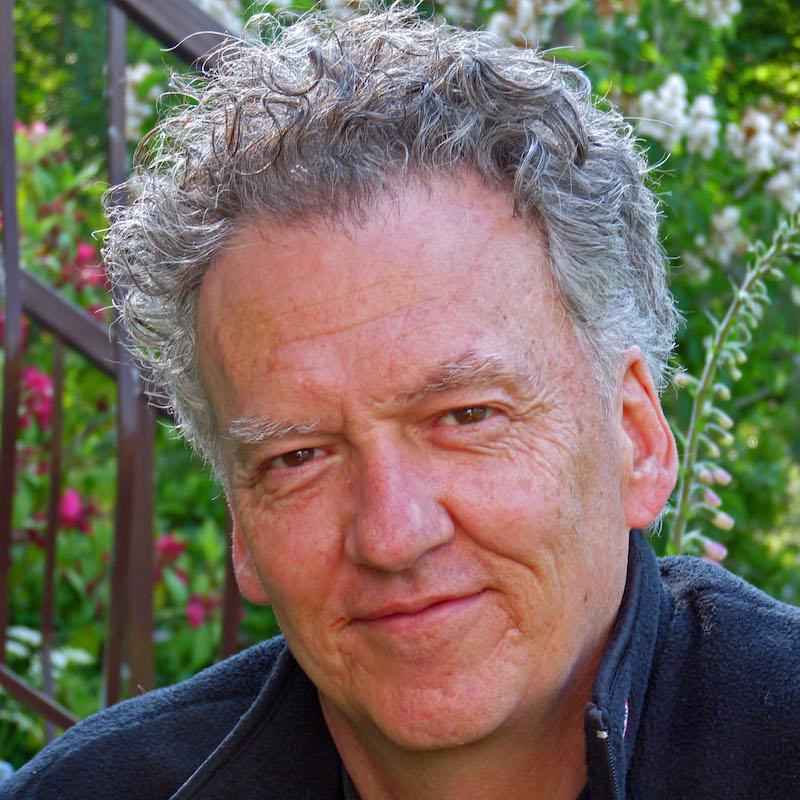
I was hunkered down at the pond at Jericho Park with my zoom lens one afternoon, trying to get an angle on a yellow warbler.
A skinny guy wearing a Black Sabbath T-shirt walked up to me and asked, “Are you one of those whatchamacallits?”
“What?” I replied.
“One of those birders?”
“No,” I said. “I’m not one of those.”
I’m not sure what the guy had in mind, but the way he posed the question seemed to imply that there was something unseemly about the practice. If he meant the term loosely, as in a birdwatcher, then I guess I qualify.
I’m certainly not one of those Tilley hat-wearing, binocular-bedecked folk who obsessively document all the birds they see and the places where they were spotted. But I do enjoy taking photographs of birds.
It’s a pastime I adopted later in life, much to the surprise of my friends and family who had always viewed me as a distinctly urban creature. It’s also something I don’t generally advertise. I call it my secret hobby.
What is not a secret is the popularity of birdwatching. About 100 million North Americans currently participate in a hobby that employs 1.4 million people in the retail and nature tour trades and generates upwards of $90 billion in salaries and wages annually.
I started taking pictures of birds after I was given a digital camera as a birthday gift. The appeal of a digital camera was the same as word processors had on my writing when they supplanted typewriters — it simplified and sped up the process and allowed for instant corrections.
It also saved me money. I no longer had to take photos in for developing, hoping that my efforts had produced some decent images. Thanks to the LCD display on the back of the camera, I could now instantly determine if I was getting the correct exposure and depth of field. It was a liberating technological breakthrough and I jumped into it.
Birds weren’t the only things I took photos of, but they soon became a major focus. I not only found birds fascinating and beautiful but also challenging to photograph. In fact, when I started trying to take photos of them in mid-flight, I initially felt that the required skill was beyond me. Luckily, I persevered.
I began heading out several times a week to pursue my new hobby and gradually improved my technique so that in-flight photos were no longer anxiety-inducing events.
The quest caused me to venture to places I had never visited before, which was both revealing and enlightening. I watched sunrises and sunsets and got lost in the tiny world framed by my viewfinder. Outside stress faded away.
The walking was good for my health and when I returned home hours later my head felt like it had been washed clean.
As I learned how to take better photos I also learned more about these feathered beings.
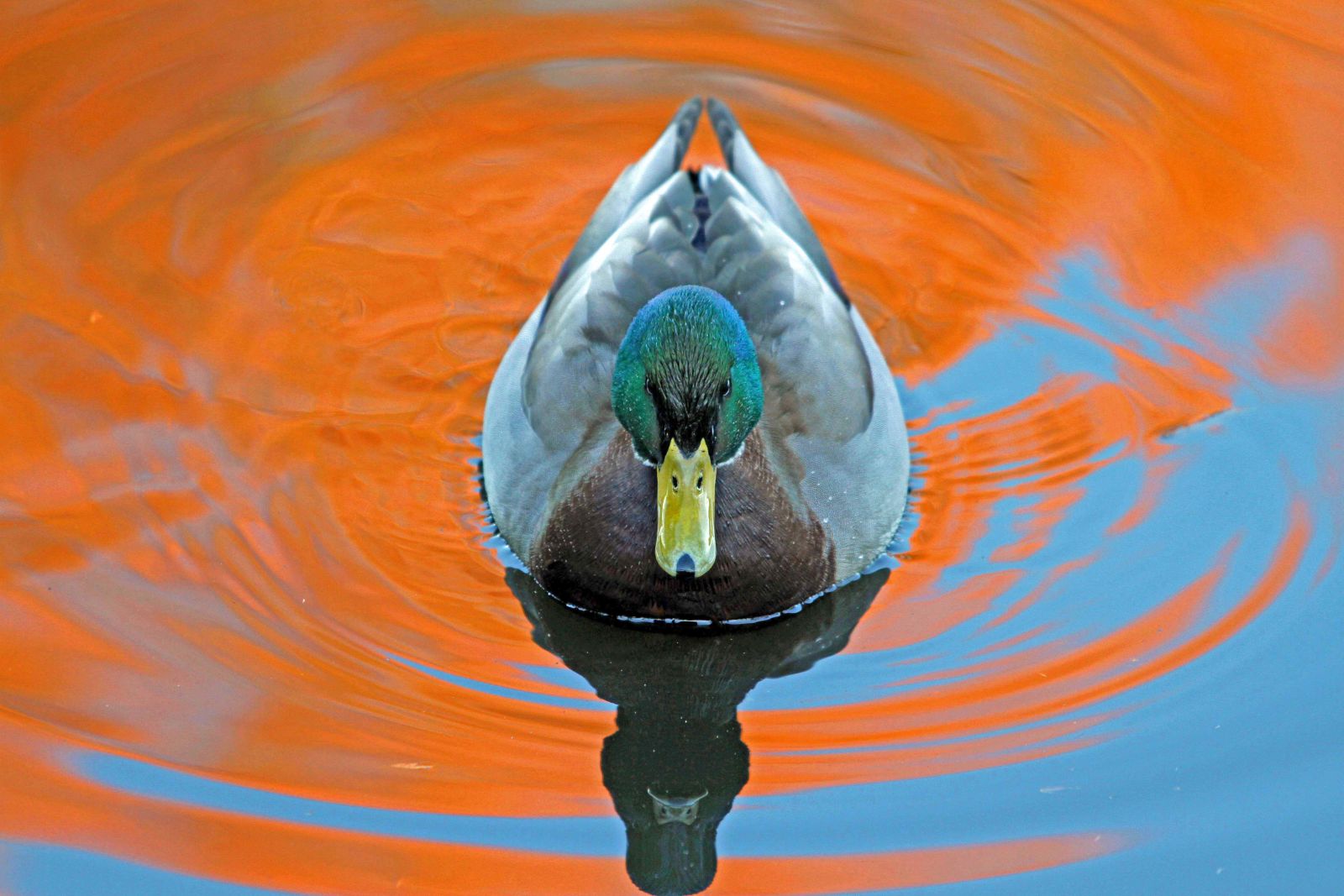
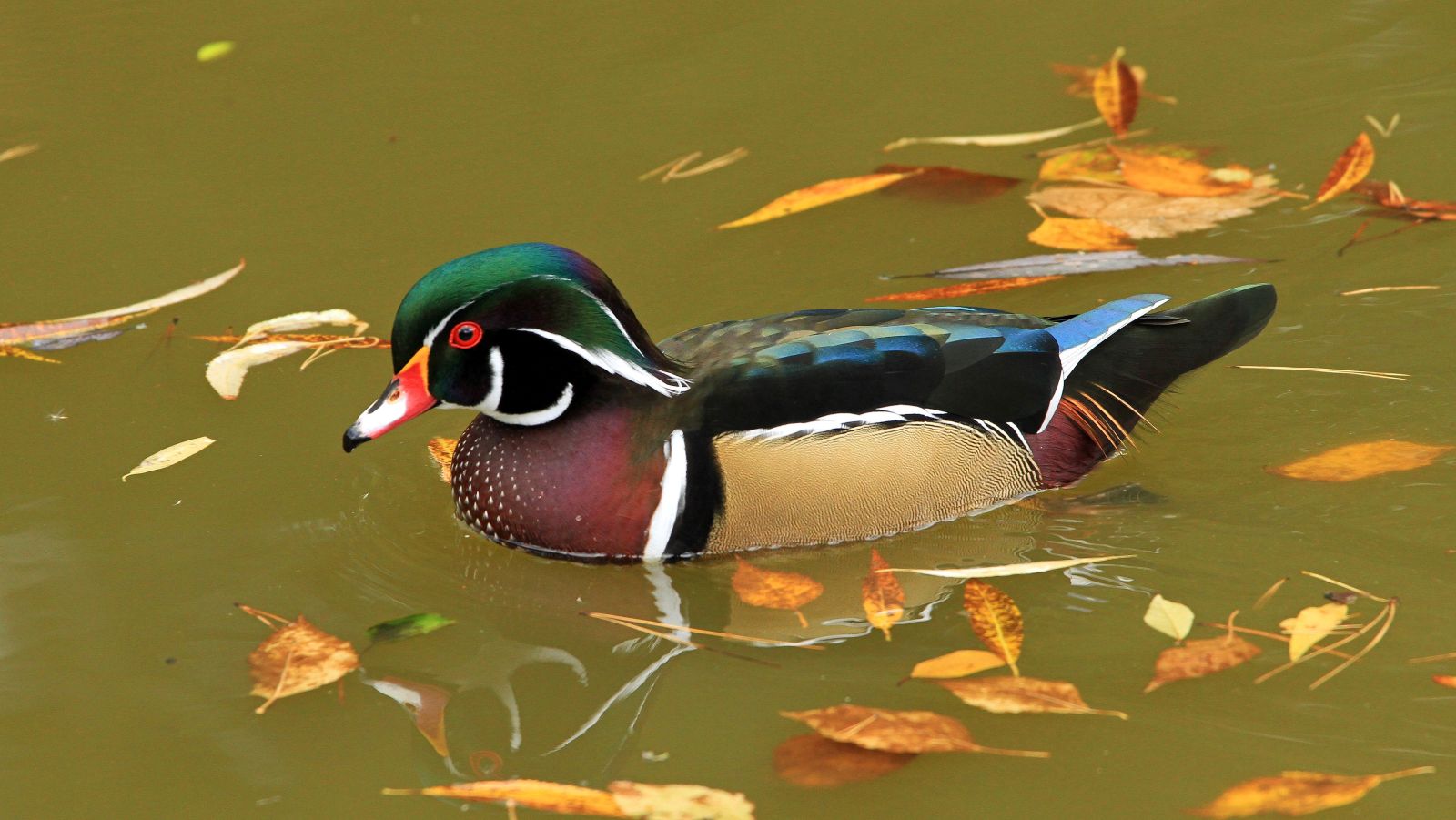
I discovered that the male wood duck, whose brilliant plumage appears to have been sprayed on with Day-Glo paint, gets its name from its habit of nesting in tree cavities. They establish these nesting sites up to 15 metres above the ground, which offers a serious obstacle for the newly hatched ducklings, who must make death-defying leaps to begin their life on terra firma.
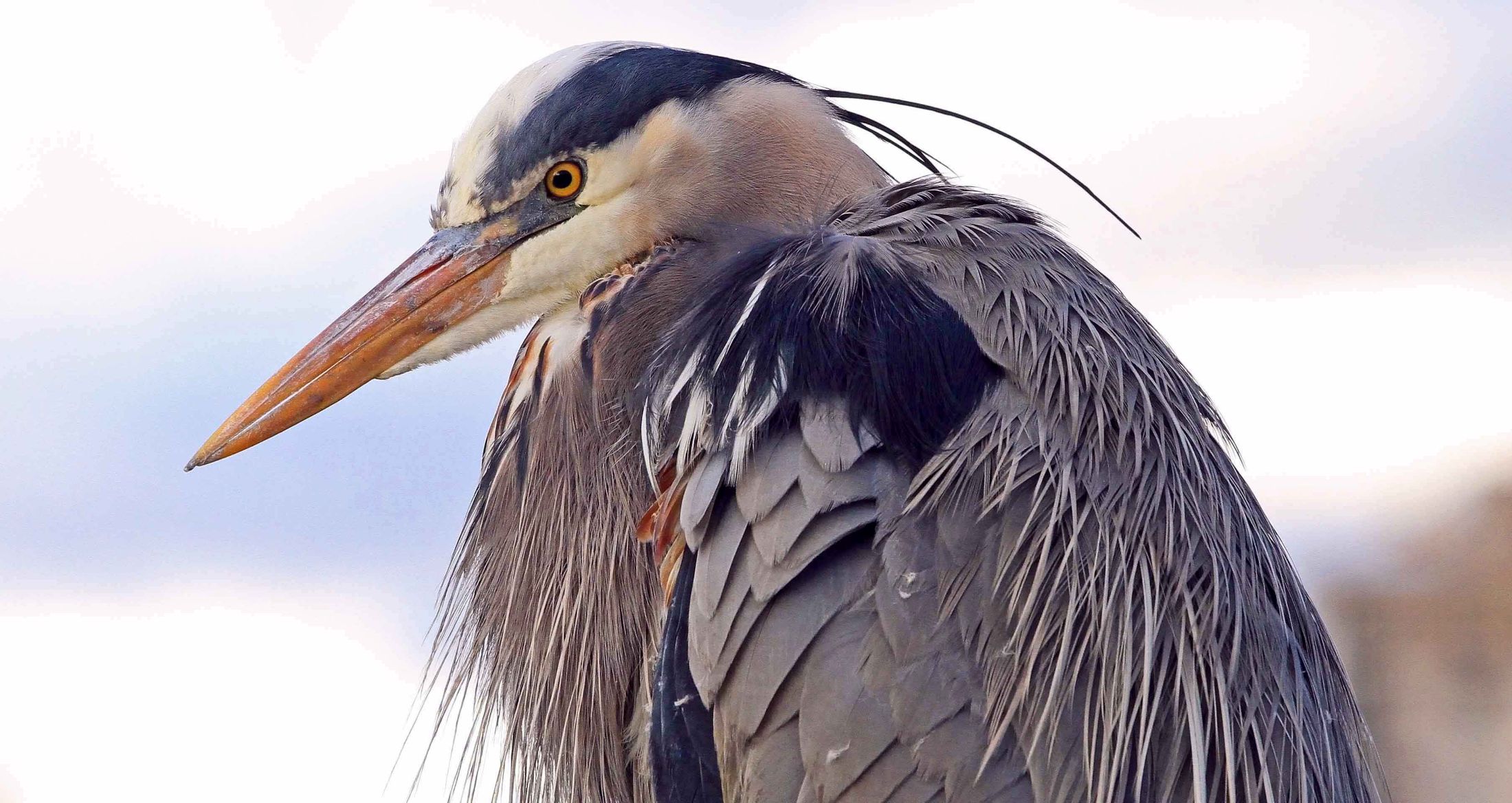
Birds, I discovered, are competitive and territorial. I watched male and female red-winged blackbirds tormenting much larger great blue herons — fearlessly zipping in and out like a commando team. Packs of crows will routinely harass hawks, pursuing them relentlessly like noisy paparazzi and destroying their hopes of making a stealthy kill.
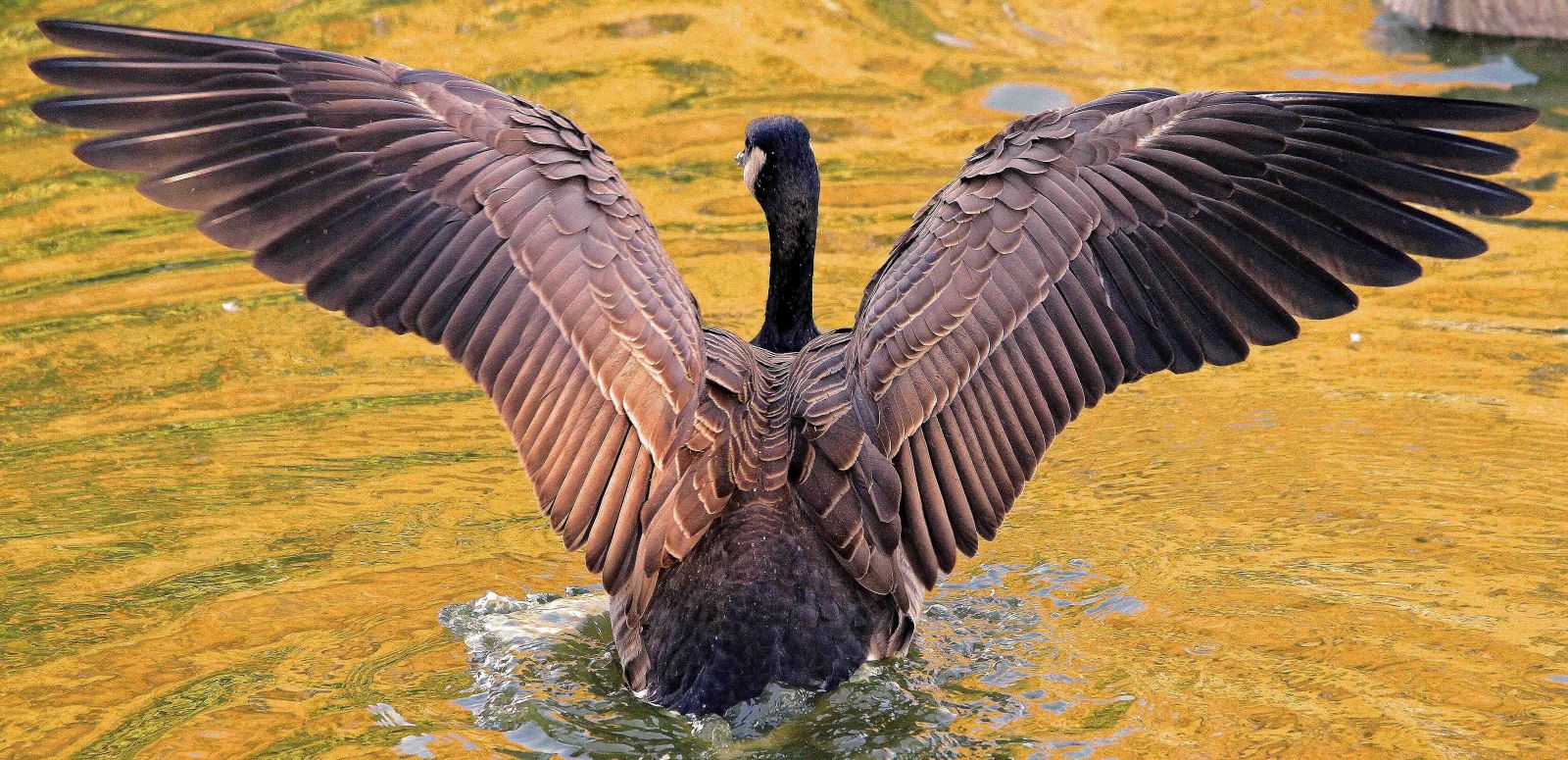
I also learned that birds sleep with one eye open so they can monitor their surroundings for predators. Some, like the Canada goose, can also fly while sleeping. Naturally, when they do this, they keep one eye open.
Good things come to those who wait
The most common response I get from people when they learn that I take photos of birds is “You must have a lot of patience.” In truth, I would not describe myself as an especially patient person, but you do have to slow down somewhat to take photos of birds.
Blending in with the background is often an effective strategy. Birds will relax and resume normal activity if you remain still around them for a while. You also sometimes need to wait for situations to develop.
The more time you spend observing birds the better you come to understand and even predict their behaviours, which is a key to taking good photos.
I recall seeing a few buffleheads skittering about the pond at Vanier Park one afternoon. A small diving duck, the bufflehead’s peculiar name is derived from buffalo head, a reference to the male’s odd, puffy shaped skull. It was mating season and I knew from reading about them that they have energetic mating rituals.
As I stopped to watch I was rewarded by the sight of the males engaging in comical head-bobbing displays and frantic chases in which they appeared to rise and run across the surface of the water. The interplay allowed me to get some striking photos.
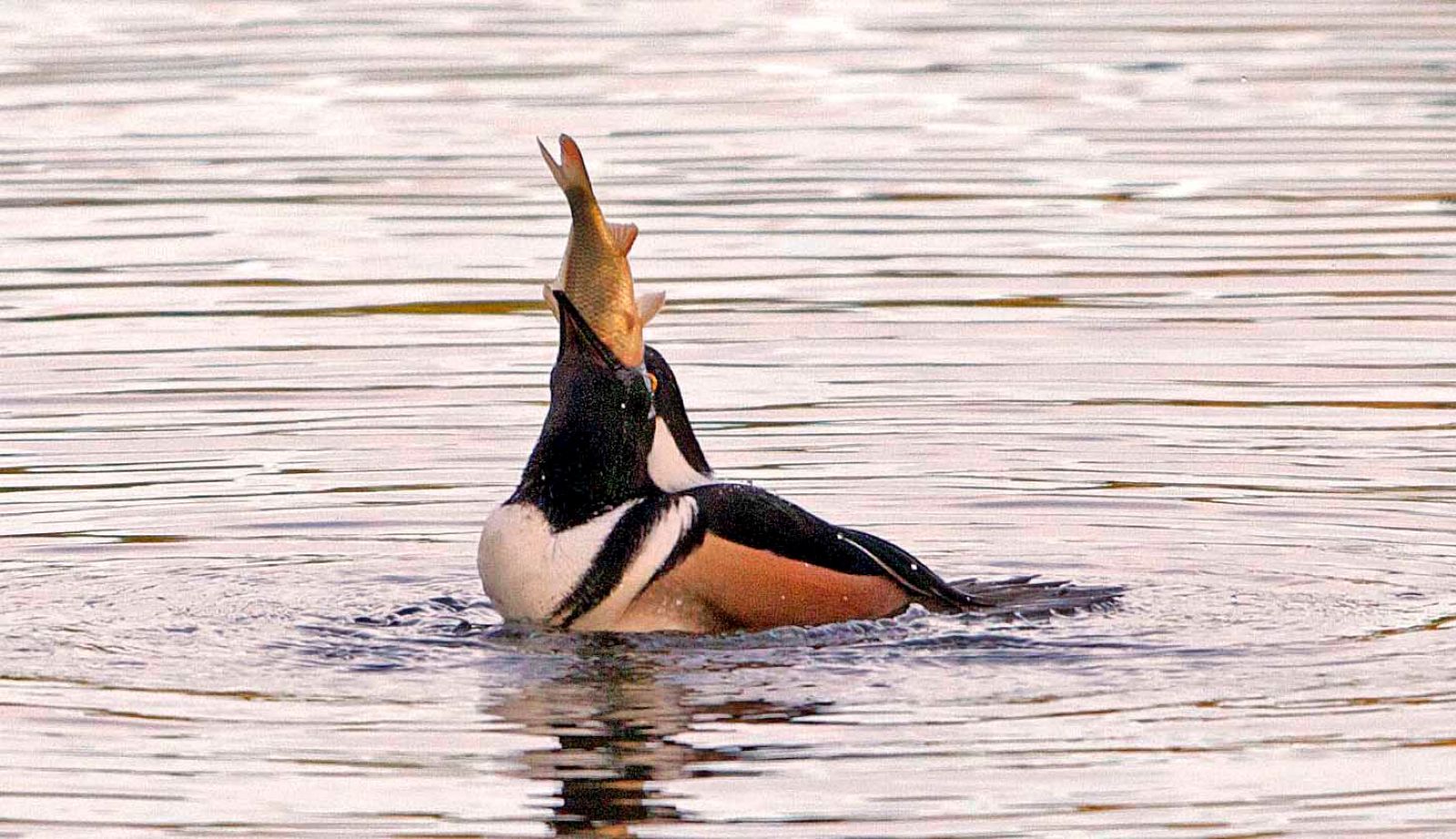
Hooded mergansers soon became another favourite subject. These small diving ducks have thin, serrated bills and specialize in catching and eating fish. The males boast a handsome blend of brown, white and black feathers and a fan-shaped crest on their heads that they can raise or flatten at will, producing an instant “wow” effect.
The ruddy-brown-coloured females also have a crest, a spiky backswept ’do that creates the impression they are sailing into a stiff wind.
As I discovered one day at Lost Lagoon, these mergansers also have suicidal impulses. Camera in hand, I watched in disbelief as a male attempted to swallow a carp that was much larger than his head. Did he survive? It’s open to debate.
Missed connections and close calls
Early on in the hobby I wasn’t nearly so savvy. There was a winter’s day at Jericho during a sustained cold snap when I encountered a hulking photographer wearing mirror sunglasses and a hooded parka. He had a monstrous lens mounted on a tripod. Both he and his camera were decked out in tan camouflage.
I asked him what he was taking photos of. “Gozhawg,” was his guttural and cryptic response. I glanced around and, seeing nothing but empty ice, meandered off to another section of the park. I later read about some photographers that had taken award-winning photos of a rare northern goshawk feasting on mallards at Jericho. The stunning images that appeared online depicted the raptors ripping ducks apart on the blood-streaked ice.
Other times I’ve simply been too slow on the draw. One day while attaching a zoom lens to my camera on the dock at Jericho, I heard a seagull scream and saw a fish fall from the sky and land with a wet plop on one of the wooden timbers.
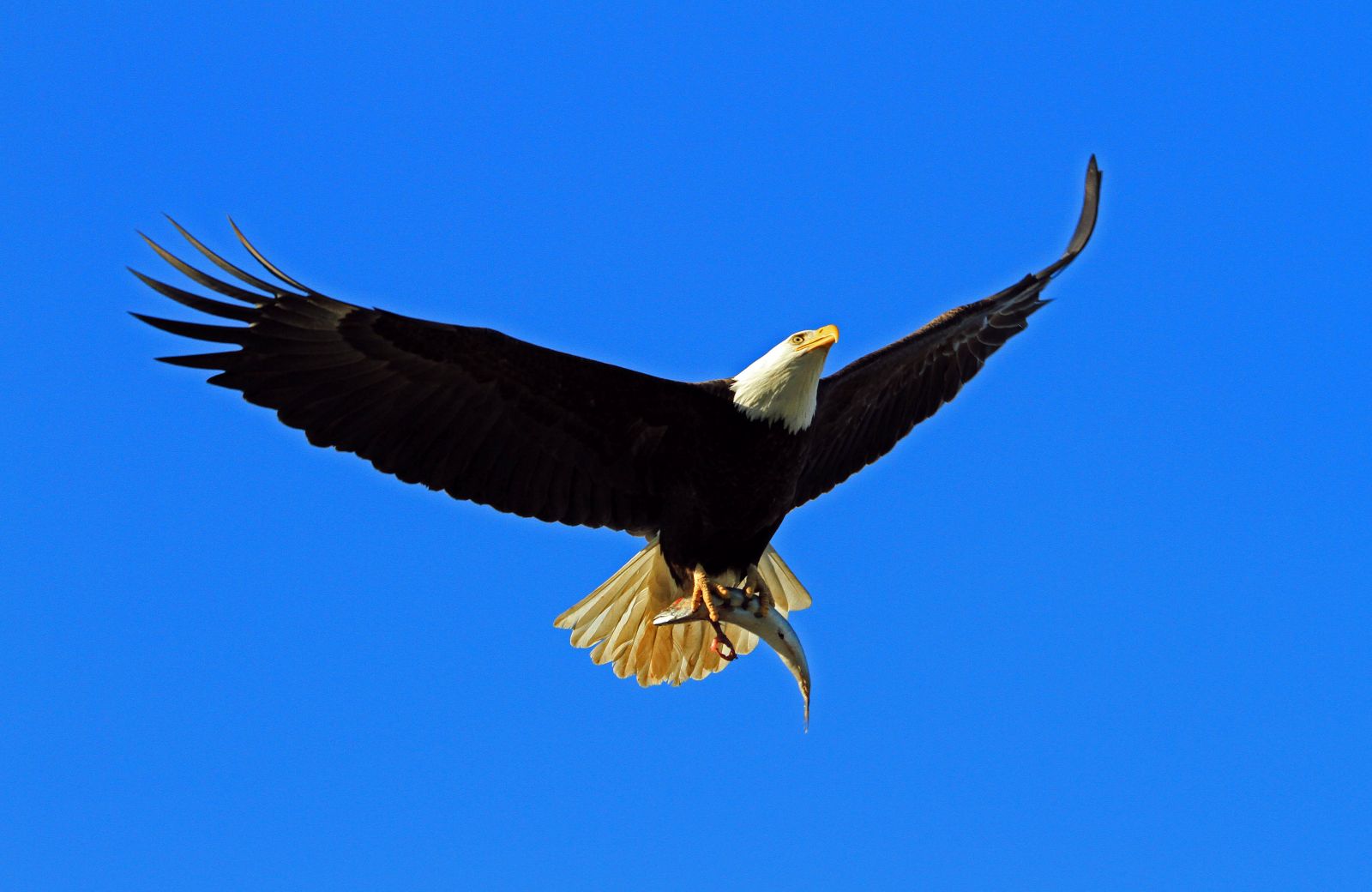
I sat there staring at the fish that was now draped across the wood like one of Dali’s melting clocks, trying to deduce what had caused it to fall from the heavens when my reverie was suddenly broken by a loud rustling of feathers. I looked up just in time to see a bald eagle descending from the west.
It came in fast, then suddenly applied the brakes in a masterful piece of precision gliding before deftly plucking the fish from its resting place. The eagle had spooked the seagull, causing it to drop the fish.
It was a moment of missed opportunities. The seagull missed out on a meal, and I missed what might have been a fabulous photo.
Eagles aren’t especially hard to photograph if you can get close enough to them, but other birds are problematic. Because of their speed, miniature dimensions and hyper-alertness, hummingbirds may be the hardest birds to take photos of, but barn swallows and crows are also difficult subjects.
Barn swallows fly quickly and never stop moving, darting to and fro and cleaving the air like jets in a dogfight. They often appear to deliberately mock you, veering in within touching distance and then angling sharply away. I described how they would circle around me as I crossed a field at Jericho to a biologist and he suggested that my body heat might be attracting insects that the swallows dined on. I’m not sure if he was serious but his remark instantly conjured up an image of Pigpen, the character in the Peanuts comic strip, who is perpetually surrounded by a cloud of insects and dust.
Crows are tricky subjects because they seem to detest having their photos taken. They will often move before you can press the shutter or in some cases even get belligerent.
I once had a noisy mob pursue me so aggressively that I had to take cover under a tree. In another memorable incident I had a crow fly directly at me from some distance away. The black bird zoomed in low and then let fly with a blast of white excrement that hit me dead centre in the chest, just missing my camera lens.
Close encounters of the bird kind
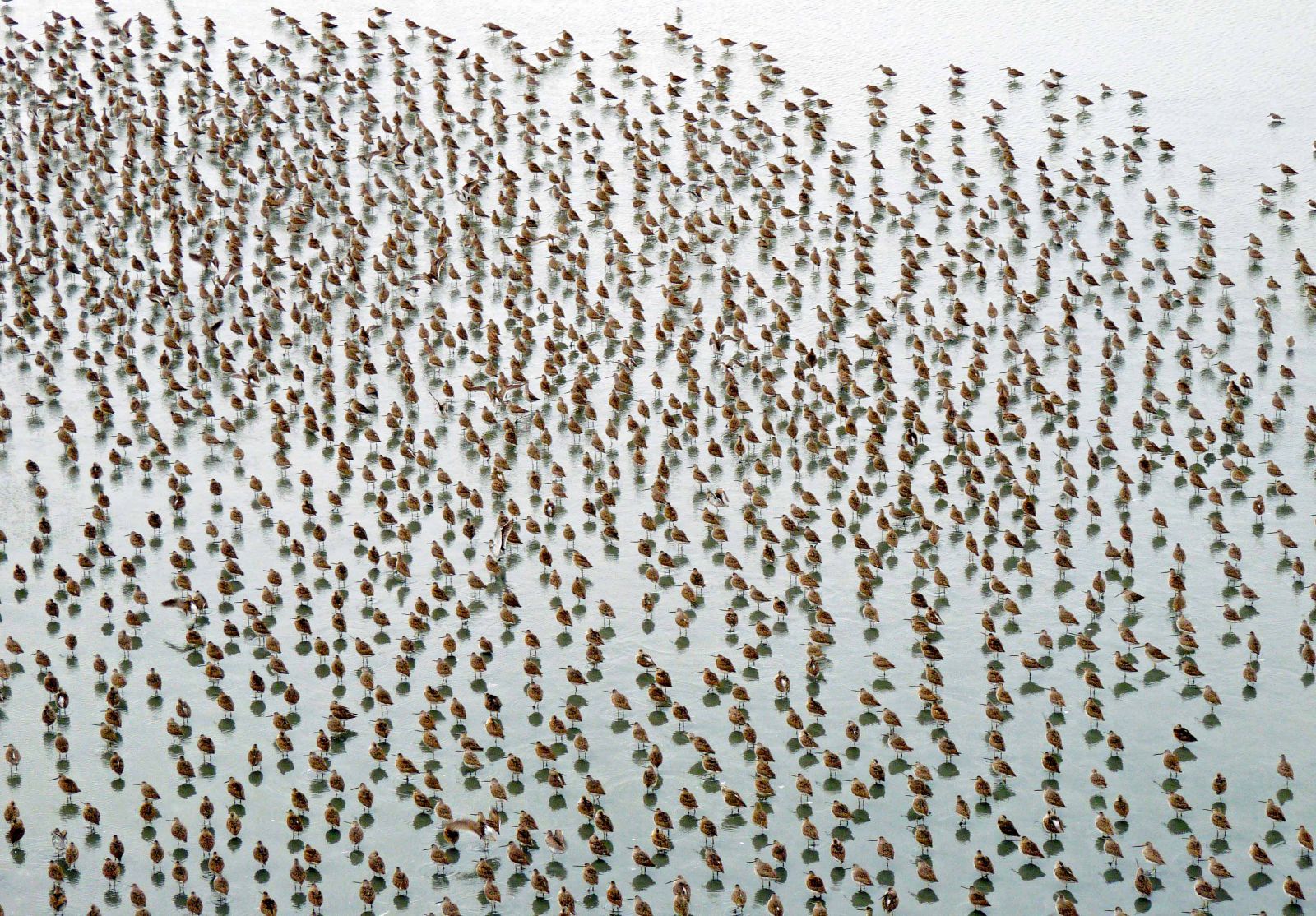
Simple serendipity can also produce stirring images. I was at the George C. Reifel Migratory Bird Sanctuary one day when I came upon a huge flock of short-billed dowitchers feeding in the shallows. I climbed to the top of a nearby viewing platform just in time to see a falcon attack.
The dowitchers rose together in terror and began fleeing in an undulating line that snaked away to the horizon.
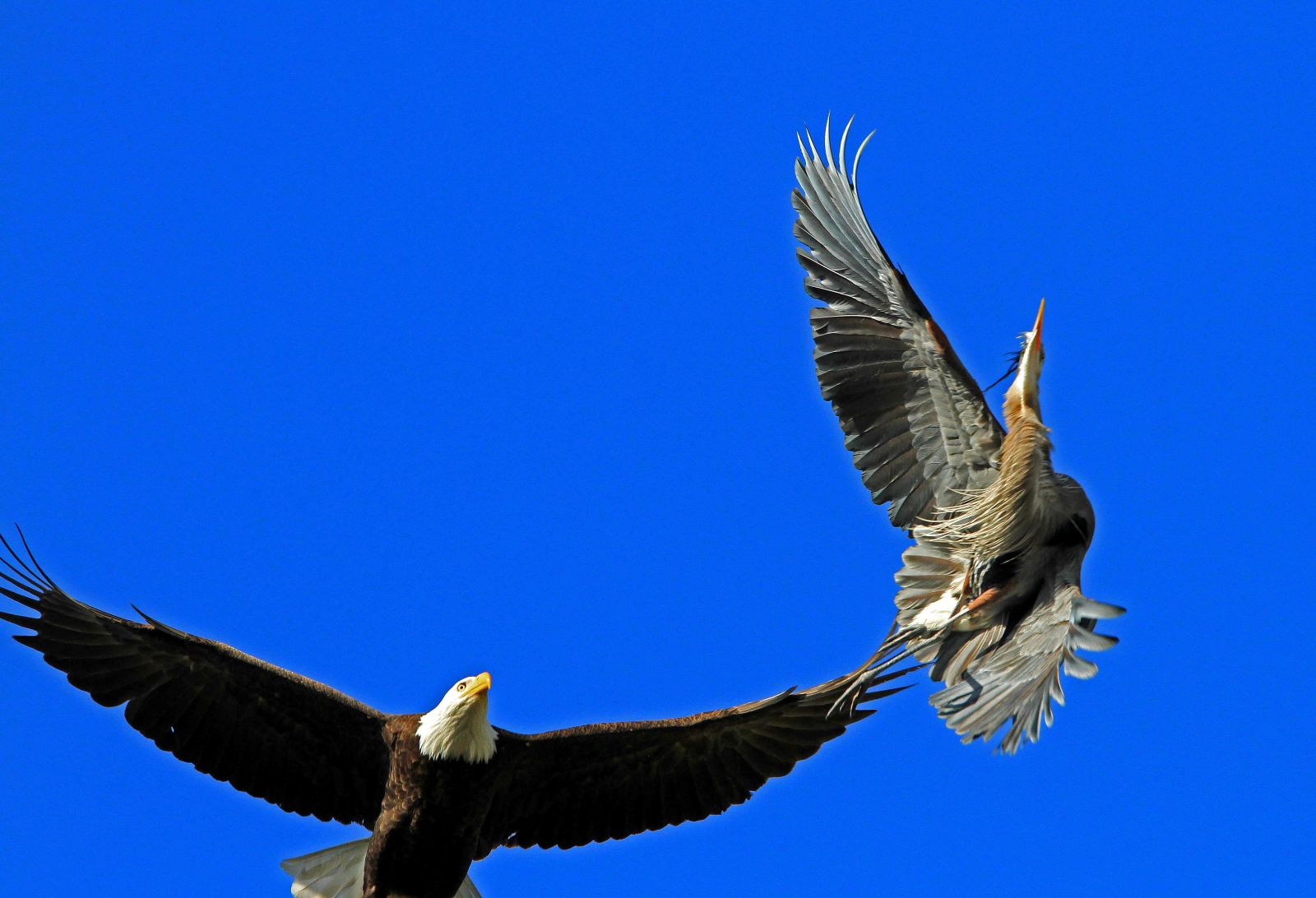
On another occasion I was taking images of the great blue heron rookery at Stanley Park when a bald eagle zoomed in and began gobbling eggs in one of the nests.
The parents screamed helplessly from atop higher branches while the rest of the colony took to the air and began shrieking loudly. It sounded like a scene from a horror film where the ground opens up and howling demons escape from inside the earth.
The eagle ignored the commotion and with yellow yolk dripping from his face, moved on to consume a few more eggs from another nest.
It was a disturbing scene. I felt like a war photographer.
While taking photos of birds you invariably meet other people doing the same thing. One day while trying to get a shot of a hummingbird at the Stanley Park rose garden, a long, lanky fellow in a wool cap came up and began talking about the hummer that I was trying to photograph.
He was so well acquainted with the tiny bird that he claimed to know its precise movements. “He’s going to fly to that branch there next and then over there,” he told me.
This fellow was carrying a satchel filled with bird photos, which he hauled out to show me. The photos were good, but his intensity was unsettling.
Another time I encountered a bearded dude with a big lens and we started chatting about belted kingfishers, a stocky, grey and white feathered bird with a sharp bill, a spiky crest atop its head and a distinctive call that sounds like the mechanical rattle of a squeaky washing line.
This fellow mentioned that he had seen a kingfisher hanging out at the Royal Vancouver Yacht Club, which was at the other end of the park. I quickly set off to find this kingfisher, but it was a hot day and my camera gear was heavy and I soon began to mentally berate myself for being so naïve as to believe I could expect to find the bird at the suggested destination.
When I finally arrived at the pier I slipped under the dock and into the shadows only to see a kingfisher staring directly at me. He had a startled look as though he had been surprised doing something illicit. He flew off a few metres and landed on a pole in the sun where he allowed me to snap his photo.
Sometimes when photographing birds, you even meet celebrities. I encountered this gruff, older German gent a few times at Jericho.
I overheard him tell a friend that he belonged to a camera club but didn’t ever bother to show any of his photos.
“I have no interest,” he said.
“Sure,” I thought to myself.
The overlap of our avian pursuit was a bit eerie.
I can recall taking photos of a great blue heron fishing in the pond at Jericho one glorious, sun-drenched afternoon and thinking to myself there is no one else in the entire world doing what I’m doing at this moment.
Then I heard a sound behind me. I turned and saw the German fellow standing there taking the same shot, or perhaps he was actually taking a photo of me taking a photo of the heron.
We sat on a bench and chatted one day and he showed me photos of tropical birds he had photographed on a birdwatching trip to Costa Rica.
He said he took a number of these trips but was frustrated because the organizers never allowed enough time for photo taking. He used a mirrorless Panasonic camera, a device with a sizeable zoom, but a rather modest price of $500.
He seemed to know little about my more powerful Canon 7D, which I explained had the advantage of being able to fire off eight shots per second.
We never exchanged names and so it came as a major surprise when I later saw the German chap profiled in Canadian Art magazine. He was the legendary Vancouver street photographer Fred Herzog.
Fred has since passed away, but despite numerous local showcases of his work, I have never encountered a single reference to his passion for bird photography.
Somehow that seems fitting.
As I said before, it’s a secret hobby. ![[Tyee]](/design-article.thetyee.ca/ui/img/yellowblob.png)
Read more: Environment






Tyee Commenting Guidelines
Please note that email notifications for replies are not currently working due to a software issue which may be resolved in a future update.
Comments that violate guidelines risk being deleted, and violations may result in a temporary or permanent user ban. Maintain the spirit of good conversation to stay in the discussion and be patient with moderators. Comments are reviewed regularly but not in real time.
Do:
Do not: