


 SHARE:
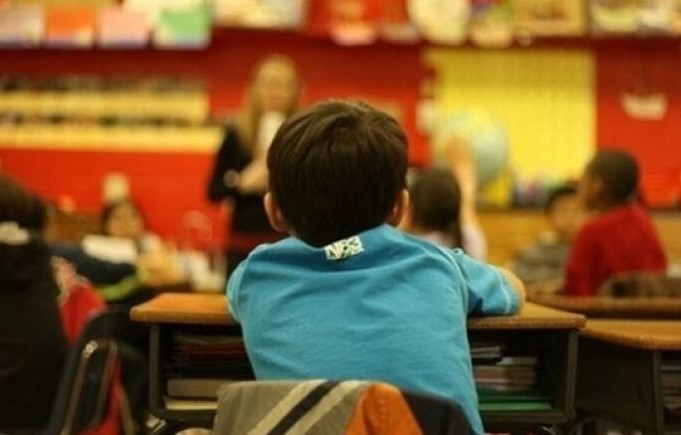
Tracy Loffler is beginning her tenure as president of the BC School Trustees Association “with a deep sense of urgency” about public education funding in the province.
In a video posted to YouTube earlier this month, Loffler acknowledged that the province’s 60 public school districts are facing “significant budget pressures” this year.
“This is not just about dollars. This is about children’s right to a quality public education,” Loffler said. It was the first time a BC School Trustees Association president has made a video address about education funding in B.C.
“In every corner of our province, schools are doing their best, but could be doing so much more for students with increased funding,” Loffler continued.
The province provides school districts with operational funding based on enrolment numbers: $9,015 per student for the 2025-26 school year.
There are additional grants for geography-based needs, such as busing and air conditioning, as well as implementing the curriculum, and for students with disabilities or diverse abilities, who identify as Indigenous or who are English-language learners.
Per the School Act, all school districts must submit a balanced operating budget to the Education Ministry by the end of June.
Failure to do so results in the firing of elected school board trustees. The board is then replaced by a single caretaker trustee appointed by the ministry.
Capital budgets can run deficits under certain circumstances.
Districts are facing multimillion-dollar shortfalls that require dipping into district savings and in some cases cutting services, supports and programs in schools, to balance their budgets.
For example, the Surrey school district, the largest by enrolment at over 83,500 students, faced a $16-million budget shortfall.
Burnaby reported a $4.2-million shortfall, Loffler told The Tyee, with a $5.8-million shortfall in the Kamloops district, $1.5 million in Nicola-Similkameen and $1.49 million in Maple Ridge.
Surrey, Nicola-Similkameen and Maple Ridge cancelled their elementary band programs to balance their budgets, as well as cutting staff at the district and school level.
Education funding as a percentage of the overall provincial budget has dropped over the past two decades, Loffler says. The BC School Trustees Association would not provide data to back up this claim.
According to data from Statistics Canada, per-student operational funding for school boards by province shows that in 2022, the most recent data available, B.C. had the fourth-lowest funding per student in the country, ahead of New Brunswick, Saskatchewan and Alberta.
Geographical and climate differences between provinces may affect operational expenses such as busing, heating and cooling expenses.
The Education Ministry’s own data shows basic per-student funding has increased, adjusted for inflation, since 2008-09.
In 2008-09, when student enrolment was 579,485, districts received $3.1 billion ($4.5 billion in today’s dollars) in basic per-student operating grants.
For the 2024-25 school year, districts received $5.25 billion ($5.29 billion in today’s dollars) in basic per-student funding for 614,869 students.
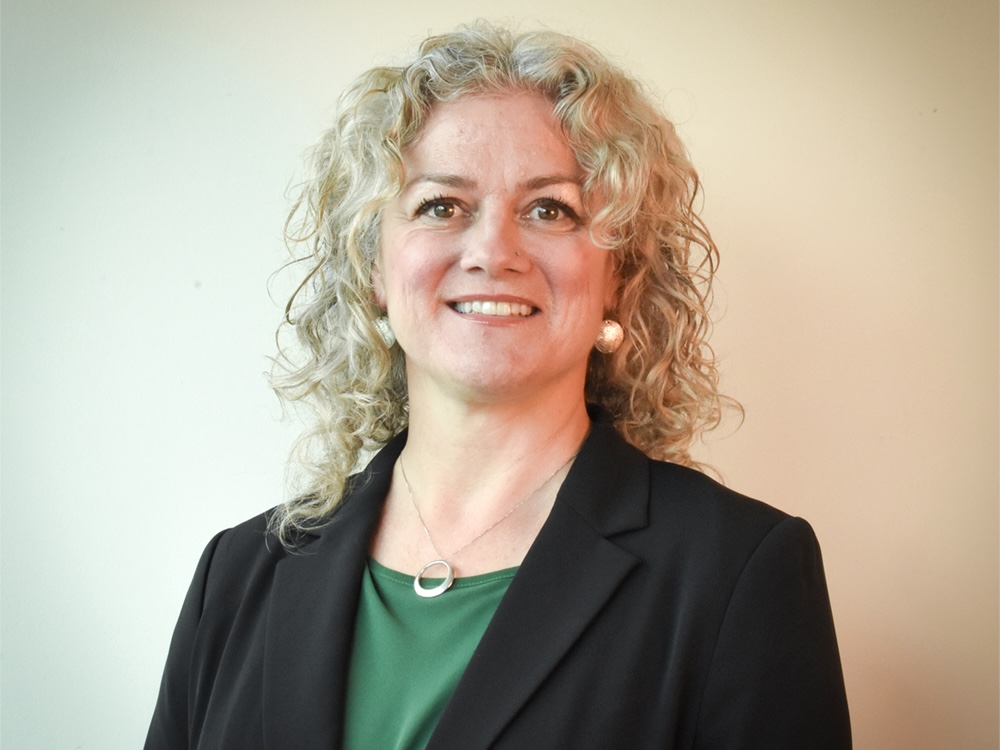
But in a phone interview with The Tyee, Loffler said funding issues have “reached a bit of a tipping point,” after one-time COVID funding ended and increasing enrolment wasn’t enough to cover for the shortfalls.
School boards are citing inflation, U.S. trade tariffs and the increasing costs of employer-paid benefits for why provincial education funding is failing to cover districts’ expenses, Loffler said.
Even increasing student enrolment hasn’t always helped budgets, she said, adding districts like Maple Ridge, where enrolment continues to increase, are predicting shortfalls of $1.4 million in the 2026-27 budget and over $2 million in the 2027-28 and 2028-29 budgets, too.
“There are some districts where the enrolment growth is so rapid, it’s hard to keep up,” Loffler said, referencing the cost of building additional schools to accommodate the growth.
Many parents seem to agree. On May 26 a protest composed of students and parent advisory council members from a number of public school districts gathered outside the provincial legislature in Victoria to protest the “crisis” in education funding.
The ministry’s response
The Tyee requested an interview with Education Minister Lisa Beare, but she was not made available.
Instead the ministry sent an emailed statement, noting the $8.2 billion in the 2024-25 school year is the “highest education funding ever.” It’s a line the previous BC Liberal government also used when it was in power to note funding amounts continued to rise, without commenting on whether it is sufficient to cover districts’ costs.
“I know these are challenging fiscal times, especially in the face of unjustified tariffs and global uncertainty. This isn’t just a reality in B.C. — jurisdictions across Canada are experiencing financial pressures, and every industry is being impacted,” Beare’s statement read.
“I’m grateful for the BCSTA’s continued partnership and remain committed to working collaboratively with all districts and education partners to support student success — both today and for the future.”
Districts facing budget shortfalls are not unusual in British Columbia.
For example, the North Vancouver, Vancouver and Surrey school districts all faced shortfalls last year that required spending cuts or using millions of dollars of savings to balance.
Asked for further details about the increasing cost of employer-paid benefits packages, BC School Trustees Association communications staff told The Tyee the association is currently researching districts’ cost pressures and would release more information publicly when it is finished.
In Vancouver, the school district did not report an operating budget shortfall for the 2025-26 school year, balancing its budget through reallocating funds instead of dipping into its savings.
But parents and staffing unions criticized the district’s decision to end its living-wage employer status — resulting in a 25 per cent wage cut for bus drivers and bus attendants — while increasing senior administration salaries in the 2025-26 budget.
The district is anticipating operating budget shortfalls of $7 million and $5.4 million in the 2026-27 and 2027-28 budgets.
Loffler would not criticize individual districts’ funding decisions.
“School boards and school districts have the local autonomy to make the best decisions that they can for their communities,” she said.
“Every four years there’s an election where folks can run for school trustee.” ![[Tyee]](/design-article.thetyee.ca/ui/img/yellowblob.png)
Read more: Education


Tyee Commenting Guidelines
Please note that email notifications for replies are not currently working due to a software issue which may be resolved in a future update.
Comments that violate guidelines risk being deleted, and violations may result in a temporary or permanent user ban. Maintain the spirit of good conversation to stay in the discussion and be patient with moderators. Comments are reviewed regularly but not in real time.
Do:
Do not: