



 SHARE:

[Editor’s note: This piece is the first in a series examining some fundamental issues in public education — issues such as funding woes, ‘behavioural problems,’ declining literacy and numeracy rates, and students’ use of AI. We zeroed in on these issues after having conversations with educators, academics and parents, and consulting the BC Select Standing Committee on Finance and Government Services’ ‘Report on the Budget 2026 Consultation’ and the BC Teachers’ Federation’s 2024-25 membership survey.]
Amid calls from the public education sector for more capital and operational funding, in-school child-care spaces and teachers, one Budget 2026 funding request to B.C.’s Select Standing Committee on Finance and Government Services stands out — Comox Valley school district’s call for a “gender-based violence action plan.”
Comox Valley school board trustee Shannon Aldinger said the district’s request was inspired by the 2023 provincial K-12 Anti-Racism Action Plan, as well as advocacy by district students and parents — including Aldinger, prior to becoming a trustee — for an improved and extended sexual health curriculum around consent and sexual violence.
“For many years I have felt that the K-12 system has not focused enough time and attention on identifying gender-based violence, preventing it and responding to it in any clear and coherent way,” Aldinger said.
Through the work of its Gender-Based Violence Committee, the Comox Valley board has brought two motions to the BC School Trustees Association annual general meetings since 2023, to advocate for ministry responses to sexual misconduct and gender-based violence and bias in schools. Both motions passed.
This past May, Comox Valley board chair Michelle Waite sent a letter to Education Minister Lisa Beare inviting her to partner with the district to create an action plan.
“We cannot expect to create safe and inclusive learning environments without directly addressing the reality of gender-based violence in our schools,” the letter reads in part.
The Tyee requested an interview with Beare, but she was not made available. In an emailed statement to The Tyee, an Education Ministry spokesperson confirmed Beare planned to meet with the school district to discuss the request.
The rise of the ‘manosphere’
Gender-based violence and misogyny are not new problems in schools.
But researchers who spoke to The Tyee say they have been amplified through the rise of the so-called “manosphere,” a loose online movement of masculinity influencers such as anti-feminist psychologist Jordan Peterson and ex-mixed martial arts fighter Andrew Tate, who is facing sex trafficking and rape charges in Romania.

“What makes this moment different is the way the media landscape has amplified the issue,” said Emelia Sandau, a teacher and a junior fellow with the Canadian Institute for Far-Right Studies. “We have folks like Andrew Tate whose content is accessible, digestible, easily spread and in formats that are reaching audiences as young boys.”
Sandau and Luc Cousineau, the institute’s co-director of research, recently published a study showing teachers, especially young women, self-reported on Reddit a rise in misogynistic and male supremacist statements and behaviours from students inspired by Tate.
Those behaviours and statements included boys grunting at teachers, commenting on teachers’ genitals and submitting essays defending sexual assault.
Where previous generations picked up misogyny over time from family, peers or society, Sandau said, now children as young as 10 years old are exposed to online echo chambers promoting violent misogyny and male supremacy.
“One thing I really want to highlight is the importance of listening to teachers when they tell us they are seeing such a problem,” Sandau said.
The issue also shows up clearly in sexual harassment, intimate partner violence and femicide statistics.
The 2023 BC Adolescent Health Survey found 25 per cent of students aged 12 to 19 had been subjected to sexual harassment in the previous year, the highest reported percentage since 2003.
Non-binary students and girls were far more likely to report experiencing sexual harassment, sexual assault and online dating violence than boys, though these experiences are widely underreported for all genders.
In 2018 a third of B.C. women aged 15 and older reported experiencing sexual assault, a rate that increased to 45 per cent for women with disabilities, 50 per cent for Indigenous women and nearly 70 per cent for bisexual and pansexual women.
Another survey found nearly 50 per cent of women and 40 per cent of men aged 15 and up in B.C. have experienced intimate partner violence.
Incidents of femicide — women murdered because they are women — are on the rise, according to the Canadian Femicide Observatory for Justice and Accountability. Its 2024 report found over 90 per cent of identified suspects were men, half of whom were in current or former romantic relationships with the victim.
The problem extends to the experience of teachers on the job.
The BC Teachers’ Federation’s 2025 membership survey revealed 15 per cent of teachers — the majority of whom are women — had experienced violence or bullying and harassment on the job.
Research from the Canadian Labour Congress, BC Teachers’ Federation president Carole Gordon added, shows majority-female industries like education, health care, food service and retail have higher rates of workplace violence.
“Misogyny, sometimes we don’t see it, we don’t identify it,” she said. “It’s just part of our daily existence.”
What’s the solution?
After reviewing district policies, consulting with staff, counsellors and student leaders, and conducting an anonymous survey, the Comox Valley school district’s Gender-Based Violence Committee concluded the district “lacks policy and has a flawed administrative procedure” when it comes to responding to gender-based and sexual violence.
A pervasive “boys will be boys” culture had normalized gender-based violence in schools, the committee found.
And district sexual health resources needed a comprehensive update.
As with B.C.’s K-12 Anti-Racism Action Plan, Comox Valley trustee Aldinger wants the creation of a K-12 gender-based violence action plan to begin with provincewide dialogues with people affected, including separate sessions for youth, as well as community roundtable discussions on action plan design and implementation.
Aldinger would also like to see teacher guides for addressing gender-based violence in the classroom, as well as a response guide for anyone encountering gender-based violence in schools, like the anti-racism action plan has.
The education system is uniquely equipped to respond to misogyny and gender-based violence, Aldinger said, because schools play an essential role in shaping expectations around students’ behaviour and conduct during their formative years.
School staff are also the first to respond to incidents of misogyny and gender-based violence happening on school property, during school hours, and are therefore already responsible for holding students accountable in these areas, she added.
“It’s going to take a lot of work from a lot of different directions: providing greater education to educators, improve staff training and accountability in relation to how comments, gestures, actions like physical-sexual harassment impact and really poison the learning environment,” she said.
For example, when a student makes a misogynist comment in class, a teacher might be tempted to ignore it so as to not further derail the class.
But Sandau said even an imperfect response to misogyny is better than no response. “When we stay silent in the expressions of misogyny, we risk normalizing those beliefs or behaviours, or sending the message that these ideas are acceptable,” she said.
It’s on all adults, including parents and school administrators, to respond, Sandau added.
“Writing off harmful comments as just ‘boys being boys’ or avoiding the conversation because we’re afraid of saying the wrong thing only gives that rhetoric more room to grow.”
For students, Aldinger said, more education is needed on consent in different situations students may find themselves in; on digital safety and integrity, including unsolicited sending and sharing of nude photos, cyberstalking, relationships with chatbots and violent pornography access; and on active bystander intervention.
“Acts of sexual assault and sexual harassment exist on a continuum, shouldn’t be considered as isolated incidents and need to be addressed from a larger systemic place,” Aldinger said, adding the action plan would acknowledge all genders can experience sexual violence.
In their emailed statement to The Tyee, an Education Ministry spokesperson said that early, ongoing and age-appropriate sexual health education, covered under physical and health education, is key to addressing gender-based violence.
The province’s sexual health education was updated in the 2022-23 school year to include new suggested topics for teachers, the spokesperson wrote.
“This includes important concepts related to gender-based violence, such as establishing and maintaining boundaries, understanding consent, the importance of bodily autonomy, and how to advocate for yourself or others,” the statement reads.
The ministry also updated elementary and secondary student health guides for teachers to assist in addressing the new gender-based violence topics.
Further resources for educators, students and families can be found through the provincial ERASE — Expect Respect and a Safe Education — website, dedicated to addressing online and in-person bullying, discrimination, sextortion and gender-based violence, the spokesperson continued.
“Over 116,000 students, families, educators and community partners have participated in ERASE training since 2012,” the Education Ministry spokesperson said. That adds up to just over one-sixth of the 614,869 students enrolled in B.C. public schools last year.
Data needed on children’s internet habits
Sandau and Cousineau, who are currently interviewing Canadian teachers about misogyny in the classroom for a study due later this fall, told The Tyee they hope to establish how misogyny in schools affects educators based on intersecting identities such as race, gender, physical ability and sexuality.
But Canada also needs to collect more data on children's internet habits, Cousineau said.
“We have effectively no youth internet use data collected in Canada in any meaningful way,” he said, adding Statistics Canada’s internet use survey starts at age 15, about seven years too late.
A “longitudinal, government-supported large data set” showing how much kids and teenagers are accessing the internet is “foundational” for advocating intervention work like education policy changes, he said.
“It took 20 years to change the sex ed curriculum in Ontario, and that was undone four years later,” he said, adding there is an overall lack of will among policymakers and politicians to enact meaningful interventions for misogyny in schools.
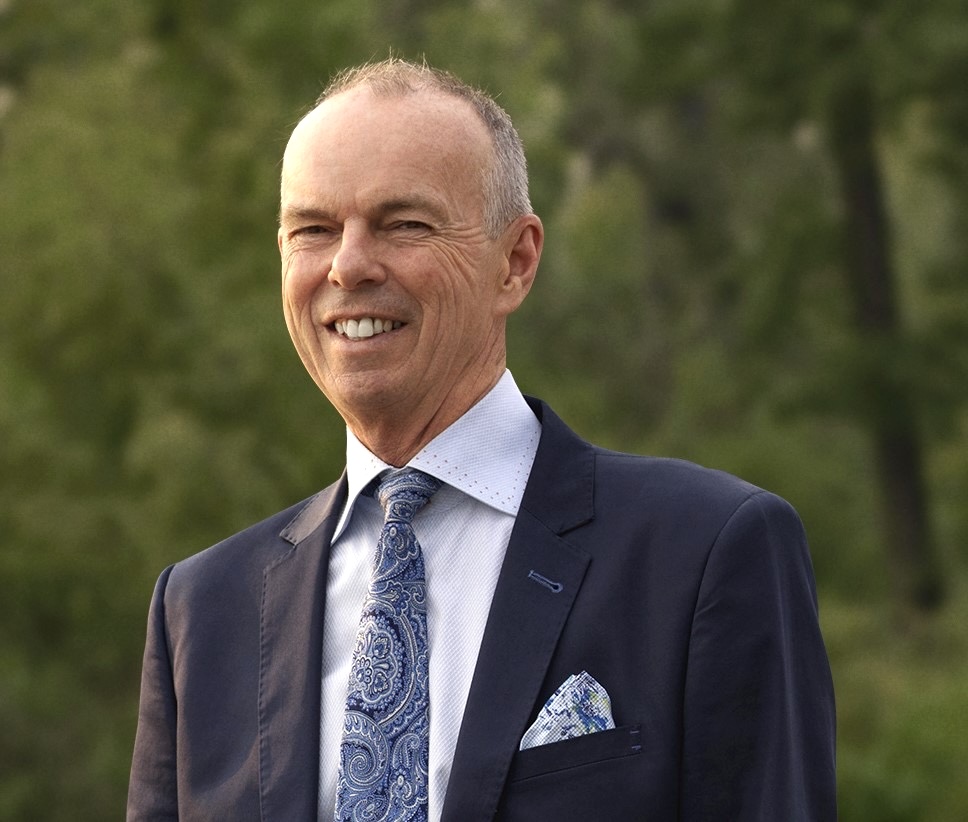
All students are affected by misogyny in the classroom, said Michael Kehler, a research professor in masculinities studies in education at the Werklund School of Education, University of Calgary.
It interrupts their learning and silences dissenting students, especially if they aren’t white, middle-class, cisgender boys. But it also hurts the boys and young men who are learning these attitudes, he said.
“It denies their own issues that they’re struggling with,” said Kehler, a former secondary teacher. “It has mental health impacts on boys and men.”
The men who magnify misogyny
Andrew Tate is mentioned by name in the Netflix limited series Adolescence, a fictionalized account of the manosphere’s influence on a 13-year-old boy who murders a girl in his class.
The show, created in response to a series of knife attacks on girls and young women by young men and boys in the United Kingdom, is now mandatory viewing in the country’s schools.
But Tate isn’t the only one spouting misogynistic, male supremacy views, Kehler said, adding we need only to look to media for other clear examples.
For example, the 2022 revelation that Hockey Canada, the national sports organization, spent $8.9 million of its membership fees on 21 sexual assault settlements since 1989.
Conservative Party of Canada Leader Pierre Poilievre faced criticism earlier this year for talking about women’s biological clocks during the federal election.
His first official post-election announcement was coming to the defence of a nurse disciplined by the BC College of Nurses and Midwives for making transphobic posts online.
Internationally, Donald Trump, who has boasted about sexually assaulting women and was found civilly liable for sexual abuse, has won the U.S. presidency twice since 2016.
Trump has stacked his cabinet and the federal and supreme courts with appointees who don’t believe women should serve in combat or have access to birth control or abortion, resulting in the criminalization of abortion in some states.
To address and combat this messaging students are receiving, it’s crucial, Sandau, Cousineau and Kehler agree, for teachers and principals of all genders to openly and continually address misogyny, healthy relationships and gender-based violence with students of all ages.
Keep an eye out for the next piece in our series about the pressing issues affecting classroom culture, publishing soon, which will tackle declining numeracy and literacy rates. ![[Tyee]](/design-article.thetyee.ca/ui/img/yellowblob.png)
Read more: Education, Gender + Sexuality












Tyee Commenting Guidelines
Please note that email notifications for replies are not currently working due to a software issue which may be resolved in a future update.
Comments that violate guidelines risk being deleted, and violations may result in a temporary or permanent user ban. Maintain the spirit of good conversation to stay in the discussion and be patient with moderators. Comments are reviewed regularly but not in real time.
Do:
Do not: