



 SHARE:
Public education’s long-standing problems are not unique to British Columbia.
From insufficient funding to systemic racism to the decline of math and reading scores to “behavioural issues,” there are regions that do better than B.C. — and other jurisdictions that look to the province as a guiding light.
Kelly Gallagher-Mackay, an associate professor of law and society at Wilfrid Laurier University who specializes in education and inequality, knows this well.
Educators across Canada are grappling with the same issues cropping up in B.C.’s classrooms, she says.
In Pushing the Limits: How Schools Can Prepare Our Children Today for the Challenges of Tomorrow, which she co-wrote with former public school principal Nancy Steinhauer, Gallagher-Mackay looked at the issues affecting public kindergarten to Grade 12 education across the country, while highlighting examples of educators doing good work.
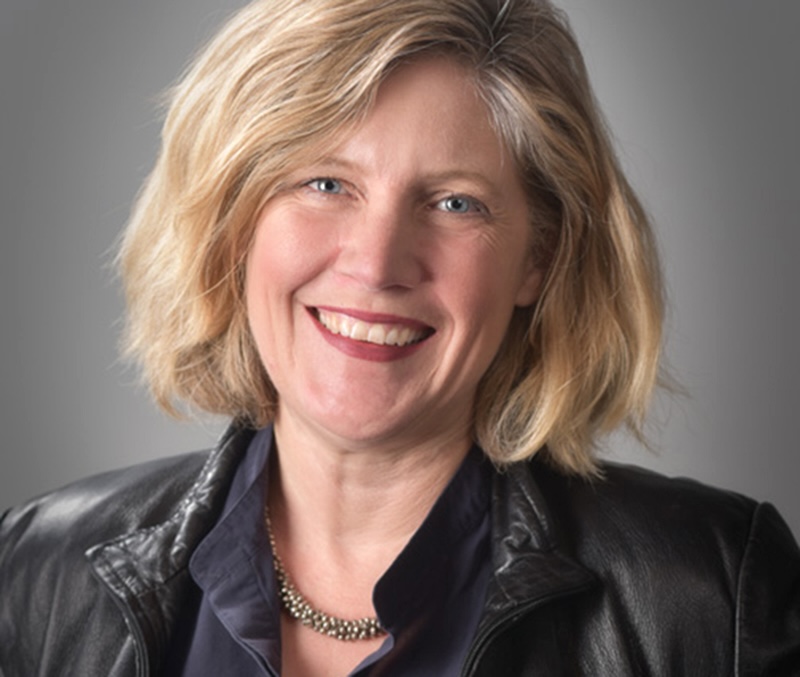
When education policy is discussed, she tells The Tyee, there’s a tendency to focus on the negative. “Amazing things are happening in our schools all the time, and when we talk about policy, we don't talk about that,” she said.
Gallagher-MacKay is currently working with the Ontario-based People for Education on a new annual national survey of public school principals about the impact of government policy on public education. The results will be published next year.
“When we think about the world that we're preparing kids to live in, one of the things I think is most true is that our schools are unequal and imperfect institutions that are more equal and try harder than most of the rest of the world,” she said.
The Tyee spoke with Gallagher-Mackay about the existential issues facing public education and their potential solutions. The following has been lightly edited for length and clarity.
The Tyee: How do we ensure Indigenous students thrive? And what needs to be done to decolonize education — that is, remove colonial attitudes, policies and practices from the public education system?
Kelly Gallagher-Mackay: Part of it is decolonizing, and part of it is closing achievement gaps. There is a tension between too much and not enough attention to gaps.
We definitely all need to learn much more and change attitudes, beliefs and knowledge about what counts as good curriculum about our treaty relationships, our mutual obligations and the history of Canadian colonialism.
If people aren't graduating, they're not as likely to live as long, earn as much or to report that they're happy. There's quite a few reasons beyond test scores to care about people's outcomes.
The places I know where First Nations are really talking about “Let's pay attention to interim achievement measures like standardized tests” are B.C. and Nova Scotia, where they're doing well relative to everywhere else in Canada.
How do we design a curriculum for today’s challenges? How do we tackle misogyny in schools?
Girls are actually excelling in K to 12 and in post-secondary. Then they hit the workforce, and we're still earning so much less. I don't know that I'm 100 per cent in the camp of the people who are like, “What we really need to worry about are boys,” but that's not an unreasonable thing to say.
Something is going on in our schools that seems to work better for white girls without disabilities than anybody else. Funnily enough, you know who most teachers are? White women without disabilities, middle class.
There is always room to look at curriculum, instruction and school policies in terms of who it's working for and who it isn't. But in terms of measuring success, we really need to think about how our schools are doing in preparing students.
When we think about the world of tomorrow, I see a world that's literally potentially on fire, that’s much more economically unequal than even a generation ago, where civic discourse is considerably limited, misinformation seems to rule, we're potentially facing a massive human displacement at the hands of our information technology tools. How do you prepare kids for that future?
Our measures of success should be at least somewhat aligned with the challenges young people face as they enter the world. Being able to read and make sense of complex text, to look at a bar graph and know that this is bad, and to have enough of an appreciation of science that we understand it's a good thing when we disprove something, because it means we've learned something.
Math and reading skills are declining in Canada. Why?
The worst and most popular explanation was we're not doing the basics right. But the last time I looked at the data, Canada was doing the worst on the higher-order stuff, not the basics.
If you look at some of the PISA [Programme for International Student Assessment] questions, the hard questions are really hard.
It is clear there is foundational content like calculation skills, reading bar charts for meaning that needs to be taught. But also, as an education system, we need to also be teaching skills in complex and applied problem-solving. This type of learning, which starts young, is essential not just for PISA scores — which show we need improvement specifically in this area — but more importantly to prepare students for a challenging future, and if we care about having an advanced economy.
There is no question that the places that are doing the best have a fair bit of opportunity for application, problem-solving and all those pieces that get you the high-order stuff.
When we think about education, there's a tendency for pendulums. We move from “Test scores is all, what else could you possibly care about?” — I had a deputy minister once say that to me — to now, there was a Royal Society COVID report that barely mentioned achievement. We can overemphasize it, but it's never gonna not matter how students are doing.
I think if you're doing well in science, geography and history, you're probably doing well at everything. They really matter for society; there's a lot of good observational evidence right now about why an understanding of history and civics would be great for us all to have, let alone science, when we look at world events.
A logical conclusion is that many people today lack basic understanding of civics — how elections work, how the Charter works and why — and even science, and that science is meant to change over time as you learn more.
In the U.S., they do track civics knowledge over time and it’s not great but not terrifying. But this context is useful.
One of the classic things people say is ‘Until Grade 3 you're learning to read, and after Grade 3 you're reading to learn.’ Sciences and social science-type courses tell you whether people are reading to learn. It's not basics.
How does student attendance factor in to all this?
Kids are not going to school way more than they ever used to. It's a North America thing. Until about 2010, if a kid was missing more than 10 per cent of school days, it was a big alarm that they weren't going on to post-secondary and maybe not going to graduate.
Well, the number of kids missing more than 10 per cent of school has more than doubled. It went way up during COVID. It hasn't come way back down.
This used to be one of the strongest indicators we had of how people were going to be doing, and if that problem indicator is suddenly doubled, is the whole system falling apart? It's not. People are graduating more than ever.
Are kids learning more on their own outside of school? There is lots of evidence saying that with more technological enablement, there is more room for independent learning. Are we expecting less from students? Or are teachers just getting better?
Did it used to be a problem because we so completely disapproved of absenteeism, but now it's much more acceptable, it no longer means that teachers and parents interpret it the same way? We have a lot we need to know about that.
Are we supporting kids with disabilities adequately?
I don't think anyone would say we are.
There's a fair bit of evidence that for kids with disabilities, going into a self-contained special education setting is a death knell for any expectations of achievement. Which is why most disability rights groups fought for inclusion.
There has been a really large increase in the number of kids who are identified as having special education needs. To be clear: the fact that we can see it does not mean it's worse.
And there's been lots of changes in terms of who we're defining as needing change in programming or supports. That makes it more complicated to talk about who needs what, because once your denominator changes that much, the range of supports that are appropriate are variable.
Ontario had a huge, very controversial human rights commission inquiry called Right to Read, which said that for kids with certain learning disabilities, not teaching decoding was literally depriving them of a chance to learn to read.
Kids also need rich text about a bunch of stuff. It's not an either-or, but certainly there's students where there may be some need to re-examine how we teach.
It is bad if people can't stay at school because there isn't available support. I do think there's a lot more we can do. There are things to worry about if we're seeing a big increase in the percentage of students who have modified curricular expectations, i.e., they're in Grade 4 learning at a Grade 2 level, or if the solution being touted is to segregate them. Those are red flags.
Canada has been slow to collect race-based education data. Is that holding us back?
Systemic discrimination — discrimination that occurs through taken-for-granted patterns of behaviour and decision-making — is against the law in Canada. You can't track systemic discrimination unless you have data on groups who are being discriminated against. Pay equity is a classic example.
We did a bunch of work on streaming in Ontario, and we heard principal after principal say, “It's good to be put in the class where you have a better chance of success.”
It took two key pieces of data, one from EQAO [Education Quality and Accountability Office], our standardized testing group, who said kids, no matter what their prior achievement is, do worse in the so-called easier courses.
The other was “Look who seems to need the easier program.” And when communities were made aware of the extent to which they were the ones routinely receiving different advice, then you take that data and you explore student perceptions.
For a long time in Canada we were like, “Those Americans with their terrible race problems.” It turns out we weren't asking, or we were doing things like conflating everyone as a “visible minority” — that includes your highest- and your lowest-achieving groups and it averages out. It doesn't look like you have a very big problem, right?
The Ontario Anti-Racism Act was passed in 2017. It mandated that all boards start to collect race-based data. They complicated things by deciding that you couldn't ask people their race without getting informed consent. We lost data like crazy because it was perceived as so sensitive and difficult.
Permission-seeking is obviously an unqualified social good. There have been harms done by not seeking permission. But Canada has the most aggressive privacy legislation in the western world. And we have worse education data than the rest of the world. There's no question: in the U.S., the U.K. or Australia, they all report on students’ progress to post-secondary from kindergarten.
One thing we tend to hear a lot from educators is that public school funding in Canada is insufficient. What do you think?
Funding is a necessary but not sufficient part of a working school system. We need to, at the same time, talk about practice and policy. Often if you can say, “Well, there's no funding,” you don't necessarily look at the things that you are doing.
One of the best predictors of a good school system, and it's something we do well in Canada, is that teachers are relatively well paid. Another really strong international predictor of good outcomes is how educated your teacher workforce is. In Canada, most teachers come from the top 20 per cent of achievement groups.
So let's now talk about funding as a problem. You cannot ignore the extent to which education is highly feminized and associated with children, and in our society, we don't pay much attention to children and we don't respect the needs of children.
People tend to care about education during the years that their kids are in school, but they don't have a lifelong belief that education matters for the whole of society.
We're always competing with health care. If you're bleeding, it's harder to walk away and say no. But we lose every time on prestige, urgency and everything else, for the lifetime-ness of health-care needs.
And the closer you get to the classroom and to the kids, the more you see what's needed.
One thing Quebec and New Brunswick do better than the rest of Canada is thinking about school community connections in terms of having policy and funding established specifically to help build connections between community groups, health and social services providers, and the school. English schools in Quebec have a designated role to foster community, with a part-time staff person attached to it.
How do we get funding that's actually strengthening our schools? And how do we make best use of schools as public places to serve our communities well?
Settlement Workers in Schools, a federally funded program that uses schools as a hub to provide services to newcomer families, works incredibly well. We don't have very much of that. Pediatric health clinics work incredibly well for both academic and health outcomes. We don't have very much of that.
What do you think about the rise of private schools? How does it affect education?
The American trend of kids not going to public schools is growing in B.C., and that really threatens our democracy and the quality of our school system.
If more and more people see their best option as being outside the system, they don't trust systems generally. In B.C., that means a lot of home-schooling. Plus B.C. subsidizes private schools. That's crazy stuff: you're paying public money for people to get away from the public system.
Schools are supposed to be pathways to both opportunity [and] also inclusive community.
One of Canada's big successes is that we have a very strong public school system: 95 per cent of people nationally go to public school. I don't know what the B.C. number is but they're much worse. [Editor’s note: 86 per cent of kids in B.C. go to public school.]
That's an existential issue, because it leads to draining of funding from the public system and it reproduces social silos, hierarchy and belief systems. Just as we start to broaden the range of understandings that come into common schooling, are we also going to start seeing the exit of dominant groups and/or splinter groups?
If the bottom line is you want to pay to be in classrooms where you don't have to deal with people who are different from you or have a disability, that's not a choice the public needs to subsidize.
I'm more sympathetic to arguments by parents of disabled kids who say, “This is my only option.” But disability is not equally distributed in society. The people who can pay their way out of that are a minority. We need the system to meet the needs of all the kids.
Are students getting the mental health help they need in school? What can we do better?
We talked to principals across the country, and they identified mental health struggles as the top issue. They talked about both staff and students. It's real. It's terrible. And I do think breakdown in parent-teacher communication is a problem as well.
But we have unclear expectations about what educators need to do, a lack of support — and that is a funding issue, for sure — of mental health professionals in schools. There is a mismatch between need and supply.
There are useful things going on around social-emotional learning and building the vocabulary to address mental health. B.C. is really leading that in Canada. Educators have much more training than they used to about how to build social skills, recognize them, identify them in the course of what students are learning.
But that's one layer. We're still not doing a great job when students need more help. We aren't training the number of mental health professionals we need, and the failures of the mental health services generally have been clearly marked.
So if someone's in crisis and they're on a six-month waiting list, well, guess what? In the best scenario, they're going to be at school in crisis.
What happens at school is really a mirror of the bigger world, but the failure to have adequate mental health systems has big impacts on schools. The work happening to improve mental health literacy and supports in schools can't keep up with that broader failure.
Earlier in our conversation, you mentioned that there are a lot of good-news education stories. Could you talk about those?
There's so much good happening in our schools all the time. But it's happening at this one-interaction-at-a-time level that doesn't translate very well to talking about systems.
Go and be on a playing field at 8:20 in the morning with 400 kids who are all doing cross-country running. It's so beautiful, I could cry. And they're doing it for free, at their school and it makes them like their school better.
Kids are really learning things. By the time she was in Grade 12, my daughter could do a big math assignment that I did not understand even a little bit. She was integrating technology, modelling potential mushroom clouds using four different kinds of software. I could see that she had, in school with her good teachers, learned to do a lot of stuff that I think will serve her well.
Some of the work around diversifying the curriculum is really exciting. Students are reading a wider range of authors than they used to, and that's great. I wish more of them were reading book-length manuscripts more often, but hey. ![[Tyee]](/design-article.thetyee.ca/ui/img/yellowblob.png)
Read more: Education







Tyee Commenting Guidelines
Please note that email notifications for replies are not currently working due to a software issue which may be resolved in a future update.
Comments that violate guidelines risk being deleted, and violations may result in a temporary or permanent user ban. Maintain the spirit of good conversation to stay in the discussion and be patient with moderators. Comments are reviewed regularly but not in real time.
Do:
Do not: