


 SHARE:
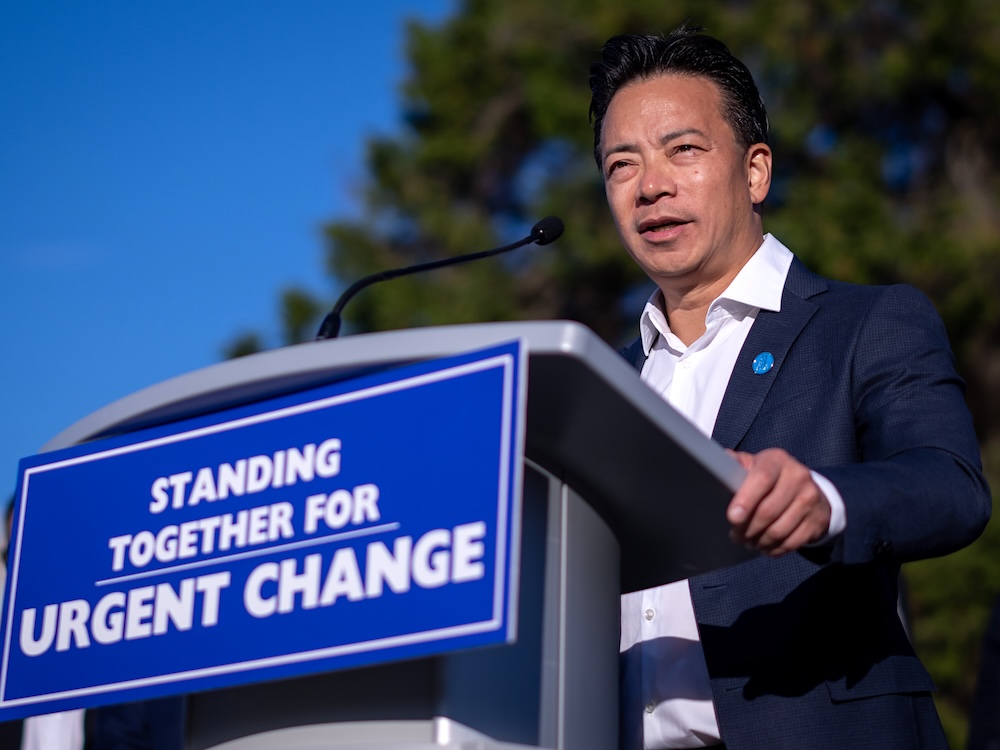
“This budget is basically just ‘Trust me bro.’”
“‘Zero means zero’ means continuing Vancouver’s reputation as no-fun city. Austerity is not fun!”
“If you think that landlords will lower their rents based on a zero per cent property tax increase, I have a bridge to sell you down the street.”
Vancouver city councillors got an earful Wednesday and Thursday from residents opposed to a proposed budget that would freeze property taxes and is expected to increase fees and cut services.
More than 600 speakers signed up after opposition parties called on supporters to speak up. According to one of those parties, the Coalition of Progressive Electors, or COPE, the number of speakers signed up to speak in opposition to a motion set a new record at the city.
The zero per cent property tax increase proposed in the 2026 budget hearkens back to a 2022 campaign promise from Mayor Ken Sim. But instead of freezing taxes, after Sim was elected his council introduced a 10.7 per cent property tax increase for 2023. Property taxes then increased by 7.5 per cent for the 2024 budget and by 3.9 per cent for the 2025 budget.
With a municipal election looming in 2026, Sim is now trying to put in place his “zero means zero” property tax promise.
But the budget will mean fees for other services, like community centre fees and parking, will have to rise to cover the shortfall.
City services are also expected to be cut as a result of the property tax freeze. But because the zero-tax-increase budget was developed in a hurry in response to Sim’s directive to city staff, no one knows what exactly will be on the chopping block.
While most city departments will see either very small increases or cuts to their funding, the exception is the police. The current plan proposes increasing the Vancouver Police Department’s budget by 10 per cent, or $50 million.
In response, left-leaning civic parties called on their supporters to sign up to speak to council, an effort some supporters started calling “the people’s filibuster,” COPE member Adriana Cumming-Teicher told The Tyee. Those opposition parties include COPE, which has one city councillor, Sean Orr; OneCity, with Coun. Lucy Maloney; and the Vancouver Greens, with Coun. Pete Fry. Rebecca Bligh, a former ABC councillor, now sits as an independent.
A “filibuster” is a practice where debate is used to delay action on proposed legislation.
“It’s not the first time I’ve come to speak at city council to oppose what I see as a fundamentally right-wing austerity government,” said Cumming-Teicher, who was speaker No. 48.
“It’s stripping community services, community spaces, and casting a lot of our especially senior and disabled population into unliveable conditions.”
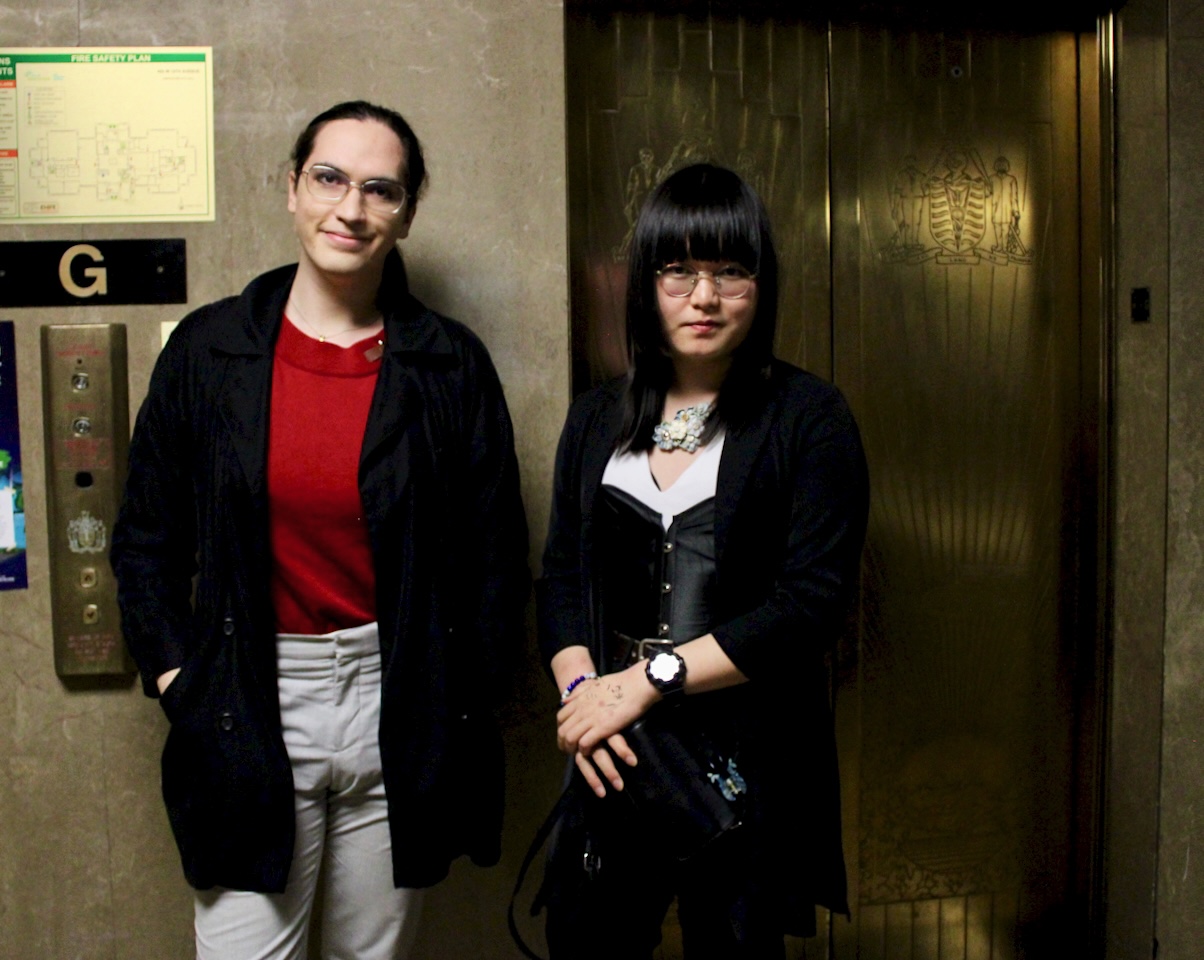
The result was over 600 speaker sign-ups and a punishing 11-hour-long listening session for the ABC majority on council. Many directed their comments specifically to Sim and to ABC Couns. Sarah Kirby-Yung, Lisa Dominato, Lenny Zhou, Peter Meiszner, Brian Montague and Mike Klassen. Speaker after speaker vowed they’d remember how those councillors voted when B.C.’s municipal elections are held on Oct. 17, 2026.
It took until 9 p.m. on the first day of the special budget meetings to hear from anyone in support of the budget. Paul Beesla, speaker No. 225, said city homeowners need a reprieve from taxation and he believes many residents have been misinformed about the impact of the proposed 2026 budget.
“The real question we should be asking is, How did we get here to begin with? How and why did the budget balloon to begin with? Cuts are needed.”
While the majority of the speakers were in opposition to the tax-freeze budgets, many speakers said they didn’t expect the ABC councillors to change their vote in response to the opposition they were hearing.
Here are the main points of contention with the budget, as expressed by Vancouverites who signed up to speak to council:
Too much money for police as other departments are cut
Many speakers were aghast that the police budget is slated to rise 10 per cent while other city departments are seeing as much as a 14 per cent cut. The police say changes to the province’s emergency dispatch service, known as E-Comm, is a large part of that increase. But the police have seen large budget increases every year during ABC’s administration, and several speakers suggested that the department should be audited to find out whether its budget is being put to good use.
“You want to keep my family safe? I can tell you, there are more ways than just handing the VPD another $50 million while continuing to decrease services for our homeless,” Kay Metchie told council.
“The exponential increase of the VPD budget does not keep me safe; it only burdens the most vulnerable in our society. And I don’t want my words to be misconstrued,” Metchie said. “I know the police are doing an emotionally and physically taxing job. But to say that basically exempt from any financial audit is ridiculous, and a heavy police presence is not the only method to make that safe and healthy community.”
Other fees will rise as a result of the property tax freeze
Many speakers, including several who said they are property owners, said they were concerned the property tax break will benefit the wealthiest Vancouver residents the most.
In an earlier council session Wednesday, city staff had told councillors that fees for other services will go up.
While staff were vague on many of the details, the park board general manager told ABC’s Dominato that fees for community centres would rise and acknowledged that Vancouver already charges fees that are “on the higher end” compared with other Canadian cities.
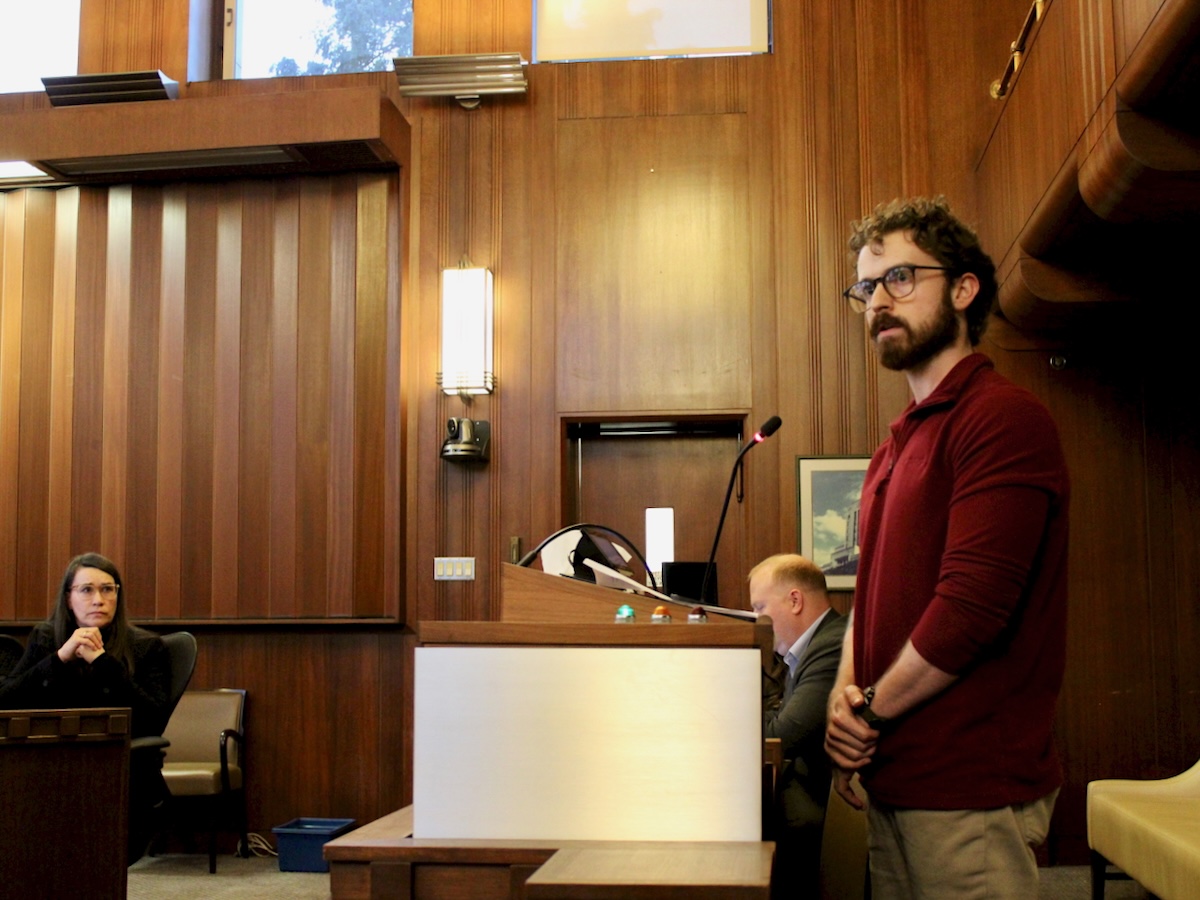
“The cost of this ‘zero means zero’ budget is that renters like me will get a city that is worse than the year before,” Nicholas Rae told council. “A ‘zero means zero’ budget means that all other fees are going up. It means our already underfunded services get less support.”
Cuts will particularly hit parents and children
While city staff were not able to provide city councillors with concrete details of how cuts — or, as staffers put it, “efficiencies” — would be made, one specific detail was provided by deputy city manager Armin Amrolia.
She told council that staff have identified removing baby changing tables from city-operated public washrooms, as well as menstrual product dispensers, as a way to save money because those items are often vandalized.
That detail was upsetting for a speaker who works as a doula.
“I was absolutely floored and disgusted... when I heard an efficiency idea, finding some money, is to remove changing tables for babies from public spaces, and removing hygiene products,” the speaker, whose full name was not audible, told council.
“That this is where our budget cuts are going, so that the wealthiest among us don’t have to pay... Does this council care about women and children?”
Several other speakers also talked about how they frequently use community centres, pools and city-funded daycares with their young children, and their concerns that cuts or increased fees for those services would make raising children in Vancouver even more unaffordable.
Renters will not benefit
During the morning session Wednesday, COPE’s Orr asked city staff to explain how the property tax freeze would help renters.
Colin Knight, head of the city’s finance and supply chain management department, told Orr that landlords decide whether to pass on rent increases to their tenants.
Several speakers were extremely skeptical that their landlord might choose to pass on the savings from the zero per cent property tax increase to tenants. In B.C., landlords are allowed to raise rents by a set percentage each year. In 2026, rents can be increased by 2.3 per cent, following a three per cent permitted increase in 2025.
“I'm a renter, just like 55 per cent of residents in Vancouver,” Nicholas Rae told council. “Renters are more likely to be low-income, struggling, and this budget does nothing to alleviate our financial struggles. My rent went up this year, and it will go up again next year.”
Council hasn’t listened to city residents’ input
Every year city staff run a public survey to gather input from residents on their priorities for the budget. Opposition parties OneCity and COPE have emphasized that in this year’s survey, respondents didn’t ask for a property tax freeze and listed emergency services (police and fire) as a lower priority.
The survey shows that 62 per cent of residents and 60 per cent of businesses asked for more investment in infrastructure and services, while there was a drop in interest in increasing funding for emergency services. Twenty per cent of residents listed investing in emergency services as their top priority, down from 27 per cent in 2025; meanwhile, 17 per cent of business listed emergency services as their top budget priority, down from 29 per cent in 2025.
To increase city revenue to fund services and infrastructure, survey participants were most supportive of increasing property tax, with 50 per cent of residents supporting increases to commercial and property tax rates. Only 19 per cent were in favour of cutting services.
But during the Wednesday morning meeting, ABC's Montague cast doubt on the quality of the survey methodology, questioning whether the annual city survey actually represents residents’ views.
Several speakers said they felt that those comments showed the ABC councillors wouldn’t take public opposition into account when it came time to vote on the budget.
“We are the public saying, ‘We don't want this.’ Why aren’t you listening to us?” said Matthew Hay. “To the remaining ABC councillors continuing to bend to the mayor's undemocratic will... you still have a narrow window to redeem yourselves and distance yourselves.”
A negative effect on the city’s economy
Several speakers talked about their concerns that arts funding and support for cultural events and festivals could be cut.
And several people who work in the real estate industry spoke about city staff’s efforts to develop energy efficiency programs or rezoning efforts that have helped their businesses grow.
Anthony Pak, the principal of a consulting firm that works on green building practices, said Vancouver has become an international leader in green building, but possible cuts to the city’s climate and sustainability department would be a blow to the city’s economy.
“I know many of the local consultants here, architects, engineers — they’re sought-after experts, not just in our local region but globally as well,” Pak said. “This also benefits our manufacturers too.” ![[Tyee]](/design-article.thetyee.ca/ui/img/yellowblob.png)
Read more: Municipal Politics




Notice about commenting changes
The Tyee’s commenting system will be moving to a new platform on Nov. 12. If you’re already a Tyee commenter you must register with the new system on or after Nov. 12 with your preferred username.More information can be found here.