



 SHARE:
During the 2024 provincial election, the NDP pledged to place a mental health counsellor in every public school in the province. Over a year later, this pledge has remained unfulfilled.
The 2023 BC Adolescent Health Survey, the most recent data available, shows a steady decline in the percentage of students who rated their mental health as “positive” to 60 per cent, down from 81 per cent in 2013. B.C. Coroner data rates the province’s response to youth suicide as inadequate.
Non-binary youth and girls continue to have higher rates of self-harm, feelings of despair, suicidal ideation and suicide attempts than boys.
Thanks to recently updated provincial guidelines, doctors can now order involuntary care for minors with mental health and substance use issues, when they can’t or won’t seek care for themselves.
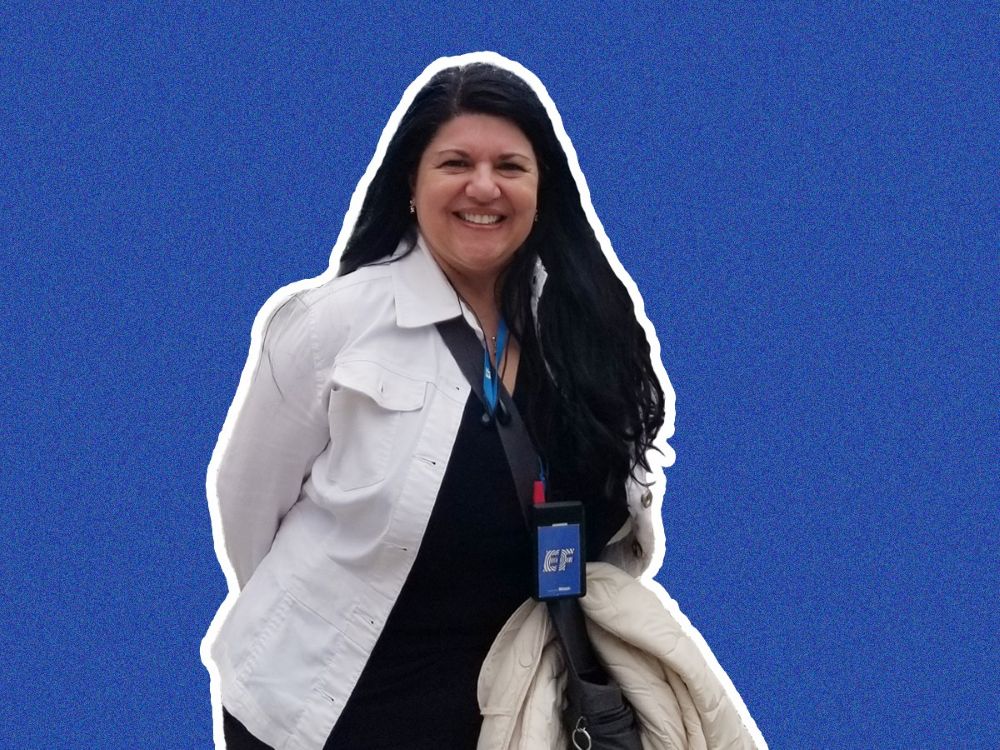
Yet it’s school counsellors that are best suited to intervene early, and often, as a form of both responsive and preventative care for kids in schools, says Norberta Heinrichs, president of the BC School Counsellors’ Association, a professional association under the BC Teachers’ Federation. It can help establish a lifelong precedent of seeking mental health help.
Encouraging students to see their school mental health counsellor at school in turn can create a culture where they see a counsellor in adulthood to maintain their well-being, or “because they have an illness, or they have symptoms that are preventing them from working through their daily lives,” said Heinrichs, who has been a public school counsellor in B.C. for eight years.
There are somewhere between 600 and 700 public school counsellors in B.C. right now, roughly 500 of whom are BC School Counsellors’ Association members. Heinrichs estimates the province would need those numbers to at least triple to serve every school in B.C.
Most public high schools in the province currently have some access to a counsellor.
“My biggest concern is in the elementary schools, where, especially in rural situations, you could have a counsellor work in multiple schools, and that means multiple communities,” Heinrichs told The Tyee, adding that a counsellor would ideally work in one school full time.
Earlier this fall The Tyee interviewed Heinrichs about the dire state of young people’s mental health today, as well as the causes and solutions, and the value of treating mental health symptoms early. This interview has been edited for length and clarity.
The Tyee: My understanding of a school counsellor is that they’re the person you talk to if you’re in trouble at school, or if something traumatic happened. And maybe the person you talked to when deciding what to do after graduation. Is that still true today?
Norberta Heinrichs: Well, that could be some pieces to our day, but that’s not all. So, for example, I work in a high school and I’m supporting teachers that have questions about students, and need some consultation on how to support children in the classroom.
I help students individually that are coming to me with problems. I also work with parents that are struggling with supporting their children, not just in school, but at home or in the community, and working with their worries. That’s just in one day.
In a high school, we also do a lot of administrative tasks. We’re also working to liaise with community resources for a child and their family.
Is any one workday the same?
Nope. Part of our work is being really responsive, and it changes year to year, too, with some aspects. Because we’re working with individual students, a class, a small-group community, the school community and also the community at large, we see needs as they emerge.
For example, one community may experience greater issues with poverty and food insecurity. As counsellors, we’re connecting with our population — the families — and recognizing that this may be a need. We’re also part of that system to support the children dealing with that.
Or grief and loss: some communities in our province are dealing with real, tangible effects of the opioid crisis, where loss is an integral part. And if the community is more greatly impacted by that, then, again, it’s a school counsellor that’s going to see that on the ground.
What is the difference between what a school counsellor does and what a school psychologist does?
Psychologists have other training, and they work with diagnoses and plans. A counsellor does not diagnose. We work with and can recognize symptoms, but we’re not the role of diagnosis for determining a ministerial [inclusive education] category.
Why do most high schools have a school counsellor, but most elementary schools don’t?
It could be size, and in a lot of high schools they use counsellors for administrative tasks. So not necessarily because they see the need for mental health support, right? They’re seeing someone who can do schedules, career planning, university prep, those kinds of things.
Generally speaking, how do school counsellors help support students’ mental health?
Mental health is a state. And it can be the whole range in a school where you’re working with students to maintain a good mental health, to the children that have a diagnosis of a mental illness, and everything in between.
Would a school counsellor be meeting the same counselling needs as a regular clinical counsellor?
The logistics don’t allow us to. But in some cases, we do provide that clinical support and follow a clinical profile. Another thing is, many of the counsellors that are working in schools are also private clinicians. I am one myself. That is very common.
On top of being a school counsellor?
Yes, or where they work part time. It’s not proven, but I know some examples: if an assigned elementary counsellor is given multiple schools to work in, they might work part time in one school and part time as a clinical counsellor, instead of working in that big spread of schools.
And if a school district gives them too many administrative tasks and they don’t have a chance to be a counsellor, then it’s maybe more attractive to them to do private counselling. That’s also where we have lost counsellors.
If a student is experiencing a mental health issue, whether they have a diagnosis or not, what role would a school counsellor play in that situation?
There’s a process involved, and it varies with elementary and secondary, because with a younger child, there’s a process of consent in working with that child.
But whether it’s through group or individual work, counsellors will assess the child’s needs. Maybe use some tools for assessment. Create a plan for that child, and it may be a plan of support in the classroom, support one on one, incorporation of a group, collaboration — because there could be other issues with the child in terms of family trauma, learning.
If it’s at a secondary school, it could be a child working through substance use or misuse. So then you create a treatment plan individualized to the child. In some cases, some counsellors have case management. So we are working with specific behaviour or mental health conditions that children have, as a plan coordinator.
For example, under the Inclusive Education manual, we provide services to kids that have a diagnosis. Making sure that we have a plan that’s individualized for that child, for success. Because we have some students that need multiple interventions to be able to work through their day at school.
So this would be in their Inclusive Education Plans, or IEPs?
Yeah. So counsellors also play a part in that; we’re included in that team regardless. Sometimes counsellors may have a more active or a lead role in that work. Learning is not always isolated, so we’re an integral part of that team.
Would you be working with outside services in that scenario, as well?
Yes, we also collaborate with outside services. That’s part of our role. And sometimes the services are not necessarily for the individual, but also for the family.
Generally speaking, how are students in B.C. doing right now when it comes to their mental health?
We’re really challenged. Social media, the struggles of families, the struggles of families in their communities, the lack of resources, isolation — mental health concerns are growing exponentially. I don’t think we can pinpoint it to one thing, but it cascades into a deluge of conditions that make it really tough for children and youth to thrive.
Society, families and communities are struggling. And when that’s happening, children are struggling at school. So for the littles, I’ll tell you right now, there could be precursors to mental illness, and we’re seeing the symptoms, working with the symptoms. But they’re never going to diagnose [a young child].
Because they’re too young?
That’s part of it. It’s also, in a school system, it’s no different than health. When kids are showing struggles — and you wouldn’t do it that young, but I’m thinking of teens — how many have a pediatrician that can make a referral [to a psychologist]?
And we certainly don’t have enough school psychologists to do any diagnosis at our end. So we’re still working with the symptoms, and the diagnosis doesn’t change the level of support that the child needs. They need those supports regardless.
When I asked you how students are doing, what did you base your response on?
Some of it’s anecdotally based. We did a survey of teachers. We also have the McCreary B.C. Adolescent Health Survey. There is regional data, as well, that talks about students, everything from substance use to suicide ideology. The ministry has some ERASE data in terms of bullying and harassment. All that information’s out there.
Some of us work in groups where we’re working with, and some stats are provided from, a health authority. Some of us network or actually work alongside the health authority in some capacities. If you’re working in particular in rural communities, in some cases not only are you the school counsellor, but you’re one of the few counsellors in their region.
Is it the pandemic that set off our current mental health crisis? Or were things getting worse for people’s mental health before that?
Mental health is exacerbated by isolation. That’s why counselling is effective. You don’t need lots of empirical data to notice that the pandemic had an effect, just because of the nature of isolation. Mental health issues love isolation. It’s that shady, wet place where it likes to mushroom.
Social media is a big one, particularly for children and youth. Adults have trouble managing social media, so imagine how young minds, where their prefrontal cortex is not fully developed, are navigating through social media. They’re developing their image, their sense of identity, on a scope of a bombardment of what society or what their thread is telling them is the ideal of image and identity. It’s so hard to navigate that.
And communication: communication online is not helpful.
How so?
You can’t teach it. They can’t see it, in terms of all those social cues and all the social learning that’s involved, and how that links with mental health, right?
And that’s what counsellors do in groups. We give a social setting for learning of themselves and of each other. A lot of counsellors provide group support for that purpose, and knowing about that balance between vulnerability, taking risks and showing compassion and empathy and all those really rich tools for life.
How should the education system be responding to the worsening mental health of students?
I know that there have been initiatives to address mental health nationally and provincially. But there’s a missed opportunity in really investing in more school counsellors, and forgetting that children spend so much [time] in their school community. Some children spend more time at their school than they do at home.
Imagine if they could readily access mental health support and remove the stigma of seeking mental health support. Knowing that they can work on their personal, their emotional, their social, their mental health goals with someone. We are there, but our roles are often diminished, or our workload diminishes that capacity.
We are best situated to work with children in the school setting, with their needs, when they need it. This is preventative work: the younger the child is with access to that care, will just save the health-care system immensely.
If a student is Indigenous or from a culture different from the mainstream culture in their community, are there adaptations that counsellors can incorporate? Or would they refer them to somebody else?
We would refer. And we also coordinate with groups. I work with families, and we invite in Indigenous thoughts and ways of being. Our groups are in circle and some counsellors incorporate the Indigenous framework of that circle in the work they do.
And can we do a better job? Of course, because there’s also ways of healing that would really benefit. But once you have a counsellor involved, each community can be proactive in incorporating the needs of the community.
We do have schools that have more Indigenous students, so you’re responsive to and reflect that community. Just like you’re working in a community that may be experiencing more poverty, or a community that’s been more greatly affected by the opioid crisis, or an inner-city community or an extremely remote community and there’s so few services.
Because you’re always being responsive to the needs of the children you work with. Once you work with children, you’re working with their families. Once you’re working with their families, you’re getting to know the community and what’s available in the community.
I graduated high school 22 years ago. I found it pretty stressful then, and I had an undiagnosed mental illness at the time. But I would not want to be a young person today, thinking about political turmoil and climate change —
Yeah, we haven’t even talked about what’s happening in their world right now.
It’s terrifying.
Even just talking about it gets us stressed. Imagine a youth who has such uncertainty before them more than in any other generation.
It seems like the global political situation and climate change are both getting worse. I’m sure bringing in more school counsellors would be helpful. But if the root causes of that stress and fear aren’t being addressed, how helpful is a school counsellor?
We give them hope. In themselves and hope that they’ll find a way, instead of absolute helplessness. School counsellors can give them a glimmer because we can remind them of times that they’ve overcome some adversity, they’ve worked through a challenge, they were able to problem solve.
What you’re giving them is tools to be resilient, to have some grit, to problem solve, to feel that they have some capacity. Especially for kids with anxiety, that are suffering, knowing there are alternatives, other states of being, to thinking in a black and white way. This is a growth mindset.
If we normalize that mental health, just like physical health, requires tune-ups and supports, they will continue to seek that support as an adult and not magnify the stigma of mental health.
What happens if nothing changes in terms of the availability of mental health support for kids in school?
We’re seeing it all happening now. Look in every community, we’re seeing people that haven’t been served and their conditions have worsened, and there are adults in our communities that have fewer tools and feel more alone.
People business is messy. But I’m of the mind that the messier you get, the more we tap into vulnerability, the more into change. Counsellors are the ones that can get messy with you and that’s why we’re so specialized. ![[Tyee]](/design-article.thetyee.ca/ui/img/yellowblob.png)
Read more: Education








Tyee Commenting Guidelines
Please note that email notifications for replies are not currently working due to a software issue which may be resolved in a future update.
Comments that violate guidelines risk being deleted, and violations may result in a temporary or permanent user ban. Maintain the spirit of good conversation to stay in the discussion and be patient with moderators. Comments are reviewed regularly but not in real time.
Do:
Do not: