


 SHARE:
Closing British Columbia’s independent Office of the Merit Commissioner will undo a significant change the NDP government made in 2018 in response to “wrong and unjust” firings from the Health Ministry.
Following a recommendation in Ombudsperson Jay Chalke’s report “Misfire: The 2012 Ministry of Health Employment Terminations and Related Matters,” the NDP gave the merit commissioner oversight of dismissal practices and responsibility to assess “whether government has complied with its legal... requirements and policy requirements.”
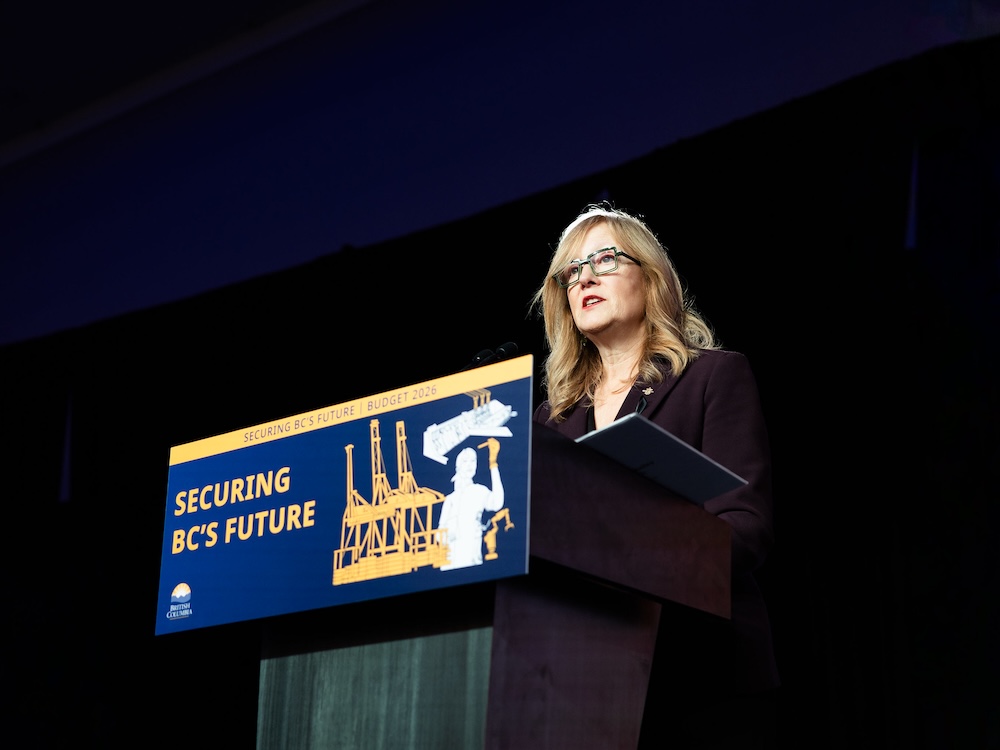
But in last week’s budget, Finance Minister Brenda Bailey quietly scrapped the merit commissioner, an office that for more than two decades has been responsible for making sure B.C. public service hirings were based on merit.
Bailey said the Health Ministry firings were made “quite some time ago” and the merit commissioner’s oversight of the BC Public Service Agency, or PSA, is no longer needed.
“We feel that the PSA have really adopted these principles and that they’ll continue to do this work within the PSA,” she said. “The PSA is a professional organization that is non-partisan and they’re delivering on these pieces every day, so we’re continuing to do this work within the PSA.”
The Health Ministry firings were a major failing that, following an in-depth review, Chalke’s office called a “wrong and unjust decision with far-reaching consequences.”
In 2012 the ministry fired six employees directly and a seventh was constructively dismissed. The firings resulted in five wrongful-dismissal and defamation lawsuits that were settled out of court, a union grievance process, some of the employees returning to work and two major investigations. One of the fired employees, Roderick MacIsaac, committed suicide.
Introducing the changes that expanded the merit commissioner’s powers in 2018, then-finance minister Carole James said it was important to take a moment to remember what had happened and the significant suffering the wrongful dismissals caused.
“Rod MacIsaac lost his life,” James said. “His sister, Linda Kayfish, I think, again, is important to recognize for the extraordinary work that she did ensuring that this issue did not get swept away — that there was a public report, an independent review and action taken to try and ensure that this never happened again.”
The other researchers were attacked and had their lives changed as well, she said.
“It’s important to speak about them and to remember, when these recommendations come forward, that we should be doing everything we can to make sure that a situation like this never occurs again.”
There were only about 25 just-cause dismissals a year, said James. “Not huge numbers, but I think what was pointed out so clearly in the ‘Misfire’ report is that there are improvements that can be made, there are lessons that can be learned and that independence and that systemic check on those dismissals is another way to be able to help ensure that this doesn’t happen again.”
James called it an important piece of legislation that addressed a “dark mark on the public service” and said she hoped it would bring some comfort to MacIsaac’s family and others affected by the firings.
In a 2023 appearance in front of the legislature’s special committee to review provisions of the Public Service Act, Chalke argued for the continued need for independent oversight of dismissals.
“Key decision-makers acted on incorrect information from a ministry investigation team and wrongly believed that the conduct of the employees under investigation was sufficient to support dismissals for cause,” he said, noting that the actions had harmful consequences.
It was important to embed the independent oversight in legislation so it would have a deterrent effect and decrease the likelihood of similar events recurring, said Chalke.
“Unfortunately, as we know, memories fade over time, policies and personnel change, and good practices can inadvertently erode,” he said. “By establishing a legislative foundation for oversight, the legislative assembly has created an important bulwark against that tendency to forget the lessons of the past.”
It also mattered that the oversight be outside the BC Public Service Agency and independent so it could be impartial and objective, Chalke told the committee. “Because it is structurally separate from any decision-making process, the merit commissioner is well placed to offer impartial and meaningful advice on dismissal best practices.”
A Conservative Party of BC government would keep the Office of the Merit Commissioner in place, said interim leader Trevor Halford.
“When you look at what the cost of the merit commissioner was to the taxpayers, I don’t think that office was extravagant by any stretch,” he said.
“I think it was a fairly modest budget and the fact is, what does it cost British Columbians not to have this? Does that mean the premier and the minister of finance have free rein on hiring whoever they choose? I don’t agree with it.”
The office has had a budget of about $1.75 million a year. Before Bailey’s announcement that the office will close, an all-party committee of the legislature recommended it continue.
In a statement posted to the office’s website, merit commissioner David McCoy said that a non-partisan multi-party committee recently affirmed the importance of the office’s review of dismissals and supported having it remain independent from government.
He’s proud of the record overall, he said.
“In an organization the size of the BC Public Service, the value of independent oversight goes beyond individual audits,” McCoy said. “Having independent and objective oversight in place encourages compliance, addresses problems before they arise, and encourages a culture of integrity. The cost of losing independent oversight may ultimately far exceed the savings from eliminating a small oversight body.”
The ombudsperson’s report on the health firings wasn’t the only one from his office to point to shortcomings in the BC Public Service Agency's culture.
In “Hire Power: The Appointment of Ineligible Candidates to Temporary Assignments in the Public Service,” released in 2024, Chalke found that for more than a decade the BC Public Service Agency had ignored its own policy and allowed ineligible order-in-council appointees to apply for internal temporary assignment positions.
Order-in-council appointments are made by the cabinet and are often made for political reasons.
“Most concerningly, a separate unwritten process was often being followed by ministry hiring managers on the instruction of the Public Service Agency to facilitate the hiring of these external applicants if they were successful in the competition,” Chalke wrote.
“I found that every year for more than 10 years, regular public servants, for whom the developmental positions were intended, lost out on opportunities to advance their careers because of the Public Service Agency’s failure to ensure its policy was followed.”
The hirings undermined the public service’s commitment to development of those employees, he said. “The deviation from policy had gone on for so long that it had become an accepted part of the Public Service Agency’s practice.” ![[Tyee]](/design-article.thetyee.ca/ui/img/yellowblob.png)
Read more: Labour + Industry, BC Politics












Tyee Commenting Guidelines
Please note that email notifications for replies are not currently working due to a software issue which may be resolved in a future update.
Comments that violate guidelines risk being deleted, and violations may result in a temporary or permanent user ban. Maintain the spirit of good conversation to stay in the discussion and be patient with moderators. Comments are reviewed regularly but not in real time.
Do:
Do not: