

 SHARE:

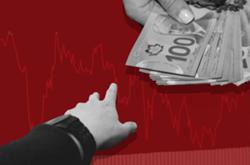
Canadians were both puzzled and infuriated when the price of gasoline shot up several cents per litre within hours of Donald Trump declaring war on Iran. That gasoline had been delivered to underground tanks days earlier, from gasoline refined weeks ago, from oil extracted months ago.
In short, there was no connection whatsoever between that gasoline and the Persian Gulf. So why did prices jump so immediately and uniformly (gas stations across town all did the same thing) because of a conflict on the other side of the world?
Of course, gasoline prices never fall back so fast when far-off chaos settles down — and that only adds to consumer anger.
Apart from how fast prices shot up, there’s a deeper disconnect between the Persian Gulf and petroleum prices at home. Even with a time lag, there’s still no concrete reason why domestic prices must follow the roller-coaster of global oil markets.
Canada is the fourth-largest oil producer in the world. We produce three times more than we use. Most of what we produce is exported. Modest imports come into Atlantic Canada, equivalent to about 15 per cent of domestic production — but none from the Persian Gulf.
We also produce more gasoline and other refined petroleum products than we use, generating an additional $6-billion trade surplus (on top of our huge exports of unrefined oil).
The costs of producing, refining and distributing petroleum products in Canada are no higher than in February. Yet prices have increased by 50 per cent or more. What gives?
‘Market forces’ versus policy decisions
At this point, petroleum lobbyists and conventional economists wave their hands and in knowing tones speak about “supply and demand” and “market forces.” They hope to explain (and justify) this painful shock as natural and inevitable.
But it is policy choices, not economic laws of nature, that explain why Canadian prices for gasoline, diesel, jet fuel and heating oil are shooting up — even though physical supply conditions in Canada (neither cost nor quantity) haven’t changed at all.
In 1985, the Conservative government of Brian Mulroney deregulated Canadian petroleum pricing. For decades previously, oil and gas prices in Canada had been regulated under successive policies, including the National Oil Policy (starting in 1961) and the National Energy Program (starting in 1980).
Mulroney discarded those regulations, giving oil companies the power to charge whatever the market would bear. The construction of extensive north-south export pipelines reinforced their power. Canadian consumers had to pay world prices, or else their own oil would be diverted to more profitable foreign markets.
Since then, Canadians have been fully exposed to the vagaries of world oil futures markets. Contrary to Economics 101 textbooks, those markets are not efficient mechanisms that equilibrate supply and demand and set prices rationally on the basis of cost of production. Rather, they are the playground of cartels, oligopolies and financiers who extract maximum wealth from concentrated ownership of a randomly distributed natural resource.
Since then, Canadian consumers have ridden the oil roller-coaster through repeated booms and busts: price surges in the late 2000s and early 2010s, price crashes in 2014 and 2020.
Billions in costs to Canadians
The most recent shock was in 2022, after Russia invaded Ukraine — a country that produces no oil. Futures markets went nuts anyway, roiled by speculative herd mentality. That price shock was the biggest single factor driving higher inflation in Canada, which peaked at eight per cent that June. Over three years, the Ukraine oil shock cost Canadians $200 billion, or $12,000 per household.
Now we are repeating the same miserable experience. Inflation has already jumped a full percentage point, reaching 2.8 per cent in April. But that’s just the beginning. Higher indirect costs (for everything from airfares to delivery charges to food) will add much more.
Even if Donald Trump walks away and the Strait of Hormuz opens tomorrow, I estimate consumers will pay $50 billion in extra direct and indirect costs over 12 months, and inflation will rise above four per cent. If the strait stays closed longer, those costs go much higher.
Expanding Canadian oil supply will not reduce this exposure. Total oil production has tripled since Mulroney eliminated price regulations, but we’re more exposed to global swings than ever (due to the dominance of exports in our production).
Canada’s petroleum industry, meanwhile, is poised to break the all-time profit records it set during the 2022 shock. Revenues will surge at least $65 billion — again, even if the Strait of Hormuz reopens tomorrow. Oil investors are popping champagne corks, even as billions face inflation, shortages and (in the Global South) famine.
How to fix inflationary forces
Again, policy choices, not market forces, explain the disconnect between what we produce and what we pay. And those policy choices can be changed.
Domestic oil prices can be regulated. Many other oil-producing countries do that. Even major oil-importing countries (such as China and India) regulate prices to buffer the volatility of world markets.
We already regulate electricity prices and natural gas distribution charges. This is neither impossible nor unreasonable. And it is perfectly legal under trade rules.
The record flow of profits to the oil industry could also be redistributed. An excess profits tax would recapture some of that revenue to compensate consumers (through a GST credit) and invest in public infrastructure.
Of course, the best way to reduce exposure to the cartels, oligopolists and speculators who run world oil markets is to stop using the stuff. EV drivers don’t care about gas prices anymore. Affirming a national commitment to a rapid energy transition is not just good for the climate. It’s also good for affordability.
Because contrary to the well-funded advertising campaigns of oil industry lobby groups, the biggest threat to affordability in Canada is our continued reliance on fossil fuels. We learned that in 2022. And now we’re learning it again. ![[Tyee]](/design-article.thetyee.ca/ui/img/yellowblob.png)










Tyee Commenting Guidelines
Please note that email notifications for replies are not currently working due to a software issue which may be resolved in a future update.
Comments that violate guidelines risk being deleted, and violations may result in a temporary or permanent user ban. Maintain the spirit of good conversation to stay in the discussion and be patient with moderators. Comments are reviewed regularly but not in real time.
Do:
Do not: