


 SHARE:
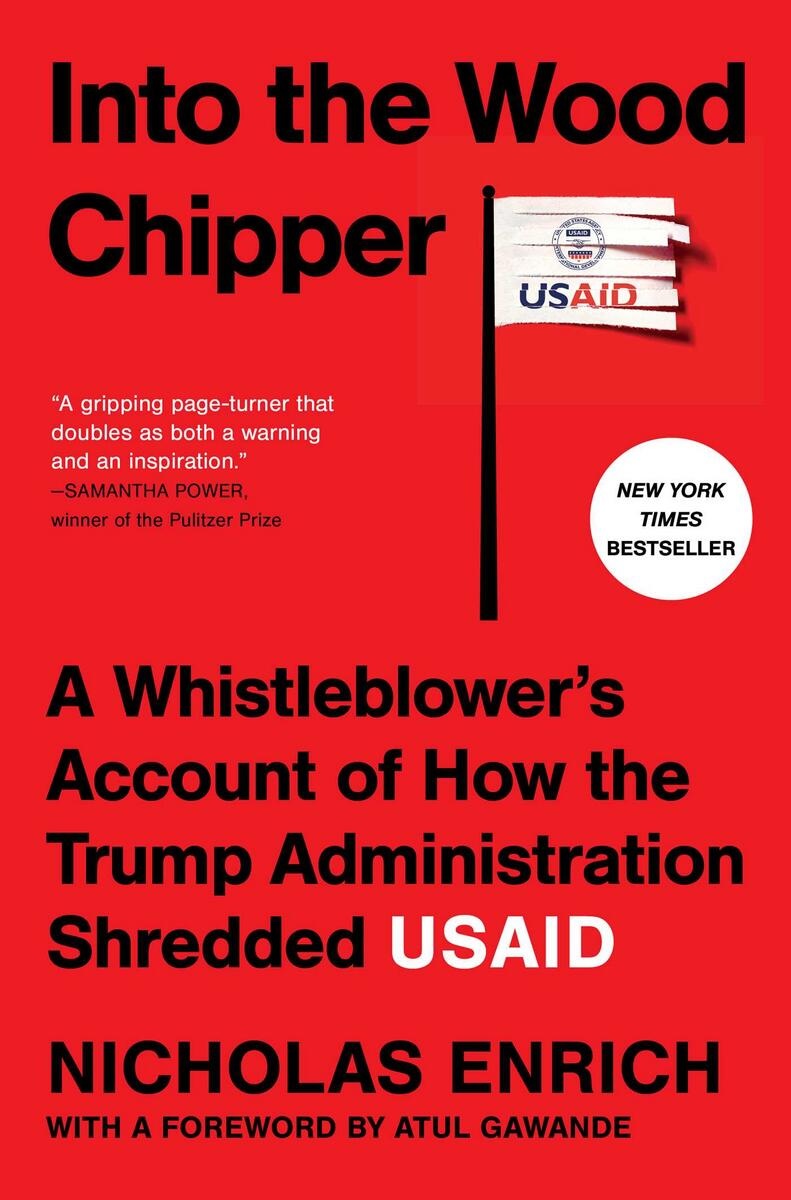
Into the Wood Chipper: A Whistleblower’s Account of How the Trump Administration Shredded USAID
Nicholas Enrich
Simon & Schuster (2026)
One of the discouraging things about U.S. president Donald Trump is that he will be the subject of countless books long after he is gone — not for years, but for centuries. We and our descendants will never be free of him.
Future authors will no doubt document crimes that we still don’t know about, as well as follies and behaviours that are, for now, kept secret by his staff and his most loyal vassals.
Many of those books will turn to Into the Wood Chipper: A Whistleblower’s Account of How the Trump Administration Shredded USAID as a key source. That is because it documents the destruction of an American government agency as seen by one of its members, foreshadowing the destruction of many more.
And very significantly, it leaves us to imagine what kind of people could cause so much death and misery.
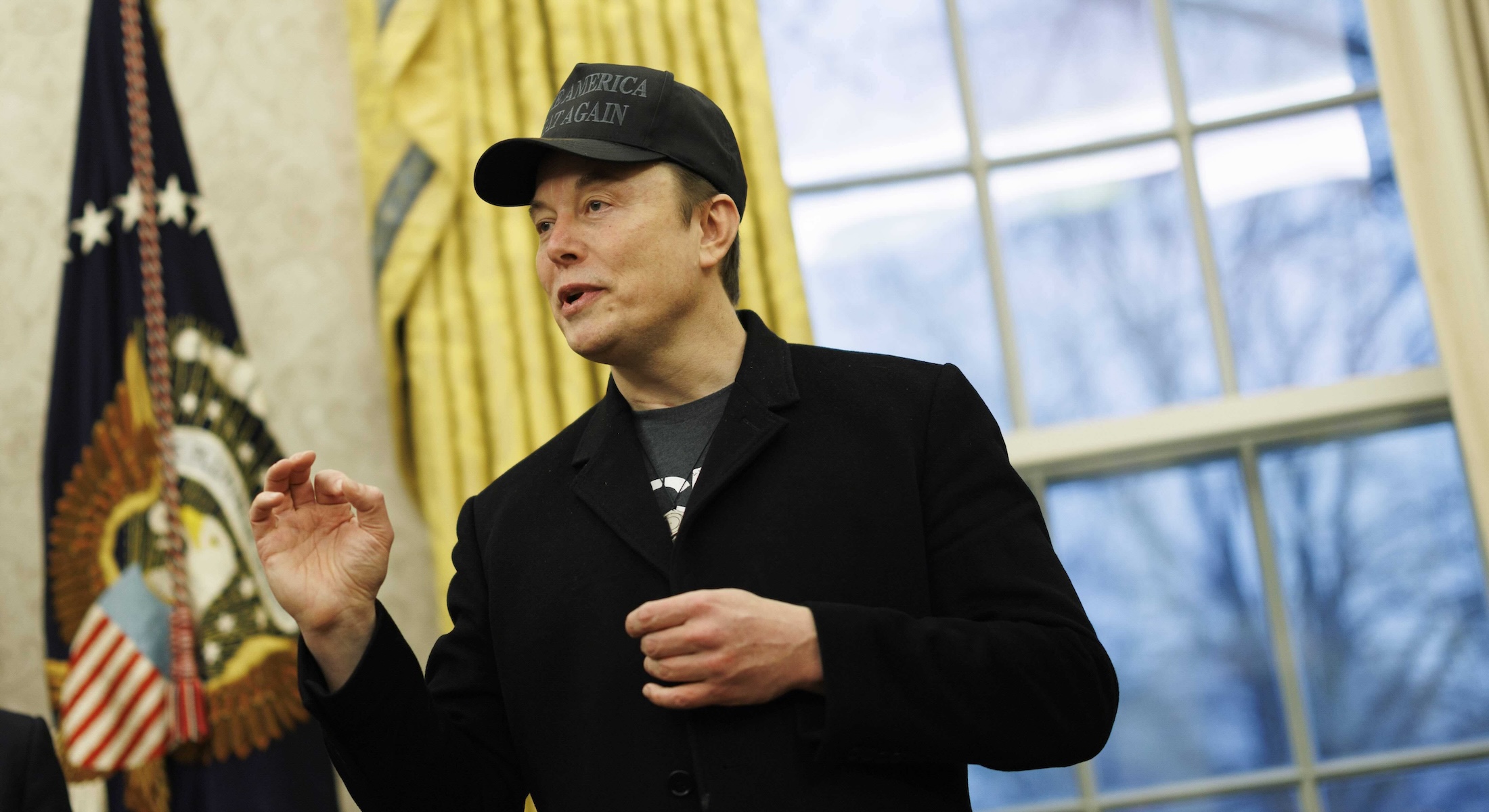
Shortly after his election in 2024, Trump appointed Elon Musk and former presidential candidate Vivek Ramaswamy to root out “waste and fraud” in the civil service. Ramaswamy was soon gone, but Musk and a handful of young men known as the Department of Government Efficiency were in place as government “advisors."
On his first day in office, Trump signed an executive order putting a halt to American foreign aid until the new administration had decided which programs suited its policies. That meant the U.S. Agency For International Development, or USAID, was the first government institution to be explicitly dismantled by the new regime.
The order stunned Nicholas Enrich, then an American civil servant. He was the Bureau of Global Health’s director of policy, planning and programs until January 2025, when he was designated USAID’s acting assistant administrator for global health.
In the first few days after DOGE was installed, Enrich and his colleagues at USAID struggled to make sense of what was happening to them. They spent the following weeks trying to save as much of it as they could.
By March 2, 2025, Enrich’s employer placed him on administrative leave for issuing a series of whistleblowing memos that exposed the Trump administration’s dismantling of USAID.
As historically valuable as Enrich’s account may be, it’s the response to it that I found alarming: almost total apathy in both the public and the media.
Saving lives with soft power
Founded by former president John F. Kennedy in 1961, USAID had been a major expression of American “soft power” for over 60 years. It had fed the hungry, healed the sick, responded to disasters and built up immense good will toward the U.S.
Enrich sums it up:
“It starts with a number: 92 million. That is how many deaths USAID prevented over the past two decades, according to a recent study in The Lancet, a leading medical journal. … And all it cost was an average of $24 a year per American.”
Enrich had dealt with the first Trump administration, which seemed unaware of USAID’s existence. Trump sent no transition team before his inauguration in 2017, and didn’t appoint a director until that summer. Enrich and his colleagues hadn’t agreed with Trump’s policies, but as civil servants they carried them out.
“Even though I felt that parts of the agenda were problematic,” Enrich writes, “I recognized that my role was to implement the policies of the president and his administration, and I ensured that those policies were executed coherently and lawfully.”
By Trump’s second term, Enrich tells us, the president’s political appointees arrived promptly, ready to carry out Executive Order 14169, a 90-day “pause” on all foreign aid.
On a ski vacation in B.C., Enrich read the executive order on his phone.
“My heart started to race,” he writes in his book.
“How could we do this without completely destabilizing our global health programs and endangering people’s lives? The order didn’t affect a mere portion of our work; it stopped everything USAID did.”
Life or death decisions
Back in Washington, Enrich, as temporary head of USAID’s global health division, had to deal with the urgency of literal life and death. Clinical trials for tuberculosis had to stop at once, depriving hundreds of patients of essential drugs.
Meanwhile, Trump’s appointees issued a ban on external communications; USAID could not reply to the thousands of contractors — health agencies, universities, clinics — who had been suddenly cut off from funding, even for ongoing programs.
Enrich’s own motives are clear. He had aspired to work for USAID, and he was immensely proud of his agency and the good work it did.
Only when it was clear that USAID would cease to exist did Enrich and some of his colleagues decide to publicize what they had witnessed.
Blazing a paper trail
Knowing what they were up against, Enrich and some of his colleagues blazed a paper trail of emails, texts and documents. From these, Enrich built a retrospective diary of the first 40 days of the destruction of USAID.
It’s a meticulous account of bureaucratic horror: medical tests suspended, babies born with preventable HIV, experts placed on “administrative leave” for imaginary offences.
The motives of the Trump appointees who oversaw the destruction are a mystery.
We learn that one, who had been appointed in Trump’s first term, was convinced that an agency employee had killed the appointee’s dog. He wanted revenge.
Another appointee in the first term had been ousted after just four months when staff had protested his mismanagement. Now he was back and had some scores to settle.
But the appointees were American citizens who had presumably gone to American schools and learned something about American history and institutions. Many had served in the military or other government agencies. Their previous careers had sometimes (not always) qualified them for senior management roles. Like the Republicans and Democrats in Congress, America since Reagan had made them what they were.
Yet, including Musk and the DOGE boys, they had moved into USAID knowing or caring very little about it, and then dismantled the agency regardless of the suffering that would result.
Musk boasted on X that he had “Spent the weekend putting USAID into the wood chipper.”
Standing in the Oval Office next to Trump, Musk told the media that funding to fight an Ebola outbreak in the Democratic Republic of Congo was “accidentally cancelled very briefly.” Enrich watched Musk say it, knowing that Musk had already cancelled Ebola funding permanently.
People like Musk and his boys were doing the same across the government, demolishing the institutions and agencies that had made the U.S. the world’s superpower.
Something had clearly gone wrong with the U.S. long before Trump descended his golden escalator in 2015 to declare his candidacy for president. Many of those in school in the 1980s and 1990s must have tuned out in their history and civics classes, internalizing instead the racism and misogyny that have persisted throughout American history. With nothing but contempt for the institutions that had taught and protected then, they were well-qualified to break the country’s civil service.
And they weren’t the only ones who’d gone wrong. A study in the British medical journal The Lancet Global Health estimated that by 2030, continued defunding of official development assistance would result in 9.4 million deaths, 2.5 million of them children under the age of five. Severe defunding would cost 22.6 million deaths, including 5.4 million under age five.
If development funding had continued at previous levels, the study said, all-cause mortality by 2030 would fall by 23 per cent, and 39 per cent in mortality in children under five.
Mortality from HIV/AIDS would fall by 70 per cent, by 56 per cent for malaria and by 56 per cent for nutritional deficiencies.
‘Tens of millions of excess deaths’
Considering the available evidence, the study concluded that “Sudden and severe reductions in official development funding could have catastrophic consequences, with a potential global death toll comparable to — or even exceeding — that of the COVID-19 pandemic. Even modest defunding that simply extends current downward trends is likely to lead to sharp increases in preventable adult and child mortality, potentially resulting in tens of millions of excess deaths in the coming years.”
USAID was a major funder of official development assistance, but it’s not the only one. Cooperation Canada, which represents over 100 humanitarian organizations, reported late in 2025 that “the government has chosen to reduce Canada’s international assistance by $2.7 billion over four years, including decreased development funding for global health.”
And that reduction was caused by Mark Carney’s Liberal government, which, like the Americans, must know the lethal consequences of cuts in assistance.
The public response to Musk’s cuts, and to Carney’s, has been silence. This is the real horror in Enrich’s book: not that a few fascist thugs destroyed a valuable agency, but that the media reported on it, described the mortality rates that would follow, and then said nothing more.
Canadian media barely noticed Carney’s foreign-aid cuts. No one rose up in rage against the cruelty and criminality they were witnessing.
Millions are falling ill and dying because of American and Canadian political decisions, and the response has been silence.
The American and Canadian publics are silent. Their democratically elected representatives are silent.
Everyone seems to have moved on to tsk-tsk about some fresh disaster before they forget that one too.
‘If the Tsar only knew’
Enrich wrote his book as a whistleblower, to record a historic moment and to tell Americans what had been done in their name. But whistleblowers assume that there are rules, that they have been violated and that an informed public can make things right.
That’s an attitude often called “If the Tsar only knew” — If the Tsar only knew how the Cossacks have beaten us peasants, he would punish them and give us justice. But the real Tsar didn’t care about his peasants, and the voters in two great democracies don’t seem to care about the starvation, disease and death their apathy is causing.
The fault doesn’t lie with Trump and Carney and their obedient bureaucrats. It lies in ourselves. As the 17th-century aristocrat La Rochefoucauld observed, “Somehow we always find the strength to bear the misfortunes of others.”
And especially when we ourselves are the cause of those misfortunes. ![[Tyee]](/design-article.thetyee.ca/ui/img/yellowblob.png)
Read more: Health, Books, Rights + Justice, Media











Tyee Commenting Guidelines
Please note that email notifications for replies are not currently working due to a software issue which may be resolved in a future update.
Comments that violate guidelines risk being deleted, and violations may result in a temporary or permanent user ban. Maintain the spirit of good conversation to stay in the discussion and be patient with moderators. Comments are reviewed regularly but not in real time.
Do:
Do not: