

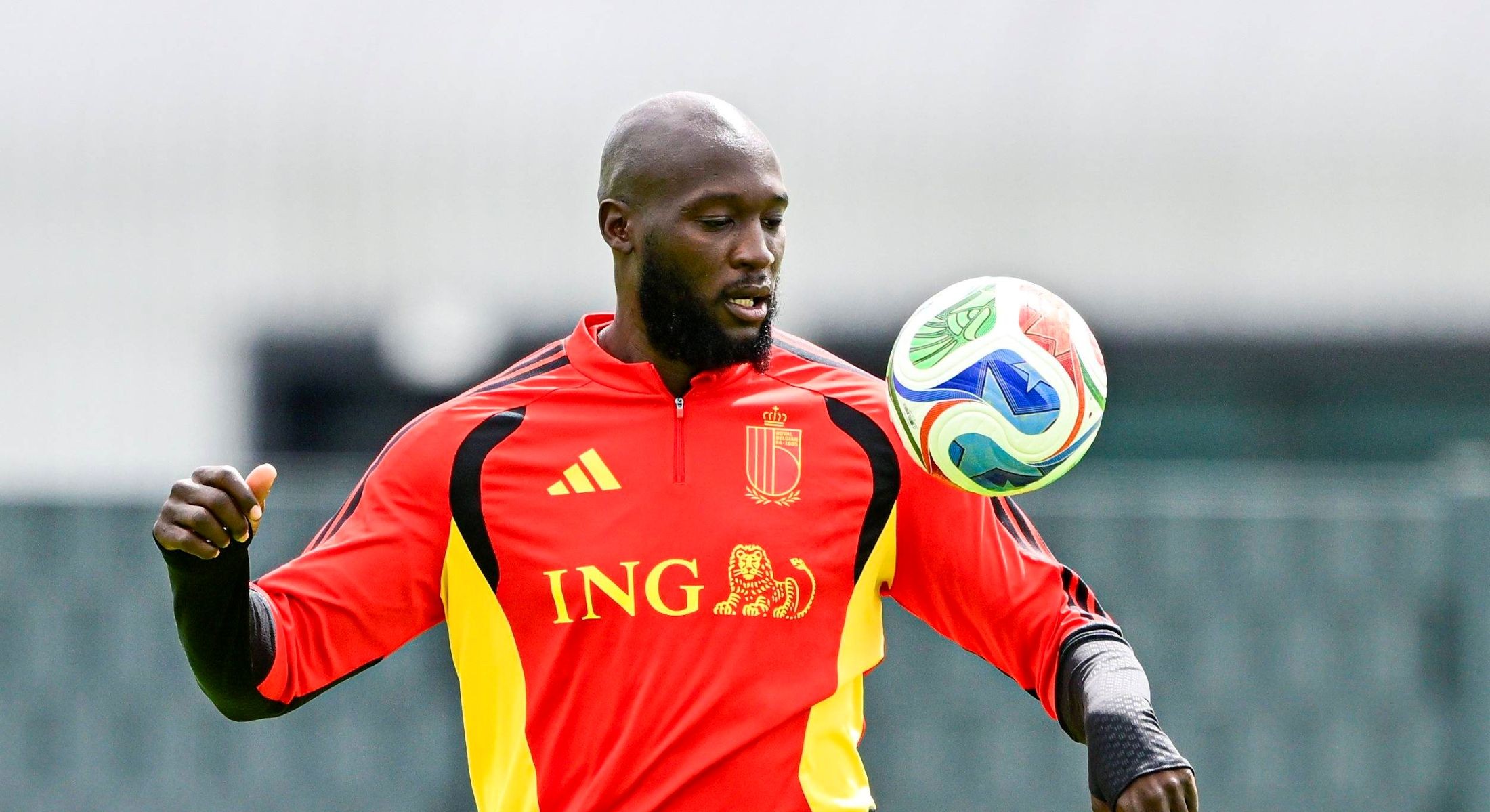

 SHARE:
I let my children stay home from school today for Canada’s first World Cup match. The school year’s almost over, and as far as I’m concerned, they’ll learn more watching soccer than watching their teachers pretend to like all their classmates. For instance, they’ll learn there’s a country called Bosnia-Herzegovina.
The mountainous republics of the Balkans haven’t mattered much to them yet, but I know my kids, and one of them is guaranteed to ask me why Canada has to play two nations at the same time.
“Some places, like people,” I’ll probably tell them, “are more than one thing.”
We won’t be attending in person, though. It’s in Toronto. The first Vancouver game is at BC Place tomorrow night, June 13, between Australia and Turkey, part of Canada’s second and third group stage matches. We won’t be attending those either, of course, as we don’t have an extra $8,000 lying around. But I did splurge on two months of TSN+.
It’s the World Cup. You’ve gotta go big or go home, and in my case, I say: why not both? It’s hard to feel bad about spending $50 on a streaming service to watch north of 100 World Cup games when the federal government plans to spend upwards of $1 billion to simply host seven.
The justification for welcoming FIFA with open arms, holding a bundle of taxpayer money, is how it stands to benefit the national economy. I’m finding it hard to believe we break even.
An infusion of global cash sure would be nice — nicer still if it would make my family’s life more affordable, or even this city more accessible to those who don’t have a lot of disposable income.
Instead, it’s clearly trending toward the opposite. The FIFA World Cup begins in Vancouver on Saturday, but not the Vancouver I live in. Traces of the other Vancouver are everywhere already. There’s old money floating around. Just the other day, I found a 20-euro note in the gutter behind the Canadian Tire.
That said, most of the money that’s floating around appears to be going to an “inherently corrupt” administration and exorbitant policing, so I suppose the two Vancouvers aren’t that different.
The $700 million cost projection for hosting part of the 2026 FIFA World Cup in Vancouver includes an estimated $242 million for safety and security. This is compared to roughly $58.5 million for the Toronto Police Service, part of an estimated $87 million in safety and security costs for Toronto overall.
We might explore the FIFA Fan Festival in East Van’s Hastings Park. It’s supposedly free. But not really. As with everything else, “the poors” get a pittance, and those who are willing or able to pay can secure themselves a premium experience.
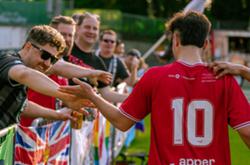
So rather than camp out for four of the 2,600 free seats in the newly built, $183 million amphitheatre, my family and most of our family friends will be watching the matches at our house or theirs, the same way we would if the tournament was taking place on one of the other six continents.
But that doesn’t mean I’m not beyond excited.
A chance to envision ourselves in new ways
The World Cup arrives at a wonderful time for my family. We’ve never been more into soccer. My partner and I have been coaching our kids’ teams for two years, and as of this writing, my children are the reigning champions of their Micro Footie league in East Van. (This Saturday morning, new champs will emerge, as both my kids up and quit on their teams when the rain started falling last weekend.)
Vancouver’s been having a wonderful run with its soccer teams. The Vancouver Rise FC are the reigning Northern Super League champions. Their games are affordable and welcoming as hell. My family was even invited to unfurl the flag for the inaugural home opener at Swangard Stadium last year.
The Vancouver Whitecaps FC had a great season last year as well, and they’re looking even more formidable this year. Forget the Vancouver Canucks for the moment. Soccer is this city’s favourite sport at the moment. The World Cup arrives at a perfect time for our identity as Vancouverites.
But doesn’t it always? What excites me the most about the World Cup is that it’s international. It’s not the NHL or NBA. It’s not about your city, really, even when it’s being held downtown. It’s something bigger, and it challenges fans to envision ourselves in new ways, with new identities we rarely explore otherwise.
On one level, my children and I are Canadians. We’ll cheer for Canada, in one of the few instances in which that doesn’t feel a bit icky, considering the rest of my political identities.
Am I rooting for Canada to further its colonial agenda or even line its pockets, after scoring a date with the famous corruption of FIFA? Not so much.
Am I rooting for Canada to score more goals than Switzerland and maybe get out of the group stage? You betcha.
Especially since we don’t qualify for the World Cup as a rule, and we didn’t get in just because we’re the hosts. We’re barely the hosts! All the big games, from Canada’s first to the tournament’s last, are somewhere else.
In essence, we’re hosting the overflow parking lot just down the road from the party.
But it’s not about where I am now. It’s about where I could be.
Cheering for Ghana
In my heart, I’ll be cheering for Ghana. My mom was Ghanaian, which strikes even me as a roundabout way of embracing my Ghanaian heritage. That’s what happens with adoption, especially when you’re raised white after being relinquished at birth.
As a general rule, I don’t notice the distance between myself and this particular aspect of my identity until it arrives on my doorstep, or TV screen. During the World Cup, I get to be Ghanaian.
The first time Ghana’s team qualified for the men’s World Cup, in 2006, I was 21 and still living with my adoptive parents. It afforded me an opportunity to be West African — embracing my identity in proud and public ways I wouldn’t have dared without soccer.
That year, I learned our team was called the Black Stars, and the colours of our flag were red, gold and green, like in “Karma Chameleon,” and the black star in the middle stood for Africa writ large, for we were one, which meant that I was one, despite being raised to be somewhat ashamed of my heritage.
Four years later, in 2010, the Black Stars came within a missed hand ball of being the first African nation to make it to the World Cup semifinal. What a run that was. I never felt more Ghanaian than that, until I met my birth mom for the first time — and I’m only making this connection now — just one month later.
After that, I was proudly Ghanaian, and excited to raise my kids likewise. But when my birth mom died in 2022, all of us lost our connection to Ghana. That summer’s World Cup lost its lustre for me. I wasn’t even sure who won until I looked it up to write this piece.
Four years later, I’m ready to pick up where I left off. I haven’t been to Ghana yet. My children have had only limited exposure to the culture — primarily the songs of Kuami Eugene and Amaarae — but starting this weekend, they’ll get to be Ghanaian in their hearts for perhaps the first time, and you can’t put a price on that.
I could never hate the World Cup. It’s given me an excuse to explore my identity, and 2026 will be the first time that I’ll get to share that with my children.
A chance to try on different selves
Neither of the squads I’m cheering for — Canada, Ghana — is likely to win the World Cup. But I’m used to my closest compatriots going out early.
As the tournament wears on, I typically find myself making all sorts of quick pivots, connections and qualifications. After Ghanaian, I’m African, full stop, which gives me the license to cheer for every other team from Africa, finding aspects of myself in every nation on the continent. I’ll also root for Curaçao and Haiti, and for those who know their transatlantic history, Brazil, which is basically Ghana again.
And when all of the Black teams are gone, I’ll acknowledge I’m also half-German.
The World Cup, for me, is a chance to be multiple people at once. It’s a chance to engage with my own multiplicity, and this year, to show my kids how many different ways they can relate to the people who come from all over the world, same as them.
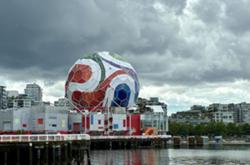
It’s a chance to try on different selves, like Science World, which shows a new side every time there’s a cause.
Every day I pass Science World, biking to work. Over the last few weeks, it’s been fun to watch its slow transformation into a giant soccer ball. Last weekend, after it was finished, I passed it while riding my big family cargo bike over the viaduct, heading downtown with my kids.
“Science World’s a giant soccer ball!” I shouted, pointing.
My son was impressed, but my daughter got quiet. The next time we stopped, I looked back and she had this dismayed look on her face. I asked her what the matter was.
“I liked Science World,” she said, starting to cry, and I had to explain that this change to one of Vancouver’s best places for kids was temporary, and only external.
“It doesn’t change what’s on the inside,” I said. ![[Tyee]](/design-article.thetyee.ca/ui/img/yellowblob.png)






Tyee Commenting Guidelines
Please note that email notifications for replies are not currently working due to a software issue which may be resolved in a future update.
Comments that violate guidelines risk being deleted, and violations may result in a temporary or permanent user ban. Maintain the spirit of good conversation to stay in the discussion and be patient with moderators. Comments are reviewed regularly but not in real time.
Do:
Do not: