


 SHARE:

Chris Corrigan is no Ryan Reynolds.
Yes, both men have strong Metro Vancouver ties and co-own soccer teams sending players to the upcoming FIFA World Cup.
But nobody is likely to pay Corrigan, a policy specialist who sings Renaissance choral music in his spare time, lavish sums to lead their movie franchise or endorse their gin brand.
Corrigan might have one leg-up on Reynolds, though. Although Wrexham AFC, which Reynolds has co-owned with fellow Hollywood star Rob Mac, has only recently begun producing top-level talent, the feat is almost becoming old hat for Corrigan’s TSS Rovers, a small Burnaby semi-pro club just one step above Canada’s countless amateur leagues.
In less than 10 years, the tiny club has helped bolster the careers of not only Julia Grosso and Jordyn Huitema, who won gold for Canada at the Tokyo Olympics, but also Joel Waterman, who will suit up for his second FIFA World Cup campaign this month.
TSS Rovers has become a key cog in Canada’s soccer pipeline while being owned not by multimillionaires, but by hundreds of local supporters just like Corrigan.
The reality of it all remains “absurd” to Corrigan, who has supported the Rovers since the club first kicked a ball in 2017.
“We wanted to give a pathway to Canadian players, especially in B.C., to make it to the national team and maybe one day play in a World Cup,” he says. “We had no idea it would be this fast.”
‘I got crazy’
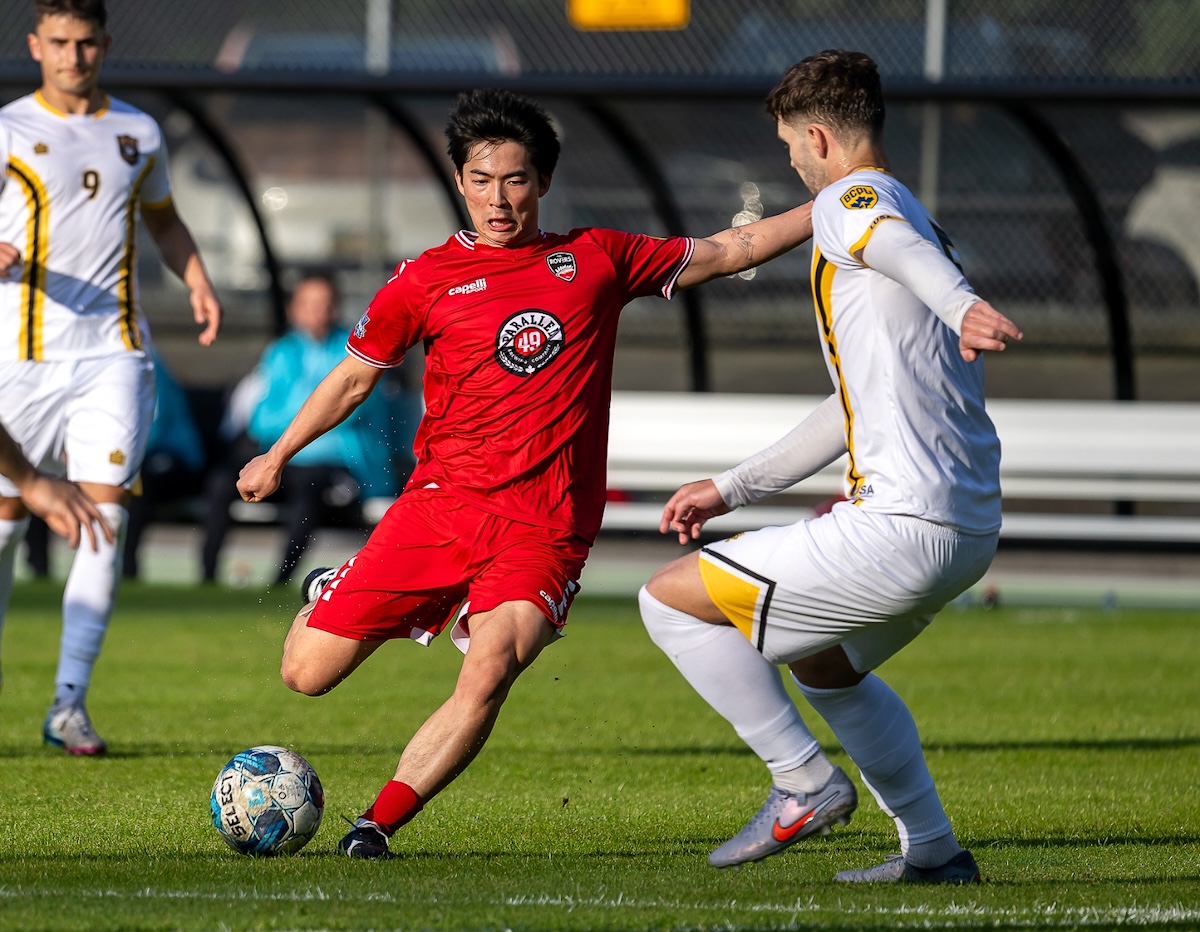
Corrigan's Rovers are an outlier in Canadian soccer. Unlike the Vancouver-area pro teams that play in Major League Soccer, the Canadian Premier League or the Northern Super League, the semi-pro club is owned by its fans.
Corrigan is one of more than 450 supporter-owners to have poured their money — at least $265 a share — into the club. In return, each supporter gets a say in how the team is run, along with a season ticket to its men’s and women’s games at Swangard Stadium. Over the years, supporters have gotten a front-row seat to the early career stages of World Cup-bound players like Grosso, Huitema and Waterman.
The model — which is relatively common in Europe but almost unheard of in North America — is about “bringing the community together,” says Colin Elmes, the club’s sporting and technical director.
Elmes is a former University of British Columbia midfielder who founded TSS as a private soccer academy in Richmond in 1997. At the time, the business model was a bit “like piano lessons,” he says. Elmes would run teenage and preteen players through skill-development drills in a setting where they could “come and not worry about the scores of games, and the pressure, and just get better technically.” The arrangement was popular, Elmes says, but it did little to address the gap in professional pathways he saw for young soccer players in B.C.
“There was a void of proper football [opportunities] at that 18-to-21-year-old level,” he adds.
Outside of Major League Soccer’s Whitecaps and its academy system, aspiring players were left with few options for going pro. The Rise, a women’s club that now plays in Canada’s newly created Northern Super League, did not yet exist. Nor did Pacific FC and Vancouver FC, which were both founded later, in part, to tackle the same problem, and which now play in the Canadian Premier League.
Against his better financial judgment, Elmes bought the rights to a team in a U.S. semi-pro league in 2016. He spent just shy of $50,000 on the deal.
“I got crazy,” he jokes.
Together with his business partners, Will Cromack and Brendan Quarry, he set about assembling a collection of current and ex-college men’s and women’s players from across the province. TSS Rovers was born a year later.
Corrigan still fondly remembers the first match.
“We had a truck with a tailgate — that’s all,” he says. “We didn’t have a barbecue, we didn’t have food, we didn’t have anything else. It wasn't really a party until Joel [Waterman]’s family showed up with a bunch of veggie platters and snacks.”
The opposing team’s supporters, travelling from Oregon, smuggled two flats of beer across the Canada-U.S. border to add to the spread.
From the beginning, the Rovers attracted a different crowd. Instead of billing themselves as a rival to their crosstown competitors in the Whitecaps, with their US$8-million roster and BC Place pitch, they skewed local. Players helped set up the stands for their supporters before their games.
“I think they benefited by starting [when they did],” says longtime Vancouver-area soccer commentator Michael McColl, who has covered the sport in B.C. from the university level to the international game since 2009. At the time, the Whitecaps were struggling, and the Major League Soccer club was embroiled in a sexual assault scandal involving former women’s coach Bob Birarda.
“Supporters were kind of fed up with the Whitecaps and looking for something different,” McColl says.
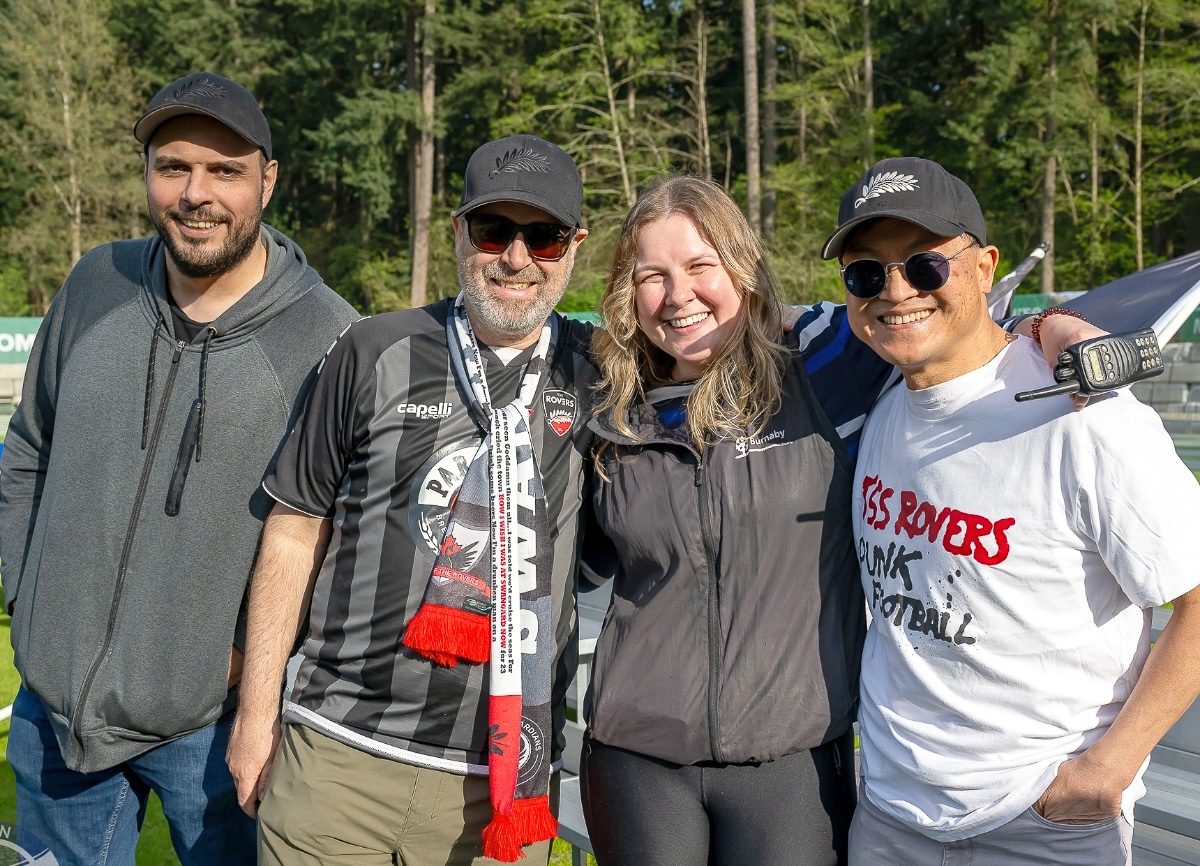
As disillusioned ’Caps supporters turned to the Rovers, they formed a new family. Calling themselves “the Swanguardians,” after the team’s home field, they brought drums and coloured smoke to matches, made up chants and sang them loudly.
“We don’t know what we’re doing, but we’re having fun doing it,” the group’s Facebook motto reads.
Amid the chants and tailgate parties, they also started talking among themselves about how they could take greater ownership of the club.
Elmes and his co-owners listened. In 2022, they offered the first Rovers shares to supporters, making up to 49 per cent of the club’s equity available for purchase. Since that offering, more than 450 investors have purchased over $286,000 worth of Rovers shares. For Day 1 supporters like Corrigan, the public ownership model offered a chance to “own something, to really be a supporter” in a tangible way.
“I think some shareholders like the novelty of it, like, ‘Hey, I own a soccer club.’ And the rest of us are pretty serious about the kind of commitment that we put into making sure that this club [lasts].”
How to buy a soccer team
Corrigan holds no illusions of getting rich and famous from his ownership stake in a semi-pro club. Unlike the supporter-owned FC Barcelona and Bayern Munich, with their Champions League trophies and multibillion-dollar brands, there is little cachet in owning a share of the Rovers. “These aren’t shares that are going to go into your retirement,” he says.
The team competes in a league that is notoriously hard to survive in. Travel for the few BC Premier League clubs outside of Metro Vancouver is gruelling. The list of expenses can seem endless.
“We’ve lost clubs [in this league], because it’s just really hard to keep it going,” Corrigan says.
The Victoria Highlanders pulled its men’s and women’s teams out of the league in 2024, months after winning the league’s regular season title. The Hope and Health for Life Society-owned Nautsaʼmawt FC withdrew after the 2023 season. Coquitlam-based Evolution FC joined the BC Premier League in 2025 and lasted a single year.
Contrary to clubs in the English Premier League, with its £6.7-billion television rights deal, or Major League Soccer, with its $2.5-billion streaming deal with Apple TV, the Rovers and their BC Premier League peers don’t enjoy the benefits of broadcasting to an audience of millions. Most teams, on a good day, might draw 1,000 fans to a match.
And unlike in Europe or Britain, where a team like Wrexham can top their league and win promotion to a higher level of play, with more financial benefits, Rovers are essentially stuck in the BC Premier League.
The question of survival, says McColl, often boils down to whether teams “have a benefactor that’s going to keep money in and be prepared to lose money.” According to Elmes, the Rovers lost “somewhere between $30,000 and $40,000” in 2025. Opening the club’s ownership up to supporters has “allowed [TSS] to be a going concern,” he says.
The Rovers won the BC Premier League regular season for the first time in 2024. A year earlier, they turned heads by upsetting Winnipeg’s Valour FC, a Canadian Premier League team, in the Canadian Championship, an annual Cup-style competition that pits Canada’s best semi-pro teams against the likes of their professional peers, including the Whitecaps.
The club has plans for a new stadium. Meanwhile, ex-Rovers, including Vancouver FC’s Kian Proctor, Halifax Tides FC’s Stella Downing, and Denver Summit FC phenom Emma Regan, are moving on to the professional ranks — and, in Regan’s case, the Canadian national team. When Brazil hosts the 2027 FIFA Women’s World Cup, the 26-year-old from North Vancouver may become the fourth ex-Rover to represent Canada at a World Cup.
“This [supporter-owned] model actually keeps it going,” Corrigan says. “We’ve got enough capital that we can keep moving.”
Destination: World Cup
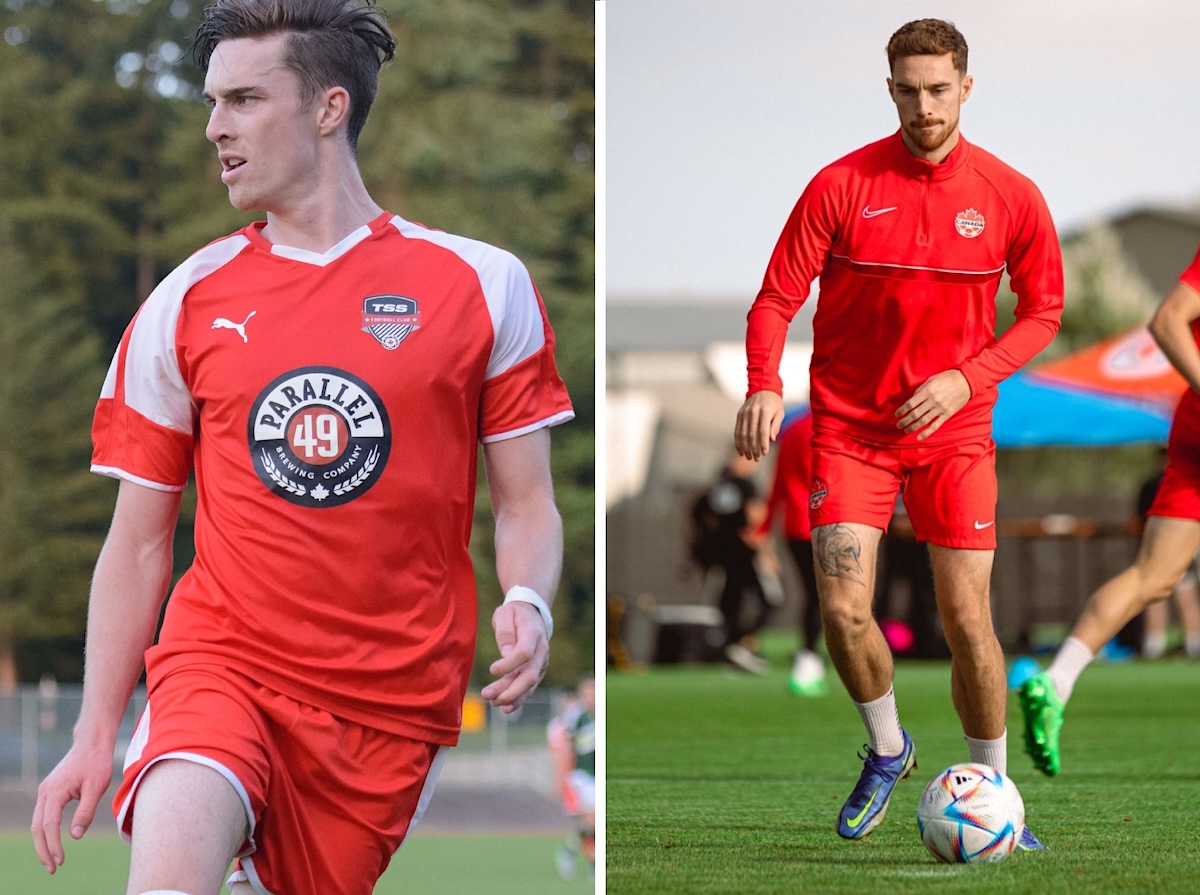
Waterman’s path has taken a unique full circle. Raised in Aldergrove, the defender was “probably going off into the [soccer] wilderness” before joining the Rovers in 2017, Elmes says. There was no obvious destination in Canada for a player who had spent his early 20s playing soccer at Trinity Western University and then moved on to play semi-pro in the United States.
Rovers let him stay in the game, return to Canada and find a foothold in pro soccer. In 2019, Waterman earned his first professional contract with the Canadian Premier League’s Cavalry FC. A year later, Major League Soccer’s CF Montréal came calling. Waterman debuted with Canada’s senior national team in a pre-World Cup friendly against Bahrain in 2022.
“He put himself into situations where he could be coached and grow,” Corrigan says.
Now, Waterman is in line to live out a dream of representing Canada at a World Cup in his home province. With crowds of more than 50,000 expected and a worldwide audience of millions, it will be a world apart from his time with the Rovers.
“Every once in a while,” says Elmes, “when we have a quiet moment, we still kind of laugh about where this started and where it's ended up.”
Corrigan will be watching Canada’s matches and wearing Waterman’s jersey in support — albeit from home.
“I have a fairly sizable investment in the Rovers,” he jokes, “but it's still less than the cost of a World Cup ticket.” ![[Tyee]](/design-article.thetyee.ca/ui/img/yellowblob.png)
Read more: Sports












Tyee Commenting Guidelines
Please note that email notifications for replies are not currently working due to a software issue which may be resolved in a future update.
Comments that violate guidelines risk being deleted, and violations may result in a temporary or permanent user ban. Maintain the spirit of good conversation to stay in the discussion and be patient with moderators. Comments are reviewed regularly but not in real time.
Do:
Do not: