


 SHARE:

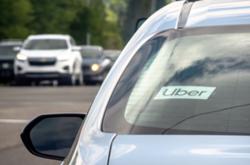
British Columbia and Ontario have enacted laws that extend some protections to gig workers, and platform giants like Uber and DoorDash appear to be lobbying to keep similar policies from being adopted in other provinces.
Ride-hailing and delivery drivers for digital platforms in North America are classified as independent contractors and not employees of the companies they work for. While app giants argue this arrangement allows greater flexibility, it also means workers aren’t entitled to basic employment protections like a minimum wage or workers’ compensation.
B.C. and Ontario were the first jurisdictions in Canada to update labour laws to include digital platform workers, establishing minimum pay standards, pay transparency requirements and other rights.
Alberta’s lobbyist registry shows Uber is lobbying the premier’s office and five government ministries to adopt its Flexible Work+ scheme to maintain a separate employment classification for app-based workers.
The company’s lobbying notice says it is asking the government to “mandate rideshare and food delivery companies to contribute to a flexible benefits spending account for workers and make investments in safety and protections.”
The provision of benefits is one factor considered by bodies like the Canada Revenue Agency to determine if a worker is an employee or a contractor.
In the U.S., industry-backed bills have been put forward in more than a dozen states to secure the classification of platform workers as contractors. A key component of these policies is the creation of portable benefits accounts for workers that companies can contribute to, but that can’t be used to argue that the workers receiving benefits from the company should be classified as employees.
DoorDash is registered to lobby Alberta’s government on “a policy framework to protect flexible work options for workers who work with digital platforms,” and the Government of Saskatchewan on labour relations and “regulations regarding app-based delivery work and workers.”
Jason Foster, a labour relations professor at Athabasca University and author of the book Gigs, Hustles, and Temps, said that the changes brought in by B.C. and Ontario have “shifted the bar a little bit in terms of the Canadian context.”
“And I suspect that what Uber and DoorDash are trying to do, and why I think they’re probably active in Alberta and Saskatchewan at the moment, is to prevent that particular legislative approach or regulatory approach spreading across the country,” Foster said.
Alongside its lobbying efforts, DoorDash has also given thousands to Saskatchewan’s major political parties, according to data from Elections Saskatchewan.
In 2025, the company gave $3,714 to the labour-friendly Saskatchewan New Democrats. Party financial returns show that in 2023, DoorDash donated $1,400 and $1,873 to the Saskatchewan Party and the Saskatchewan NDP, respectively.
Foster said the large donations to the NDP, which has “tended to be more hawkish around trying to protect app workers than the other parties,” is an interesting finding that could be seen as “an effort to try and soften the Saskatchewan NDP up on this issue.”
Unionized Uber drivers in Victoria also recently negotiated and approved their first collective agreement, and the combination of regulatory protections and worker pushback has likely caused worry within the app companies, Foster said.
“I think my instinct is that the app companies are feeling a bit defensive in Canada right now because they are seeing these advances,” he said. ![[Tyee]](/design-article.thetyee.ca/ui/img/yellowblob.png)
Read more: Labour + Industry, Alberta








Tyee Commenting Guidelines
Please note that email notifications for replies are not currently working due to a software issue which may be resolved in a future update.
Comments that violate guidelines risk being deleted, and violations may result in a temporary or permanent user ban. Maintain the spirit of good conversation to stay in the discussion and be patient with moderators. Comments are reviewed regularly but not in real time.
Do:
Do not: