



 SHARE:
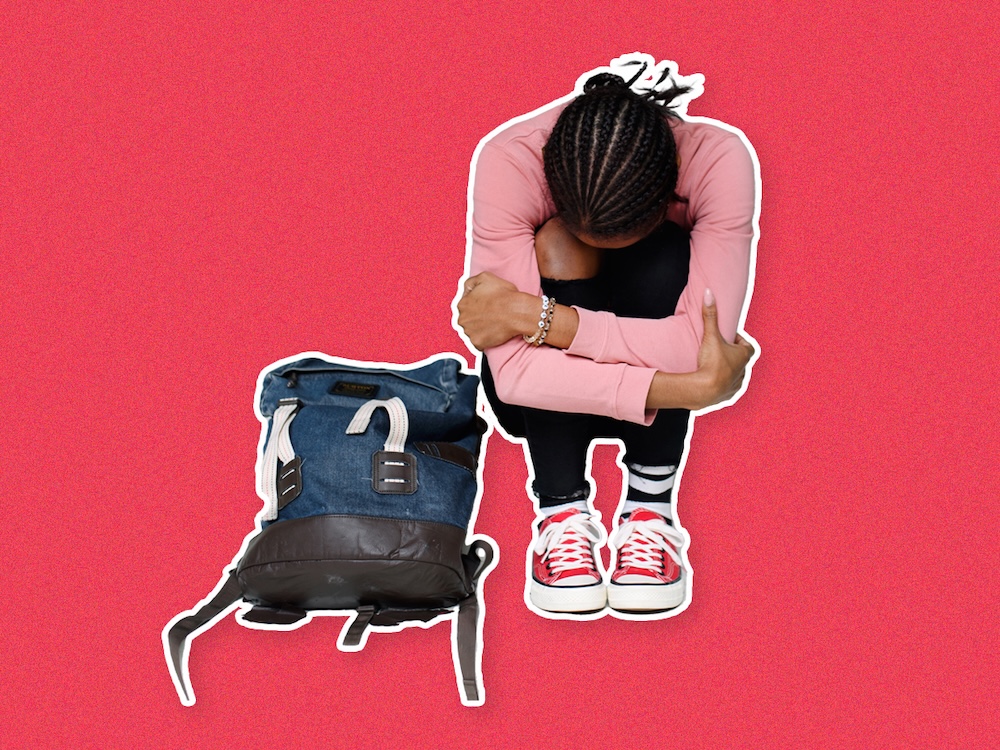
On an almost daily basis, the inbox for Moms Against Racism receives a message about a young person experiencing or witnessing racism in their school.
These emails demonstrate that “things are not getting better,” said Kerry Cavers, founder and chair of Moms Against Racism, a B.C.-based non-profit supporting mothers to “root out racism” and raise anti-racist children.
With anti-Asian racist attacks increasing at the start of the COVID-19 pandemic, alongside a Canada-wide reckoning over the disproportionate impact of police violence on Black people, Indigenous people and other people of colour, the province began making moves to address racism in 2020.
This included passing anti-racism legislation; investigating the collection and distribution of race-disaggregated education, health-care and policing data; and introducing the Education Ministry’s K-12 Anti-Racism Action Plan in January 2023.
The plan includes 12 “priority actions” for the provincial education system to take, based on ministry discussions with educators, students, Indigenous organizations and community groups. These included creating an inclusive calendar, which notes significant dates and celebrations of all students’ cultures and religions, and anti-racism training and racism response guidelines for educators.
The Tyee requested an interview with Education Minister Lisa Beare, but she was not made available.
In an emailed statement to The Tyee, an Education Ministry spokesperson said most of the 12 priority actions have been implemented, and the province is now working on a government-wide anti-racism action plan with actions for ministries to take over the next two years, including more for education.
But measuring the impact on racism in schools is tricky, as the ministry’s “most relevant” data regarding racism in B.C. schools comes from Grade 10, 11 and 12 students’ responses to a question introduced to the Student Learning Survey in 2024-25.
Fourteen per cent of students surveyed indicated they had experienced discrimination on the basis of their race that school year. This is consistent with the 2018 and 2023 B.C. Adolescent Health Survey student responses, as well, taken from a selection of students from grades 7 to 12.
But a fall 2025 survey from the B.C.-based Centre for Family Equity of 104 Indigenous, Black and other parents and caregivers of colour found that 80 per cent have kids who experienced racist harm or bullying in a B.C. school.
Nearly 80 per cent also told the centre their kids witnessed others being bullied for their race, considerably higher than the 58 per cent countrywide average.
Yet Cavers said many people who reach out to Moms Against Racism for help aren’t aware B.C. has an action plan to end racism in schools.
Relatedly, the Centre for Family Equity’s survey found three-quarters of parents didn’t know if their school or district was implementing the anti-racism action plan.
Cavers thinks the ministry’s action plan hasn't changed much in schools but is “a rather weak signal that anti-racism is something that is important in education,” she said.
What racism in schools looks like
Families are reporting to Moms Against Racism increasing levels of overt racism — like the use of slurs or stereotypes about Indigenous people, Black people or other people of colour — in schools, Cavers told The Tyee.
For example, she told The Tyee about a white family Moms Against Racism supported to confront anti-Indigenous racist dialogue in a play at their school.
“They went to the teacher and got pushback — the teacher refused to remove it. Then they escalated it, and the principal refused to remove it,” Cavers said.
“Then their kiddo actually wrote letters as to why this was problematic, and eventually it got resolved. Somewhat begrudgingly, that dialogue got taken out.”
The Centre for Family Equity’s survey, part of its ongoing Kindergarten to Grade 12 Without Racism project, highlights the extensive presence and impact of racism in schools on Black families, Indigenous families and other families of colour, said Harsha Walia, the centre’s racial equity projects lead.
“We can confidently say that these are patterns that are emerging across the province,” she said.
Two-thirds of survey respondents reported their kids being subjected to racism at school related to their food, culture, religious apparel, clothing, English ability or accent.
Indigenous families made up just under half of the survey respondents but reported the highest rates of kids experiencing racism in schools. Only one-third of Indigenous parents who reported racism to school staff felt believed and listened to.
Black families reported “the most amounts of egregious” racism in schools, Walia said. “And the most amount of lack of accountability, and really have overall the worst experiences.”
Examples included students being called slurs; other students appropriating Black culture, music and slang, including using the N-word; and Black students receiving harsher discipline than their peers.
“Which tracks to what many Black community members have been saying generally about anti-Black racism specifically in B.C. and about its erasure and lack of attention to anti-Black racism,” Walia said.
In other cases racism is baked into the education system itself.
Amrit Sanghe, a member of the Anti-Oppression Educators Collective, a provincial specialist association under the BC Teachers’ Federation, said Black, Indigenous and other students of colour have told her about the lack of representation of their own cultures, races, ethnicities and communities in the curriculum and learning resources.
Sanghe, who is the Surrey Teachers’ Association president but spoke to The Tyee in her role as an Anti-Oppression Educators Collective member, said the number of racism complaints from teachers to the union local have increased since 2020 because teachers feel more comfortable bringing it up.
However, there is still a fear among educators today that they won’t be taken seriously when they report racism to the district, she told The Tyee. And reporting doesn’t mean racism will be addressed, either.
For example, the sports mascot at the secondary school Sanghe used to teach at is the Bengal tiger.
“Tiger imagery was used by the British during colonization to represent the ‘barbarity’ of Indian people,” Sanghe said. When she raised the issue with the district back in 2019, Sanghe said she experienced “a ton of backlash, and it felt like institutional gaslighting.”
After receiving complaints, the district struck a racial equity committee in 2022, of which Sanghe was a member, that went on to recommend decolonizing mascot and school names. As well, the district undertook a racial equity assessment at the school, which referenced the issue with the tiger mascot.
But the Bengal tiger remains the school’s mascot to this day.
Doing anti-racism work off the side of your desk, only for nothing to change, is a feature, not a bug, of systemic racism, Sanghe said. “And at the end of the day, those things still don’t get addressed and you’re just exhausted.”
The action plan
Since it created the K-12 Anti-Racism Action Plan, the ministry has released an anti-racism guide for teachers, distributed guidelines for districts’ inclusive calendars, offered a free anti-racism course for everyone working in education and implemented guidelines for school staff to follow when responding to racist incidents.
But even with these response and training resources available, Cavers said, anti-racism policies are “inconsistent” from school district to school district. “There are no clear accountability measures from ‘When this happens, then this happens.’”
Walia was unable to find the racism response guidelines on the nearly 40 out of 60 school district websites she searched. Even though the BC Confederation of Parent Advisory Councils created an online ad about the action plan last year, the majority of parents surveyed by the Centre for Family Equity did not know the guidelines existed.
“You can only find it on the provincial government website, buried... several layers into their K-12 action plan,” Walia said.
The K-12 Anti-Racism Action Plan was created with input from First Nations communities and Indigenous organizations. But the plan notes the ministry is also dedicated to implementing the Declaration on the Rights of Indigenous Peoples Act Action Plan, a five-year provincial strategy to implement the United Nations Declaration on the Rights of Indigenous Peoples.
This includes taking steps to end overt and systemic anti-Indigenous racism in the school system, including the development of a separate First Nations anti-racism strategy led by the First Nations Education Steering Committee. A progress update is due this June, with the ministry reporting that three of the 13 education-related actions are complete so far.
The Tyee reached out to the First Nations Education Steering Committee for an interview about anti-Indigenous racism in the school system and the government’s action plans, but it declined to participate.
Under-resourcing education undermines anti-racism
Creating hiring strategies to improve racial diversity among teaching staff is another long-term action; the majority of BC Teachers’ Federation members are white women.
There is language to support the diversification of teaching staff in the province in the public school teachers’ union’s new collective agreement.
This includes creating programs to attract and retain teachers from “groups who face disadvantage,” including Indigenous people, people with disabilities, racialized people and LGBTQ2S(IA)+ people, as well as layoff and recall rights for existing employees from these groups.
But Carole Gordon, president of the BC Teachers’ Federation, said there is a need for a greater diversity of people working across the education system, from administrators and senior management to teaching assistants and maintenance staff.
“Recruitment and retention is a whole system approach,” Gordon said.
Only one-third of parents surveyed by the Centre for Family Equity said their B.C. school had “meaningful representation” of educators and administrators who are Indigenous, Black or other people of colour.
The K-12 Anti-Racism Action Plan calls for anti-racism training for educators but did not fund the training or make it mandatory. In 2025 just 825 school staff completed the training, which launched in fall 2024. In comparison there are over 51,000 public school teachers in B.C.
It’s become another task added to teachers’ already untenable workload, Sanghe said.
“Teachers are reporting that they don’t have enough time to do that in-service, even though they see the priority and the need,” she said.
“What I would like to see is more supports and resources so that teachers can implement anti-racism pedagogy in their delivery of curriculum, as well as in their [student] assessment practices.”
Gordon said educators have done a good job developing anti-racism education resources. She points to the non-profit Focused Education’s Anti-Racism Learning Resources Project, funded by the ministry, which evaluated classroom resources for all grades based on their representation of race, anti-racism, human rights and diverse histories, cultures and contributions.
The province has added new topics to cover in Social Studies 10 for a more comprehensive history of race in B.C., including Vancouver’s Hogan’s Alley neighbourhood, racial segregation, the Holocaust and Japanese internment during the Second World War. It also released a B.C. Black history teachers’ guide.
But leaving teachers and administrators to navigate and implement these changes solo isn’t going to lead to success, Gordon said.
“When we are having conversations in isolation, they don’t create the systemic change that we’re looking for,” she said. “Awareness starts those conversations, but training helps us have effective conversations and find those solutions for issues that arise.”
A quarter of families surveyed by the Centre for Family Equity reported their kids are receiving an anti-racist, non-Eurocentric education in B.C. schools, while just over a third personally felt overall cultural and racial safety in their school.
But another third of parents and caregivers reported teacher comments or class materials have been racist or culturally insensitive.
Cavers empathizes with teachers who “are just doing their best to survive” in an underfunded education system, even before adding essential anti-racism training to their to-do lists.
“They don’t have the mental, emotional, physical capacity to do a lot of this extra learning, and to change the way they’ve been teaching and to find new resources,” Cavers said.
For her, the buck stops with the Education Ministry: “When you put out an action plan but don’t give clear guidance, support, structure, resourcing, it feels optional.”
The data dilemma
While B.C. tracks data on standardized test results, grade-to-grade transitions, the rate of learning disability diagnoses, and graduation rates for Indigenous students, it doesn’t collect data disaggregated by race for other students.
Even this data is not truly race-disaggregated, as “Indigenous” is a broad category composed of distinct populations of First Nations, Inuit and Métis peoples.
Collecting race-disaggregated data “would help us assess whether we’re making progress on the anti-racism plan,” Sanghe said.
Sanghe added that she’d also like to see the ministry collect race-disaggregated data on rates of discipline for students, as that’s another key way racism manifests in school systems.
Over a third of parents surveyed by the Centre for Family Equity said their children were disproportionately disciplined in a B.C. school because of their race.
Sanghe also wants to see disaggregated data collected about school district staff. “We believe that racialized teachers are overrepresented in conduct investigations and reports of racism are underinvestigated,” she said.
The province has been providing education outcome data for Indigenous students since 1999. This data has been used to advocate for additional resources for Indigenous students, decolonization of the education system and integrating Indigenous ways of knowing into the curriculum.
In their email to The Tyee, the Education Ministry spokesperson said they are still working on collecting and implementing race-disaggregated education data.
But it’s a sensitive process that takes time, their statement added. “It is important that this work was done with sensitivity and community involvement to avoid further harm and to build trust.”
And teachers’ union president Gordon pointed out to The Tyee that data isn’t always necessary to know students’ needs aren’t being met.
“We have long been saying that we need an investment in the public education system to ensure that everyone who has the most needs are being addressed. So that’s time, it’s resources and it’s people,” Gordon said. “It shouldn’t take data to make someone’s lived experience matter.”
Accountability is foundational
The most relevant part of the K-12 Anti-Racism Action Plan is that it acknowledges that racism is an issue in schools, Walia said.
“It is affirmation of what Indigenous, Black and racialized communities have been saying for a very, very long time,” she said.
But that doesn’t mean much without schools taking accountability for responding to, resolving and preventing racism from occurring in the first place.
Less than a third of surveyed parents told the Centre for Family Equity that their child was comfortable reporting racism to school staff.
And less than half of parents felt comfortable reporting it, too, for reasons including fears they wouldn't be taken seriously or would be labelled a troublemaker, or because their complaints had been previously dismissed.
Some parents’ survey comments included saying they have taken their child out of a class or even a school because of lack of accountability for racism. Cavers said Moms Against Racism also hears this from B.C. families who either transferred to another school or district or switched to online schooling.
“I’m always looking for the accountability measures,” Cavers said. “When it’s always research and reports and nothing coming from that, then it just becomes a performative exercise.”
The Centre for Family Equity is calling on the province to establish a centralized, independent accountability mechanism and office for reporting racism in schools, so people who fear retaliation for speaking out will have their privacy protected.
“An actual office with some enforcement power,” Walia said.
B.C. does have the online ERASE reporting tool, which allows students to anonymously report bullying and harassment in schools. A ministry spokesperson told The Tyee there have been 460 reports of racism, hate and radicalization made through ERASE since the 2022-23 school year.
The ministry told The Tyee reports are reviewed by the school’s safety team, as well as being forwarded to the ministry. But they can be followed up on only if students aren’t anonymous.
Many teachers and school administrators are doing great anti-racism work, Cavers said. But in her experience most school staff don’t do anything to address racism, which counteracts anti-racist efforts.
“That’s someone who is the ‘good’ person who is non-racist, but because of their inaction is upholding our current systems, which were built upon racial discrimination,” she said.
“Because so many people live in that middle area, things don’t change.” ![[Tyee]](/design-article.thetyee.ca/ui/img/yellowblob.png)
Read more: Education












Tyee Commenting Guidelines
Please note that email notifications for replies are not currently working due to a software issue which may be resolved in a future update.
Comments that violate guidelines risk being deleted, and violations may result in a temporary or permanent user ban. Maintain the spirit of good conversation to stay in the discussion and be patient with moderators. Comments are reviewed regularly but not in real time.
Do:
Do not: